1
/
of
9
Oribe Chawan — Iron-Painted Pine Motif with Copper-Green Glaze, Studio Artist Signed Tomobako
Oribe Chawan — Iron-Painted Pine Motif with Copper-Green Glaze, Studio Artist Signed Tomobako
Regular price
Dhs. 629.00 AED
Regular price
Sale price
Dhs. 629.00 AED
Taxes included.
Shipping calculated at checkout.
Experience Authentic Japan Art with this Oribe Chawan, a Matcha Bowl for Japanese Tea Ceremony. This Mino Pottery piece serves as a Wabi Tea Bowl and Studio Artist Ceramics, featuring Iron Painting on White Slip and Oribe Green Glaze—a quietly defining work for any Art Collector or Ceramic Art enthusiast.
🔹 [ BASIC DETAILS ]
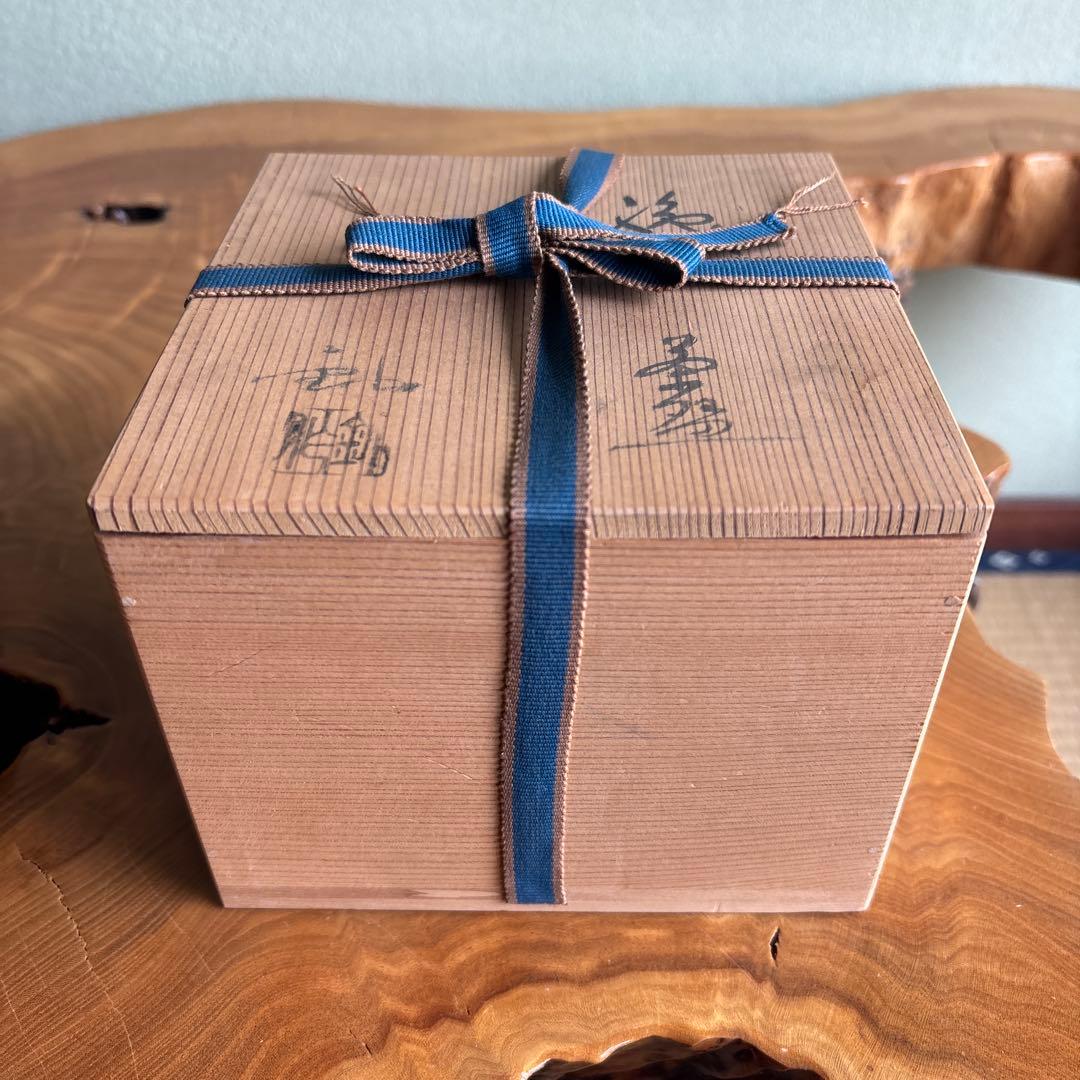
• Artist: Studio artist with signed tomobako (specific name not legible; signature present on lid)
• Technique: Ao-Oribe — iron oxide brushwork (tetsu-e) on white slip (shironagashi), with characteristic copper-green glaze pooled at rim
• Era: 1990s–2006
• Origin: Mino, Gifu, Japan (Oribe lineage, Furuta Oribe tradition, 16th century)
• Dimensions: Height approx. 8.2 cm, Diameter approx. 11.5 cm
• Box: Tomobako — signed wooden box
• Condition: Good. No chips, cracks, or repairs. Minor kiln variation consistent with the tradition.
🔹 [ CULTURAL & ARTISTIC INSIGHT ]
Oribe ware emerged under the patronage of Furuta Oribe, the tea master who succeeded Sen no Rikyū in the late Momoyama period. Where Rikyū's wabi sensibility sought quietude through restraint, Oribe introduced deliberate asymmetry, bold iron painting, and the audacious pooling of copper-green glaze — a formal vocabulary that felt almost transgressive against the backdrop of classical ceramics. The pine motif here, executed with loose calligraphic authority across the white slip body, belongs to that tradition of painting-as-gesture: the branches do not describe a tree so much as invoke the presence of one.
The body's sculpted waist — a visible constriction between lower and upper register — is not accident but intent. It is a formal decision that gives the bowl its tension, its sense of being held in a single breath. The green glaze answers at the rim, pooling unevenly, dripping in two characteristic cascades that are among the most recognizable marks of Ao-Oribe aesthetics. The interior, glazed in the same deep copper-green, completes the composition: a bowl that is dark within, alive without.
🔹 [ DEEP-DIVE COMMENTARY ]
Ao-Oribe (青織部) — "blue-green Oribe" — is the most visually commanding variant within the Oribe family. It is defined by the contrast between white slip ground and copper-green glaze, with iron oxide painting serving as the third voice. The white slip (shironagashi) is applied thickly, creating a slightly rough, absorbent surface that takes the iron brushwork with directness: the strokes land and stay, unmediated.
The pine (matsu) is one of the most loaded motifs in Japanese ceramic art. Associated with longevity, constancy, and the passage of time, it appears across centuries of Mino ware. But in Oribe hands, it loses its formal heraldic quality and becomes something more immediate — a trace of a brushstroke, a moment of attention. The artist here has not illustrated a pine; they have moved a brush as one might move through a forest.
The technique requires the artist to apply iron oxide before the first firing, painting blind onto raw white slip with no assurance of how the marks will survive the kiln. The green glaze is applied separately, its pooling and drip behavior shaped partly by gravity and partly by where the artist chooses to load it. This division of control — between intention and kiln — is central to Oribe's aesthetic philosophy.
For collectors, Ao-Oribe chawan with tomobako and legible artistic intent occupy a distinct position: they are studio works rooted in a four-century tradition, functioning fully as tea bowls while simultaneously holding their own as ceramic sculpture. This piece's waist constriction, its confident brushwork, and the balance of its two-glaze composition all point to a practitioner working within the tradition with genuine understanding.
Contemporary collectors drawn to Mingei, Japanese folk craft, or to the post-wabi aesthetics of the Momoyama revival will find in this bowl a clear voice — one that does not explain itself, but makes its presence felt from across a room.
[ JAPANESE DESCRIPTION / 日本語解説 ]
織部焼の茶碗。作家物、共箱付き。
白化粧を施したやや粗い素地に鉄絵で松枝を描き、見込みと口縁には銅緑釉(青織部釉)を大胆に流した一碗。胴部には意図的な絞り込みが施されており、上下の表情を分けながら全体の緊張感を保っている。緑釉は口縁から自然に垂れ、二箇所の流下跡が端正なアクセントとなっている。松の枝を描いた鉄絵は大らかな筆致で、説明的ではなく、印象として物体に宿っている。
青織部は桃山時代の茶人・古田織部が主導した美意識を源流とする。利休の侘びが静寂と簡素を旨としたのに対し、織部は意図的な歪み、大胆な絵付け、非対称の造形を積極的に取り込んだ。この茶碗はその精神を継ぐ作家の手によるもので、轆轤成形後に削り出された胴の絞りと、白釉上に走る松の鉄絵が、かたちと絵付けの対話を成立させている。
産地は美濃(岐阜県)。16世紀の織部焼の系譜を継ぐ産地であり、現代においても多くの作家が志野・織部の伝統様式に取り組んでいる。時代は1990年代から2006年頃と推定。共箱の蓋裏には作家の署名が確認できる。
使用感なく、チップ・割れ・修理の痕跡は見当たらない。茶道の稽古用としても、また棚に置いて静かに愛でる観賞用としても、存在感のある一碗である。
🔹 [ SHIPPING & PACKAGING ]
• Dispatch: Within 1-6 business days
• Carrier: Japan Post EMS / UPS (with tracking)
• Packaging: Carefully wrapped with protective materials
🔹 [ BASIC DETAILS ]
• Artist: Studio artist with signed tomobako (specific name not legible; signature present on lid)
• Technique: Ao-Oribe — iron oxide brushwork (tetsu-e) on white slip (shironagashi), with characteristic copper-green glaze pooled at rim
• Era: 1990s–2006
• Origin: Mino, Gifu, Japan (Oribe lineage, Furuta Oribe tradition, 16th century)
• Dimensions: Height approx. 8.2 cm, Diameter approx. 11.5 cm
• Box: Tomobako — signed wooden box
• Condition: Good. No chips, cracks, or repairs. Minor kiln variation consistent with the tradition.
🔹 [ CULTURAL & ARTISTIC INSIGHT ]
Oribe ware emerged under the patronage of Furuta Oribe, the tea master who succeeded Sen no Rikyū in the late Momoyama period. Where Rikyū's wabi sensibility sought quietude through restraint, Oribe introduced deliberate asymmetry, bold iron painting, and the audacious pooling of copper-green glaze — a formal vocabulary that felt almost transgressive against the backdrop of classical ceramics. The pine motif here, executed with loose calligraphic authority across the white slip body, belongs to that tradition of painting-as-gesture: the branches do not describe a tree so much as invoke the presence of one.
The body's sculpted waist — a visible constriction between lower and upper register — is not accident but intent. It is a formal decision that gives the bowl its tension, its sense of being held in a single breath. The green glaze answers at the rim, pooling unevenly, dripping in two characteristic cascades that are among the most recognizable marks of Ao-Oribe aesthetics. The interior, glazed in the same deep copper-green, completes the composition: a bowl that is dark within, alive without.
🔹 [ DEEP-DIVE COMMENTARY ]
Ao-Oribe (青織部) — "blue-green Oribe" — is the most visually commanding variant within the Oribe family. It is defined by the contrast between white slip ground and copper-green glaze, with iron oxide painting serving as the third voice. The white slip (shironagashi) is applied thickly, creating a slightly rough, absorbent surface that takes the iron brushwork with directness: the strokes land and stay, unmediated.
The pine (matsu) is one of the most loaded motifs in Japanese ceramic art. Associated with longevity, constancy, and the passage of time, it appears across centuries of Mino ware. But in Oribe hands, it loses its formal heraldic quality and becomes something more immediate — a trace of a brushstroke, a moment of attention. The artist here has not illustrated a pine; they have moved a brush as one might move through a forest.
The technique requires the artist to apply iron oxide before the first firing, painting blind onto raw white slip with no assurance of how the marks will survive the kiln. The green glaze is applied separately, its pooling and drip behavior shaped partly by gravity and partly by where the artist chooses to load it. This division of control — between intention and kiln — is central to Oribe's aesthetic philosophy.
For collectors, Ao-Oribe chawan with tomobako and legible artistic intent occupy a distinct position: they are studio works rooted in a four-century tradition, functioning fully as tea bowls while simultaneously holding their own as ceramic sculpture. This piece's waist constriction, its confident brushwork, and the balance of its two-glaze composition all point to a practitioner working within the tradition with genuine understanding.
Contemporary collectors drawn to Mingei, Japanese folk craft, or to the post-wabi aesthetics of the Momoyama revival will find in this bowl a clear voice — one that does not explain itself, but makes its presence felt from across a room.
[ JAPANESE DESCRIPTION / 日本語解説 ]
織部焼の茶碗。作家物、共箱付き。
白化粧を施したやや粗い素地に鉄絵で松枝を描き、見込みと口縁には銅緑釉(青織部釉)を大胆に流した一碗。胴部には意図的な絞り込みが施されており、上下の表情を分けながら全体の緊張感を保っている。緑釉は口縁から自然に垂れ、二箇所の流下跡が端正なアクセントとなっている。松の枝を描いた鉄絵は大らかな筆致で、説明的ではなく、印象として物体に宿っている。
青織部は桃山時代の茶人・古田織部が主導した美意識を源流とする。利休の侘びが静寂と簡素を旨としたのに対し、織部は意図的な歪み、大胆な絵付け、非対称の造形を積極的に取り込んだ。この茶碗はその精神を継ぐ作家の手によるもので、轆轤成形後に削り出された胴の絞りと、白釉上に走る松の鉄絵が、かたちと絵付けの対話を成立させている。
産地は美濃(岐阜県)。16世紀の織部焼の系譜を継ぐ産地であり、現代においても多くの作家が志野・織部の伝統様式に取り組んでいる。時代は1990年代から2006年頃と推定。共箱の蓋裏には作家の署名が確認できる。
使用感なく、チップ・割れ・修理の痕跡は見当たらない。茶道の稽古用としても、また棚に置いて静かに愛でる観賞用としても、存在感のある一碗である。
🔹 [ SHIPPING & PACKAGING ]
• Dispatch: Within 1-6 business days
• Carrier: Japan Post EMS / UPS (with tracking)
• Packaging: Carefully wrapped with protective materials
Quantity
Couldn't load pickup availability
Low stock: 1 left
View full details