1
/
of
15
Omotesenke Jimyosai Inscribed Karamatsu Maki-e Lacquer O-Natsume — Grand Master Tea Caddy
Omotesenke Jimyosai Inscribed Karamatsu Maki-e Lacquer O-Natsume — Grand Master Tea Caddy
Regular price
Dhs. 15,342.00 AED
Regular price
Sale price
Dhs. 15,342.00 AED
Taxes included.
Shipping calculated at checkout.
An Omotesenke Grand Master–inscribed lacquer tea caddy of extraordinary cultural weight. This gold maki-e natsume bears the kakihan of Jimyosai — Sen Sōsa, 14th-generation Iemoto of Omotesenke — authenticating it within the living lineage of Japanese tea ceremony. Bold karamatsu (Japanese larch) pine needle clusters radiate across jet-black urushi in layered hiramaki-e and takamaki-e gold, while the interior gleams with gin-tame-nuri silver. A museum-caliber Japanese lacquerware tea caddy with full tomobako provenance.
🔹 [ BASIC DETAILS ]
• Attribution: Jimyosai / 而妙斎 — Sen Sōsa (千宗左), 14th Grand Master (Iemoto) of Omotesenke (表千家)
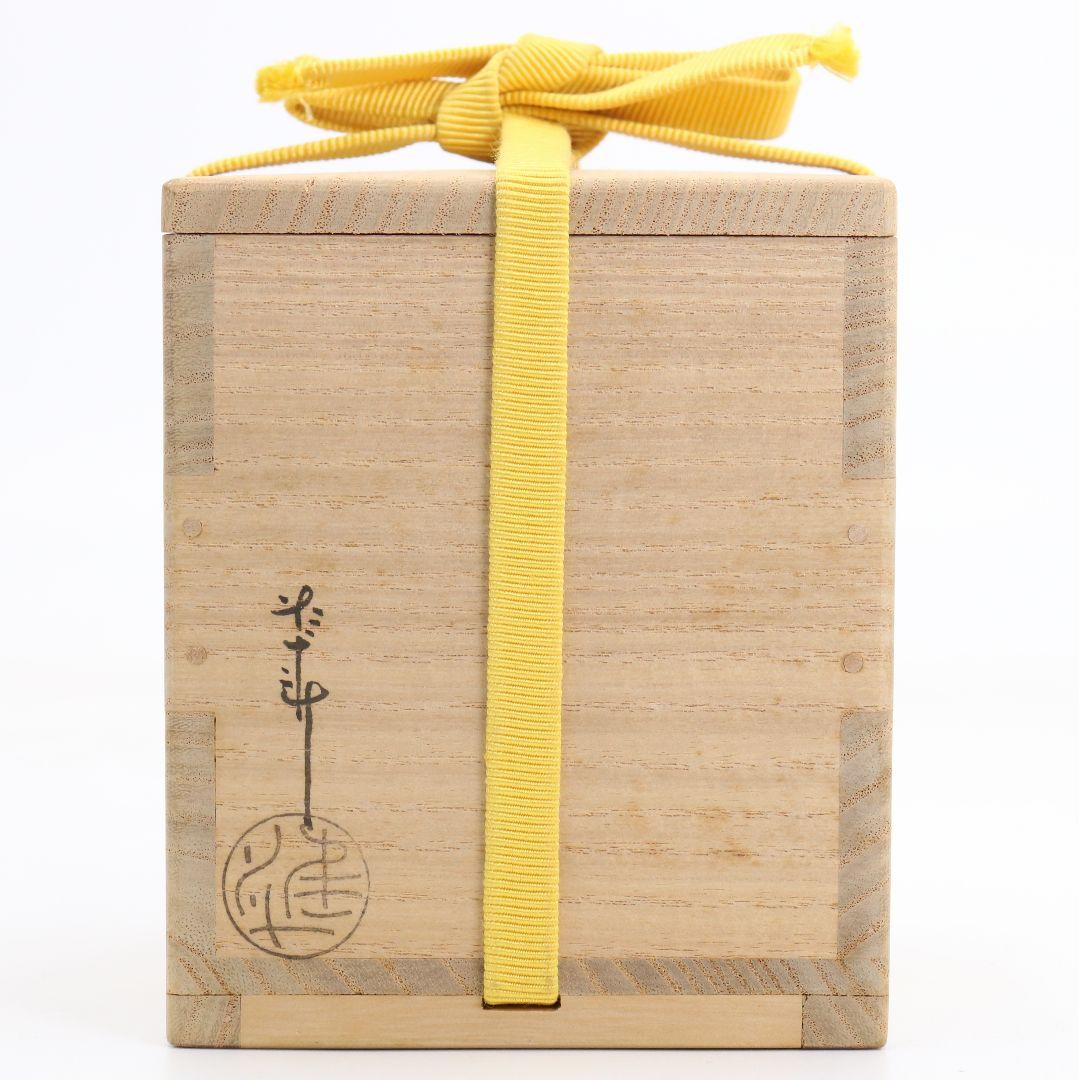
• Authentication: Kakihan (花押 / personal cipher) and inscription on tomobako, with seal
• Form: Ō-natsume (大棗 / large tea caddy)
• Technique: Gold maki-e — hiramaki-e (flat) and takamaki-e (raised) on black urushi lacquer; interior gin-tame-nuri (銀溜塗 / silver-powder undercoat)
• Motif: Karamatsu (唐松 — Japanese larch/pine) — radiating needle clusters in gold
• Era: Shōwa–Heisei (Jimyosai active as Iemoto 1937–)
• Origin: Japan — Omotesenke lineage
• Dimensions: Height approx. 7.2 cm, Diameter approx. 7.2 cm
• Box: Tomobako with Jimyosai's kakihan (花押), inscription, and seal in black and red
• Condition: Excellent — maki-e pristine with no wear or abrasion; gold work retains full luster; interior gin-tame-nuri immaculate; lid seam alignment precise
🔹 [ CULTURAL & ARTISTIC INSIGHT ]
Omotesenke is one of the San-Senke — the three Sen families descended directly from Sen no Rikyū, the figure who distilled the Japanese tea ceremony into its present philosophical form. The Iemoto (家元) is the hereditary Grand Master who holds the authority to authenticate tea utensils for use within the tradition. When a Grand Master inscribes a piece with his kakihan — a personal cipher unique to each generation — he is not merely signing it. He is placing it within the continuum of a practice that has transmitted, hand to hand, for five centuries.
Karamatsu — the Japanese larch, sometimes rendered as pine — is an evergreen presence in the seasonal vocabulary of chanoyu. Its needles radiate from central points in perfect circular arrays, a motif that speaks to continuity and the quiet persistence of form across time. On this natsume, the karamatsu clusters wrap the entire body, crossing the lid seam without interruption — a feat of technical precision that required the maki-e to be applied after the caddy was fully assembled.
Pine needles gather around a single point — the way a tradition gathers around a single lineage.
🔹 [ DEEP-DIVE COMMENTARY ]
Iemoto kakitsuke (家元書付) — the Grand Master's written attribution — represents the highest form of authentication in the world of Japanese tea. It is not a certificate of quality in the Western sense; it is an act of cultural transmission. The Iemoto examines a utensil and, finding it worthy, inscribes its box with his cipher, thereby welcoming it into the canon of objects that may be used in formal tea practice. A piece bearing kakitsuke carries a weight that transcends its physical materials — it has been seen, held, and acknowledged by the living head of a tradition stretching back to Rikyū.
Jimyosai (而妙斎), born 1938, became the 14th Iemoto of Omotesenke and guided the school through decades of cultural stewardship. His kakihan — visible on the tomobako lid in bold black ink alongside a red seal — is immediately recognizable to students of the tradition. The box calligraphy itself is an object of contemplation: decisive brushstrokes that convey both authority and restraint.
The natsume body was crafted by a skilled lacquer artisan — the karamatsu design executed in a combination of hiramaki-e (flat gold maki-e, where gold powder is sprinkled onto wet lacquer and sealed) and takamaki-e (raised maki-e, where lacquer is built up in layers before gold application to create dimensional relief). The interplay between flat and raised gold gives the pine clusters a sculptural quality: each radiating needle catches light differently depending on its elevation. The gin-tame-nuri interior — where silver powder is suspended beneath translucent lacquer — provides a luminous, cool-toned contrast to the warm gold exterior.
Pieces carrying Iemoto attribution occupy a specific position in the hierarchy of tea utensils. They are not decorative objects; they are instruments of practice, authenticated for use in the most formal settings of chanoyu. Their cultural significance does not diminish with time — it deepens, as each generation inherits the understanding of what these inscriptions represent.
🔹 [ 日本語解説 ]
表千家十四代家元・而妙斎(千宗左)書付の唐松蒔絵大棗です。
漆黒の地に金蒔絵で唐松文様を大胆に配した格調高い作品で、放射状に広がる松葉の一つ一つが平蒔絵と高蒔絵を駆使して精綻に描かれています。蓋と身の合わせ目を跨いで文様が途切れることなく続く高度な技法が用いられ、蒔絵師の力量が稺えます。内部は銀溜塗で仕上げられ、品格ある佇まいです。
共箱蓋裏に而妙斎の花押(書判)と朱印が据えられ、家元書付としての格式を備えています。家元書付とは、歴代家元がその道具を茶の湯にふさわしいものとして認め、自らの花押を箱に記す行為であり、千利休以来五百年の伝統の中に道具を位置づける文化的行為です。
唐松は日本の茶の湯における通年の吉祥文様として知られ、常緑の気品と静かな持続を象徴します。本作の唐松文様は器体全面に展開し、放射状の松葉群が幾何学的な美しさを見せながらも有機的な広がりを持つ、見事な意匠です。
寸法:高さ約7.2cm、径約7.2cm。状態は極めて良好で、蒔絵の剥落や擦れは見られず、銀溜塗の内部も清浄な状態を保っています。
🔹 [ SHIPPING & PACKAGING ]
• Dispatch: Within 1-6 business days
• Carrier: Japan Post EMS / UPS (with tracking)
• Packaging: Carefully wrapped with protective materials
🔹 [ BASIC DETAILS ]
• Attribution: Jimyosai / 而妙斎 — Sen Sōsa (千宗左), 14th Grand Master (Iemoto) of Omotesenke (表千家)
• Authentication: Kakihan (花押 / personal cipher) and inscription on tomobako, with seal
• Form: Ō-natsume (大棗 / large tea caddy)
• Technique: Gold maki-e — hiramaki-e (flat) and takamaki-e (raised) on black urushi lacquer; interior gin-tame-nuri (銀溜塗 / silver-powder undercoat)
• Motif: Karamatsu (唐松 — Japanese larch/pine) — radiating needle clusters in gold
• Era: Shōwa–Heisei (Jimyosai active as Iemoto 1937–)
• Origin: Japan — Omotesenke lineage
• Dimensions: Height approx. 7.2 cm, Diameter approx. 7.2 cm
• Box: Tomobako with Jimyosai's kakihan (花押), inscription, and seal in black and red
• Condition: Excellent — maki-e pristine with no wear or abrasion; gold work retains full luster; interior gin-tame-nuri immaculate; lid seam alignment precise
🔹 [ CULTURAL & ARTISTIC INSIGHT ]
Omotesenke is one of the San-Senke — the three Sen families descended directly from Sen no Rikyū, the figure who distilled the Japanese tea ceremony into its present philosophical form. The Iemoto (家元) is the hereditary Grand Master who holds the authority to authenticate tea utensils for use within the tradition. When a Grand Master inscribes a piece with his kakihan — a personal cipher unique to each generation — he is not merely signing it. He is placing it within the continuum of a practice that has transmitted, hand to hand, for five centuries.
Karamatsu — the Japanese larch, sometimes rendered as pine — is an evergreen presence in the seasonal vocabulary of chanoyu. Its needles radiate from central points in perfect circular arrays, a motif that speaks to continuity and the quiet persistence of form across time. On this natsume, the karamatsu clusters wrap the entire body, crossing the lid seam without interruption — a feat of technical precision that required the maki-e to be applied after the caddy was fully assembled.
Pine needles gather around a single point — the way a tradition gathers around a single lineage.
🔹 [ DEEP-DIVE COMMENTARY ]
Iemoto kakitsuke (家元書付) — the Grand Master's written attribution — represents the highest form of authentication in the world of Japanese tea. It is not a certificate of quality in the Western sense; it is an act of cultural transmission. The Iemoto examines a utensil and, finding it worthy, inscribes its box with his cipher, thereby welcoming it into the canon of objects that may be used in formal tea practice. A piece bearing kakitsuke carries a weight that transcends its physical materials — it has been seen, held, and acknowledged by the living head of a tradition stretching back to Rikyū.
Jimyosai (而妙斎), born 1938, became the 14th Iemoto of Omotesenke and guided the school through decades of cultural stewardship. His kakihan — visible on the tomobako lid in bold black ink alongside a red seal — is immediately recognizable to students of the tradition. The box calligraphy itself is an object of contemplation: decisive brushstrokes that convey both authority and restraint.
The natsume body was crafted by a skilled lacquer artisan — the karamatsu design executed in a combination of hiramaki-e (flat gold maki-e, where gold powder is sprinkled onto wet lacquer and sealed) and takamaki-e (raised maki-e, where lacquer is built up in layers before gold application to create dimensional relief). The interplay between flat and raised gold gives the pine clusters a sculptural quality: each radiating needle catches light differently depending on its elevation. The gin-tame-nuri interior — where silver powder is suspended beneath translucent lacquer — provides a luminous, cool-toned contrast to the warm gold exterior.
Pieces carrying Iemoto attribution occupy a specific position in the hierarchy of tea utensils. They are not decorative objects; they are instruments of practice, authenticated for use in the most formal settings of chanoyu. Their cultural significance does not diminish with time — it deepens, as each generation inherits the understanding of what these inscriptions represent.
🔹 [ 日本語解説 ]
表千家十四代家元・而妙斎(千宗左)書付の唐松蒔絵大棗です。
漆黒の地に金蒔絵で唐松文様を大胆に配した格調高い作品で、放射状に広がる松葉の一つ一つが平蒔絵と高蒔絵を駆使して精綻に描かれています。蓋と身の合わせ目を跨いで文様が途切れることなく続く高度な技法が用いられ、蒔絵師の力量が稺えます。内部は銀溜塗で仕上げられ、品格ある佇まいです。
共箱蓋裏に而妙斎の花押(書判)と朱印が据えられ、家元書付としての格式を備えています。家元書付とは、歴代家元がその道具を茶の湯にふさわしいものとして認め、自らの花押を箱に記す行為であり、千利休以来五百年の伝統の中に道具を位置づける文化的行為です。
唐松は日本の茶の湯における通年の吉祥文様として知られ、常緑の気品と静かな持続を象徴します。本作の唐松文様は器体全面に展開し、放射状の松葉群が幾何学的な美しさを見せながらも有機的な広がりを持つ、見事な意匠です。
寸法:高さ約7.2cm、径約7.2cm。状態は極めて良好で、蒔絵の剥落や擦れは見られず、銀溜塗の内部も清浄な状態を保っています。
🔹 [ SHIPPING & PACKAGING ]
• Dispatch: Within 1-6 business days
• Carrier: Japan Post EMS / UPS (with tracking)
• Packaging: Carefully wrapped with protective materials
Quantity
Couldn't load pickup availability
Low stock: 1 left
View full details