1
/
of
7
Oil Spot Tenmoku Tea Bowl by Josen — Mino Kiln, Signed Wooden Box
Oil Spot Tenmoku Tea Bowl by Josen — Mino Kiln, Signed Wooden Box
Regular price
Dhs. 610.00 AED
Regular price
Sale price
Dhs. 610.00 AED
Taxes included.
Shipping calculated at checkout.
Experience Authentic Japan Art with this Oil Spot Tenmoku Tea Bowl. This Japanese Tea Ceremony Bowl serves as a Mino Pottery Chawan and Tenmoku Glazed Bowl, featuring Gold Silver Oil Spot Glaze and Signed Wooden Box—a must-have for any Art Collector.
🔹 [ BASIC DETAILS ]
• Artist: Josen (如泉) — Mino / Tenmoku kiln
• Technique: Oil Spot Tenmoku glaze — jet-black ground with gold and silver oil-spot iridescence
• Era: 2000 – 2026
• Origin: Mino, Japan
• Dimensions: Diameter approx. 12.5 cm, Height approx. 7 cm
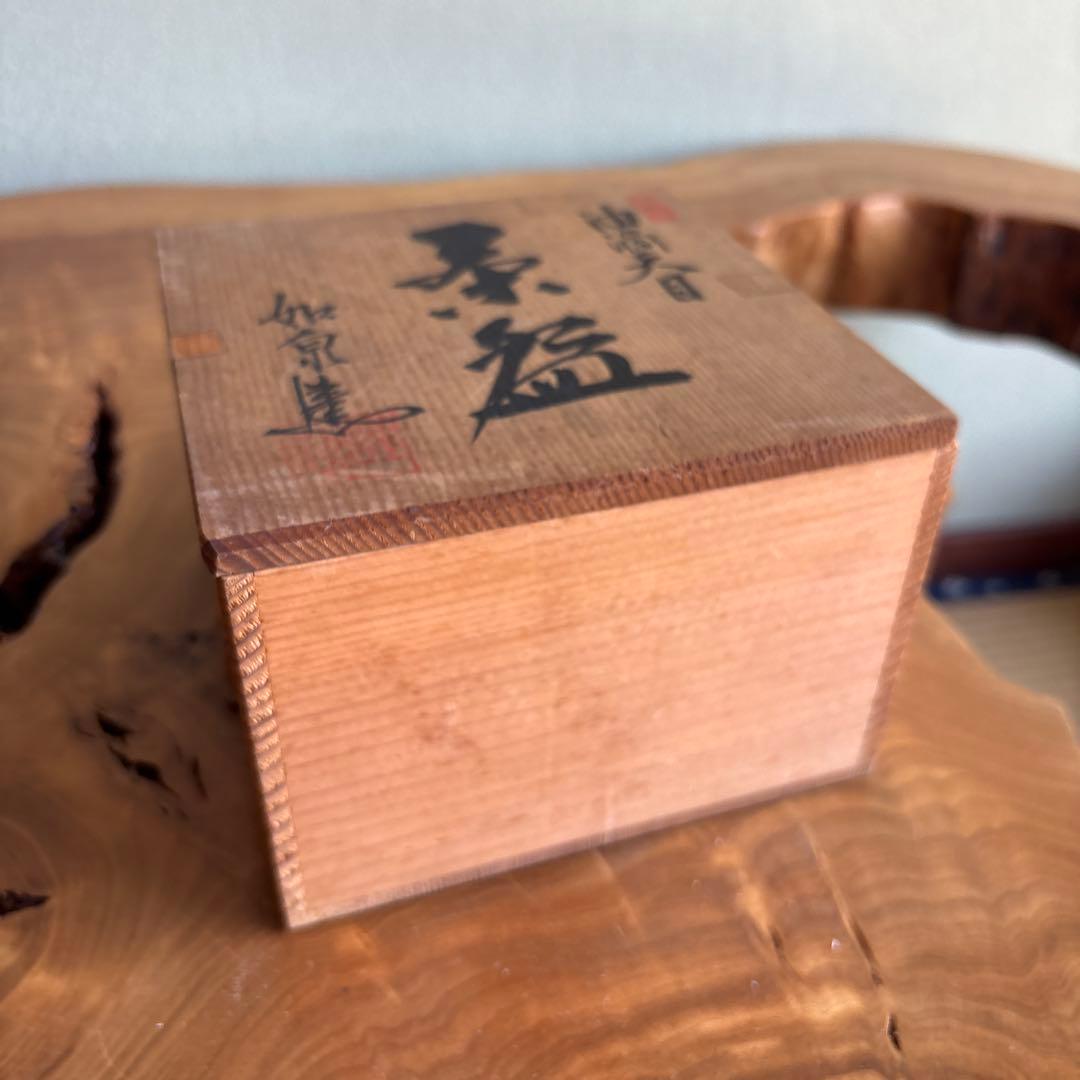
• Box: Artist-signed wooden box (tomobako) with inscription and seal
• Condition: Excellent — no chips, cracks, or restoration
🔹 [ CULTURAL & ARTISTIC INSIGHT ]
Tenmoku (天目) glazing is among the most technically demanding traditions in East Asian ceramics. The name derives from Tianmu Mountain in China, where Japanese monks first encountered the deep iron-saturated bowls used in Chan Buddhist tea practice and carried the tradition home during the Song dynasty. In Mino — the region that gave birth to Shino, Oribe, and Ki-Seto — this lineage took on its own character: earthier, quieter, and charged with the sensibility of the Japanese tea room.
Josen works within this current. The bowl's jet-black glaze is fired to a depth that absorbs light rather than reflecting it, while the oil-spot formations — gold and silver droplets that crystallize at peak kiln temperature — rise to the surface like stars emerging from a night sky. Each spot is a record of heat, of the moment the iron oxide separated and bloomed. No two bowls carry the same constellation.
The footring (kodai) is hand-trimmed with care, and the form settles naturally in the palm — not commanding attention, but holding presence. This is the quality that marks authorship: not spectacle, but weight.
"The black holds the light it was given and returns it slowly, in oil."
🔹 [ DEEP-DIVE COMMENTARY ]
Tenmoku glaze belongs to a family of high-iron glazes (typically 8–12% iron oxide) fired in a reduction atmosphere at temperatures approaching 1300°C. Under these conditions, iron oxide moves within the molten glaze, gathering into pools and droplets. The oil-spot effect occurs when iron-rich bubbles form at the surface during firing, burst, and leave behind circular halos of crystallized metalite — what we see as the gold and silver spots.
In the Mino tradition, tenmoku was never as central as it was in Song China, and that distance gave Japanese potters freedom to reinterpret. Josen approaches the form as a vessel for contemplation rather than ritual orthodoxy. The color range — from flat black in the shadows to warm bronze and silver at the rim — shifts with the light and with the viewer's angle, making each observation of the bowl slightly different from the last.
Tomobako (共箱), the signed wooden box made by the artist, is the primary authentication document for Japanese studio pottery. The box inscription here names the work, and the seal confirms authorship — a standard Josen practice. For collectors of Mino ware or tenmoku across East Asian and Western markets, the combination of signed box, intact glaze, and excellent condition represents the clean, traceable provenance that long-term collecting requires.
Tenmoku bowls have moved consistently across Japanese, Taiwanese, and European collector communities for decades, valued for their visual density, their philosophical associations with Zen and the tea ceremony, and the technical difficulty of producing oil-spot patterns of this clarity and distribution.
🔹 [ JAPANESE DESCRIPTION / 日本語解説 ]
【 基本仕様 】
• 作家:如泉(美濃・天目系)
• 技法:油滴天目釉 — 漆黒の地に金彩・銀彩の油滴が浮かぶ
• 時代:現代(2000年以降)
• 産地:美濃
• 寸法:口径約12.5cm、高さ約7cm
• 箱:共箱(箱書・印あり)
• 状態:極良 — 欠け・ひび・補修なし
【 文化的・芸術的解説 】
天目釉は東アジア陶芸の中でも、技術的に最も要求の高い様式のひとつです。その名は中国・天目山に由来し、宋代の禅僧が喫茶に用いた鉄釉碗を日本へ持ち帰ったことで国内に根付きました。志野・織部・黄瀬戸を生んだ美濃の土では、それはより静謐で、侘びの感覚をまとった形に変容していきました。
如泉はその系譜の中で仕事をしています。漆黒の釉は光を反射するのではなく吸い込み、油滴——窯の高温で酸化鉄が分離し結晶化した金銀の斑点——は夜空の星のように釉面に浮かびます。ひとつひとつの油滴は、その碗が経験した熱の記録であり、まったく同じ配置の碗は存在しません。
高台の削りは丁寧で、手の中に収まる形には無理がない。これが作家性というものです——派手さではなく、重さ。
「漆黒は受け取った光を、油滴となってゆっくりと返す。」
【 上級コレクター向け解説 】
天目釉は一般に酸化鉄を8〜12%含む高鉄釉で、還元焼成・1300℃前後という条件下で焼かれます。この環境下で鉄分が溶融した釉の内部を動き回り、表面で泡状に集積・破裂し、その痕跡が金銀の円形斑点として残ります——これが油滴です。
美濃では天目は宋代中国ほど中心的な様式ではなく、その距離感が日本の陶工に自由な解釈を与えました。如泉はこの形を儀式的な正統性ではなく、観照の器として扱っています。影では平坦な黒、見込みや口縁では温かみある銅色と銀色へと変化する釉の色は、見る角度と光の条件によって毎回わずかに異なる表情を見せます。
共箱は日本の現代陶芸における第一義的な作家証明です。箱書と印章が揃った本作は、長期的なコレクション構築に求められる明快な来歴を備えています。天目茶碗は日本・台湾・欧州のコレクター市場において安定した位置づけをもち、その視覚的密度、禅・茶道との思想的な結びつき、そして油滴模様の技術的難度において高く評価され続けています。
🔹 [ SHIPPING & PACKAGING ]
• Dispatch: Within 1-6 business days
• Carrier: Japan Post EMS / UPS (with tracking)
• Packaging: Carefully wrapped with protective materials
🔹 [ BASIC DETAILS ]
• Artist: Josen (如泉) — Mino / Tenmoku kiln
• Technique: Oil Spot Tenmoku glaze — jet-black ground with gold and silver oil-spot iridescence
• Era: 2000 – 2026
• Origin: Mino, Japan
• Dimensions: Diameter approx. 12.5 cm, Height approx. 7 cm
• Box: Artist-signed wooden box (tomobako) with inscription and seal
• Condition: Excellent — no chips, cracks, or restoration
🔹 [ CULTURAL & ARTISTIC INSIGHT ]
Tenmoku (天目) glazing is among the most technically demanding traditions in East Asian ceramics. The name derives from Tianmu Mountain in China, where Japanese monks first encountered the deep iron-saturated bowls used in Chan Buddhist tea practice and carried the tradition home during the Song dynasty. In Mino — the region that gave birth to Shino, Oribe, and Ki-Seto — this lineage took on its own character: earthier, quieter, and charged with the sensibility of the Japanese tea room.
Josen works within this current. The bowl's jet-black glaze is fired to a depth that absorbs light rather than reflecting it, while the oil-spot formations — gold and silver droplets that crystallize at peak kiln temperature — rise to the surface like stars emerging from a night sky. Each spot is a record of heat, of the moment the iron oxide separated and bloomed. No two bowls carry the same constellation.
The footring (kodai) is hand-trimmed with care, and the form settles naturally in the palm — not commanding attention, but holding presence. This is the quality that marks authorship: not spectacle, but weight.
"The black holds the light it was given and returns it slowly, in oil."
🔹 [ DEEP-DIVE COMMENTARY ]
Tenmoku glaze belongs to a family of high-iron glazes (typically 8–12% iron oxide) fired in a reduction atmosphere at temperatures approaching 1300°C. Under these conditions, iron oxide moves within the molten glaze, gathering into pools and droplets. The oil-spot effect occurs when iron-rich bubbles form at the surface during firing, burst, and leave behind circular halos of crystallized metalite — what we see as the gold and silver spots.
In the Mino tradition, tenmoku was never as central as it was in Song China, and that distance gave Japanese potters freedom to reinterpret. Josen approaches the form as a vessel for contemplation rather than ritual orthodoxy. The color range — from flat black in the shadows to warm bronze and silver at the rim — shifts with the light and with the viewer's angle, making each observation of the bowl slightly different from the last.
Tomobako (共箱), the signed wooden box made by the artist, is the primary authentication document for Japanese studio pottery. The box inscription here names the work, and the seal confirms authorship — a standard Josen practice. For collectors of Mino ware or tenmoku across East Asian and Western markets, the combination of signed box, intact glaze, and excellent condition represents the clean, traceable provenance that long-term collecting requires.
Tenmoku bowls have moved consistently across Japanese, Taiwanese, and European collector communities for decades, valued for their visual density, their philosophical associations with Zen and the tea ceremony, and the technical difficulty of producing oil-spot patterns of this clarity and distribution.
🔹 [ JAPANESE DESCRIPTION / 日本語解説 ]
【 基本仕様 】
• 作家:如泉(美濃・天目系)
• 技法:油滴天目釉 — 漆黒の地に金彩・銀彩の油滴が浮かぶ
• 時代:現代(2000年以降)
• 産地:美濃
• 寸法:口径約12.5cm、高さ約7cm
• 箱:共箱(箱書・印あり)
• 状態:極良 — 欠け・ひび・補修なし
【 文化的・芸術的解説 】
天目釉は東アジア陶芸の中でも、技術的に最も要求の高い様式のひとつです。その名は中国・天目山に由来し、宋代の禅僧が喫茶に用いた鉄釉碗を日本へ持ち帰ったことで国内に根付きました。志野・織部・黄瀬戸を生んだ美濃の土では、それはより静謐で、侘びの感覚をまとった形に変容していきました。
如泉はその系譜の中で仕事をしています。漆黒の釉は光を反射するのではなく吸い込み、油滴——窯の高温で酸化鉄が分離し結晶化した金銀の斑点——は夜空の星のように釉面に浮かびます。ひとつひとつの油滴は、その碗が経験した熱の記録であり、まったく同じ配置の碗は存在しません。
高台の削りは丁寧で、手の中に収まる形には無理がない。これが作家性というものです——派手さではなく、重さ。
「漆黒は受け取った光を、油滴となってゆっくりと返す。」
【 上級コレクター向け解説 】
天目釉は一般に酸化鉄を8〜12%含む高鉄釉で、還元焼成・1300℃前後という条件下で焼かれます。この環境下で鉄分が溶融した釉の内部を動き回り、表面で泡状に集積・破裂し、その痕跡が金銀の円形斑点として残ります——これが油滴です。
美濃では天目は宋代中国ほど中心的な様式ではなく、その距離感が日本の陶工に自由な解釈を与えました。如泉はこの形を儀式的な正統性ではなく、観照の器として扱っています。影では平坦な黒、見込みや口縁では温かみある銅色と銀色へと変化する釉の色は、見る角度と光の条件によって毎回わずかに異なる表情を見せます。
共箱は日本の現代陶芸における第一義的な作家証明です。箱書と印章が揃った本作は、長期的なコレクション構築に求められる明快な来歴を備えています。天目茶碗は日本・台湾・欧州のコレクター市場において安定した位置づけをもち、その視覚的密度、禅・茶道との思想的な結びつき、そして油滴模様の技術的難度において高く評価され続けています。
🔹 [ SHIPPING & PACKAGING ]
• Dispatch: Within 1-6 business days
• Carrier: Japan Post EMS / UPS (with tracking)
• Packaging: Carefully wrapped with protective materials
Quantity
Couldn't load pickup availability
Low stock: 1 left
View full details