1
/
of
10
Ohi-yaki Matcha Bowl by Ohi Ippei — Rare Blue-Purple Yohen Kiln Effect, Signed Tomobako
Ohi-yaki Matcha Bowl by Ohi Ippei — Rare Blue-Purple Yohen Kiln Effect, Signed Tomobako
Regular price
Dhs. 1,076.00 AED
Regular price
Sale price
Dhs. 1,076.00 AED
Taxes included.
Shipping calculated at checkout.
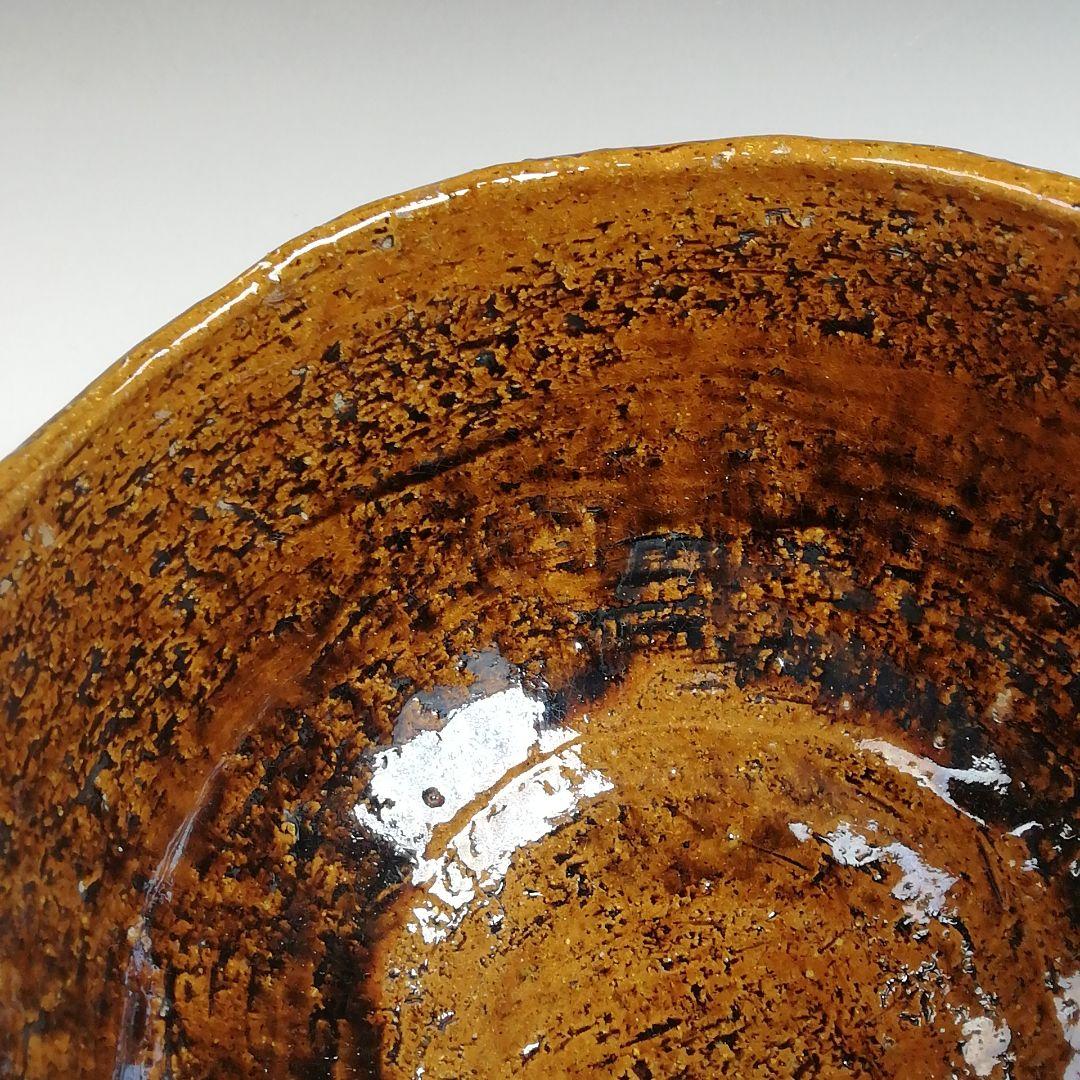
Experience Authentic Japan Art with this Ohi-yaki Tea Bowl by Ohi Ippei — a hand-shaped Japanese matcha bowl bearing a rare blue-purple yōhen kiln transformation across its ame-yu glaze. Crafted in the living tradition of Kanazawa's Ohi ware, this Japanese ceramic tea bowl carries the unmistakable warmth of Ohi clay alongside a kiln atmosphere that deposited shifting tones of iron-blue, indigo, and gunmetal across the lower body — a phenomenon encountered only when flame and glaze enter an unrepeatable dialogue. Arrives with the artist's original signed tomobako wooden box. A piece for the discerning collector of Japanese antique pottery, Kaga ceramics, and wabi-cha aesthetics.
🔹 [ BASIC DETAILS ]
• Artist: Ohi Ippei (大樋一平), tenth-generation heir to the Ohi lineage
• Technique: Ohi-yaki with traditional ame-yu (amber glaze); rare blue-purple yōhen (kiln-transformation effect) across the lower body
• Origin: Kanazawa, Ishikawa Prefecture, Japan — seat of Kaga Domain culture
• Dimensions: Diameter approx. 12 cm / H approx. 7.5 cm
• Box: Original signed tomobako (artist's wooden storage box) inscribed 「大樋焼 茶ノ碗 大樋一平造」with red seal
• Condition: No chips, no cracks; glaze in full integrity
🔹 [ CULTURAL & ARTISTIC INSIGHT ]
The Ohi tradition was founded in the late seventeenth century when the Kaga Domain lord Maeda Tsunanori invited tea master Urasenke Senso Soshitsu and his potter Chozaemon — who took the name Ohi — to establish a kiln dedicated to the aesthetics of wabi-cha. For over three hundred years, each generation of the Ohi family has maintained the secret ame-yu glaze formula: a honey-amber, lead-silicate melt that softens under heat into a surface both tactile and luminous, ideal for the slow warmth a matcha bowl must hold in the hands.
Ohi Ippei, as the tenth-generation head of this lineage, works within that inheritance while allowing the kiln its own voice. The glaze on this bowl records a moment of atmospheric alchemy — where iron compounds in the clay body and trace elements in the glaze met a reducing atmosphere inside the chamber, precipitating a broad band of blue-grey and indigo across the lower shoulder and body. In the vocabulary of Japanese ceramics this is called yōhen: a kiln transformation that cannot be coaxed or repeated. The amber rim and the blue-washed body sit in quiet tension, like the boundary between amber dusk and deep water.
The rim itself shows the characteristic Ohi kuchizukuri — hand-pinched, slightly uneven, with a russet granularity where the glaze sits thicker at certain points and reveals the warm clay beneath at others. Tilted toward natural light, the body shifts between iron-brown, moss-black, and the faint iridescence of the blue-purple deposit. This is not decoration; it is a record of a single firing, on a single day, that will not come again.
🔹 [ DEEP-DIVE COMMENTARY ]
Within the canon of Ohi ware, the signature palette is amber — the steady, warm amber of the ame-yu glaze that has defined the kiln's aesthetic identity since the Genroku era. Bowls with strong yōhen variations, particularly those where blue or purple tones dominate entire sections of the exterior, are encountered only occasionally in Ohi production and tend to attract sustained attention from collectors who follow the kiln closely. This bowl belongs to that narrower category.
The yōhen zone on this piece begins just below the shoulder and descends toward the foot ring, covering roughly two-thirds of the exterior wall in shifting tones of steel-blue, indigo, and muted violet-grey. Within that band, islands of amber breakthrough — where the ame-yu reasserts itself through the reduction layer — create a surface that reads as landscape: cloud formations, shoreline, the underside of lit water. The effect is not accidental, but neither is it controllable. Ohi Ippei would have placed this bowl in the kiln knowing only that the conditions were prepared; what emerged was the kiln's answer.
The interior presents a contrasting experience: a deep rust-amber, finely granular, with a slight concavity at the center that catches the pooled matcha and holds it naturally in place. The rim's undulation — gentle, human, unhurried — gives the hands a point of orientation when lifting for a sip. This is a bowl designed to be used, not only displayed, and the tomobako confirms it was treated with the full ceremony of attribution from the moment it left the studio.
From a collector's perspective, the provenance chain here is clear: original tomobako with artist's brush inscription and red seal, consistent with standard Ohi studio practice. The box lid reads 「大樋焼 茶ノ碗」on the right panel and carries the artist's signature 「大樋一平造」on the left with the characteristic cinnabar seal. No condition issues are present; the piece has been stored correctly and retains full structural and glazing integrity.
For those building a collection around the living traditions of Japanese chado — the functional art of tea — Ohi ware occupies a position that few other kilns hold: a direct, unbroken lineage from the Urasenke school's own founding potter, producing work that is simultaneously historical document and present-tense craft. Ohi Ippei's generation brings to that history a willingness to let the kiln speak in unexpected registers, and this bowl is one of those conversations.
🔹 [ 日本語解説 ]
本作は大樋一平造・大樋焼茶碗です。大樋焼は江戸時代、加賀藩主前田綱紀公の庇護のもと、裏千家仙叟宗室と初代大樋長左衛門によって開かれた金沢の茶陶窯。以来十代にわたり、独自の飴釉と大樋土を守り続けてきました。
本作は飴釉を基調としながら、胴部全体に青紫〜鉄青色の窯変(yōhen)が広く展開する、大樋焼としても稀な景色を呈しています。炎と釉薬が還元雰囲気のなかで交わり、一度しか現れない発色を生み出したものです。口縁には飴色の粗い肌が残り、内側は深い赤褐色で抹茶の色を静かに受け止めます。
共箱は一平氏自筆の箱書きと朱印入り。割れ・欠けなし、状態良好です。茶道を嗜む方のみならず、現代の作陶家・日本陶芸コレクターにとっても、加賀の美意識と窯変の神秘を伝える一碗です。
🔹 [ SHIPPING & PACKAGING ]
• Dispatch: Within 1-6 business days
• Carrier: Japan Post EMS / UPS (with tracking)
• Packaging: Carefully wrapped with protective materials
🔹 [ BASIC DETAILS ]
• Artist: Ohi Ippei (大樋一平), tenth-generation heir to the Ohi lineage
• Technique: Ohi-yaki with traditional ame-yu (amber glaze); rare blue-purple yōhen (kiln-transformation effect) across the lower body
• Origin: Kanazawa, Ishikawa Prefecture, Japan — seat of Kaga Domain culture
• Dimensions: Diameter approx. 12 cm / H approx. 7.5 cm
• Box: Original signed tomobako (artist's wooden storage box) inscribed 「大樋焼 茶ノ碗 大樋一平造」with red seal
• Condition: No chips, no cracks; glaze in full integrity
🔹 [ CULTURAL & ARTISTIC INSIGHT ]
The Ohi tradition was founded in the late seventeenth century when the Kaga Domain lord Maeda Tsunanori invited tea master Urasenke Senso Soshitsu and his potter Chozaemon — who took the name Ohi — to establish a kiln dedicated to the aesthetics of wabi-cha. For over three hundred years, each generation of the Ohi family has maintained the secret ame-yu glaze formula: a honey-amber, lead-silicate melt that softens under heat into a surface both tactile and luminous, ideal for the slow warmth a matcha bowl must hold in the hands.
Ohi Ippei, as the tenth-generation head of this lineage, works within that inheritance while allowing the kiln its own voice. The glaze on this bowl records a moment of atmospheric alchemy — where iron compounds in the clay body and trace elements in the glaze met a reducing atmosphere inside the chamber, precipitating a broad band of blue-grey and indigo across the lower shoulder and body. In the vocabulary of Japanese ceramics this is called yōhen: a kiln transformation that cannot be coaxed or repeated. The amber rim and the blue-washed body sit in quiet tension, like the boundary between amber dusk and deep water.
The rim itself shows the characteristic Ohi kuchizukuri — hand-pinched, slightly uneven, with a russet granularity where the glaze sits thicker at certain points and reveals the warm clay beneath at others. Tilted toward natural light, the body shifts between iron-brown, moss-black, and the faint iridescence of the blue-purple deposit. This is not decoration; it is a record of a single firing, on a single day, that will not come again.
🔹 [ DEEP-DIVE COMMENTARY ]
Within the canon of Ohi ware, the signature palette is amber — the steady, warm amber of the ame-yu glaze that has defined the kiln's aesthetic identity since the Genroku era. Bowls with strong yōhen variations, particularly those where blue or purple tones dominate entire sections of the exterior, are encountered only occasionally in Ohi production and tend to attract sustained attention from collectors who follow the kiln closely. This bowl belongs to that narrower category.
The yōhen zone on this piece begins just below the shoulder and descends toward the foot ring, covering roughly two-thirds of the exterior wall in shifting tones of steel-blue, indigo, and muted violet-grey. Within that band, islands of amber breakthrough — where the ame-yu reasserts itself through the reduction layer — create a surface that reads as landscape: cloud formations, shoreline, the underside of lit water. The effect is not accidental, but neither is it controllable. Ohi Ippei would have placed this bowl in the kiln knowing only that the conditions were prepared; what emerged was the kiln's answer.
The interior presents a contrasting experience: a deep rust-amber, finely granular, with a slight concavity at the center that catches the pooled matcha and holds it naturally in place. The rim's undulation — gentle, human, unhurried — gives the hands a point of orientation when lifting for a sip. This is a bowl designed to be used, not only displayed, and the tomobako confirms it was treated with the full ceremony of attribution from the moment it left the studio.
From a collector's perspective, the provenance chain here is clear: original tomobako with artist's brush inscription and red seal, consistent with standard Ohi studio practice. The box lid reads 「大樋焼 茶ノ碗」on the right panel and carries the artist's signature 「大樋一平造」on the left with the characteristic cinnabar seal. No condition issues are present; the piece has been stored correctly and retains full structural and glazing integrity.
For those building a collection around the living traditions of Japanese chado — the functional art of tea — Ohi ware occupies a position that few other kilns hold: a direct, unbroken lineage from the Urasenke school's own founding potter, producing work that is simultaneously historical document and present-tense craft. Ohi Ippei's generation brings to that history a willingness to let the kiln speak in unexpected registers, and this bowl is one of those conversations.
🔹 [ 日本語解説 ]
本作は大樋一平造・大樋焼茶碗です。大樋焼は江戸時代、加賀藩主前田綱紀公の庇護のもと、裏千家仙叟宗室と初代大樋長左衛門によって開かれた金沢の茶陶窯。以来十代にわたり、独自の飴釉と大樋土を守り続けてきました。
本作は飴釉を基調としながら、胴部全体に青紫〜鉄青色の窯変(yōhen)が広く展開する、大樋焼としても稀な景色を呈しています。炎と釉薬が還元雰囲気のなかで交わり、一度しか現れない発色を生み出したものです。口縁には飴色の粗い肌が残り、内側は深い赤褐色で抹茶の色を静かに受け止めます。
共箱は一平氏自筆の箱書きと朱印入り。割れ・欠けなし、状態良好です。茶道を嗜む方のみならず、現代の作陶家・日本陶芸コレクターにとっても、加賀の美意識と窯変の神秘を伝える一碗です。
🔹 [ SHIPPING & PACKAGING ]
• Dispatch: Within 1-6 business days
• Carrier: Japan Post EMS / UPS (with tracking)
• Packaging: Carefully wrapped with protective materials
Quantity
Couldn't load pickup availability
Low stock: 1 left
View full details