1
/
of
10
Ohi Ware Tea Bowl by Ohi Ippei — Amber Kaki Glaze, Drip Rim Effect, Signed Box, Kanazawa Kiln
Ohi Ware Tea Bowl by Ohi Ippei — Amber Kaki Glaze, Drip Rim Effect, Signed Box, Kanazawa Kiln
Regular price
Dhs. 1,034.00 AED
Regular price
Sale price
Dhs. 1,034.00 AED
Taxes included.
Shipping calculated at checkout.
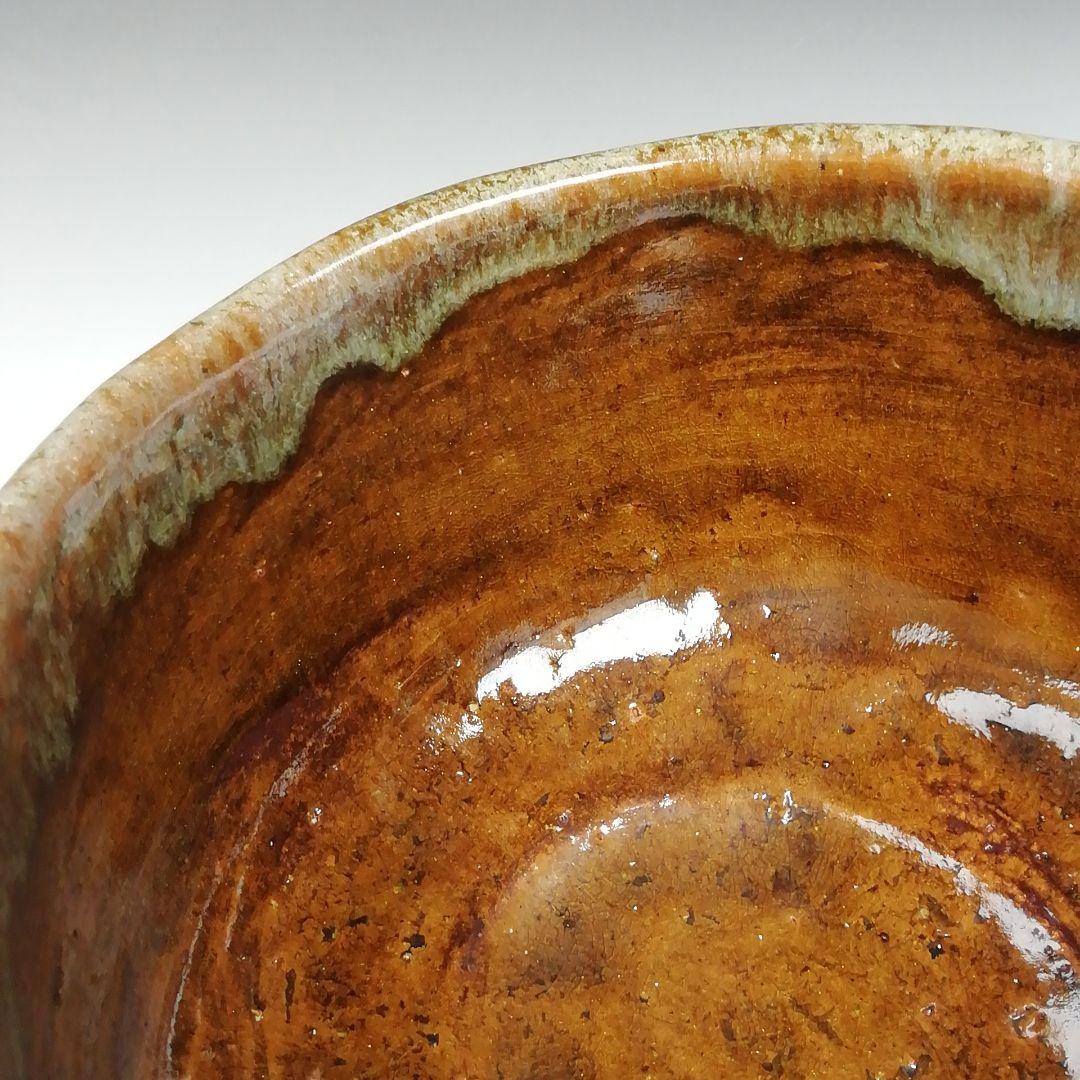
Experience Authentic Japan Art with this Ohi Ware Tea Bowl. This Kanazawa Kiln Chawan serves as a Japanese Tea Ceremony Bowl and Matcha Bowl Gift, featuring Amber Kaki Glaze and Drip Rim Effect—a must-have for any Art Collector seeking Ohi Ippei Pottery with Cascading White Glaze, Signed Wooden Box, and Wabi Sabi Aesthetic.
🔹 [ BASIC DETAILS ]
• Artist: Ohi Ippei (大樋一平) — Ohi ware tradition, Kanazawa
• Technique: Ohi ware (大樋焼) — warm amber kaki (persimmon) glaze on the interior; dramatic cascading white-cream with russet-ochre streaks flowing downward from the rim on the exterior; characteristic drip formations over the mouth edge; exposed warm terracotta clay body on the lower exterior
• Era: Late Showa to Heisei period (c. 1980s–2000s)
• Origin: Kanazawa, Ishikawa Prefecture, Japan
• Dimensions: Height approx. 7.5 cm, Diameter approx. 11.5 cm
• Box: Original signed wooden box (tomobako) with inscription "大樋焼 茶本知" (front) and "大樋一平 造" (side)
• Condition: No cracks or chips; excellent overall condition
🔹 [ CULTURAL & ARTISTIC INSIGHT ]
Ohi ware (大樋焼) is among the most intimate and philosophically refined of Japan's tea ceramics traditions. Founded in the late seventeenth century by the Korean-born potter Chozaemon at the invitation of the Urasenke tea master Senso Soshitsu V — himself a student of Sen no Sotan — the Ohi kiln was established with a single purpose: to produce tea bowls for the Ura Senke school of tea ceremony in Kanazawa. Every bowl made at Ohi has been, for three and a half centuries, an instrument of chado philosophy made material.
The signature of Ohi ware is its amber glaze — known as "kaki" (persimmon) for its warm, dark orange-brown depth — and its low, wide-bellied form that invites the hands to hold rather than merely grasp. But this bowl by Ohi Ippei reveals something beyond the classic formula: the exterior is dominated by a dramatic two-glaze landscape. From the rim, a pale cream-white glaze has cascaded downward in long vertical streaks, carrying russet and amber tones with it, before terminating in a jagged, flame-like line above the unglazed terracotta lower body. At the rim itself, the glaze has formed small drip teeth — the enamel melting and falling in arrested motion, fixed forever in the moment of transformation.
The interior, by contrast, is deep and calm: the kaki amber fills the bowl with a warm amber glow that deepens at the centre. Together, the exterior cascade and the interior calm create a sense of the bowl as a world contained — turbulent weather above, still water within.
Poetic line: "The glaze fell slowly toward the earth and stopped — the fire held it there, between motion and rest."
🔹 [ DEEP-DIVE COMMENTARY ]
Ohi ware was born from a specific philosophical commission. When the Ura Senke tradition established itself in Kanazawa in the Edo period, the tea master sought a local kiln capable of producing bowls that embodied the wabi spirit of the school. Chozaemon — who took the kiln name Ohi Chozaemon (大樋長左衛門) — answered that call, and his lineage has continued without interruption to the present day, making Ohi one of the longest-running family kiln traditions in Japanese ceramics.
The kaki (persimmon) glaze that defines Ohi ware is formulated from a specific blend of ash, feldspar, and iron-bearing minerals. Applied thickly and fired in a reduction-influenced atmosphere at relatively low stoneware temperatures (approximately 1100–1150 °C), it develops the characteristic warm amber tone that ranges from deep persimmon orange to near-burgundy in areas of maximum thickness. The chemistry is stable but responsive — small variations in kiln atmosphere, glaze thickness, and firing position produce the subtle tonal differences that make each Ohi bowl unique.
The secondary glaze on this bowl's exterior — the cascading cream-white with amber streaks — is a deliberate compositional choice rather than accident. By applying a second feldspathic glaze over the kaki base and allowing it to drip and flow during the firing, the potter creates a dynamic surface that captures the movement of the kiln's heat. The resulting "waterfall" effect is a conscious evocation of natural phenomena, deeply connected to the Zen-inflected aesthetic of the Kanazawa cultural tradition.
For collectors of contemporary Japanese tea ceramics, Ohi ware represents a living tradition of exceptional depth. Pieces by named Ohi family members and recognised kiln masters carry genuine provenance and collecting significance. This bowl by Ohi Ippei, with its complete tomobako, is a representative example of the tradition at its most expressive — fully usable in tea practice and compelling as a display object.
🔹 [ SHIPPING & PACKAGING ]
• Dispatch: Within 1-6 business days
• Carrier: Japan Post EMS / UPS (with tracking)
• Packaging: Carefully wrapped with protective materials
🔹 [ 日本語解説 ]
【詳細スペック】
・作家:大樋一平(大樋焼窯元)
・技法:大樋焼 — 内面は典型的な柿色釉(深みある琥珀橙)、外面は白系釉が幕のように流れ落ち、口辺では釉が滴下して炎のような景色を形成。下半部は素地の温かい赤茶土が露出
・年代:昭和後期〜平成(1980〜2000年代)
・産地:石川県金沢市(大樋焼)
・寸法:高さ約7.5cm、直径約11.5cm
・付属:共箱(「大樋焼 茶本知」「大樋一平 造」の銘入り)
・状態:割れ・欠けなし。良好
【文化・芸術的解説】
大樋焼は十七世紀後半、裏千家の茶道哲学を具現化するために金沢に創設された専用の茶碗窯である。朝鮮系陶工・長左衛門が裏千家仙叟宗室に招かれて開いた窯は、以来三百五十年以上にわたって一子相伝で続き、日本陶磁史上もっとも哲学的一貫性を持つ窯元の一つとなった。
柿釉(かきぐすり)は大樋焼の代名詞であり、灰・長石・鉄分を独自に調合した釉薬を低温で焼成することで生まれる、温かみある深い橙褐色が特徴である。本作の内面はその柿釉が静かに広がり、茶碗の底へ向かって琥珀の深みを増す。外面では対照的に、白系釉が口辺から滝のように流れ落ち、口辺では滴下して炎状の造形を作り、下部では素地の赤茶土が鮮やかに顔を出す。この「静と動」の対比が大樋一平の個性を如実に示している。
詩的一言:「釉薬はゆっくりと地に向かい、そして止まった——炎がその瞬間を、永遠に留めた。」
【上級コレクター向け解説】
大樋焼の柿釉は灰・長石・鉄分の特定配合によって作られ、約1100〜1150℃のやや低温で焼成される。低温焼成ゆえに緻密さより温かみが勝り、手に持った時に素地の温もりが伝わる固有の感触を生む。
外面の二重施釉(柿釉の上に長石系白釉を重ねて流し掛け)は意図的な演出であり、炎の動きを釉薬の流れとして封じ込める行為である。その結果として生まれる「瀑布」の景色は、禅の自然観察と金沢の文化的洗練が交差する大樋焼の核心にある。
共箱が揃い、作家銘が明確な大樋一平作品は、現代日本の茶道具コレクションにおいて確かな位置を持つ一点であり、茶事での実使用と展示の両方に適している。
🔹 [ BASIC DETAILS ]
• Artist: Ohi Ippei (大樋一平) — Ohi ware tradition, Kanazawa
• Technique: Ohi ware (大樋焼) — warm amber kaki (persimmon) glaze on the interior; dramatic cascading white-cream with russet-ochre streaks flowing downward from the rim on the exterior; characteristic drip formations over the mouth edge; exposed warm terracotta clay body on the lower exterior
• Era: Late Showa to Heisei period (c. 1980s–2000s)
• Origin: Kanazawa, Ishikawa Prefecture, Japan
• Dimensions: Height approx. 7.5 cm, Diameter approx. 11.5 cm
• Box: Original signed wooden box (tomobako) with inscription "大樋焼 茶本知" (front) and "大樋一平 造" (side)
• Condition: No cracks or chips; excellent overall condition
🔹 [ CULTURAL & ARTISTIC INSIGHT ]
Ohi ware (大樋焼) is among the most intimate and philosophically refined of Japan's tea ceramics traditions. Founded in the late seventeenth century by the Korean-born potter Chozaemon at the invitation of the Urasenke tea master Senso Soshitsu V — himself a student of Sen no Sotan — the Ohi kiln was established with a single purpose: to produce tea bowls for the Ura Senke school of tea ceremony in Kanazawa. Every bowl made at Ohi has been, for three and a half centuries, an instrument of chado philosophy made material.
The signature of Ohi ware is its amber glaze — known as "kaki" (persimmon) for its warm, dark orange-brown depth — and its low, wide-bellied form that invites the hands to hold rather than merely grasp. But this bowl by Ohi Ippei reveals something beyond the classic formula: the exterior is dominated by a dramatic two-glaze landscape. From the rim, a pale cream-white glaze has cascaded downward in long vertical streaks, carrying russet and amber tones with it, before terminating in a jagged, flame-like line above the unglazed terracotta lower body. At the rim itself, the glaze has formed small drip teeth — the enamel melting and falling in arrested motion, fixed forever in the moment of transformation.
The interior, by contrast, is deep and calm: the kaki amber fills the bowl with a warm amber glow that deepens at the centre. Together, the exterior cascade and the interior calm create a sense of the bowl as a world contained — turbulent weather above, still water within.
Poetic line: "The glaze fell slowly toward the earth and stopped — the fire held it there, between motion and rest."
🔹 [ DEEP-DIVE COMMENTARY ]
Ohi ware was born from a specific philosophical commission. When the Ura Senke tradition established itself in Kanazawa in the Edo period, the tea master sought a local kiln capable of producing bowls that embodied the wabi spirit of the school. Chozaemon — who took the kiln name Ohi Chozaemon (大樋長左衛門) — answered that call, and his lineage has continued without interruption to the present day, making Ohi one of the longest-running family kiln traditions in Japanese ceramics.
The kaki (persimmon) glaze that defines Ohi ware is formulated from a specific blend of ash, feldspar, and iron-bearing minerals. Applied thickly and fired in a reduction-influenced atmosphere at relatively low stoneware temperatures (approximately 1100–1150 °C), it develops the characteristic warm amber tone that ranges from deep persimmon orange to near-burgundy in areas of maximum thickness. The chemistry is stable but responsive — small variations in kiln atmosphere, glaze thickness, and firing position produce the subtle tonal differences that make each Ohi bowl unique.
The secondary glaze on this bowl's exterior — the cascading cream-white with amber streaks — is a deliberate compositional choice rather than accident. By applying a second feldspathic glaze over the kaki base and allowing it to drip and flow during the firing, the potter creates a dynamic surface that captures the movement of the kiln's heat. The resulting "waterfall" effect is a conscious evocation of natural phenomena, deeply connected to the Zen-inflected aesthetic of the Kanazawa cultural tradition.
For collectors of contemporary Japanese tea ceramics, Ohi ware represents a living tradition of exceptional depth. Pieces by named Ohi family members and recognised kiln masters carry genuine provenance and collecting significance. This bowl by Ohi Ippei, with its complete tomobako, is a representative example of the tradition at its most expressive — fully usable in tea practice and compelling as a display object.
🔹 [ SHIPPING & PACKAGING ]
• Dispatch: Within 1-6 business days
• Carrier: Japan Post EMS / UPS (with tracking)
• Packaging: Carefully wrapped with protective materials
🔹 [ 日本語解説 ]
【詳細スペック】
・作家:大樋一平(大樋焼窯元)
・技法:大樋焼 — 内面は典型的な柿色釉(深みある琥珀橙)、外面は白系釉が幕のように流れ落ち、口辺では釉が滴下して炎のような景色を形成。下半部は素地の温かい赤茶土が露出
・年代:昭和後期〜平成(1980〜2000年代)
・産地:石川県金沢市(大樋焼)
・寸法:高さ約7.5cm、直径約11.5cm
・付属:共箱(「大樋焼 茶本知」「大樋一平 造」の銘入り)
・状態:割れ・欠けなし。良好
【文化・芸術的解説】
大樋焼は十七世紀後半、裏千家の茶道哲学を具現化するために金沢に創設された専用の茶碗窯である。朝鮮系陶工・長左衛門が裏千家仙叟宗室に招かれて開いた窯は、以来三百五十年以上にわたって一子相伝で続き、日本陶磁史上もっとも哲学的一貫性を持つ窯元の一つとなった。
柿釉(かきぐすり)は大樋焼の代名詞であり、灰・長石・鉄分を独自に調合した釉薬を低温で焼成することで生まれる、温かみある深い橙褐色が特徴である。本作の内面はその柿釉が静かに広がり、茶碗の底へ向かって琥珀の深みを増す。外面では対照的に、白系釉が口辺から滝のように流れ落ち、口辺では滴下して炎状の造形を作り、下部では素地の赤茶土が鮮やかに顔を出す。この「静と動」の対比が大樋一平の個性を如実に示している。
詩的一言:「釉薬はゆっくりと地に向かい、そして止まった——炎がその瞬間を、永遠に留めた。」
【上級コレクター向け解説】
大樋焼の柿釉は灰・長石・鉄分の特定配合によって作られ、約1100〜1150℃のやや低温で焼成される。低温焼成ゆえに緻密さより温かみが勝り、手に持った時に素地の温もりが伝わる固有の感触を生む。
外面の二重施釉(柿釉の上に長石系白釉を重ねて流し掛け)は意図的な演出であり、炎の動きを釉薬の流れとして封じ込める行為である。その結果として生まれる「瀑布」の景色は、禅の自然観察と金沢の文化的洗練が交差する大樋焼の核心にある。
共箱が揃い、作家銘が明確な大樋一平作品は、現代日本の茶道具コレクションにおいて確かな位置を持つ一点であり、茶事での実使用と展示の両方に適している。
Quantity
Couldn't load pickup availability
Low stock: 1 left
View full details