1
/
of
9
Ohi Ware Matcha Bowl by Ohi Ippei — Amber Glaze Chawan with Signed Wooden Box, Kanazawa Ceramic Art
Ohi Ware Matcha Bowl by Ohi Ippei — Amber Glaze Chawan with Signed Wooden Box, Kanazawa Ceramic Art
Regular price
Dhs. 807.00 AED
Regular price
Sale price
Dhs. 807.00 AED
Taxes included.
Shipping calculated at checkout.
Experience Authentic Japan Art with this Ohi Ware Matcha Bowl. This Japanese Tea Ceremony Bowl serves as an Amber Glaze Chawan and Hand-Built Ceramic Art, featuring Ohi Ippei Signed Work and Kanazawa Kiln Pottery—a must-have for any Art Collector. This Tomobako Wooden Box Set with Wabi-Sabi Tea Bowl completes a rare Japanese Antique Ceramics offering.
🔹 [ BASIC DETAILS ]
• Artist: Ohi Ippei (大樋一平), heir to the Ohi kiln lineage, Kanazawa
• Technique: Ohi-te (大樋手) hand-building; Ohi-yu amber glaze (飴釉) fired at low temperature
• Era: Contemporary (post-2007)
• Origin: Ohi kiln, Kanazawa, Ishikawa Prefecture, Japan
• Dimensions: Height approx. 8 cm, Diameter approx. 11.5 cm
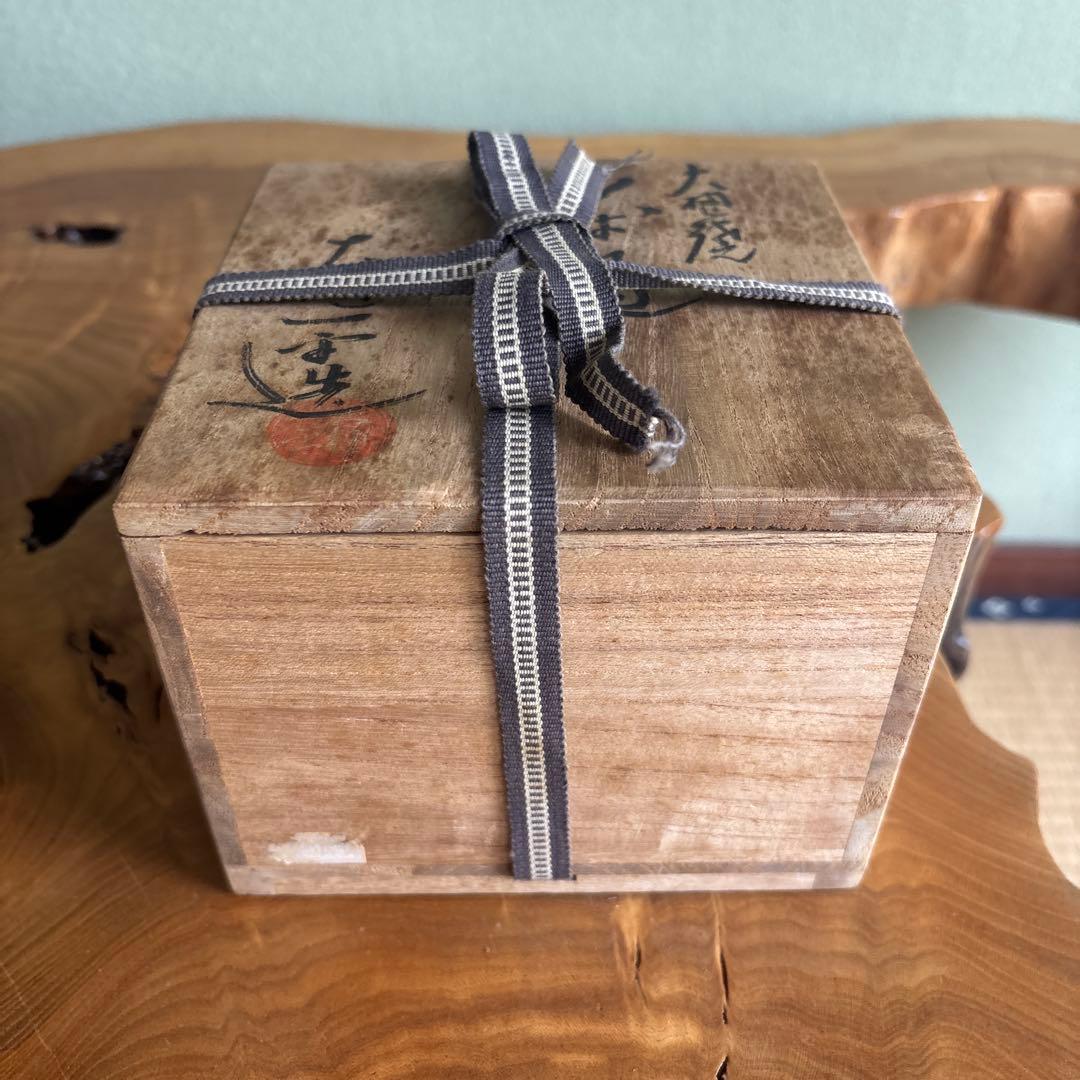
• Box: Signed tomobako (共箱) with calligraphic inscription and red artist seal
• Condition: Excellent — no chips, cracks, or repairs
🔹 [ CULTURAL & ARTISTIC INSIGHT ]
The Ohi kiln was established in 1666 in Kanazawa by Chozaemon, a student of Raku master Hon'ami Koetsu, at the invitation of the fifth lord of the Kaga domain. For more than three centuries, the Ohi family has carried forward a distinct ceramic tradition — quieter than Raku, yet equally charged with philosophical intention. The defining feature of Ohi ware is its deep amber glaze, known as Ohi-yu or "toffee glaze" (飴釉), which pools and thickens over a hand-formed stoneware body in ways that resist prediction and welcome discovery.
This chawan by Ohi Ippei demonstrates the hallmark Ohi-te aesthetic: the body is formed entirely by hand (手づくね), without the wheel, giving it an organic weight and settled presence. The amber surface shifts from warm rust-sienna in the lower register to volcanic near-black at the rim, with translucent pooling mid-body that catches light like darkened autumn resin. The interior carries a warmer, more amber tone — the natural result of differential glaze accumulation and low-temperature oxidation firing.
"The amber deepens as autumn deepens — not by intention, but by yielding to fire."
🔹 [ DEEP-DIVE COMMENTARY ]
Ohi ware occupies a singular position in the Japanese ceramic canon. Unlike the wheel-thrown precision of Kyoto's Kiyomizu tradition or the dramatic reduction effects of Bizen and Shigaraki, Ohi ware speaks in a lower register — intimate, contemplative, resolutely handmade. Each piece is built from Noto Peninsula clay, shaped entirely by the potter's palms and fingers, and fired in a small kiln at temperatures around 800°C — significantly lower than most stoneware traditions.
The Ohi-yu glaze is derived from ash and iron compounds native to the Kaga region. At low temperatures, it does not flow freely but rather settles into the surface texture, creating pools of transparent amber over darker, more matte passages. This is why Ohi pieces display such varied surface behavior across a single bowl: the same glaze reads differently depending on the thickness of application, the angle of the kiln shelf, and the micro-topography of the hand-formed clay beneath.
Ohi Ippei is a contemporary practitioner who has inherited both the technical lineage and the philosophical orientation of the Ohi family tradition. Working within a tradition that has now spanned more than twelve generations and 350 years, Ippei's work is notable for its directness — less concerned with surface embellishment than with the honest expression of material and form. The tomobako (signed wooden box) included with this piece is an authenticating document in ceramic form: the calligraphic inscription and red seal serve as the artist's declaration of authorship and intent.
For the collector, a signed Ohi chawan with original tomobako represents a foundational acquisition. Ohi ware sits within the highest tier of chanoyu (tea ceremony) culture — historically favored by Urasenke and Omotesenke tea masters in the Kaga region — and pieces by named family-lineage potters with intact provenance boxes are increasingly sought by international collectors. The bowl's size (diameter approx. 11.5 cm, height approx. 8 cm) conforms to the ideal proportions for koicha (thick tea) practice, where the generous opening and settled base allow the chasen (tea whisk) to move freely.
🔹 [ 日本語解説 ]
【基本情報】
• 作家:大樋一平(大樋窯系譜、金沢)
• 技法:大樋手(手づくね成形)、大樋釉(飴釉)低温焼成
• 時代:現代作(2007年以降)
• 産地:石川県金沢市 大樋窯
• 寸法:高さ約8cm、直径約11.5cm
• 箱:共箱(箱書・落款朱印付)
• 状態:良好、ヒビ・カケ・補修なし
【文化的・芸術的考察】
大樋焼は1666年(寛文六年)、加賀藩五代藩主前田綱紀の招きにより、長左衛門が金沢に窯を開いたことに始まる。本阿弥光悦に師事した楽家の流れを汲みながらも、独自の釉薬と造形を発展させ、以来三百五十年以上にわたり一子相伝で継承されてきた。大樋釉と呼ばれる飴色の釉薬は、加賀地域固有の灰と鉄分を調合し、低温焼成によって生まれる。流れすぎず、沈みこむような釉調が手づくねの土肌に溶け込み、秋の琥珀のような深みある表情を作り出す。
大樋一平による本作は、正統な大樋手の様式を体現している。轆轤を使わず掌と指のみで成形されたフォルムは、有機的な重量感と落ち着いた存在感を持ち、機械的な対称性とは無縁の、生命ある器としての佇まいを示す。釉面は下半部の温かい錆朱色から胴中の半透明な琥珀の溜まり、口縁付近の暗褐色へと変化し、一碗の中に炎と時間の痕跡が凝縮されている。
「秋が深まるように、飴釉も深まる——意図せず、ただ火に委ねることで。」
【上級コレクター向け解説】
大樋焼は日本陶芸史において孤高の位置を占める。京焼の轆轤精度とも、備前・信楽の劇的な焼締とも異なる、より低く親密な声域で語りかける焼物である。能登半島の粘土を素材とし、800度前後という低温で焼成されるため、釉薬は自由に流れず土肌の微細な凹凸に従って沈着する。それが釉の厚薄によって千変万化する表面表情を生み出す。
大樋一平は、三百五十年の系譜を継ぐ現代の作家として、装飾的な表層よりも素材と形の誠実な表現を優先した作風で知られる。本作に添付される共箱は、作家自筆の箱書と朱印によって作品の真正性を担保する陶芸における一次資料であり、収集家にとって作品と不可分の価値を持つ。
茶碗の寸法(直径約11.5cm、高さ約8cm)は、濃茶での使用を想定した理想的な比率に合致しており、裏千家・表千家系の茶人が用いる実用としての格式も備えている。名のある作家による共箱付きの大樋茶碗は、国際市場においても収集家からの需要が高まっており、長期的な美術品としての価値を持つ一碗である。
🔹 [ SHIPPING & PACKAGING ]
• Dispatch: Within 1-6 business days
• Carrier: Japan Post EMS / UPS (with tracking)
• Packaging: Carefully wrapped with protective materials
🔹 [ BASIC DETAILS ]
• Artist: Ohi Ippei (大樋一平), heir to the Ohi kiln lineage, Kanazawa
• Technique: Ohi-te (大樋手) hand-building; Ohi-yu amber glaze (飴釉) fired at low temperature
• Era: Contemporary (post-2007)
• Origin: Ohi kiln, Kanazawa, Ishikawa Prefecture, Japan
• Dimensions: Height approx. 8 cm, Diameter approx. 11.5 cm
• Box: Signed tomobako (共箱) with calligraphic inscription and red artist seal
• Condition: Excellent — no chips, cracks, or repairs
🔹 [ CULTURAL & ARTISTIC INSIGHT ]
The Ohi kiln was established in 1666 in Kanazawa by Chozaemon, a student of Raku master Hon'ami Koetsu, at the invitation of the fifth lord of the Kaga domain. For more than three centuries, the Ohi family has carried forward a distinct ceramic tradition — quieter than Raku, yet equally charged with philosophical intention. The defining feature of Ohi ware is its deep amber glaze, known as Ohi-yu or "toffee glaze" (飴釉), which pools and thickens over a hand-formed stoneware body in ways that resist prediction and welcome discovery.
This chawan by Ohi Ippei demonstrates the hallmark Ohi-te aesthetic: the body is formed entirely by hand (手づくね), without the wheel, giving it an organic weight and settled presence. The amber surface shifts from warm rust-sienna in the lower register to volcanic near-black at the rim, with translucent pooling mid-body that catches light like darkened autumn resin. The interior carries a warmer, more amber tone — the natural result of differential glaze accumulation and low-temperature oxidation firing.
"The amber deepens as autumn deepens — not by intention, but by yielding to fire."
🔹 [ DEEP-DIVE COMMENTARY ]
Ohi ware occupies a singular position in the Japanese ceramic canon. Unlike the wheel-thrown precision of Kyoto's Kiyomizu tradition or the dramatic reduction effects of Bizen and Shigaraki, Ohi ware speaks in a lower register — intimate, contemplative, resolutely handmade. Each piece is built from Noto Peninsula clay, shaped entirely by the potter's palms and fingers, and fired in a small kiln at temperatures around 800°C — significantly lower than most stoneware traditions.
The Ohi-yu glaze is derived from ash and iron compounds native to the Kaga region. At low temperatures, it does not flow freely but rather settles into the surface texture, creating pools of transparent amber over darker, more matte passages. This is why Ohi pieces display such varied surface behavior across a single bowl: the same glaze reads differently depending on the thickness of application, the angle of the kiln shelf, and the micro-topography of the hand-formed clay beneath.
Ohi Ippei is a contemporary practitioner who has inherited both the technical lineage and the philosophical orientation of the Ohi family tradition. Working within a tradition that has now spanned more than twelve generations and 350 years, Ippei's work is notable for its directness — less concerned with surface embellishment than with the honest expression of material and form. The tomobako (signed wooden box) included with this piece is an authenticating document in ceramic form: the calligraphic inscription and red seal serve as the artist's declaration of authorship and intent.
For the collector, a signed Ohi chawan with original tomobako represents a foundational acquisition. Ohi ware sits within the highest tier of chanoyu (tea ceremony) culture — historically favored by Urasenke and Omotesenke tea masters in the Kaga region — and pieces by named family-lineage potters with intact provenance boxes are increasingly sought by international collectors. The bowl's size (diameter approx. 11.5 cm, height approx. 8 cm) conforms to the ideal proportions for koicha (thick tea) practice, where the generous opening and settled base allow the chasen (tea whisk) to move freely.
🔹 [ 日本語解説 ]
【基本情報】
• 作家:大樋一平(大樋窯系譜、金沢)
• 技法:大樋手(手づくね成形)、大樋釉(飴釉)低温焼成
• 時代:現代作(2007年以降)
• 産地:石川県金沢市 大樋窯
• 寸法:高さ約8cm、直径約11.5cm
• 箱:共箱(箱書・落款朱印付)
• 状態:良好、ヒビ・カケ・補修なし
【文化的・芸術的考察】
大樋焼は1666年(寛文六年)、加賀藩五代藩主前田綱紀の招きにより、長左衛門が金沢に窯を開いたことに始まる。本阿弥光悦に師事した楽家の流れを汲みながらも、独自の釉薬と造形を発展させ、以来三百五十年以上にわたり一子相伝で継承されてきた。大樋釉と呼ばれる飴色の釉薬は、加賀地域固有の灰と鉄分を調合し、低温焼成によって生まれる。流れすぎず、沈みこむような釉調が手づくねの土肌に溶け込み、秋の琥珀のような深みある表情を作り出す。
大樋一平による本作は、正統な大樋手の様式を体現している。轆轤を使わず掌と指のみで成形されたフォルムは、有機的な重量感と落ち着いた存在感を持ち、機械的な対称性とは無縁の、生命ある器としての佇まいを示す。釉面は下半部の温かい錆朱色から胴中の半透明な琥珀の溜まり、口縁付近の暗褐色へと変化し、一碗の中に炎と時間の痕跡が凝縮されている。
「秋が深まるように、飴釉も深まる——意図せず、ただ火に委ねることで。」
【上級コレクター向け解説】
大樋焼は日本陶芸史において孤高の位置を占める。京焼の轆轤精度とも、備前・信楽の劇的な焼締とも異なる、より低く親密な声域で語りかける焼物である。能登半島の粘土を素材とし、800度前後という低温で焼成されるため、釉薬は自由に流れず土肌の微細な凹凸に従って沈着する。それが釉の厚薄によって千変万化する表面表情を生み出す。
大樋一平は、三百五十年の系譜を継ぐ現代の作家として、装飾的な表層よりも素材と形の誠実な表現を優先した作風で知られる。本作に添付される共箱は、作家自筆の箱書と朱印によって作品の真正性を担保する陶芸における一次資料であり、収集家にとって作品と不可分の価値を持つ。
茶碗の寸法(直径約11.5cm、高さ約8cm)は、濃茶での使用を想定した理想的な比率に合致しており、裏千家・表千家系の茶人が用いる実用としての格式も備えている。名のある作家による共箱付きの大樋茶碗は、国際市場においても収集家からの需要が高まっており、長期的な美術品としての価値を持つ一碗である。
🔹 [ SHIPPING & PACKAGING ]
• Dispatch: Within 1-6 business days
• Carrier: Japan Post EMS / UPS (with tracking)
• Packaging: Carefully wrapped with protective materials
Quantity
Couldn't load pickup availability
Low stock: 1 left
View full details