1
/
of
10
Ohi Toshiro X Ame-yu Chawan — Kanazawa Raku Lineage Matcha Bowl with Signed Tomobako
Ohi Toshiro X Ame-yu Chawan — Kanazawa Raku Lineage Matcha Bowl with Signed Tomobako
Regular price
Dhs. 4,148.00 AED
Regular price
Sale price
Dhs. 4,148.00 AED
Taxes included.
Shipping calculated at checkout.
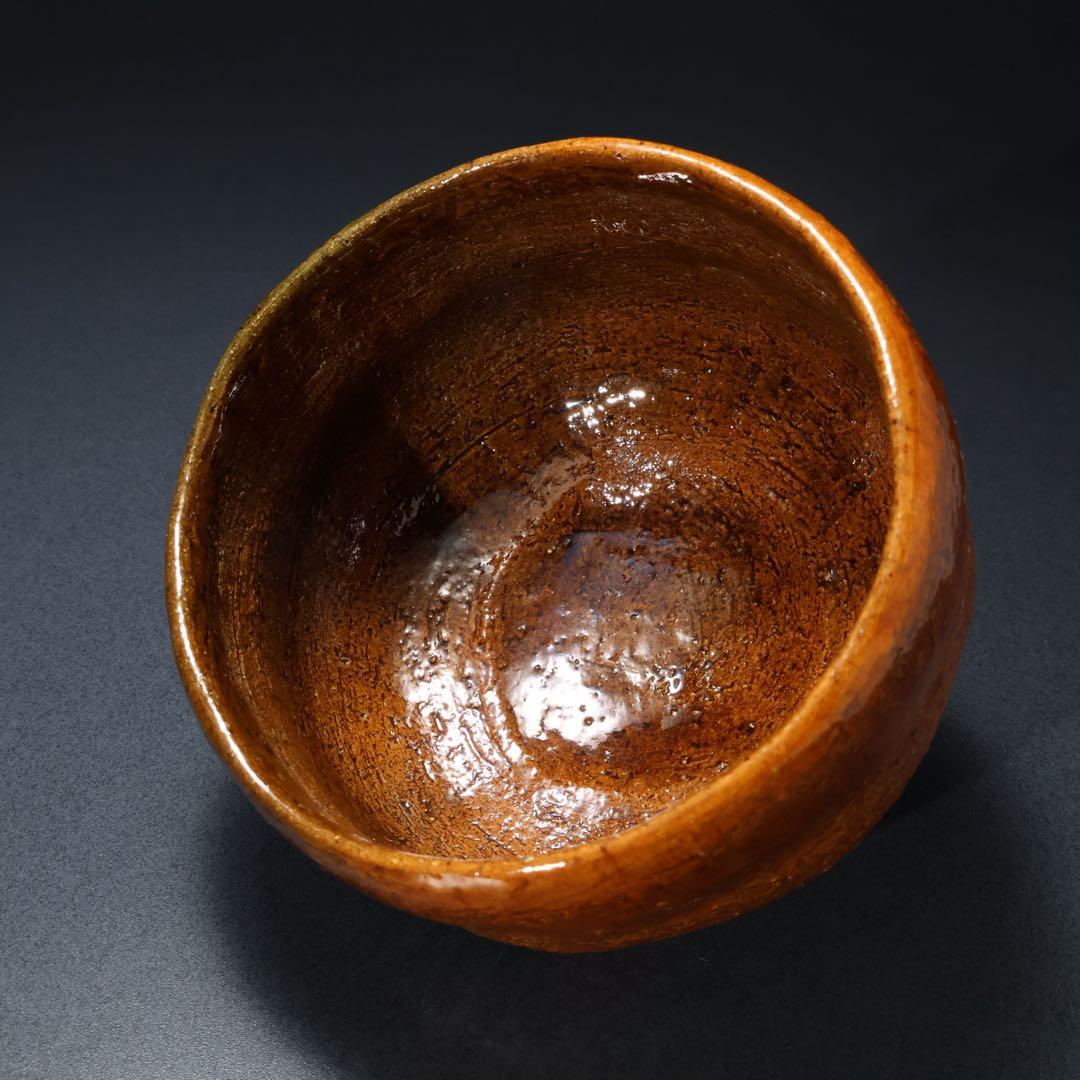
Experience Authentic Japan Art with this Ohi Yaki Tea Bowl. This Ame Yu Glaze Chawan serves as a Kanazawa Raku Pottery vessel and Tenth Generation Master work, hand-shaped in the lineage that has continued without interruption since 1666. Held in the palm, it carries the warmth of low-fired earthenware and the quiet weight of three and a half centuries of Maeda-clan patronage. A signed paulownia tomobako and original tomonuno accompany the bowl, marking it as a documented piece by Ohi Toshirō X (1927–2023), the tenth-generation head of the Ohi family kiln.
🔹 [ BASIC DETAILS ]
• Artist: Ohi Toshirō X (大樋年郎, 1927–2023), 10th-generation head of the Ohi family kiln
• Technique: Ame-yu (amber-lead) glaze, hand-shaped raku-style, low-temperature reduction firing
• Era: Late Shōwa to Heisei period (estimated 1990s–2000s, signed)
• Origin: Kanazawa, Ishikawa Prefecture, Japan
• Dimensions: Diameter approx. 11.5 cm × Height approx. 8.5 cm
• Box: Original signed paulownia tomobako (kiribako) with tomonuno cloth wrap
• Mark: Incised kiln seal "Toshi" (年) on the foot, beside the kōdai
• Condition: Excellent — no chips, cracks, or repairs; minimal handling wear consistent with careful storage
🔹 [ CULTURAL & ARTISTIC INSIGHT ]
The Ohi kiln (大樋焼) traces its founding to 1666, when the fifth lord of the Kaga domain, Maeda Tsunanori, summoned the Kyoto tea master Senso Sōshitsu (founder of the Urasenke school) to Kanazawa and, with him, the Raku-trained potter Chōzaemon — a disciple of the fourth-generation Raku Ichinyū. Chōzaemon settled in the village of Ohi, just outside the castle town, and there established a kiln whose sole purpose was to serve the tea ceremony of the Kaga court. From that single commission grew a lineage that has now reached its eleventh generation, never moving from Kanazawa, never industrializing, never abandoning the hand.
Ohi Toshirō X stood at the center of this lineage for more than half a century. Recognized as a Person of Cultural Merit by the Japanese government and decorated with the Order of the Sacred Treasure, he carried the family kiln through the postwar decades while quietly expanding its vocabulary — exhibiting at the Nitten, lecturing internationally, and shaping bowls for tea masters of the Urasenke school in an unbroken continuation of the founding commission. His work is held by the National Museum of Modern Art (Tokyo) and the Ishikawa Prefectural Museum of Art, among others.
The amber surface holds the room's light like resin. Where the glaze pools at the foot, it deepens into the green of forest moss after rain — a quiet conversation between iron and fire.
🔹 [ DEEP-DIVE COMMENTARY ]
The Ohi lineage occupies a singular position in Japanese ceramics. Unlike Raku-yaki in Kyoto, which became a closed family tradition serving the three Sen schools of tea, Ohi-yaki was, from its first day, a regional branch — Raku technique transplanted three hundred kilometres north, to the snow country of Kaga. The clay changed. The kiln changed. The light changed. What remained was the principle: each bowl is shaped entirely by hand, without a wheel, then trimmed with a bamboo spatula and fired at low temperature so that the vessel keeps the memory of the maker's pressure.
The ame-yu (飴釉) glaze is the signature of the house. Its name means "candy glaze," and its colour ranges from honey-amber to deep tortoiseshell-brown depending on the thickness of application and the atmosphere of the kiln. The base is a lead-flux glaze coloured by iron oxide; during reduction firing, the iron partially reverts and the surface develops the warm transparency that has defined Ohi ware for three and a half centuries. On this bowl, the glaze breaks unevenly across the upper wall, allowing a deep mossy green to emerge where the iron has settled most heavily — a contrast prized by tea practitioners as a sign of a successful firing.
The form itself is hand-built, not thrown. The wall thickness varies slightly under the fingers; the rim rises and falls in a gentle, asymmetrical curve; the foot is small, deliberately cut, with the unglazed clay showing the rust-orange of Kanazawa earth. This refusal of the wheel is not a limitation but a discipline. Each bowl is therefore unrepeatable, and each carries the particular weight and balance the potter gave it at the moment of shaping.
Within the Urasenke tradition, Ohi bowls are valued for winter tea — the low-fired earthenware retains heat gently and feels warm in the hand, unlike high-fired stoneware which can feel cool even when full of hot tea. Toshirō X's bowls, in particular, are sought for chakai held in the months around the new year, when the amber glaze echoes the colour of early morning light through shōji paper.
His death in 2023 closed the tenth chapter of the kiln. The eleventh generation, Ohi Toshio (his son), continues the lineage today, but pieces by the tenth — fully signed, fully boxed, in fine condition — are now finite. This bowl is one of them.
🔹 [ 日本語解説 ]
【基本情報】
・作家: 大樋年郎(10代大樋長左衛門, 1927–2023)
・技法: 飴釉、手捏ね(ろくろ不使用)、低火度還元焼成
・時代: 昭和後期〜平成期(1990年代〜2000年代頃と推定、共箱署名あり)
・産地: 石川県金沢市
・寸法: 直径約11.5cm × 高さ約8.5cm
・付属: 共箱(桐箱・署名入り)、共布
・銘: 高台脇に「年」窯印
・状態: 良好。欠け・割れ・直しなし。丁寧な保管による経年のみ
【文化的・芸術的背景】
大樋焼は寛文6年(1666)、加賀藩五代藩主・前田綱紀が裏千家初代・仙叟宗室を金沢に招いた折、同行した楽家四代一入の弟子・長左衛門が金沢郊外の大樋村に窯を開いたことに始まる。以来三百五十年余、加賀の地を一度も離れることなく、十一代にわたって手捏ねの伝統を守り続けてきた。
大樋年郎(10代)は、文化功労者・旭日中綬章受章。日展で活躍する一方、裏千家の茶人のために茶碗を作り続け、創業時の使命を半世紀以上にわたり静かに継承した。東京国立近代美術館、石川県立美術館などに作品が収蔵されている。
【深掘り解説】
大樋焼は京都の楽焼とは異なり、加賀という地方に「移植された楽」である。土が変わり、窯が変わり、光が変わったが、轆轤を使わず手で捏ね、竹箆で削り、低火度で焼くという原理だけは変わらなかった。各碗は作者の指圧の記憶を保ち、再現不可能な姿を持つ。
飴釉は大樋家の象徴である。鉄分を含む鉛釉が還元焼成によって飴色から濃褐色まで変化し、この碗では上部に深いモスグリーンが現れている──鉄が厚く沈んだ部分に出る、よい焼けの証である。
低火度のため熱を柔らかく保ち、冬季の茶会で特に重用される。年郎10代の作品はとりわけ新年前後の茶事に選ばれてきた。2023年の逝去により10代の時代は閉じ、現在は11代年雄が窯を継いでいる。
🔹 [ SHIPPING & PACKAGING ]
• Dispatch: Within 1-6 business days
• Carrier: Japan Post EMS / UPS (with tracking)
• Packaging: Carefully wrapped with protective materials
🔹 [ BASIC DETAILS ]
• Artist: Ohi Toshirō X (大樋年郎, 1927–2023), 10th-generation head of the Ohi family kiln
• Technique: Ame-yu (amber-lead) glaze, hand-shaped raku-style, low-temperature reduction firing
• Era: Late Shōwa to Heisei period (estimated 1990s–2000s, signed)
• Origin: Kanazawa, Ishikawa Prefecture, Japan
• Dimensions: Diameter approx. 11.5 cm × Height approx. 8.5 cm
• Box: Original signed paulownia tomobako (kiribako) with tomonuno cloth wrap
• Mark: Incised kiln seal "Toshi" (年) on the foot, beside the kōdai
• Condition: Excellent — no chips, cracks, or repairs; minimal handling wear consistent with careful storage
🔹 [ CULTURAL & ARTISTIC INSIGHT ]
The Ohi kiln (大樋焼) traces its founding to 1666, when the fifth lord of the Kaga domain, Maeda Tsunanori, summoned the Kyoto tea master Senso Sōshitsu (founder of the Urasenke school) to Kanazawa and, with him, the Raku-trained potter Chōzaemon — a disciple of the fourth-generation Raku Ichinyū. Chōzaemon settled in the village of Ohi, just outside the castle town, and there established a kiln whose sole purpose was to serve the tea ceremony of the Kaga court. From that single commission grew a lineage that has now reached its eleventh generation, never moving from Kanazawa, never industrializing, never abandoning the hand.
Ohi Toshirō X stood at the center of this lineage for more than half a century. Recognized as a Person of Cultural Merit by the Japanese government and decorated with the Order of the Sacred Treasure, he carried the family kiln through the postwar decades while quietly expanding its vocabulary — exhibiting at the Nitten, lecturing internationally, and shaping bowls for tea masters of the Urasenke school in an unbroken continuation of the founding commission. His work is held by the National Museum of Modern Art (Tokyo) and the Ishikawa Prefectural Museum of Art, among others.
The amber surface holds the room's light like resin. Where the glaze pools at the foot, it deepens into the green of forest moss after rain — a quiet conversation between iron and fire.
🔹 [ DEEP-DIVE COMMENTARY ]
The Ohi lineage occupies a singular position in Japanese ceramics. Unlike Raku-yaki in Kyoto, which became a closed family tradition serving the three Sen schools of tea, Ohi-yaki was, from its first day, a regional branch — Raku technique transplanted three hundred kilometres north, to the snow country of Kaga. The clay changed. The kiln changed. The light changed. What remained was the principle: each bowl is shaped entirely by hand, without a wheel, then trimmed with a bamboo spatula and fired at low temperature so that the vessel keeps the memory of the maker's pressure.
The ame-yu (飴釉) glaze is the signature of the house. Its name means "candy glaze," and its colour ranges from honey-amber to deep tortoiseshell-brown depending on the thickness of application and the atmosphere of the kiln. The base is a lead-flux glaze coloured by iron oxide; during reduction firing, the iron partially reverts and the surface develops the warm transparency that has defined Ohi ware for three and a half centuries. On this bowl, the glaze breaks unevenly across the upper wall, allowing a deep mossy green to emerge where the iron has settled most heavily — a contrast prized by tea practitioners as a sign of a successful firing.
The form itself is hand-built, not thrown. The wall thickness varies slightly under the fingers; the rim rises and falls in a gentle, asymmetrical curve; the foot is small, deliberately cut, with the unglazed clay showing the rust-orange of Kanazawa earth. This refusal of the wheel is not a limitation but a discipline. Each bowl is therefore unrepeatable, and each carries the particular weight and balance the potter gave it at the moment of shaping.
Within the Urasenke tradition, Ohi bowls are valued for winter tea — the low-fired earthenware retains heat gently and feels warm in the hand, unlike high-fired stoneware which can feel cool even when full of hot tea. Toshirō X's bowls, in particular, are sought for chakai held in the months around the new year, when the amber glaze echoes the colour of early morning light through shōji paper.
His death in 2023 closed the tenth chapter of the kiln. The eleventh generation, Ohi Toshio (his son), continues the lineage today, but pieces by the tenth — fully signed, fully boxed, in fine condition — are now finite. This bowl is one of them.
🔹 [ 日本語解説 ]
【基本情報】
・作家: 大樋年郎(10代大樋長左衛門, 1927–2023)
・技法: 飴釉、手捏ね(ろくろ不使用)、低火度還元焼成
・時代: 昭和後期〜平成期(1990年代〜2000年代頃と推定、共箱署名あり)
・産地: 石川県金沢市
・寸法: 直径約11.5cm × 高さ約8.5cm
・付属: 共箱(桐箱・署名入り)、共布
・銘: 高台脇に「年」窯印
・状態: 良好。欠け・割れ・直しなし。丁寧な保管による経年のみ
【文化的・芸術的背景】
大樋焼は寛文6年(1666)、加賀藩五代藩主・前田綱紀が裏千家初代・仙叟宗室を金沢に招いた折、同行した楽家四代一入の弟子・長左衛門が金沢郊外の大樋村に窯を開いたことに始まる。以来三百五十年余、加賀の地を一度も離れることなく、十一代にわたって手捏ねの伝統を守り続けてきた。
大樋年郎(10代)は、文化功労者・旭日中綬章受章。日展で活躍する一方、裏千家の茶人のために茶碗を作り続け、創業時の使命を半世紀以上にわたり静かに継承した。東京国立近代美術館、石川県立美術館などに作品が収蔵されている。
【深掘り解説】
大樋焼は京都の楽焼とは異なり、加賀という地方に「移植された楽」である。土が変わり、窯が変わり、光が変わったが、轆轤を使わず手で捏ね、竹箆で削り、低火度で焼くという原理だけは変わらなかった。各碗は作者の指圧の記憶を保ち、再現不可能な姿を持つ。
飴釉は大樋家の象徴である。鉄分を含む鉛釉が還元焼成によって飴色から濃褐色まで変化し、この碗では上部に深いモスグリーンが現れている──鉄が厚く沈んだ部分に出る、よい焼けの証である。
低火度のため熱を柔らかく保ち、冬季の茶会で特に重用される。年郎10代の作品はとりわけ新年前後の茶事に選ばれてきた。2023年の逝去により10代の時代は閉じ、現在は11代年雄が窯を継いでいる。
🔹 [ SHIPPING & PACKAGING ]
• Dispatch: Within 1-6 business days
• Carrier: Japan Post EMS / UPS (with tracking)
• Packaging: Carefully wrapped with protective materials
Quantity
Couldn't load pickup availability
Low stock: 1 left
View full details