1
/
of
11
Ohi Toshiro Black Tea Bowl Kuro Chawan 10th Ohi Chozaemon Early Work Kanazawa
Ohi Toshiro Black Tea Bowl Kuro Chawan 10th Ohi Chozaemon Early Work Kanazawa
Regular price
Dhs. 3,780.00 AED
Regular price
Sale price
Dhs. 3,780.00 AED
Taxes included.
Shipping calculated at checkout.
A black tea bowl by Ohi Toshiro — the pre-succession name of the 10th Ohi Chozaemon, one of the most consequential figures in modern Japanese tea ceramics. Created during his formative years before assuming the hereditary title, this bowl carries the concentrated intensity of an artist approaching the full weight of a 350-year lineage. Deep black glaze saturates the upper body with volcanic presence, yielding to matte grey stoneware below. Kanazawa’s singular Raku tradition made visible.
━━━━━━━━━━━━━━━━━━━━
🔹 [ BASIC DETAILS ]
• Artist: Ohi Toshiro (大樋年朗) — later succeeded as 10th Ohi Chozaemon (十代大樋長左衛門)
• Technique: Ohi-yaki black glaze (大樋黒釉) — hand-built, Raku-lineage firing
• Era: Showa–Heisei period (early career work)
• Origin: Kanazawa, Ishikawa Prefecture, Japan
• Dimensions: 12.0 cm × 8.0 cm (4.7" dia × 3.1" h)
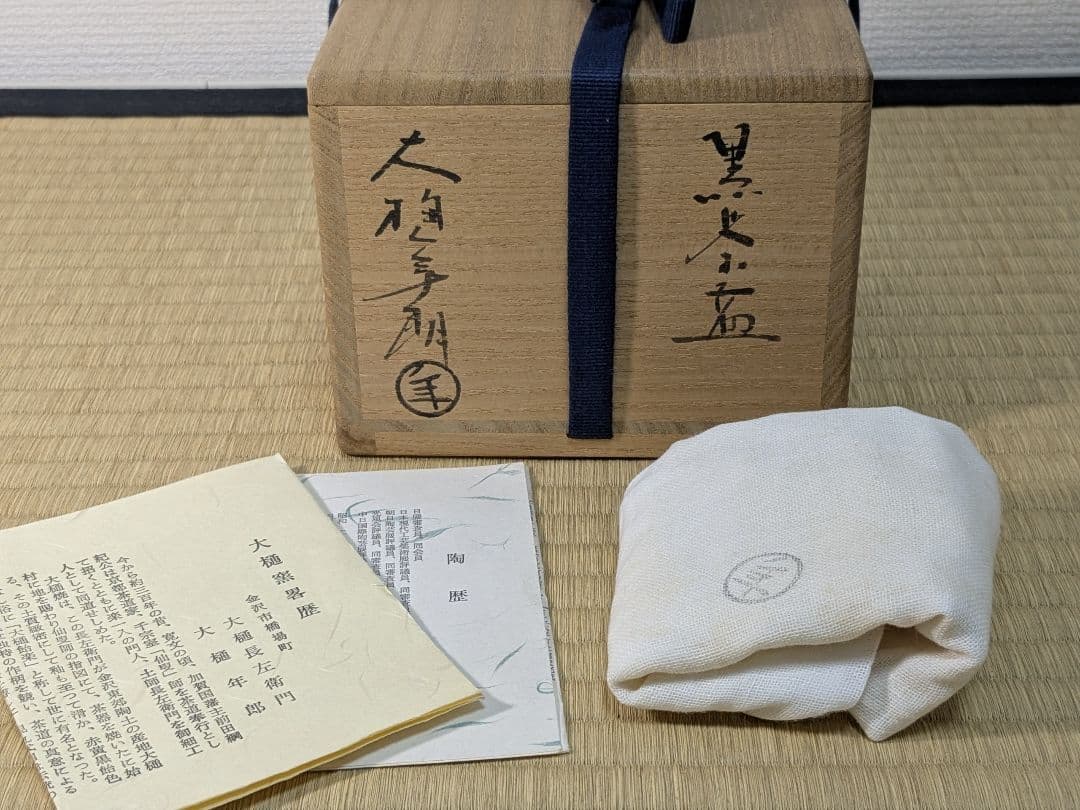
• Box: Tomobako signed "黒茶碗 大樋年朗" with seal
• Includes: Cloth wrapper with kiln seal, artist CV document
• Condition: Excellent — complete, no chips, cracks, or repairs
━━━━━━━━━━━━━━━━━━━━
🔹 [ CULTURAL & ARTISTIC INSIGHT ]
The Ohi ceramic lineage is unlike any other in Japan. It began in 1666 when Chojiro’s descendant in the Raku tradition, Ohi Chozaemon I, accompanied the Maeda lord from Kyoto to Kaga Province. From that moment, Ohi ware became the tea ceramic of the Maeda domain — a parallel Raku tradition that developed independently for over three and a half centuries in the cultural hothouse of Kanazawa.
This black tea bowl was made by Ohi Toshiro during his years before succeeding as the 10th-generation head. The period is significant: these early works often reveal an artist working with particular urgency, the weight of succession already present but the title not yet conferred. The freedom and intensity of this transitional moment are palpable in the bowl’s form — broad, grounded, with a physicality that speaks to direct engagement between hand and clay.
The black glaze is applied with characteristic Ohi density. The upper half of the bowl is saturated in deep, glossy black with a pronounced texture — a surface alive with volcanic pitting and subtle undulation that catches light at every angle. Below the glaze line, the exposed clay body reveals a matte grey surface, rough and mineral, the earth from which the darkness emerged.
*“Before the name, the hands already knew. The bowl carries what the title would later confirm.”*
━━━━━━━━━━━━━━━━━━━━
🔹 [ DEEP-DIVE COMMENTARY ]
**Ohi Ware and the Maeda Legacy**: Kanazawa under the Maeda clan was one of the wealthiest domains in Edo-period Japan, and its patronage of the arts rivaled Kyoto itself. The Ohi kiln occupied a unique position within this cultural ecosystem — the designated tea ceramic workshop for the domain’s official tea ceremonies. This institutional role shaped Ohi ware’s character: powerful, substantial forms designed for the formal tea gatherings of a warrior aristocracy. This bowl inherits that gravity.
**Glaze Character**: Ohi black glaze differs from Kyoto Raku black in both chemistry and temperament. Where Kyoto Raku pursues a smooth, mirror-like black, Ohi’s interpretation allows for greater textural expression. The surface of this bowl exhibits a lava-like quality — fine pitting, cratering, and tonal variation from obsidian black to dark amber where the glaze thins over ridges. This is not imperfection but a deliberate engagement with the kiln’s transformative energy.
**The Pre-Succession Period**: Works signed “Ohi Toshiro” rather than “Ohi Chozaemon” hold a particular fascination for collectors and scholars. They represent the artist at a moment of maximum creative tension — deeply schooled in the family tradition yet not yet formally bound to it. The bowl’s confident proportions and bold glaze application suggest an artist already in possession of mastery, working with the concentrated energy that precedes a life’s most consequential threshold.
**Foot and Interior**: The underside shows a carefully articulated foot ring with an impressed seal, the base fully glazed in the same black — a characteristic of Ohi ware that distinguishes it from many other Raku traditions. The interior is uniformly glazed to a deep, lustrous black, creating a dark pool that will beautifully offset the green of whisked matcha. The bowl’s weight and wall thickness communicate substantiality in the hands, the kind of presence that transforms the act of tea preparation into something approaching ritual.
━━━━━━━━━━━━━━━━━━━━
🔹 [ 日本語解説 ]
【基本情報】
• 作家:大樋年朗(後の十代大樋長左衛門)
• 技法:大樋黒釉(手捻り・楽系焼成)
• 時代:昭和〜平成(若作・襲名前)
• 産地:金沢、石川県
• 寸法:口径約12.0cm × 高さ約8.0cm
• 付属:共箱(「黒茶碗 大樋年朗」箱書・印)、共布(窯印入)、陶歴
• 状態:完品 — 傷・ヒビ・直しなし
【解説】
十代大樋長左衛門が襲名前、大樋年朗として作陶していた時期の黒茶碗。上半にたっぷりとかかった漆黒の釉薬は火山的な質感を持ち、下半の灰色の素地との対比が力強い存在感を生んでいる。
大樋焼は寛文六年(1666年)、楽家の系譜に連なる初代大樋長左衛門が前田家に従い京都から加賀に移ったことに始まる。以来三百五十余年、金沢の地で独自の発展を遂げた楽の分流である。
襲名前の「年朗」銘の作品は、家統の重みを既に背負いながらも自由な造形が許された時期の作として、特有の緊張感と集中力を実えている。手に取ればその重厚な壁と確かな重量感が、武家茶道の気概を静かに伝える。黒の深い見込に抜茶を点てれば、緑の色が漆黒に浮かぶ。その景色を知るものだけが、この碗の真価を理解する。
━━━━━━━━━━━━━━━━━━━━
🔹 [ SHIPPING & PACKAGING ]
• Dispatch: Within 1-6 business days
• Carrier: Japan Post EMS / UPS (with tracking)
• Packaging: Carefully wrapped with protective materials
*Three hundred and fifty years between Kyoto and Kanazawa. The distance is measured not in miles but in the darkness of the glaze.*
━━━━━━━━━━━━━━━━━━━━
🔹 [ BASIC DETAILS ]
• Artist: Ohi Toshiro (大樋年朗) — later succeeded as 10th Ohi Chozaemon (十代大樋長左衛門)
• Technique: Ohi-yaki black glaze (大樋黒釉) — hand-built, Raku-lineage firing
• Era: Showa–Heisei period (early career work)
• Origin: Kanazawa, Ishikawa Prefecture, Japan
• Dimensions: 12.0 cm × 8.0 cm (4.7" dia × 3.1" h)
• Box: Tomobako signed "黒茶碗 大樋年朗" with seal
• Includes: Cloth wrapper with kiln seal, artist CV document
• Condition: Excellent — complete, no chips, cracks, or repairs
━━━━━━━━━━━━━━━━━━━━
🔹 [ CULTURAL & ARTISTIC INSIGHT ]
The Ohi ceramic lineage is unlike any other in Japan. It began in 1666 when Chojiro’s descendant in the Raku tradition, Ohi Chozaemon I, accompanied the Maeda lord from Kyoto to Kaga Province. From that moment, Ohi ware became the tea ceramic of the Maeda domain — a parallel Raku tradition that developed independently for over three and a half centuries in the cultural hothouse of Kanazawa.
This black tea bowl was made by Ohi Toshiro during his years before succeeding as the 10th-generation head. The period is significant: these early works often reveal an artist working with particular urgency, the weight of succession already present but the title not yet conferred. The freedom and intensity of this transitional moment are palpable in the bowl’s form — broad, grounded, with a physicality that speaks to direct engagement between hand and clay.
The black glaze is applied with characteristic Ohi density. The upper half of the bowl is saturated in deep, glossy black with a pronounced texture — a surface alive with volcanic pitting and subtle undulation that catches light at every angle. Below the glaze line, the exposed clay body reveals a matte grey surface, rough and mineral, the earth from which the darkness emerged.
*“Before the name, the hands already knew. The bowl carries what the title would later confirm.”*
━━━━━━━━━━━━━━━━━━━━
🔹 [ DEEP-DIVE COMMENTARY ]
**Ohi Ware and the Maeda Legacy**: Kanazawa under the Maeda clan was one of the wealthiest domains in Edo-period Japan, and its patronage of the arts rivaled Kyoto itself. The Ohi kiln occupied a unique position within this cultural ecosystem — the designated tea ceramic workshop for the domain’s official tea ceremonies. This institutional role shaped Ohi ware’s character: powerful, substantial forms designed for the formal tea gatherings of a warrior aristocracy. This bowl inherits that gravity.
**Glaze Character**: Ohi black glaze differs from Kyoto Raku black in both chemistry and temperament. Where Kyoto Raku pursues a smooth, mirror-like black, Ohi’s interpretation allows for greater textural expression. The surface of this bowl exhibits a lava-like quality — fine pitting, cratering, and tonal variation from obsidian black to dark amber where the glaze thins over ridges. This is not imperfection but a deliberate engagement with the kiln’s transformative energy.
**The Pre-Succession Period**: Works signed “Ohi Toshiro” rather than “Ohi Chozaemon” hold a particular fascination for collectors and scholars. They represent the artist at a moment of maximum creative tension — deeply schooled in the family tradition yet not yet formally bound to it. The bowl’s confident proportions and bold glaze application suggest an artist already in possession of mastery, working with the concentrated energy that precedes a life’s most consequential threshold.
**Foot and Interior**: The underside shows a carefully articulated foot ring with an impressed seal, the base fully glazed in the same black — a characteristic of Ohi ware that distinguishes it from many other Raku traditions. The interior is uniformly glazed to a deep, lustrous black, creating a dark pool that will beautifully offset the green of whisked matcha. The bowl’s weight and wall thickness communicate substantiality in the hands, the kind of presence that transforms the act of tea preparation into something approaching ritual.
━━━━━━━━━━━━━━━━━━━━
🔹 [ 日本語解説 ]
【基本情報】
• 作家:大樋年朗(後の十代大樋長左衛門)
• 技法:大樋黒釉(手捻り・楽系焼成)
• 時代:昭和〜平成(若作・襲名前)
• 産地:金沢、石川県
• 寸法:口径約12.0cm × 高さ約8.0cm
• 付属:共箱(「黒茶碗 大樋年朗」箱書・印)、共布(窯印入)、陶歴
• 状態:完品 — 傷・ヒビ・直しなし
【解説】
十代大樋長左衛門が襲名前、大樋年朗として作陶していた時期の黒茶碗。上半にたっぷりとかかった漆黒の釉薬は火山的な質感を持ち、下半の灰色の素地との対比が力強い存在感を生んでいる。
大樋焼は寛文六年(1666年)、楽家の系譜に連なる初代大樋長左衛門が前田家に従い京都から加賀に移ったことに始まる。以来三百五十余年、金沢の地で独自の発展を遂げた楽の分流である。
襲名前の「年朗」銘の作品は、家統の重みを既に背負いながらも自由な造形が許された時期の作として、特有の緊張感と集中力を実えている。手に取ればその重厚な壁と確かな重量感が、武家茶道の気概を静かに伝える。黒の深い見込に抜茶を点てれば、緑の色が漆黒に浮かぶ。その景色を知るものだけが、この碗の真価を理解する。
━━━━━━━━━━━━━━━━━━━━
🔹 [ SHIPPING & PACKAGING ]
• Dispatch: Within 1-6 business days
• Carrier: Japan Post EMS / UPS (with tracking)
• Packaging: Carefully wrapped with protective materials
*Three hundred and fifty years between Kyoto and Kanazawa. The distance is measured not in miles but in the darkness of the glaze.*
Quantity
Couldn't load pickup availability
Low stock: 1 left
View full details