1
/
of
10
Ogi-Karatsu Chawan by Inoue Kenji — Tenzan-gama | Ame-Yu & Iron Glaze Tea Bowl, Signed Tomobako
Ogi-Karatsu Chawan by Inoue Kenji — Tenzan-gama | Ame-Yu & Iron Glaze Tea Bowl, Signed Tomobako
Regular price
Dhs. 853.00 AED
Regular price
Sale price
Dhs. 853.00 AED
Taxes included.
Shipping calculated at checkout.
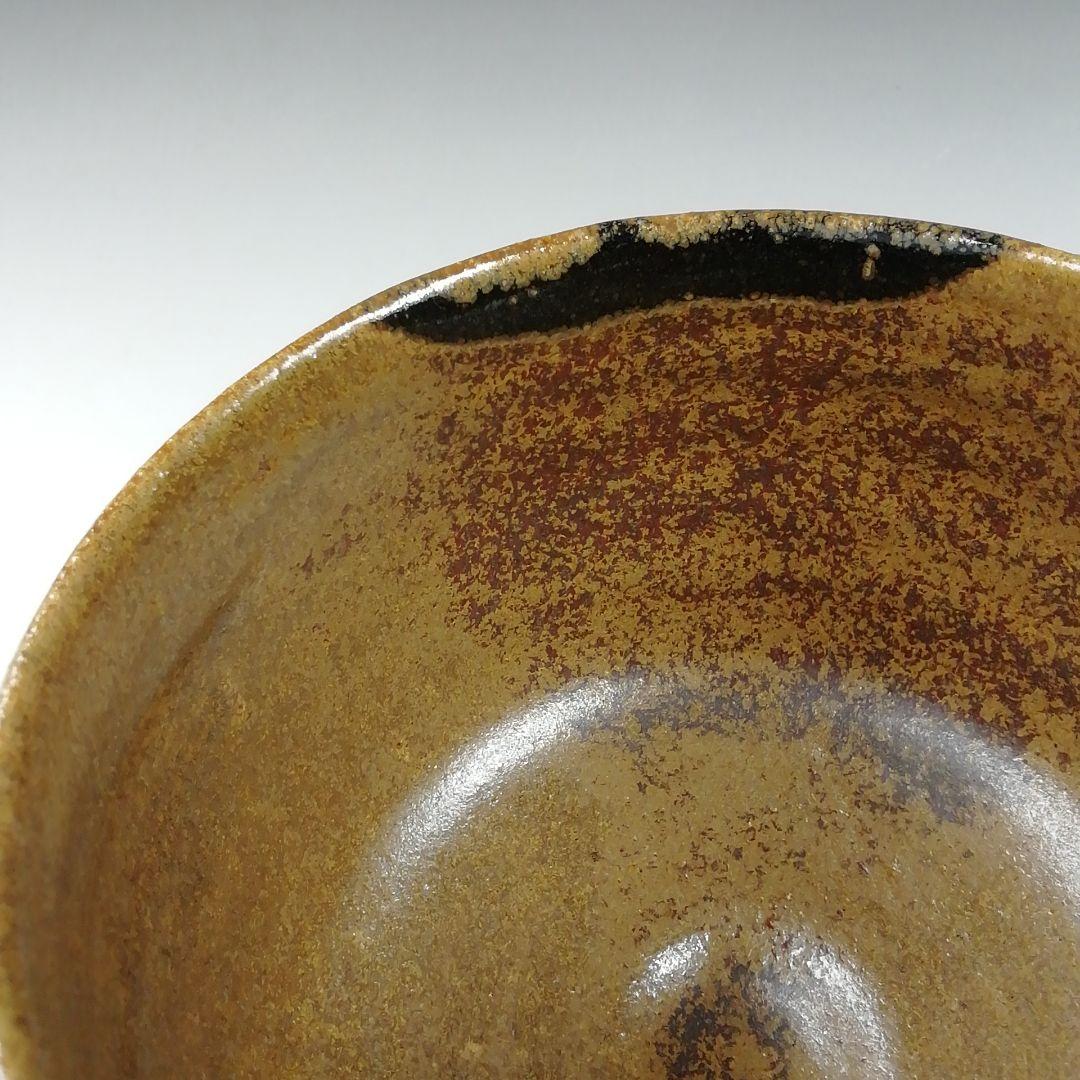
A Karatsu chawan from Tenzan-gama, Ogi — the hand of Inoue Kenji rendered in amber, iron-black, and slate. The glaze does not cover the bowl; it moves across it. Ame-yu pools and breaks into dark iron-kuro at the shoulder, then opens into cool ai-blue along the lower body. Each transition is unrepeatable. The foot is exposed stoneware — coarse, sandy, the color of the earth it came from.
The form holds the classic Karatsu sensibility: a slight waist, a rim that opens without announcing itself, a weight that settles into the hand as though it belongs there. This is a bowl made to disappear into use.
🔹 [ BASIC DETAILS ]
• Dimensions: H approx. 8.5 cm × Dia. approx. 11 cm
• Glaze: Ame-yu (amber/yellow-brown) with flowing iron-kuro and ai-glaze drips
• Clay: Coarse Karatsu stoneware, exposed foot
• Provenance: Tenzan-gama (天山窯), Ogi, Saga Prefecture
• Artist: Inoue Kenji (井上健次)
• Box: Signed paulownia tomobako, calligraphed with 茶碗 / 小城唐津焼 / 天山造 and artist seal
• Condition: Excellent — no chips, cracks, or restoration
🔹 [ CULTURAL & ARTISTIC INSIGHT ]
The old hierarchy of tea ceramics places Karatsu third — Ichi-Raku, ni-Hagi, san-Karatsu. But Rikyu's order was never a ranking of beauty; it was a sequence of understanding. Karatsu arrives last because it requires the most from its reader.
Ogi-Karatsu carries a lineage that runs back to the kilns established after Hideyoshi's campaigns on the Korean peninsula — Korean potters, Korean clay sensibilities, absorbed into Saga soil over four centuries. What remained is a particular directness: no surface decoration, no apologetic refinement. The glaze speaks because the form allows it to.
Tenzan-gama continues this dialect in Ogi. Inoue Kenji works within a tradition that does not accommodate ornament. The ame-yu and iron-kuro on this bowl are not decorative choices; they are the record of firing — temperature, atmosphere, the particular angle of flame on a given day.
🔹 [ DEEP-DIVE COMMENTARY ]
Karatsu ware entered tea ceremony through the taste of wabi practitioners who recognized in its roughness something that Kyoto refinement could not produce. The Korean inheritance — exposed foot, asymmetric form, glaze that moves rather than coats — became the physical language of a certain kind of attention. To hold a Karatsu chawan is to hold that history without being asked to display it.
This bowl was made to be used. The tomobako protects it between uses. The paulownia holds humidity steady. The seal confirms authorship without requiring it to matter to every person who lifts the bowl.
🔹 [ 日本語解説 ]
小城唐津焼・天山窯、井上健次による茶碗。飴釉が器肩から深い鉄黒へ、さらに藍青の流れへと変化してゆく。同じ景色は二度と現れない。荒目の唐津土が素地に露わで、手に取った瞬間に土の重みが伝わる。
・サイズ:高さ約8.5cm、口径約11cm
・釉薬:飴釉、鉄黒、藍釉の重なり
・土:荒目の唐津土、露胎の高台
・産地:佐賀県小城市、天山窯
・作者:井上健次
・付属:共箱(桐製)、「茶碗」「小城唐津焼」「天山造」墨書、落款
・状態:割れ・欠け・修復なし、良好
「一楽、二萩、三唐津」——茶碗の序列として伝えられるこの言葉は、優劣ではなく、理解の深さを示している。唐津は最も多くを求める器だからこそ、三番目に置かれた。
小城唐津は、豊臣秀吉の朝鮮出兵を経て渡来した陶工たちの血脈を引く。四百年の時間をかけて佐賀の土に根づいたその感覚は、飾らない直截さとして今日も生きている。天山窯・井上健次は、その方言を現代において継ぐ作家である。飴釉と鉄黒は装飾ではなく、窯の記録——温度、雰囲気、炎の角度が刻んだ一回限りの痕跡。
使うために作られた器。使わない時間は桐箱が守る。
🔹 [ SHIPPING & PACKAGING ]
• Dispatch: Within 1-6 business days
• Carrier: Japan Post EMS / UPS (with tracking)
• Packaging: Carefully wrapped with protective materials
The form holds the classic Karatsu sensibility: a slight waist, a rim that opens without announcing itself, a weight that settles into the hand as though it belongs there. This is a bowl made to disappear into use.
🔹 [ BASIC DETAILS ]
• Dimensions: H approx. 8.5 cm × Dia. approx. 11 cm
• Glaze: Ame-yu (amber/yellow-brown) with flowing iron-kuro and ai-glaze drips
• Clay: Coarse Karatsu stoneware, exposed foot
• Provenance: Tenzan-gama (天山窯), Ogi, Saga Prefecture
• Artist: Inoue Kenji (井上健次)
• Box: Signed paulownia tomobako, calligraphed with 茶碗 / 小城唐津焼 / 天山造 and artist seal
• Condition: Excellent — no chips, cracks, or restoration
🔹 [ CULTURAL & ARTISTIC INSIGHT ]
The old hierarchy of tea ceramics places Karatsu third — Ichi-Raku, ni-Hagi, san-Karatsu. But Rikyu's order was never a ranking of beauty; it was a sequence of understanding. Karatsu arrives last because it requires the most from its reader.
Ogi-Karatsu carries a lineage that runs back to the kilns established after Hideyoshi's campaigns on the Korean peninsula — Korean potters, Korean clay sensibilities, absorbed into Saga soil over four centuries. What remained is a particular directness: no surface decoration, no apologetic refinement. The glaze speaks because the form allows it to.
Tenzan-gama continues this dialect in Ogi. Inoue Kenji works within a tradition that does not accommodate ornament. The ame-yu and iron-kuro on this bowl are not decorative choices; they are the record of firing — temperature, atmosphere, the particular angle of flame on a given day.
🔹 [ DEEP-DIVE COMMENTARY ]
Karatsu ware entered tea ceremony through the taste of wabi practitioners who recognized in its roughness something that Kyoto refinement could not produce. The Korean inheritance — exposed foot, asymmetric form, glaze that moves rather than coats — became the physical language of a certain kind of attention. To hold a Karatsu chawan is to hold that history without being asked to display it.
This bowl was made to be used. The tomobako protects it between uses. The paulownia holds humidity steady. The seal confirms authorship without requiring it to matter to every person who lifts the bowl.
🔹 [ 日本語解説 ]
小城唐津焼・天山窯、井上健次による茶碗。飴釉が器肩から深い鉄黒へ、さらに藍青の流れへと変化してゆく。同じ景色は二度と現れない。荒目の唐津土が素地に露わで、手に取った瞬間に土の重みが伝わる。
・サイズ:高さ約8.5cm、口径約11cm
・釉薬:飴釉、鉄黒、藍釉の重なり
・土:荒目の唐津土、露胎の高台
・産地:佐賀県小城市、天山窯
・作者:井上健次
・付属:共箱(桐製)、「茶碗」「小城唐津焼」「天山造」墨書、落款
・状態:割れ・欠け・修復なし、良好
「一楽、二萩、三唐津」——茶碗の序列として伝えられるこの言葉は、優劣ではなく、理解の深さを示している。唐津は最も多くを求める器だからこそ、三番目に置かれた。
小城唐津は、豊臣秀吉の朝鮮出兵を経て渡来した陶工たちの血脈を引く。四百年の時間をかけて佐賀の土に根づいたその感覚は、飾らない直截さとして今日も生きている。天山窯・井上健次は、その方言を現代において継ぐ作家である。飴釉と鉄黒は装飾ではなく、窯の記録——温度、雰囲気、炎の角度が刻んだ一回限りの痕跡。
使うために作られた器。使わない時間は桐箱が守る。
🔹 [ SHIPPING & PACKAGING ]
• Dispatch: Within 1-6 business days
• Carrier: Japan Post EMS / UPS (with tracking)
• Packaging: Carefully wrapped with protective materials
Quantity
Couldn't load pickup availability
Low stock: 1 left
View full details