1
/
of
5
Noh Flute Incense Container Lacquer Kogo by Dojo Munehiro
Noh Flute Incense Container Lacquer Kogo by Dojo Munehiro
Regular price
Dhs. 1,065.00 AED
Regular price
Sale price
Dhs. 1,065.00 AED
Taxes included.
Shipping calculated at checkout.
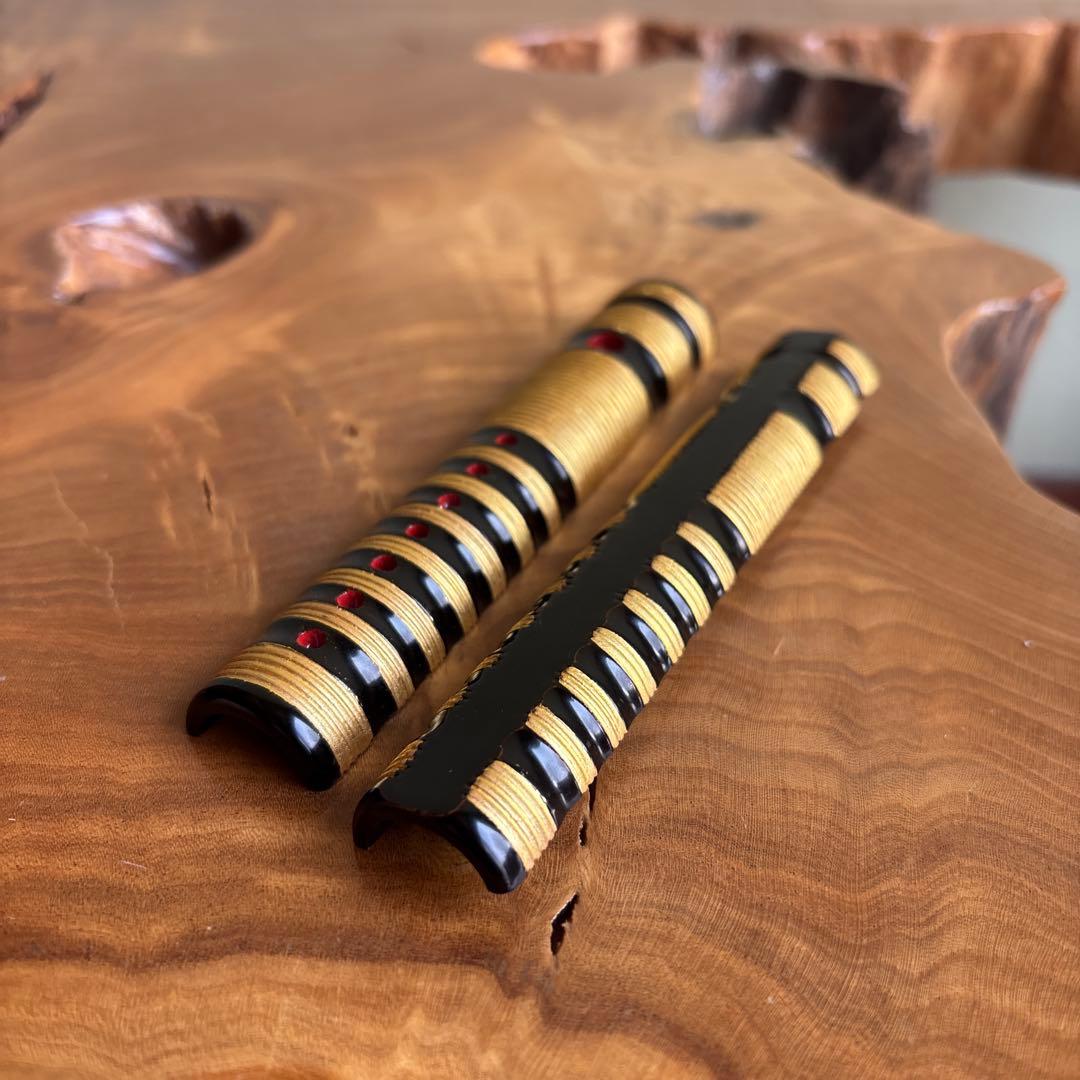
Experience Authentic Japan Art with this Noh Flute Incense Container. This Nōkan Shape Lacquer Kogo serves as a Japanese Tea Ceremony Tool and Noh Theatre Art Object, featuring Bamboo Lacquer Craftsmanship and Alternating Band Lacquerwork—a must-have for any Wabi Tea Collector. This Signed Artist Kogo presents a one-of-a-kind Japanese Art Gift where performing arts and tea ceremony meet in a single object of presence.
🔹 [ Basic Details ]
• Artist: Dōjō Munehiro (道場宗廣)
• Technique: Lacquerwork on bamboo replicating a noh flute (nōkan) — alternating bands of natural bamboo and black urushi with red accent dots
• Era: 20th–21st century
• Origin: Japan
• Dimensions: Length approx. 13.3 cm, Height (diameter) approx. 1.5 cm
• Box: Shared wooden box (共箱) inscribed "能管香合"
• Condition: No chips or cracks; lacquer bands and red dots intact
🔹 [ Cultural & Artistic Insight ]
The nōkan (能管) is the distinctive transverse flute of Noh theatre — its haunting, microtonal voice is unlike any other instrument in the Japanese classical tradition. Dōjō Munehiro has translated its visual presence into a functional kogo with extraordinary fidelity: the alternating bands of natural bamboo skin and glossy black lacquer, the small red dots marking the position of finger holes — every detail is present, including the open mouth of the flute rendered as the container's opening.
To select this kogo for a tea gathering is to invoke the world of Noh — its masks, its stillness, its revelation of the spiritual through gesture and sound. The flute becomes a vessel; the vessel holds fragrance; fragrance fills the space between host and guest.
"The flute rests. The fragrance rises. What the musician held, now the tea room holds."
🔹 [ Deep-Dive Commentary ]
Kogo in the shape of musical instruments occupy a specific niche within the Japanese tea ceremony object world. They allow the host to extend the seasonal or thematic conversation of a gathering beyond ceramics into the performing arts. A nōkan-form kogo carries the weight of Noh's 600-year tradition — its association with aristocratic culture, Zen philosophy, and the aesthetics of yūgen (subtle grace).
Dōjō Munehiro's execution is technically demanding. The nōkan is a cylindrical instrument with precise proportions; to replicate it as a container while maintaining visual authenticity requires both knowledge of the instrument and mastery of lacquer technique. The alternating matte-bamboo and gloss-black lacquer bands are not merely decorative — they follow the actual binding pattern of a real nōkan, where silk thread wrapping separates bamboo sections.
The red dots — finger hole markers — are applied as raised lacquer points, giving the surface a subtle tactile quality that rewards close inspection. The artist's seal on the box confirms this as a documented work, not a craft reproduction.
For collectors at the intersection of tea ceremony and classical Japanese performing arts, this kogo represents a convergence that seldom appears in the market. It functions fully as a tea utensil while embodying a reference to one of Japan's most intellectually demanding art forms.
【日本語解説】
🔹 [ 基本情報 ]
• 作家:道場宗廣
• 技法:竹・漆による能管形香合制作(黒漆帯・赤点の精密な再現)
• 年代:20〜21世紀
• 産地:日本
• 寸法:長さ約13.3cm、直径(高さ)約1.5cm
• 箱:共箱(「能管香合」識書)
• 状態:ヒビ・欠けなし。漆帯・赤点ともに良好
🔹 [ 文化・芸術的解説 ]
能管は能楽で用いられる横笛で、その音色は他に類を見ない哀愁と霊性を持ちます。道場宗廣はその視覚的形姿を忠実に香合として再現し、指孔の位置を赤い点漆で表すという細部へのこだわりが際立ちます。茶席においてこの香合を置くことは、能の世界観——幽玄、静寂、精神の顕現——を空間に呼び込むことにほかなりません。
🔹 [ 深掘り解説 ]
楽器形の香合は茶道具の中でも特別な位置を占めます。亭主は道具を通じて物語を語り、来客との対話を深めます。600年の歴史を持つ能楽への参照は、茶と古典芸能の精神的連続性を示すものであり、知性と美意識を併せ持つコレクターにとって格別の一品です。
🔹 [ SHIPPING & PACKAGING ]
• Dispatch: Within 1-6 business days
• Carrier: Japan Post EMS / UPS (with tracking)
• Packaging: Carefully wrapped with protective materials
🔹 [ Basic Details ]
• Artist: Dōjō Munehiro (道場宗廣)
• Technique: Lacquerwork on bamboo replicating a noh flute (nōkan) — alternating bands of natural bamboo and black urushi with red accent dots
• Era: 20th–21st century
• Origin: Japan
• Dimensions: Length approx. 13.3 cm, Height (diameter) approx. 1.5 cm
• Box: Shared wooden box (共箱) inscribed "能管香合"
• Condition: No chips or cracks; lacquer bands and red dots intact
🔹 [ Cultural & Artistic Insight ]
The nōkan (能管) is the distinctive transverse flute of Noh theatre — its haunting, microtonal voice is unlike any other instrument in the Japanese classical tradition. Dōjō Munehiro has translated its visual presence into a functional kogo with extraordinary fidelity: the alternating bands of natural bamboo skin and glossy black lacquer, the small red dots marking the position of finger holes — every detail is present, including the open mouth of the flute rendered as the container's opening.
To select this kogo for a tea gathering is to invoke the world of Noh — its masks, its stillness, its revelation of the spiritual through gesture and sound. The flute becomes a vessel; the vessel holds fragrance; fragrance fills the space between host and guest.
"The flute rests. The fragrance rises. What the musician held, now the tea room holds."
🔹 [ Deep-Dive Commentary ]
Kogo in the shape of musical instruments occupy a specific niche within the Japanese tea ceremony object world. They allow the host to extend the seasonal or thematic conversation of a gathering beyond ceramics into the performing arts. A nōkan-form kogo carries the weight of Noh's 600-year tradition — its association with aristocratic culture, Zen philosophy, and the aesthetics of yūgen (subtle grace).
Dōjō Munehiro's execution is technically demanding. The nōkan is a cylindrical instrument with precise proportions; to replicate it as a container while maintaining visual authenticity requires both knowledge of the instrument and mastery of lacquer technique. The alternating matte-bamboo and gloss-black lacquer bands are not merely decorative — they follow the actual binding pattern of a real nōkan, where silk thread wrapping separates bamboo sections.
The red dots — finger hole markers — are applied as raised lacquer points, giving the surface a subtle tactile quality that rewards close inspection. The artist's seal on the box confirms this as a documented work, not a craft reproduction.
For collectors at the intersection of tea ceremony and classical Japanese performing arts, this kogo represents a convergence that seldom appears in the market. It functions fully as a tea utensil while embodying a reference to one of Japan's most intellectually demanding art forms.
【日本語解説】
🔹 [ 基本情報 ]
• 作家:道場宗廣
• 技法:竹・漆による能管形香合制作(黒漆帯・赤点の精密な再現)
• 年代:20〜21世紀
• 産地:日本
• 寸法:長さ約13.3cm、直径(高さ)約1.5cm
• 箱:共箱(「能管香合」識書)
• 状態:ヒビ・欠けなし。漆帯・赤点ともに良好
🔹 [ 文化・芸術的解説 ]
能管は能楽で用いられる横笛で、その音色は他に類を見ない哀愁と霊性を持ちます。道場宗廣はその視覚的形姿を忠実に香合として再現し、指孔の位置を赤い点漆で表すという細部へのこだわりが際立ちます。茶席においてこの香合を置くことは、能の世界観——幽玄、静寂、精神の顕現——を空間に呼び込むことにほかなりません。
🔹 [ 深掘り解説 ]
楽器形の香合は茶道具の中でも特別な位置を占めます。亭主は道具を通じて物語を語り、来客との対話を深めます。600年の歴史を持つ能楽への参照は、茶と古典芸能の精神的連続性を示すものであり、知性と美意識を併せ持つコレクターにとって格別の一品です。
🔹 [ SHIPPING & PACKAGING ]
• Dispatch: Within 1-6 business days
• Carrier: Japan Post EMS / UPS (with tracking)
• Packaging: Carefully wrapped with protective materials
Quantity
Couldn't load pickup availability
Low stock: 1 left
View full details