1
/
of
18
Nishio Zuiho Kinran-iro-e Noshi Design Tea Bowl — Kyo-yaki Chawan
Nishio Zuiho Kinran-iro-e Noshi Design Tea Bowl — Kyo-yaki Chawan
Regular price
Dhs. 623.00 AED
Regular price
Sale price
Dhs. 623.00 AED
Taxes included.
Shipping calculated at checkout.
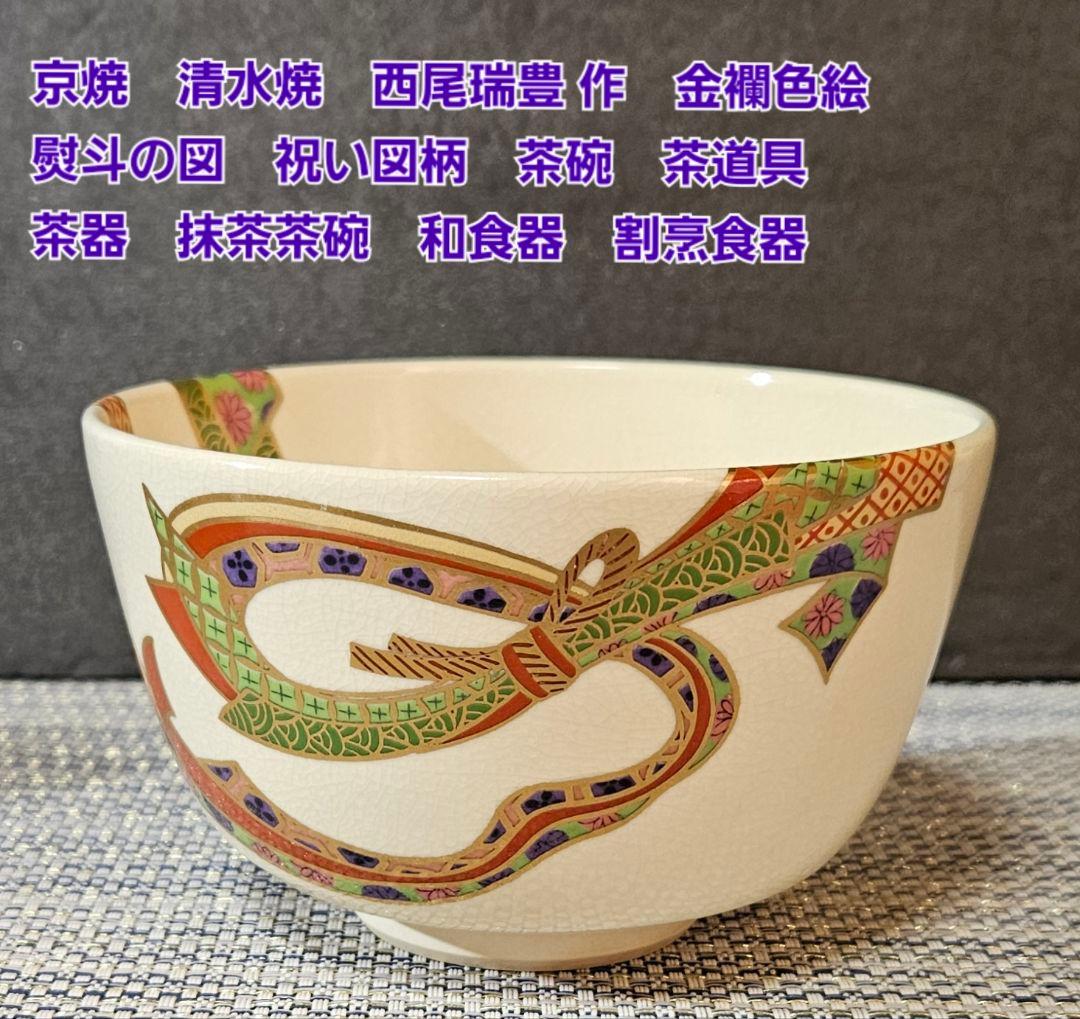
A Kyo-yaki tea bowl (京焼茶碗) by Nishio Zuiho (西尾瑞豊), featuring a flowing noshi (熨斗 — ceremonial ribbon strips) design rendered in kinran-iro-e (金襴色絵) overglaze enamel — gold brocade patterns within each ribbon carrying seigaiha waves, cherry blossoms, and diamond lattice across a pale cream crackle glaze (kannyu) body. This Kiyomizu-yaki Chawan carries the cultural weight of Kyoto's polychrome overglaze tradition — a Japanese Tea Ceremony piece in near-unused condition for collectors drawn to Auspicious Noshi Motif ceramics, Gold Brocade Enamel, and the deliberate authorship of the Kyo-yaki lineage.
━━━━━━━━━━━━━━━━━━━━
🔹 [ BASIC DETAILS ]
• Artist: Nishio Zuiho (西尾瑞豊) — Kyoto / Kiyomizu-yaki potter
• Technique: Kinran-iro-e (金襴色絵) — gold brocade overglaze enamel painting
• Era: 2010s
• Origin: Kyoto, Japan (Kiyomizu-yaki)
• Dimensions: D 12.5 cm × H 7.7 cm (approx. 4.9" × 3.0")
• Box: Wooden box — noted as near-unused condition
• Condition: Near-unused (未使用に近い) — essentially unwrapped and placed back
━━━━━━━━━━━━━━━━━━━━
🔹 [ CULTURAL & ARTISTIC INSIGHT ]
Noshi is not ribbon. It is the memory of a gift. In classical Japanese culture, thin strips of dried abalone were wrapped in decorative paper and tied to offerings — a gesture that said: this object carries intention beyond its material worth. Over centuries, the abalone disappeared. The wrapping remained. The noshi became pure form — a flowing, cascading strip of color that signifies celebration, blessing, and the act of giving itself.
Nishio Zuiho wraps this bowl in noshi the way one wraps a gift — with deliberation, with care, with the understanding that how something is presented is inseparable from what it contains. The ribbon strips flow around the vessel in sweeping curves, each one filled with a different kinran (gold brocade) pattern: seigaiha waves rendered in green and gold, diamond lattice in iron-red and gold, cherry blossom sections in soft pink. The gold outlines defining each ribbon are applied with the precision of textile design — this is a potter thinking like a weaver.
The cream crackle glaze beneath these ribbons does what silence does in music — it gives the pattern room to breathe. Where noshi gathers, the bowl celebrates. Where the cream ground shows through, the celebration pauses. The design concentrates on the front face, leaving the reverse largely bare — an asymmetry that the tea practitioner recognizes as intentional: the bowl knows which side faces the guest.
*"The ribbon carries nothing now. It carries only the gesture of giving — and that gesture has outlasted what was given."*
━━━━━━━━━━━━━━━━━━━━
🔹 [ DEEP-DIVE COMMENTARY ]
**Noshi (熨斗) — From Abalone to Abstraction**: The noshi motif traces one of the most remarkable evolutions in Japanese decorative vocabulary. Its origin is entirely practical: strips of thin-sliced dried abalone (noshi-awabi) were attached to gifts as a sign that the offering was genuine and auspicious. By the Edo period, the actual abalone had been replaced by folded paper representations — origami-like abstractions that preserved the gesture while releasing it from material dependency. By the time noshi appears on ceramics and textiles, it has become pure pattern — flowing ribbons that carry auspicious meaning through form alone. The content vanished. The intention remained.
**Kinran-iro-e (金襴色絵) — Gold Brocade Enamel**: Kinran literally means "gold brocade" — a term borrowed from textile arts to describe ceramic decoration that emulates the density and richness of woven gold fabric. On this bowl, the kinran technique is visible within each noshi strip: geometric sub-patterns filled with gold that recall the repeating motifs of Nishijin brocade. This cross-pollination between textile and ceramic vocabularies is characteristic of Kyoto, where weavers, potters, lacquer artists, and painters have always inhabited the same cultural ecosystem, borrowing freely from each other's visual language.
**Seigaiha (青海波) Within the Noshi**: One of the noshi strips contains the seigaiha wave pattern — concentric arcs suggesting endless, calm ocean waves. Seigaiha originates in ancient Persian textile design, traveled the Silk Road to Tang dynasty China, and was adopted into Japanese decorative arts by the Heian period. Its meaning — peaceful seas, enduring prosperity — compounds the auspicious character of the noshi itself. Wave within ribbon within bowl: each layer adds another dimension of well-wishing.
**Kannyu (貫入) as Ground**: The fine crackle covering the cream body is not damage. It is kannyu — a deliberate feature of the Kyo-yaki tradition where the glaze contracts more than the clay body during cooling, creating a web of fine lines across the surface. On this bowl, the kannyu gives the unpainted areas the quality of aged parchment, providing textural depth that prevents the bare ground from feeling empty. The crackle also catches tea stains over years of use, developing a patina that records the bowl's life — though in this case, the near-unused condition means that story has not yet begun.
**Auspicious Design Context**: In tea practice, a noshi-decorated bowl belongs to celebratory occasions — New Year gatherings, seasonal transitions, milestone celebrations. The combination of noshi with seigaiha, sakura, and kinran lattice creates a layered vocabulary of well-wishing that communicates without words. The host who selects this bowl for a gathering has already said everything about the occasion before the first cup of tea is prepared.
━━━━━━━━━━━━━━━━━━━━
🔹 [ 日本語解説 ]
【基本情報】
• 作家:西尾瑞豊(京焼・清水焼)
• 技法:金襴色絵(上絵付)
• 意匠:熨斗の図(のしのず)
• 時代:2010年代
• 産地:京都
• 寸法:口径 12.5cm × 高さ 7.7cm
• 箱:木箱
• 状態:未使用に近い
【解説】
西尾瑞豊作、金襴色絵・熨斗の図の茶碗です。淡いクリーム色の貫入釉の上に、流れるような熨斗(のし)の帯が器を包むように描かれています。
熨斗は元来、贈答品に添えた薄く削いだ鮑(のしあわび)に由来する吉祥文様です。実用から離れ、純粋な意匠として昇華された熨斗文は、「贈る」という行為そのものの象徴となりました。本作では、各熨斗の帯の中に異なる金襴文様が充填されています——青海波(緑と金)、菱格子(鉄赤と金)、桜花(ピンク)。西陣織を思わせる緻密な金彩が、京焼ならではの織物と陶磁の交差を見せています。
意匠は正面に集中し、裏面はほぼ無地のクリーム貫入地——この非対称は茶の湯における「正面」の意識を反映しています。未使用に近い状態で、貫入にまだ茶渋の物語が刻まれていない、これからの一碗です。新年や祝いの茶席にふさわしい、華やかさと品格を兼ね備えた茶碗です。
━━━━━━━━━━━━━━━━━━━━
🔹 [ SHIPPING & PACKAGING ]
• Dispatch: Within 1-6 business days
• Carrier: Japan Post EMS / UPS (with tracking)
• Packaging: Carefully wrapped with protective materials
*The abalone vanished centuries ago. The ribbon remained — carrying nothing but the weight of intention. Each strip still holds a different pattern of well-wishing, waiting for the occasion that will receive it.*
━━━━━━━━━━━━━━━━━━━━
🔹 [ BASIC DETAILS ]
• Artist: Nishio Zuiho (西尾瑞豊) — Kyoto / Kiyomizu-yaki potter
• Technique: Kinran-iro-e (金襴色絵) — gold brocade overglaze enamel painting
• Era: 2010s
• Origin: Kyoto, Japan (Kiyomizu-yaki)
• Dimensions: D 12.5 cm × H 7.7 cm (approx. 4.9" × 3.0")
• Box: Wooden box — noted as near-unused condition
• Condition: Near-unused (未使用に近い) — essentially unwrapped and placed back
━━━━━━━━━━━━━━━━━━━━
🔹 [ CULTURAL & ARTISTIC INSIGHT ]
Noshi is not ribbon. It is the memory of a gift. In classical Japanese culture, thin strips of dried abalone were wrapped in decorative paper and tied to offerings — a gesture that said: this object carries intention beyond its material worth. Over centuries, the abalone disappeared. The wrapping remained. The noshi became pure form — a flowing, cascading strip of color that signifies celebration, blessing, and the act of giving itself.
Nishio Zuiho wraps this bowl in noshi the way one wraps a gift — with deliberation, with care, with the understanding that how something is presented is inseparable from what it contains. The ribbon strips flow around the vessel in sweeping curves, each one filled with a different kinran (gold brocade) pattern: seigaiha waves rendered in green and gold, diamond lattice in iron-red and gold, cherry blossom sections in soft pink. The gold outlines defining each ribbon are applied with the precision of textile design — this is a potter thinking like a weaver.
The cream crackle glaze beneath these ribbons does what silence does in music — it gives the pattern room to breathe. Where noshi gathers, the bowl celebrates. Where the cream ground shows through, the celebration pauses. The design concentrates on the front face, leaving the reverse largely bare — an asymmetry that the tea practitioner recognizes as intentional: the bowl knows which side faces the guest.
*"The ribbon carries nothing now. It carries only the gesture of giving — and that gesture has outlasted what was given."*
━━━━━━━━━━━━━━━━━━━━
🔹 [ DEEP-DIVE COMMENTARY ]
**Noshi (熨斗) — From Abalone to Abstraction**: The noshi motif traces one of the most remarkable evolutions in Japanese decorative vocabulary. Its origin is entirely practical: strips of thin-sliced dried abalone (noshi-awabi) were attached to gifts as a sign that the offering was genuine and auspicious. By the Edo period, the actual abalone had been replaced by folded paper representations — origami-like abstractions that preserved the gesture while releasing it from material dependency. By the time noshi appears on ceramics and textiles, it has become pure pattern — flowing ribbons that carry auspicious meaning through form alone. The content vanished. The intention remained.
**Kinran-iro-e (金襴色絵) — Gold Brocade Enamel**: Kinran literally means "gold brocade" — a term borrowed from textile arts to describe ceramic decoration that emulates the density and richness of woven gold fabric. On this bowl, the kinran technique is visible within each noshi strip: geometric sub-patterns filled with gold that recall the repeating motifs of Nishijin brocade. This cross-pollination between textile and ceramic vocabularies is characteristic of Kyoto, where weavers, potters, lacquer artists, and painters have always inhabited the same cultural ecosystem, borrowing freely from each other's visual language.
**Seigaiha (青海波) Within the Noshi**: One of the noshi strips contains the seigaiha wave pattern — concentric arcs suggesting endless, calm ocean waves. Seigaiha originates in ancient Persian textile design, traveled the Silk Road to Tang dynasty China, and was adopted into Japanese decorative arts by the Heian period. Its meaning — peaceful seas, enduring prosperity — compounds the auspicious character of the noshi itself. Wave within ribbon within bowl: each layer adds another dimension of well-wishing.
**Kannyu (貫入) as Ground**: The fine crackle covering the cream body is not damage. It is kannyu — a deliberate feature of the Kyo-yaki tradition where the glaze contracts more than the clay body during cooling, creating a web of fine lines across the surface. On this bowl, the kannyu gives the unpainted areas the quality of aged parchment, providing textural depth that prevents the bare ground from feeling empty. The crackle also catches tea stains over years of use, developing a patina that records the bowl's life — though in this case, the near-unused condition means that story has not yet begun.
**Auspicious Design Context**: In tea practice, a noshi-decorated bowl belongs to celebratory occasions — New Year gatherings, seasonal transitions, milestone celebrations. The combination of noshi with seigaiha, sakura, and kinran lattice creates a layered vocabulary of well-wishing that communicates without words. The host who selects this bowl for a gathering has already said everything about the occasion before the first cup of tea is prepared.
━━━━━━━━━━━━━━━━━━━━
🔹 [ 日本語解説 ]
【基本情報】
• 作家:西尾瑞豊(京焼・清水焼)
• 技法:金襴色絵(上絵付)
• 意匠:熨斗の図(のしのず)
• 時代:2010年代
• 産地:京都
• 寸法:口径 12.5cm × 高さ 7.7cm
• 箱:木箱
• 状態:未使用に近い
【解説】
西尾瑞豊作、金襴色絵・熨斗の図の茶碗です。淡いクリーム色の貫入釉の上に、流れるような熨斗(のし)の帯が器を包むように描かれています。
熨斗は元来、贈答品に添えた薄く削いだ鮑(のしあわび)に由来する吉祥文様です。実用から離れ、純粋な意匠として昇華された熨斗文は、「贈る」という行為そのものの象徴となりました。本作では、各熨斗の帯の中に異なる金襴文様が充填されています——青海波(緑と金)、菱格子(鉄赤と金)、桜花(ピンク)。西陣織を思わせる緻密な金彩が、京焼ならではの織物と陶磁の交差を見せています。
意匠は正面に集中し、裏面はほぼ無地のクリーム貫入地——この非対称は茶の湯における「正面」の意識を反映しています。未使用に近い状態で、貫入にまだ茶渋の物語が刻まれていない、これからの一碗です。新年や祝いの茶席にふさわしい、華やかさと品格を兼ね備えた茶碗です。
━━━━━━━━━━━━━━━━━━━━
🔹 [ SHIPPING & PACKAGING ]
• Dispatch: Within 1-6 business days
• Carrier: Japan Post EMS / UPS (with tracking)
• Packaging: Carefully wrapped with protective materials
*The abalone vanished centuries ago. The ribbon remained — carrying nothing but the weight of intention. Each strip still holds a different pattern of well-wishing, waiting for the occasion that will receive it.*
Quantity
Couldn't load pickup availability
Low stock: 1 left
View full details