1
/
of
15
Nishimura Tokusen Kyo-yaki Hannya Demon Mask Futaoki Lid Rest
Nishimura Tokusen Kyo-yaki Hannya Demon Mask Futaoki Lid Rest
Regular price
Dhs. 1,191.00 AED
Regular price
Sale price
Dhs. 1,191.00 AED
Taxes included.
Shipping calculated at checkout.
Authentic Nishimura Tokusen Kyo-yaki Hannya demon mask futaoki lid rest for tea ceremony, crafted in Kyoto with polychrome overglaze enamels and gold accents on white porcelain. This Japanese tea ceremony tool features a dramatic Hannya mask design with signed tomobako wooden box and authentication certificate.
━━━━━━━━━━━━━━━━━━━━━━━━━━━━━━━━━━━━━
🔹 BASIC DETAILS
• Artist: Nishimura Tokusen (西村徳泉), Shisuiyou Kiln (紫翠窯)
• Technique: Kyo-yaki polychrome overglaze enamels (iro-e) with gold detailing
• Era: Late 20th - early 21st century
• Origin: Kyoto, Japan
• Dimensions: H 4.2 cm × W 6.0 cm (H 1.7" × W 2.4")
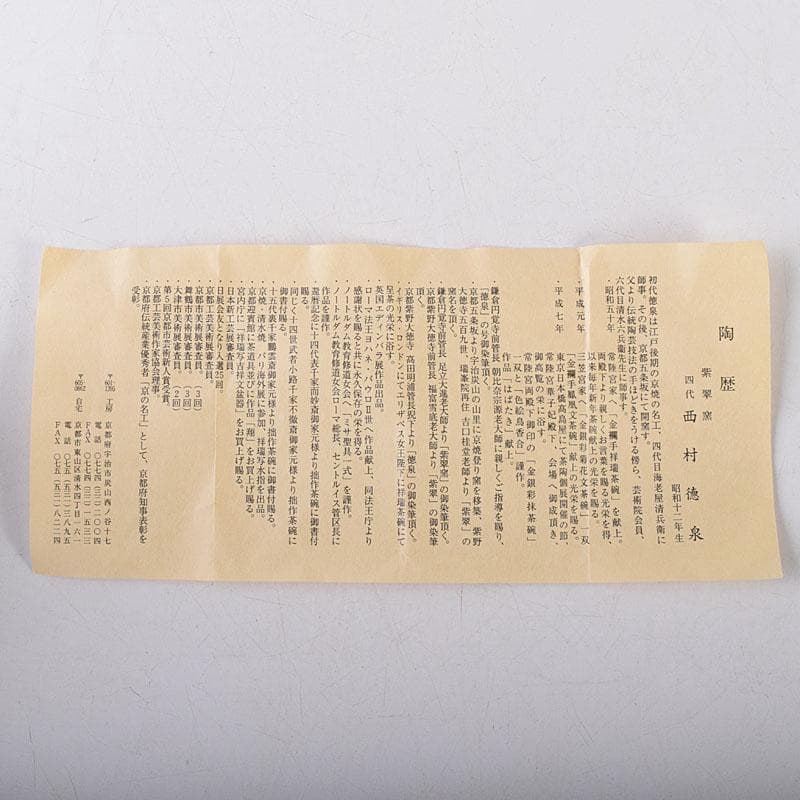
• Box: Signed tomobako (wooden authentication box) with silk cloth and certificate
• Condition: Excellent - no chips, cracks, or wear; vibrant glazes and gold intact
━━━━━━━━━━━━━━━━━━━━━━━━━━━━━━━━━━━━━
🔹 CULTURAL & ARTISTIC INSIGHT
The Hannya mask — horned, golden-eyed, and poised between sorrow and rage — occupies a unique position in Japanese cultural memory. Originally a Noh theater icon representing a woman transformed by jealousy, the Hannya has evolved into a protective talisman and decorative motif. Nishimura Tokusen's interpretation translates this theatrical intensity into tea ceremony vocabulary, transforming a utilitarian lid rest into a moment of confrontation and recognition.
Kyo-yaki, Kyoto's distinguished ceramic tradition, is renowned for its meticulous overglaze enamel work (iro-e), where colors are applied over glazed porcelain and fired at lower temperatures to achieve jewel-like vibrancy. Here, the artist employs black glossy lacquer-like glaze for the cap, red for the lips, and gold for the horns and eyes — a palette that speaks to both Noh theater aesthetics and Buddhist iconography. The white porcelain face provides a stark canvas, heightening the mask's dramatic presence.
In tea ceremony context, the futaoki (lid rest) is a small but essential tool, supporting the kettle lid during preparation. While many lid rests adopt minimalist or naturalistic forms, this Hannya futaoki introduces theatrical tension into the tea room — a reminder that wabi-sabi encompasses not only serenity but also the beauty of imperfection, transformation, and the shadows within.
*Demons guard the threshold — even in tea, we meet what we carry.*
━━━━━━━━━━━━━━━━━━━━━━━━━━━━━━━━━━━━━
🔹 DEEP-DIVE COMMENTARY
The Hannya as tea ceremony tool represents a fascinating convergence of theatrical and ritual aesthetics. In Noh, the Hannya mask is worn during climactic moments of transformation — the character's humanity dissolving into rage or sorrow. Yet beneath the demon's fury lies a human story, often one of abandonment or betrayal. By placing this charged icon within the tea ceremony, Tokusen invites practitioners to confront duality: beauty and terror, control and chaos, the host's composure and the emotions beneath.
Tokusen's craftsmanship honors Kyo-yaki's technical legacy while embracing expressive form. The gold horns curve organically, the red lips are precisely defined, and the eyes — painted in gold against white — seem to follow the viewer. This is not a static decorative object; it possesses agency, presence. The black glossy cap recalls lacquerware's depth, creating textural contrast against the matte white porcelain skin.
The signed tomobako and authentication certificate establish provenance and artistic lineage. Tokusen's work is part of Kyoto's ongoing ceramic dialogue, where tradition is not repetition but reinterpretation. The Shisuiyou Kiln, known for refined Kyo-yaki pieces, maintains standards of technical excellence while allowing individual artistic voice.
Collectors of tea ceremony utensils will recognize this futaoki as a conversation piece — one that introduces narrative complexity into the tea room's meditative space. It pairs well with bold, expressive tea bowls and serves as a counterpoint to minimalist bamboo or ceramic rests. The Hannya does not disappear into the ceremony; it participates, bearing witness.
━━━━━━━━━━━━━━━━━━━━━━━━━━━━━━━━━━━━━
🔹 日本語解説
西村徳泉作、般若面を象った京焼色絵の蓋置です。茶道具として用いる蓋置でありながら、能面の劇的な表現を茶室に持ち込んだ意欲作です。
• 作家: 西村徳泉(紫翠窯)
• 技法: 京焼色絵(上絵付け)、金彩装飾
• 時代: 20世紀後半〜21世紀初頭
• 産地: 京都
• 寸法: 高さ4.2cm × 幅6.0cm
• 共箱: 作家銘入り桐箱、裂地、鑑定書付き
• 状態: 優良 — 欠け・ヒビなし、発色良好、金彩鮮明
般若面は、嫉妬に狂った女性が鬼女へと変貌する姿を表した能面として知られ、日本文化において悲劇と守護の両義性を帯びた存在です。徳泉はこの劇的なモチーフを茶道具に転用し、蓋置という実用の道具に物語性と緊張感を持ち込みました。
京焼の伝統技法である色絵(上絵付け)により、白磁の顔に黒艶の頭巾、赤い唇、金彩の角と目が施されています。能舞台の美学と仏教図像学の色彩が融合し、小さな蓋置でありながら強い存在感を放ちます。
茶席において蓋置は、釜の蓋を置くための脇役的な道具ですが、この般若蓋置は静謐な茶室に演劇的な緊張をもたらします。侘び寂びの美学が、静寂のみならず影や変容の美をも包含することを、この作品は象徴的に示しています。
━━━━━━━━━━━━━━━━━━━━━━━━━━━━━━━━━━━━━
🔹 [ SHIPPING & PACKAGING ]
• Dispatch: Within 1-6 business days
• Carrier: Japan Post EMS / UPS (with tracking)
• Packaging: Carefully wrapped with protective materials
━━━━━━━━━━━━━━━━━━━━━━━━━━━━━━━━━━━━━
🔹 BASIC DETAILS
• Artist: Nishimura Tokusen (西村徳泉), Shisuiyou Kiln (紫翠窯)
• Technique: Kyo-yaki polychrome overglaze enamels (iro-e) with gold detailing
• Era: Late 20th - early 21st century
• Origin: Kyoto, Japan
• Dimensions: H 4.2 cm × W 6.0 cm (H 1.7" × W 2.4")
• Box: Signed tomobako (wooden authentication box) with silk cloth and certificate
• Condition: Excellent - no chips, cracks, or wear; vibrant glazes and gold intact
━━━━━━━━━━━━━━━━━━━━━━━━━━━━━━━━━━━━━
🔹 CULTURAL & ARTISTIC INSIGHT
The Hannya mask — horned, golden-eyed, and poised between sorrow and rage — occupies a unique position in Japanese cultural memory. Originally a Noh theater icon representing a woman transformed by jealousy, the Hannya has evolved into a protective talisman and decorative motif. Nishimura Tokusen's interpretation translates this theatrical intensity into tea ceremony vocabulary, transforming a utilitarian lid rest into a moment of confrontation and recognition.
Kyo-yaki, Kyoto's distinguished ceramic tradition, is renowned for its meticulous overglaze enamel work (iro-e), where colors are applied over glazed porcelain and fired at lower temperatures to achieve jewel-like vibrancy. Here, the artist employs black glossy lacquer-like glaze for the cap, red for the lips, and gold for the horns and eyes — a palette that speaks to both Noh theater aesthetics and Buddhist iconography. The white porcelain face provides a stark canvas, heightening the mask's dramatic presence.
In tea ceremony context, the futaoki (lid rest) is a small but essential tool, supporting the kettle lid during preparation. While many lid rests adopt minimalist or naturalistic forms, this Hannya futaoki introduces theatrical tension into the tea room — a reminder that wabi-sabi encompasses not only serenity but also the beauty of imperfection, transformation, and the shadows within.
*Demons guard the threshold — even in tea, we meet what we carry.*
━━━━━━━━━━━━━━━━━━━━━━━━━━━━━━━━━━━━━
🔹 DEEP-DIVE COMMENTARY
The Hannya as tea ceremony tool represents a fascinating convergence of theatrical and ritual aesthetics. In Noh, the Hannya mask is worn during climactic moments of transformation — the character's humanity dissolving into rage or sorrow. Yet beneath the demon's fury lies a human story, often one of abandonment or betrayal. By placing this charged icon within the tea ceremony, Tokusen invites practitioners to confront duality: beauty and terror, control and chaos, the host's composure and the emotions beneath.
Tokusen's craftsmanship honors Kyo-yaki's technical legacy while embracing expressive form. The gold horns curve organically, the red lips are precisely defined, and the eyes — painted in gold against white — seem to follow the viewer. This is not a static decorative object; it possesses agency, presence. The black glossy cap recalls lacquerware's depth, creating textural contrast against the matte white porcelain skin.
The signed tomobako and authentication certificate establish provenance and artistic lineage. Tokusen's work is part of Kyoto's ongoing ceramic dialogue, where tradition is not repetition but reinterpretation. The Shisuiyou Kiln, known for refined Kyo-yaki pieces, maintains standards of technical excellence while allowing individual artistic voice.
Collectors of tea ceremony utensils will recognize this futaoki as a conversation piece — one that introduces narrative complexity into the tea room's meditative space. It pairs well with bold, expressive tea bowls and serves as a counterpoint to minimalist bamboo or ceramic rests. The Hannya does not disappear into the ceremony; it participates, bearing witness.
━━━━━━━━━━━━━━━━━━━━━━━━━━━━━━━━━━━━━
🔹 日本語解説
西村徳泉作、般若面を象った京焼色絵の蓋置です。茶道具として用いる蓋置でありながら、能面の劇的な表現を茶室に持ち込んだ意欲作です。
• 作家: 西村徳泉(紫翠窯)
• 技法: 京焼色絵(上絵付け)、金彩装飾
• 時代: 20世紀後半〜21世紀初頭
• 産地: 京都
• 寸法: 高さ4.2cm × 幅6.0cm
• 共箱: 作家銘入り桐箱、裂地、鑑定書付き
• 状態: 優良 — 欠け・ヒビなし、発色良好、金彩鮮明
般若面は、嫉妬に狂った女性が鬼女へと変貌する姿を表した能面として知られ、日本文化において悲劇と守護の両義性を帯びた存在です。徳泉はこの劇的なモチーフを茶道具に転用し、蓋置という実用の道具に物語性と緊張感を持ち込みました。
京焼の伝統技法である色絵(上絵付け)により、白磁の顔に黒艶の頭巾、赤い唇、金彩の角と目が施されています。能舞台の美学と仏教図像学の色彩が融合し、小さな蓋置でありながら強い存在感を放ちます。
茶席において蓋置は、釜の蓋を置くための脇役的な道具ですが、この般若蓋置は静謐な茶室に演劇的な緊張をもたらします。侘び寂びの美学が、静寂のみならず影や変容の美をも包含することを、この作品は象徴的に示しています。
━━━━━━━━━━━━━━━━━━━━━━━━━━━━━━━━━━━━━
🔹 [ SHIPPING & PACKAGING ]
• Dispatch: Within 1-6 business days
• Carrier: Japan Post EMS / UPS (with tracking)
• Packaging: Carefully wrapped with protective materials
Quantity
Couldn't load pickup availability
Low stock: 1 left
View full details