1
/
of
18
Ninsei-Style Fuki-yose Kyo-yaki Chawan by Morisato Toraku, Kyoto
Regular price
Dhs. 783.00 AED
Regular price
Sale price
Dhs. 783.00 AED
Taxes included.
Shipping calculated at checkout.
A chawan carrying the ninsei fuki-yose motif — maple leaves, pine needles, and bamboo gathered as if swept together by an autumn wind — by Morisato Toraku, working under the Heian kiln lineage in Kyoto. The cream-white ground, crackled beneath a soft glaze, holds gold and color enamel foliage in red, yellow, and green, each leaf outlined in gold with the density of a hand that trusted its own line.
🔹 [ BASIC DETAILS ]
- Artist: Morisato Toraku (森里陶楽)
- Technique: Kinsai (gold and polychrome enamel over cream glaze), Kyo-yaki
- Era: Showa–Heisei period studio production
- Origin: Kyoto, Japan (Heian kiln lineage)
- Dimensions: Diameter approx. 12.5 cm, Height approx. 7 cm
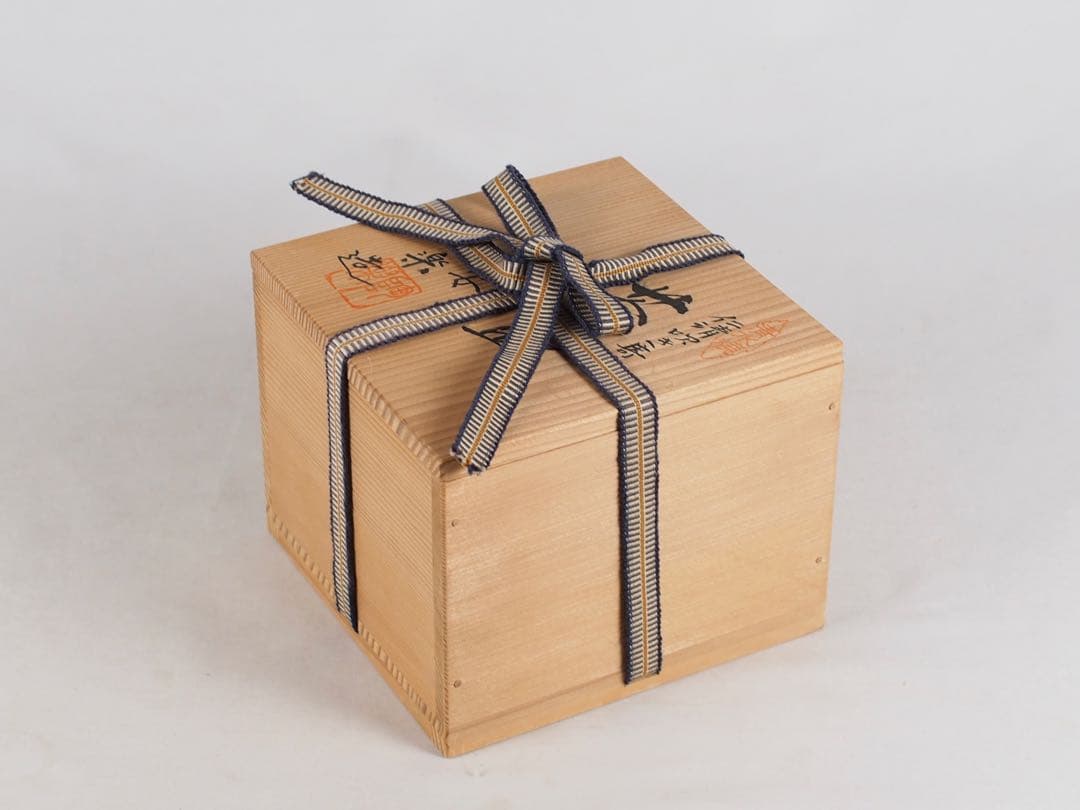
- Box: Signed wooden tomobako, with paper tag (shiori)
- Condition: Good — no notable chips or cracks, fine age-consistent crackle to the glaze
🔹 [ CULTURAL & ARTISTIC INSIGHT ]
The fuki-yose motif — literally "wind-gathered" — depicts the small drifts of leaves and needles that collect at the edges of a garden path in late autumn. In Kyo-yaki painting, this scattering is never random; each leaf is placed to hold its own weight against the empty cream ground, so the eye moves the way wind moves, pausing and resettling. The cream base itself, warmer and softer than pure white porcelain, is a hallmark of Kyoto's decorative wares, chosen because it lets gold enamel sit rather than glare.
Morisato Toraku's hand favors restraint within abundance — maple leaves rendered in solid red and gold rather than washed color, bamboo drawn as clean dark strokes rather than decorative filler. The crackle across the glaze, fine and even, is not damage but the surface's own record of the kiln's heat, a quiet trace of the making.
The flowing gold across the bowl's shoulder mirrors drifting cloud banks — a season caught mid-turn, neither fully autumn nor fully spent.
🔹 [ DEEP-DIVE COMMENTARY ]
Kyo-yaki, the decorative ware tradition of Kyoto, developed apart from regional stoneware kilns like Karatsu or Bizen precisely because it served the tea culture of the imperial city — patrons who wanted painting, not just form. A bowl like this one is built first as plain cream-glazed bisque, then returned to the kiln multiple times: once for the base glaze, then again for each layer of enamel and gold, fired at progressively lower temperatures so the color holds without running.
The fuki-yose theme belongs to a small family of Kyo-yaki autumn motifs prized by collectors for their seasonal specificity — a chawan meant for use in the momiji-gari (maple-viewing) season of the tea calendar, when the bowl itself becomes part of the room's seasonal reading. Collectors of Kyoto decorative ware look for exactly this: enamel applied with confidence, gold that has not thinned with wear, and a box that keeps the artist's name legible.
That the tomobako survives intact with its paper shiori matters here — it is the bowl's continuous record, the thing that keeps Morisato Toraku's name attached to the object rather than left to guesswork.
🔹 [ 日本語解説 ]
平安・森里陶楽造による仁清吹き寄せ文の茶碗。生成り色の地に、紅葉・松葉・竹を金彩と色絵で描き、秋の風に吹き寄せられた景色を写しています。
【基本情報】
作家:森里陶楽/技法:金彩・色絵(京焼、仁清写し)/産地:京都/寸法:直径約12.5cm、高さ約7cm/付属品:共箱、栞/状態:良好、目立つ傷なし
【文化的背景】
吹き寄せ文様は、庭先に風で吹き集められた落葉や松葉の景色を写した意匠で、無作為に見えて実は一枚一枚が生成り色の余白に対して意図的に配置されています。京焼特有の生成り色の生地は、金彩を沈めて品よく見せるための選択でもあります。森里陶楽の筆致は、紅葉を淡彩でなく確かな朱と金で塗り分ける潔さに表れています。
流れる金の意匠は、移ろう季節の雲を思わせます。
【ディープダイブ解説】
京焼は絵付けを主とする京都の焼物で、素地を白く焼いたのち、釉薬・色絵・金彩と、温度を下げながら複数回焼き直すことで完成します。吹き寄せは紅葉狩りの季節に用いる茶碗として好まれてきた文様で、共箱に作家名が明瞭に残っていることが、収集家にとって重要な価値の裏付けとなります。
🔹 [ SHIPPING & PACKAGING ]
• Dispatch: Within 1-6 business days
• Carrier: Japan Post EMS / UPS / FedEx (with tracking)
• Packaging: Carefully wrapped with protective materials
🔹 [ BASIC DETAILS ]
- Artist: Morisato Toraku (森里陶楽)
- Technique: Kinsai (gold and polychrome enamel over cream glaze), Kyo-yaki
- Era: Showa–Heisei period studio production
- Origin: Kyoto, Japan (Heian kiln lineage)
- Dimensions: Diameter approx. 12.5 cm, Height approx. 7 cm
- Box: Signed wooden tomobako, with paper tag (shiori)
- Condition: Good — no notable chips or cracks, fine age-consistent crackle to the glaze
🔹 [ CULTURAL & ARTISTIC INSIGHT ]
The fuki-yose motif — literally "wind-gathered" — depicts the small drifts of leaves and needles that collect at the edges of a garden path in late autumn. In Kyo-yaki painting, this scattering is never random; each leaf is placed to hold its own weight against the empty cream ground, so the eye moves the way wind moves, pausing and resettling. The cream base itself, warmer and softer than pure white porcelain, is a hallmark of Kyoto's decorative wares, chosen because it lets gold enamel sit rather than glare.
Morisato Toraku's hand favors restraint within abundance — maple leaves rendered in solid red and gold rather than washed color, bamboo drawn as clean dark strokes rather than decorative filler. The crackle across the glaze, fine and even, is not damage but the surface's own record of the kiln's heat, a quiet trace of the making.
The flowing gold across the bowl's shoulder mirrors drifting cloud banks — a season caught mid-turn, neither fully autumn nor fully spent.
🔹 [ DEEP-DIVE COMMENTARY ]
Kyo-yaki, the decorative ware tradition of Kyoto, developed apart from regional stoneware kilns like Karatsu or Bizen precisely because it served the tea culture of the imperial city — patrons who wanted painting, not just form. A bowl like this one is built first as plain cream-glazed bisque, then returned to the kiln multiple times: once for the base glaze, then again for each layer of enamel and gold, fired at progressively lower temperatures so the color holds without running.
The fuki-yose theme belongs to a small family of Kyo-yaki autumn motifs prized by collectors for their seasonal specificity — a chawan meant for use in the momiji-gari (maple-viewing) season of the tea calendar, when the bowl itself becomes part of the room's seasonal reading. Collectors of Kyoto decorative ware look for exactly this: enamel applied with confidence, gold that has not thinned with wear, and a box that keeps the artist's name legible.
That the tomobako survives intact with its paper shiori matters here — it is the bowl's continuous record, the thing that keeps Morisato Toraku's name attached to the object rather than left to guesswork.
🔹 [ 日本語解説 ]
平安・森里陶楽造による仁清吹き寄せ文の茶碗。生成り色の地に、紅葉・松葉・竹を金彩と色絵で描き、秋の風に吹き寄せられた景色を写しています。
【基本情報】
作家:森里陶楽/技法:金彩・色絵(京焼、仁清写し)/産地:京都/寸法:直径約12.5cm、高さ約7cm/付属品:共箱、栞/状態:良好、目立つ傷なし
【文化的背景】
吹き寄せ文様は、庭先に風で吹き集められた落葉や松葉の景色を写した意匠で、無作為に見えて実は一枚一枚が生成り色の余白に対して意図的に配置されています。京焼特有の生成り色の生地は、金彩を沈めて品よく見せるための選択でもあります。森里陶楽の筆致は、紅葉を淡彩でなく確かな朱と金で塗り分ける潔さに表れています。
流れる金の意匠は、移ろう季節の雲を思わせます。
【ディープダイブ解説】
京焼は絵付けを主とする京都の焼物で、素地を白く焼いたのち、釉薬・色絵・金彩と、温度を下げながら複数回焼き直すことで完成します。吹き寄せは紅葉狩りの季節に用いる茶碗として好まれてきた文様で、共箱に作家名が明瞭に残っていることが、収集家にとって重要な価値の裏付けとなります。
🔹 [ SHIPPING & PACKAGING ]
• Dispatch: Within 1-6 business days
• Carrier: Japan Post EMS / UPS / FedEx (with tracking)
• Packaging: Carefully wrapped with protective materials
Quantity
Couldn't load pickup availability
Low stock: 1 left
View full details