1
/
of
10
Nezumi Shino Futaoki Lid Rest by Kato Shuntei — Signed Wooden Box, Mino Ware Tea Ceremony
Nezumi Shino Futaoki Lid Rest by Kato Shuntei — Signed Wooden Box, Mino Ware Tea Ceremony
Regular price
Dhs. 708.00 AED
Regular price
Sale price
Dhs. 708.00 AED
Taxes included.
Shipping calculated at checkout.
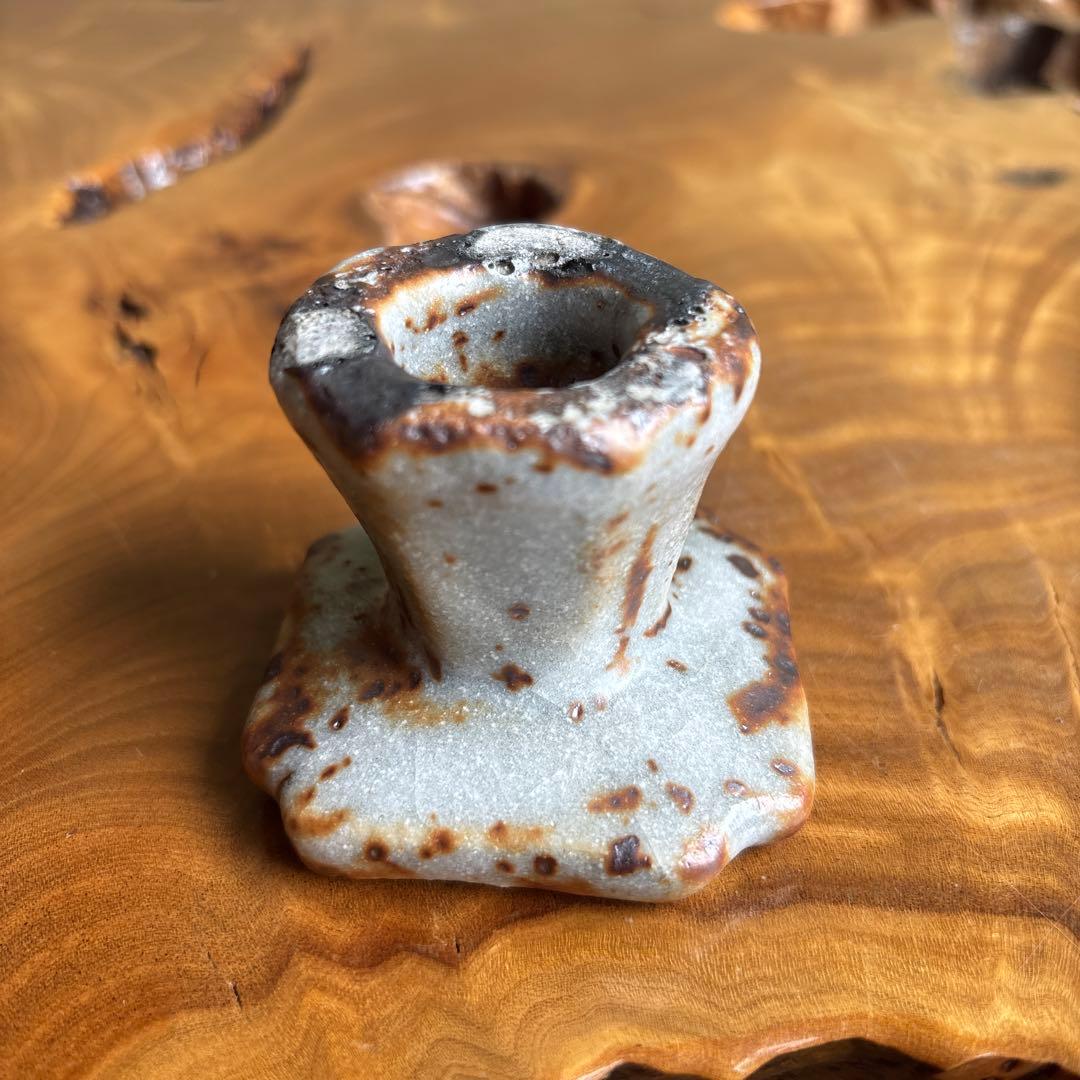
Experience Authentic Japan Art with this Nezumi Shino Futaoki Lid Rest. This Mino Ware Tea Ceremony piece serves as a Japanese Tea Ceremony Utensil and Signed Pottery With Box, featuring Shino Glaze Iron Spotting and Kato Shuntei Ceramics—a must-have for any Wabi Sabi Tea Art Collector seeking Handmade Stoneware Japan or Vintage Japanese Pottery.
🔹 [ BASIC DETAILS ]
• Artist: Kato Shuntei (加藤春鼎)
• Technique: Nezumi Shino (mouse-grey shino glaze) with iron spotting (tetsu-ten)
• Era: Late 20th – early 21st century, Mino tradition
• Origin: Mino ware (Gifu Prefecture, Japan)
• Dimensions: Diameter approx. 6.3 cm, Height approx. 5 cm
• Box: Tomobako (artist's own signed wooden box) with calligraphic inscription
• Condition: Excellent — no chips, no cracks
🔹 [ CULTURAL & ARTISTIC INSIGHT ]
The futaoki — lid rest — is one of the most quietly decisive utensils in the Japanese tea ceremony. Its role is minimal: to receive the iron kettle lid between pourings, keeping it off the tatami and preserving the host's composure. Yet within that restraint lives the entire aesthetic tension of chado. A futaoki does not announce itself. It waits.
Kato Shuntei's nezumi shino futaoki carries the weight of Mino's six-century lineage while remaining entirely its own object. The form — a wide, softly squared platform hovering on a tapered cylindrical base — recalls the classical mushroom (kinoko) shape that emerged in Momoyama-period kiln tradition, where potters at Okaya and Ohira kilns first developed the grey-white feldspar glaze known as shino. The nezumi (mouse) variation introduces iron oxide into the glaze body, producing the signature pewter-ash tone that distinguishes it from the warmer cream of standard shino.
Across the flat crown of this piece, iron spotting emerges in constellations — tetsu-ten, iron dots — each one a record of kiln temperature, atmospheric fluctuation, and the particular iron content of this clay. The amber-rust flashing at the rim and base is hidasuki-adjacent: iron from the clay body bleeding upward through the glaze during firing, warm against the cool ash-grey ground. Craquelure runs through the surface in fine threads, evidence of the differential contraction between clay body and glaze as the kiln cooled.
There is a particular kind of silence in the grey of nezumi shino. Not the silence of absence, but the silence of a winter morning — present, textured, alive beneath its stillness.
🔹 [ DEEP-DIVE COMMENTARY ]
Nezumi shino is a subset of Mino ware developed during the Momoyama period (late 16th century), characterized by its iron-rich glaze that fires to a distinctive grey tone — nezumi meaning mouse in Japanese, referencing the quiet, muted color. Unlike standard shino, which relies on a thick feldspar glaze to produce creamy whites and orange flashing, nezumi shino incorporates iron oxide directly into the glaze composition, shifting the visual register toward cool greys, pewter, and slate.
The technique requires a reduction atmosphere during the mid-fire stage, where oxygen is deliberately limited inside the kiln. This causes the iron to remain in its reduced ferrous state rather than oxidizing to the warmer ferric iron seen in standard shino. The result is the characteristic grey ground, upon which iron spotting (tetsu-ten) appears as the glaze thins at sharp edges or where iron migrates upward from the clay body.
Futaoki in the Mino tradition serve not only functional but aesthetic roles in the tea ceremony (chado). The host selects a futaoki appropriate to the season, the occasion, and the pairing with other utensils — its form, glaze character, and material all communicate without words. A nezumi shino futaoki is particularly associated with winter and autumn gatherings, its cool grey surface resonating with the season's muted palette and contemplative mood.
Kato Shuntei works within the living tradition of Mino ware, a lineage that counts among its ancestors the foundational figures of Japanese wabi tea aesthetics. His tomobako — the artist's own signed wooden box — carries calligraphic inscription authenticating the piece and placing it within his documented oeuvre. The inclusion of a tomobako significantly anchors a work's provenance for serious collectors, particularly as Mino ware's secondary market continues to be assessed for attribution precision.
The squared-circular platform form of this futaoki — neither strictly round nor strictly square — reflects the Japanese aesthetic principle of katachi no ma, the interval within shape, where the indeterminate boundary becomes the most charged space. It sits on its pedestal base with a stability that belies its small scale.
🔹 [ 日本語解説 ]
■ 基本情報
作家:加藤春鼎
技法:鼠志野(鉄点入り)
時代:20世紀後期〜21世紀初頭、美濃焼の伝統
産地:美濃焼(岐阜県)
寸法:直径 約6.3cm、高さ 約5cm
箱:共箱(作家自筆・落款入り桐箱)
状態:良好 — ヒビ・カケなし
■ 文化・芸術的解説
蓋置は茶道における最もさりげなく、しかし本質的な道具のひとつです。釜の蓋を畳の上に直置きすることなく受け取り、亭主の所作を支える。それだけの役割でありながら、その小さな存在に茶人の美意識がすべて凝縮されています。
加藤春鼎の鼠志野蓋置は、桃山期に美濃・大萓・大平の諸窯で生まれた志野釉の系譜を、現代において誠実に継ぐ一品です。鼠志野は長石釉に酸化鉄を加えることで、通常の志野が持つ温かみのある白色とは異なり、鼠色(ねずみいろ)と呼ばれる落ち着いた灰青色の発色を持ちます。その名の通り、冬の夜明け前の空のような、静謐にして密度のある色調です。
上面には鉄点(てってん)が散らばり、窯の中の温度変化と気化鉄の動きを記録しています。縁と底部の琥珀色の緋色(ひいろ)は、素地の鉄分が釉薬を通じて滲み出たもの——静かな灰色の地に、炎の記憶が残っています。釉薬と素地の収縮差が生んだ細かな貫入が全体に走り、時間の層を感じさせます。
■ 詳細解説
鼠志野は桃山時代(16世紀末)に美濃で発展した技法であり、長石釉に酸化鉄を混入することで焼成時の還元雰囲気下において特有の灰色発色を実現します。通常の志野釉が酸化焼成で温かみのある橙・白に発色するのに対し、鼠志野は還元によって鉄が二価のまま留まり、冷ややかで深みのある灰色地を形成します。
蓋置という茶道具は、季節・取り合わせ・席の雰囲気に応じて選ばれる重要な脇役です。鼠志野の蓋置は特に秋冬の茶席に用いられることが多く、その抑えた色調が侘び茶の精神と深く共鳴します。
加藤春鼎は現代美濃焼の作家として、桃山以来の技法的系譜を踏まえながら独自の造形を展開しています。本作に附属する共箱は、作家自身による落款・書き入れを持ち、真作性と来歴の基点となります。コレクターにとって共箱の有無は作品評価において重要な要素であり、本作はその点においても確かな根拠を持ちます。
台形の胴部の上に、角を丸めた方形の頂部が乗るこの形姿——円でも四角でもない、その「間」の形——は、日本の形の美学を静かに体現しています。手に取れば、小さくとも重心の確かな存在感を感じるはずです。
🔹 [ SHIPPING & PACKAGING ]
• Dispatch: Within 1-6 business days
• Carrier: Japan Post EMS / UPS (with tracking)
• Packaging: Carefully wrapped with protective materials
🔹 [ BASIC DETAILS ]
• Artist: Kato Shuntei (加藤春鼎)
• Technique: Nezumi Shino (mouse-grey shino glaze) with iron spotting (tetsu-ten)
• Era: Late 20th – early 21st century, Mino tradition
• Origin: Mino ware (Gifu Prefecture, Japan)
• Dimensions: Diameter approx. 6.3 cm, Height approx. 5 cm
• Box: Tomobako (artist's own signed wooden box) with calligraphic inscription
• Condition: Excellent — no chips, no cracks
🔹 [ CULTURAL & ARTISTIC INSIGHT ]
The futaoki — lid rest — is one of the most quietly decisive utensils in the Japanese tea ceremony. Its role is minimal: to receive the iron kettle lid between pourings, keeping it off the tatami and preserving the host's composure. Yet within that restraint lives the entire aesthetic tension of chado. A futaoki does not announce itself. It waits.
Kato Shuntei's nezumi shino futaoki carries the weight of Mino's six-century lineage while remaining entirely its own object. The form — a wide, softly squared platform hovering on a tapered cylindrical base — recalls the classical mushroom (kinoko) shape that emerged in Momoyama-period kiln tradition, where potters at Okaya and Ohira kilns first developed the grey-white feldspar glaze known as shino. The nezumi (mouse) variation introduces iron oxide into the glaze body, producing the signature pewter-ash tone that distinguishes it from the warmer cream of standard shino.
Across the flat crown of this piece, iron spotting emerges in constellations — tetsu-ten, iron dots — each one a record of kiln temperature, atmospheric fluctuation, and the particular iron content of this clay. The amber-rust flashing at the rim and base is hidasuki-adjacent: iron from the clay body bleeding upward through the glaze during firing, warm against the cool ash-grey ground. Craquelure runs through the surface in fine threads, evidence of the differential contraction between clay body and glaze as the kiln cooled.
There is a particular kind of silence in the grey of nezumi shino. Not the silence of absence, but the silence of a winter morning — present, textured, alive beneath its stillness.
🔹 [ DEEP-DIVE COMMENTARY ]
Nezumi shino is a subset of Mino ware developed during the Momoyama period (late 16th century), characterized by its iron-rich glaze that fires to a distinctive grey tone — nezumi meaning mouse in Japanese, referencing the quiet, muted color. Unlike standard shino, which relies on a thick feldspar glaze to produce creamy whites and orange flashing, nezumi shino incorporates iron oxide directly into the glaze composition, shifting the visual register toward cool greys, pewter, and slate.
The technique requires a reduction atmosphere during the mid-fire stage, where oxygen is deliberately limited inside the kiln. This causes the iron to remain in its reduced ferrous state rather than oxidizing to the warmer ferric iron seen in standard shino. The result is the characteristic grey ground, upon which iron spotting (tetsu-ten) appears as the glaze thins at sharp edges or where iron migrates upward from the clay body.
Futaoki in the Mino tradition serve not only functional but aesthetic roles in the tea ceremony (chado). The host selects a futaoki appropriate to the season, the occasion, and the pairing with other utensils — its form, glaze character, and material all communicate without words. A nezumi shino futaoki is particularly associated with winter and autumn gatherings, its cool grey surface resonating with the season's muted palette and contemplative mood.
Kato Shuntei works within the living tradition of Mino ware, a lineage that counts among its ancestors the foundational figures of Japanese wabi tea aesthetics. His tomobako — the artist's own signed wooden box — carries calligraphic inscription authenticating the piece and placing it within his documented oeuvre. The inclusion of a tomobako significantly anchors a work's provenance for serious collectors, particularly as Mino ware's secondary market continues to be assessed for attribution precision.
The squared-circular platform form of this futaoki — neither strictly round nor strictly square — reflects the Japanese aesthetic principle of katachi no ma, the interval within shape, where the indeterminate boundary becomes the most charged space. It sits on its pedestal base with a stability that belies its small scale.
🔹 [ 日本語解説 ]
■ 基本情報
作家:加藤春鼎
技法:鼠志野(鉄点入り)
時代:20世紀後期〜21世紀初頭、美濃焼の伝統
産地:美濃焼(岐阜県)
寸法:直径 約6.3cm、高さ 約5cm
箱:共箱(作家自筆・落款入り桐箱)
状態:良好 — ヒビ・カケなし
■ 文化・芸術的解説
蓋置は茶道における最もさりげなく、しかし本質的な道具のひとつです。釜の蓋を畳の上に直置きすることなく受け取り、亭主の所作を支える。それだけの役割でありながら、その小さな存在に茶人の美意識がすべて凝縮されています。
加藤春鼎の鼠志野蓋置は、桃山期に美濃・大萓・大平の諸窯で生まれた志野釉の系譜を、現代において誠実に継ぐ一品です。鼠志野は長石釉に酸化鉄を加えることで、通常の志野が持つ温かみのある白色とは異なり、鼠色(ねずみいろ)と呼ばれる落ち着いた灰青色の発色を持ちます。その名の通り、冬の夜明け前の空のような、静謐にして密度のある色調です。
上面には鉄点(てってん)が散らばり、窯の中の温度変化と気化鉄の動きを記録しています。縁と底部の琥珀色の緋色(ひいろ)は、素地の鉄分が釉薬を通じて滲み出たもの——静かな灰色の地に、炎の記憶が残っています。釉薬と素地の収縮差が生んだ細かな貫入が全体に走り、時間の層を感じさせます。
■ 詳細解説
鼠志野は桃山時代(16世紀末)に美濃で発展した技法であり、長石釉に酸化鉄を混入することで焼成時の還元雰囲気下において特有の灰色発色を実現します。通常の志野釉が酸化焼成で温かみのある橙・白に発色するのに対し、鼠志野は還元によって鉄が二価のまま留まり、冷ややかで深みのある灰色地を形成します。
蓋置という茶道具は、季節・取り合わせ・席の雰囲気に応じて選ばれる重要な脇役です。鼠志野の蓋置は特に秋冬の茶席に用いられることが多く、その抑えた色調が侘び茶の精神と深く共鳴します。
加藤春鼎は現代美濃焼の作家として、桃山以来の技法的系譜を踏まえながら独自の造形を展開しています。本作に附属する共箱は、作家自身による落款・書き入れを持ち、真作性と来歴の基点となります。コレクターにとって共箱の有無は作品評価において重要な要素であり、本作はその点においても確かな根拠を持ちます。
台形の胴部の上に、角を丸めた方形の頂部が乗るこの形姿——円でも四角でもない、その「間」の形——は、日本の形の美学を静かに体現しています。手に取れば、小さくとも重心の確かな存在感を感じるはずです。
🔹 [ SHIPPING & PACKAGING ]
• Dispatch: Within 1-6 business days
• Carrier: Japan Post EMS / UPS (with tracking)
• Packaging: Carefully wrapped with protective materials
Quantity
Couldn't load pickup availability
Low stock: 1 left
View full details