1
/
of
10
Nezumi Shino Chawan "Fukuju" by Noda Tozan — Daitokuji Inscription, Signed Box, Mino Ware Matcha Bowl
Nezumi Shino Chawan "Fukuju" by Noda Tozan — Daitokuji Inscription, Signed Box, Mino Ware Matcha Bowl
Regular price
Dhs. 994.00 AED
Regular price
Sale price
Dhs. 994.00 AED
Taxes included.
Shipping calculated at checkout.
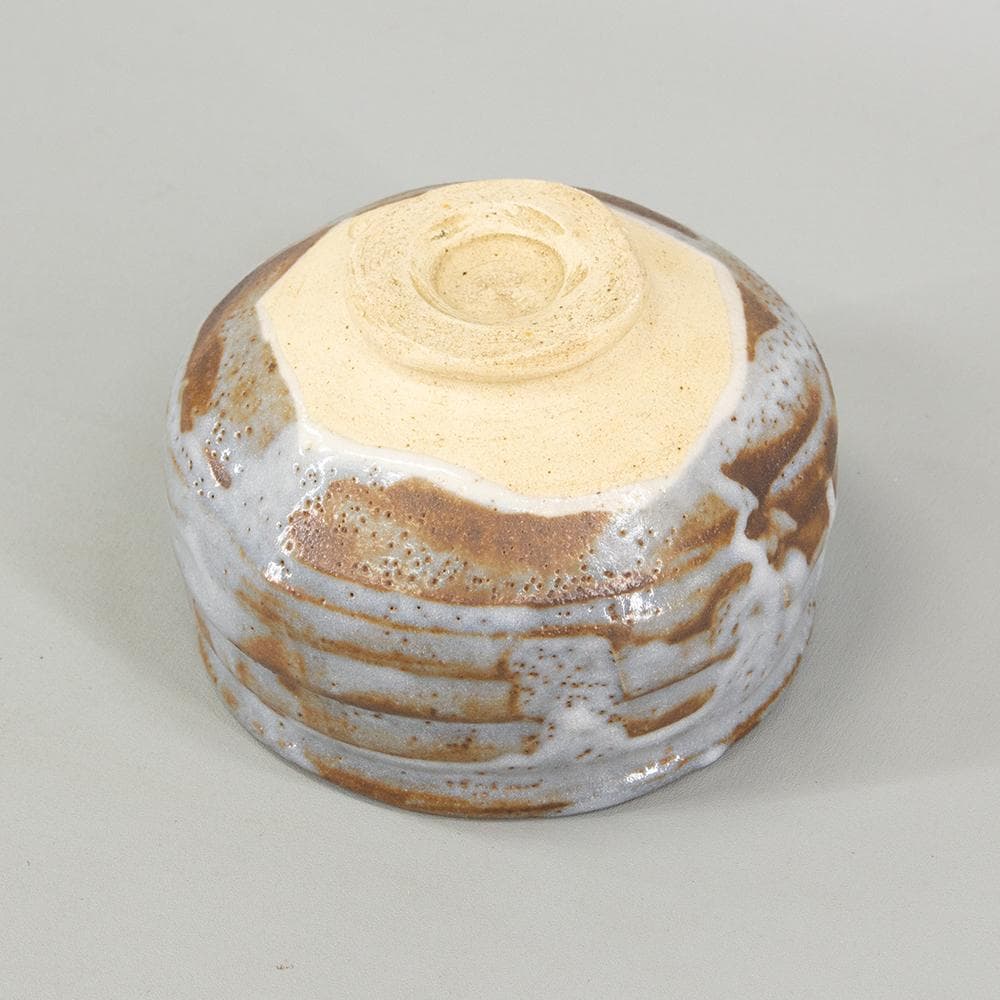
Experience Authentic Japan Art with this Nezumi Shino Chawan named Fukuju. This Noda Tozan Pottery serves as a Daitokuji Inscription Bowl and Signed Wooden Box Chawan, featuring Mouse-Gray Shino Glaze and White Grass Brushstroke Motif—a must-have for any Art Collector. This Handmade Mino Ware Teabowl embodies Wabi Sabi Pottery, and the Matcha Bowl Fukuju name carries auspicious meaning cherished across centuries of Japanese Tea Ceremony.
🔹 [ BASIC DETAILS ]
• Artist: Noda Tozan (野田東山) — Mino ceramics master
• Name (銘): Fukuju (福寿) — "Prosperity and Longevity," an auspicious blessing
• Technique: Nezumi Shino (鼡志野) — iron-rich clay body with milky white feldspar glaze, brown kiln-fire eruptions, white grass brushstroke reserve
• Inscription: Daitokuji-kakitsuke (大徳寺書付) — authenticated by the Daitokuji temple calligrapher, a mark of highest tea ceremony validation
• Era: 1980s–2000s
• Origin: Mino, Gifu Prefecture, Japan
• Dimensions: Height approx. 8.2 cm, Diameter approx. 12.2 cm
• Box: Original signed shared wooden box (共箱) with Tozan's stamp; yellow silk cloth (共布) included
• Condition: Excellent vintage condition; dramatic surface variations of brown and gray are intrinsic firing characteristics
🔹 [ CULTURAL & ARTISTIC INSIGHT ]
A Daitokuji-kakitsuke is among the rarest and most coveted credentials a Japanese tea bowl can carry. The great Zen temple of Daitokuji in Kyoto has been linked to the tea ceremony since Sen no Rikyu himself trained within its precincts in the sixteenth century. When a Daitokuji calligrapher inscribes a box lid — lending the bowl a poetic name and confirming its suitability for the highest tea practice — the object transcends mere ceramics. It becomes a document of continuity between the living practitioner and the long history of Japanese wabi-cha.
This bowl, named Fukuju (福寿), carries the blessing of "prosperity and longevity" — a name chosen with intention, as the Shino glaze's behavior during firing mirrors the very unpredictability that tea masters celebrate. The steel-gray ground of the Nezumi Shino breaks open in warm amber-brown passages where iron concentrations have asserted themselves, while a reserved white brushstroke — suggesting wind-bent grass or the calligraphic sweep of a single bold stroke — moves freely across the belly. In the hand, the bowl's slight asymmetry and the visible coiling ridges beneath the glaze recall the maker's direct touch.
POETIC LINE: "Fukuju — in this gray bowl, long life pools like rain collecting in ancient stone, unhurried and full."
🔹 [ DEEP-DIVE COMMENTARY ]
Nezumi Shino (鼡志野) is distinguished from the more familiar white Shino by the presence of iron-bearing clay or slip applied before the feldspar glaze coat. In reduction firing at temperatures exceeding 1,280°C, the iron compounds beneath the translucent white glaze are partially reduced, yielding the characteristic steel-to-mouse-gray surface that gives this type its name. Where the iron concentration is highest, warm brown or rust passages erupt through the milky glaze — a phenomenon Japanese connoisseurs call "higashi" (fire landscape) — making each Nezumi Shino bowl a unique record of the kiln atmosphere.
Noda Tozan worked within the Mino tradition centered in Tajimi and Toki, where unglazed Sue ware gave way over centuries to the sophisticated Momoyama-period Shino and Oribe traditions. His Nezumi Shino practice continues the lineage codified by figures such as Arakawa Toyozo, the twentieth century's great Shino revivalist, who rediscovered the ancient Momoyama kiln sites and reestablished the true feldspar-glaze method that had been lost for three centuries.
The Daitokuji inscription elevates this chawan into a category recognized by senior tea practitioners across all Ura Senke, Omote Senke, and Mushanokoji Senke schools: a bowl authenticated by Zen temple authority, suitable for formal chakai (tea gatherings) as well as private daily practice. The yellow silk cloth (共布) adds a further layer of provenance and protective tradition.
For the serious collector, this is a complete archive in ceramic form: the bowl, the box, the cloth, the calligrapher's inscription, and the auspicious name — Fukuju — all speaking together across generations.
🔹 [ 日本語解説 ]
【作品詳細】
作家:野田東山
銘:福寿(ふくじゅ)
技法:鼡志野 — 鉄分を含む化粧土に白長石釉を施し、還元焼成によって鼠色の地に茶褐色の火景と白い草文様の景色を作り出す美濃の伝統技法
書付:大徳寺書付(茶碗としての格付けの証明)
時代:昭和後期〜平成期
産地:岐阜県美濃
寸法:高さ約8.2cm、口径約12.2cm
付属品:共箱(東山落款入り)、共布(黄色絹布)
状態:良好。釉薬の茶褐色の景色は鼡志野焼成の本質的な表情であり、傷ではございません
【文化・芸術的解説】
大徳寺書付は、日本の茶道具が受けうる最高位の認証のひとつです。京都の大徳寺は、千利休が修行した禅の名刹として知られ、その書付は茶道具の品格と茶席での使用適正を保証するものです。銘「福寿」は「幸福と長寿」を意味する吉祥の名で、この茶碗にひとつの物語を与えています。
鼡志野の釉肌は、鉄分の多い土と長石釉が還元焼成の中で生み出す複雑な景色——鼠色の地に茶褐色の火のあとが滲み出し、白い筆の一撃が草のように走る——が本作の主題です。手に取ると、わずかな歪みと轆轤跡が残る腰のかたちが、制作者の手の温度を今に伝えています。
【深層解説】
野田東山は美濃焼の現代的継承者として、多治見・土岐を中心とする窯業地の伝統の中で制作を続けました。鼡志野の技法は、荒川豊蔵が桃山期の古窯址を再発見し、真の長石釉技法を復興した二十世紀の再興運動に連なるものです。鉄分の還元による「火景」と、白釉の溶融による「飛び白」が生み出す複雑な表面は、見るたびに新しい景色を発見させてくれます。
大徳寺書付が付くことで、この茶碗は表千家・裏千家・武者小路千家を問わず、正式な茶会で使用できる格を持つことが証明されています。共箱・共布・書付が揃う完全な状態での入手は、コレクターにとって稀少な機会です。銘「福寿」の吉祥の意味とともに、末永くご愛用いただける逸品です。
🔹 [ SHIPPING & PACKAGING ]
• Dispatch: Within 1-6 business days
• Carrier: Japan Post EMS / UPS (with tracking)
• Packaging: Carefully wrapped with protective materials
🔹 [ BASIC DETAILS ]
• Artist: Noda Tozan (野田東山) — Mino ceramics master
• Name (銘): Fukuju (福寿) — "Prosperity and Longevity," an auspicious blessing
• Technique: Nezumi Shino (鼡志野) — iron-rich clay body with milky white feldspar glaze, brown kiln-fire eruptions, white grass brushstroke reserve
• Inscription: Daitokuji-kakitsuke (大徳寺書付) — authenticated by the Daitokuji temple calligrapher, a mark of highest tea ceremony validation
• Era: 1980s–2000s
• Origin: Mino, Gifu Prefecture, Japan
• Dimensions: Height approx. 8.2 cm, Diameter approx. 12.2 cm
• Box: Original signed shared wooden box (共箱) with Tozan's stamp; yellow silk cloth (共布) included
• Condition: Excellent vintage condition; dramatic surface variations of brown and gray are intrinsic firing characteristics
🔹 [ CULTURAL & ARTISTIC INSIGHT ]
A Daitokuji-kakitsuke is among the rarest and most coveted credentials a Japanese tea bowl can carry. The great Zen temple of Daitokuji in Kyoto has been linked to the tea ceremony since Sen no Rikyu himself trained within its precincts in the sixteenth century. When a Daitokuji calligrapher inscribes a box lid — lending the bowl a poetic name and confirming its suitability for the highest tea practice — the object transcends mere ceramics. It becomes a document of continuity between the living practitioner and the long history of Japanese wabi-cha.
This bowl, named Fukuju (福寿), carries the blessing of "prosperity and longevity" — a name chosen with intention, as the Shino glaze's behavior during firing mirrors the very unpredictability that tea masters celebrate. The steel-gray ground of the Nezumi Shino breaks open in warm amber-brown passages where iron concentrations have asserted themselves, while a reserved white brushstroke — suggesting wind-bent grass or the calligraphic sweep of a single bold stroke — moves freely across the belly. In the hand, the bowl's slight asymmetry and the visible coiling ridges beneath the glaze recall the maker's direct touch.
POETIC LINE: "Fukuju — in this gray bowl, long life pools like rain collecting in ancient stone, unhurried and full."
🔹 [ DEEP-DIVE COMMENTARY ]
Nezumi Shino (鼡志野) is distinguished from the more familiar white Shino by the presence of iron-bearing clay or slip applied before the feldspar glaze coat. In reduction firing at temperatures exceeding 1,280°C, the iron compounds beneath the translucent white glaze are partially reduced, yielding the characteristic steel-to-mouse-gray surface that gives this type its name. Where the iron concentration is highest, warm brown or rust passages erupt through the milky glaze — a phenomenon Japanese connoisseurs call "higashi" (fire landscape) — making each Nezumi Shino bowl a unique record of the kiln atmosphere.
Noda Tozan worked within the Mino tradition centered in Tajimi and Toki, where unglazed Sue ware gave way over centuries to the sophisticated Momoyama-period Shino and Oribe traditions. His Nezumi Shino practice continues the lineage codified by figures such as Arakawa Toyozo, the twentieth century's great Shino revivalist, who rediscovered the ancient Momoyama kiln sites and reestablished the true feldspar-glaze method that had been lost for three centuries.
The Daitokuji inscription elevates this chawan into a category recognized by senior tea practitioners across all Ura Senke, Omote Senke, and Mushanokoji Senke schools: a bowl authenticated by Zen temple authority, suitable for formal chakai (tea gatherings) as well as private daily practice. The yellow silk cloth (共布) adds a further layer of provenance and protective tradition.
For the serious collector, this is a complete archive in ceramic form: the bowl, the box, the cloth, the calligrapher's inscription, and the auspicious name — Fukuju — all speaking together across generations.
🔹 [ 日本語解説 ]
【作品詳細】
作家:野田東山
銘:福寿(ふくじゅ)
技法:鼡志野 — 鉄分を含む化粧土に白長石釉を施し、還元焼成によって鼠色の地に茶褐色の火景と白い草文様の景色を作り出す美濃の伝統技法
書付:大徳寺書付(茶碗としての格付けの証明)
時代:昭和後期〜平成期
産地:岐阜県美濃
寸法:高さ約8.2cm、口径約12.2cm
付属品:共箱(東山落款入り)、共布(黄色絹布)
状態:良好。釉薬の茶褐色の景色は鼡志野焼成の本質的な表情であり、傷ではございません
【文化・芸術的解説】
大徳寺書付は、日本の茶道具が受けうる最高位の認証のひとつです。京都の大徳寺は、千利休が修行した禅の名刹として知られ、その書付は茶道具の品格と茶席での使用適正を保証するものです。銘「福寿」は「幸福と長寿」を意味する吉祥の名で、この茶碗にひとつの物語を与えています。
鼡志野の釉肌は、鉄分の多い土と長石釉が還元焼成の中で生み出す複雑な景色——鼠色の地に茶褐色の火のあとが滲み出し、白い筆の一撃が草のように走る——が本作の主題です。手に取ると、わずかな歪みと轆轤跡が残る腰のかたちが、制作者の手の温度を今に伝えています。
【深層解説】
野田東山は美濃焼の現代的継承者として、多治見・土岐を中心とする窯業地の伝統の中で制作を続けました。鼡志野の技法は、荒川豊蔵が桃山期の古窯址を再発見し、真の長石釉技法を復興した二十世紀の再興運動に連なるものです。鉄分の還元による「火景」と、白釉の溶融による「飛び白」が生み出す複雑な表面は、見るたびに新しい景色を発見させてくれます。
大徳寺書付が付くことで、この茶碗は表千家・裏千家・武者小路千家を問わず、正式な茶会で使用できる格を持つことが証明されています。共箱・共布・書付が揃う完全な状態での入手は、コレクターにとって稀少な機会です。銘「福寿」の吉祥の意味とともに、末永くご愛用いただける逸品です。
🔹 [ SHIPPING & PACKAGING ]
• Dispatch: Within 1-6 business days
• Carrier: Japan Post EMS / UPS (with tracking)
• Packaging: Carefully wrapped with protective materials
Quantity
Couldn't load pickup availability
Low stock: 1 left
View full details