1
/
of
8
Nashiji Textured Matcha Bowl by Yokota Kenraku (Toko) — Omaki Kiln, Deep Indigo Interior, Signed Box
Nashiji Textured Matcha Bowl by Yokota Kenraku (Toko) — Omaki Kiln, Deep Indigo Interior, Signed Box
Regular price
Dhs. 1,045.00 AED
Regular price
Sale price
Dhs. 1,045.00 AED
Taxes included.
Shipping calculated at checkout.
Experience Authentic Japan Art with this Japanese Matcha Bowl. This Signed Ceramic Tea Bowl serves as a Wabi Tea Ceremony Bowl and Handcrafted Pottery Gift, featuring Nashiji Carved Texture and Blue Glazed Interior—a must-have for any Art Collector. This Omaki Kiln Chawan by Yokota Kenraku embodies Japanese Ceramic Art at its most restrained and powerful.
🔹 [ BASIC DETAILS ]
• Artist: Yokota Kenraku (art name: Toko / 陶光), Omaki Kiln (御牧窯)
• Technique: Nashiji-mon carved exterior texture with layered blue interior glaze (seihaku-yu style)
• Era: Late Showa – Heisei period (estimated 1980s–2000s)
• Origin: Omaki Kiln, Japan
• Dimensions: Diameter approx. 12 cm, Height approx. 8.5 cm
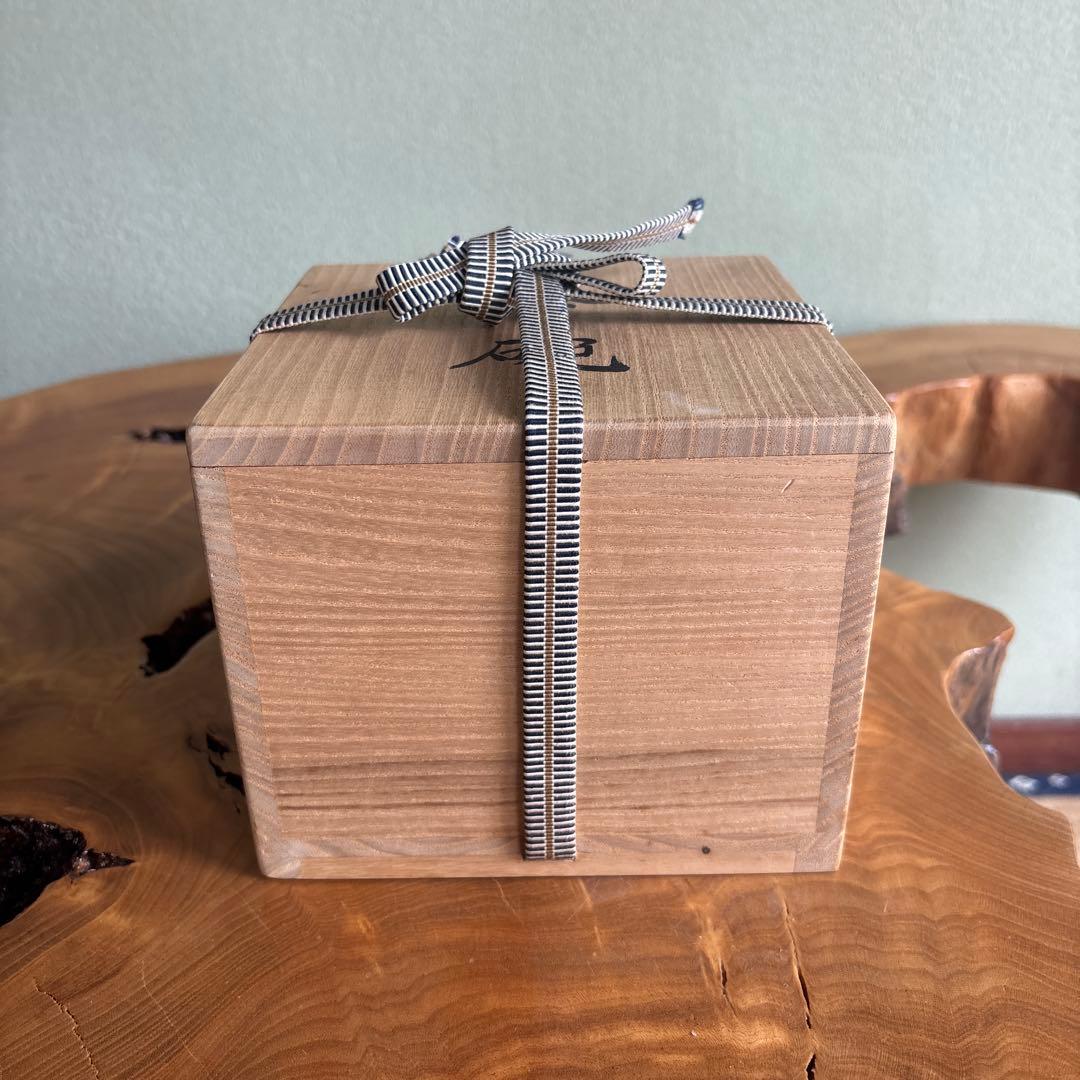
• Box: Original signed tomobako (wooden box) inscribed "陶光作" with artist's red seal
• Condition: Excellent — no chips, no cracks, no repairs
🔹 [ CULTURAL & ARTISTIC INSIGHT ]
The first thing one notices about this chawan is the contradiction it holds: a surface that speaks of earth and stone enclosing an interior of sky and deep water. The exterior of this bowl is covered in nashiji-mon — a dense, all-over pear-skin texture achieved by carving or impressing minute granular marks into the clay before firing. The result is a surface of arresting visual density, like the bark of an ancient tree or the scales of a river carp, shifting from dark charcoal to warm sandy ochre as the light changes. Then the eye moves inward. The interior is glazed in a deep indigo blue — a midnight pool that deepens at the center and feathers outward into lighter mottled grey-blue near the rim. This contrast, rough versus smooth, earth versus sky, tension versus stillness, is the aesthetic heart of the piece. In the language of chado (the way of tea), this bowl asks the drinker to hold both worlds simultaneously: the grounded and the vast.
POETIC LINE: "Stone on the outside, midnight sky within — one bowl, two silences."
🔹 [ DEEP-DIVE COMMENTARY ]
Omaki Kiln (御牧窯) is a studio kiln whose name references the classical court pastures (御牧, maki) of ancient Japan, invoking a lineage tied to both nature and cultural memory. Yokota Kenraku, working under the art name Toko (陶光 — meaning "ceramic light" or "the light of pottery"), developed a personal vocabulary of textured stonewares that sit comfortably within the broader tradition of mingei (folk craft aesthetics) while maintaining the refinement expected of formally trained ceramic artists.
The nashiji technique — covering the exterior in a dense pear-skin or stone-skin texture — has roots in several Japanese ceramic traditions. In lacquerware, nashiji refers to gold dust suspended beneath layers of transparent lacquer; in ceramics, the term is borrowed to describe surfaces similarly dense with small impressed or carved markings. The method requires the potter to work the clay surface while it retains sufficient plasticity, using tools or stamps to apply the repeated micro-texture without losing the overall form. The challenge is maintaining structural integrity while achieving sufficient depth of texture to survive the kiln's transformation.
The interior blue glaze is particularly noteworthy. Deep indigo and tenmoku-adjacent glazes occupy a revered position in Japanese ceramics history, connected to the great Song Dynasty oil-spot and hares-fur temmoku bowls that arrived in Japan through trade and became foundational objects in the early tea ceremony tradition. Yokota Toko's interior glaze, while not a classical temmoku, draws from this aesthetic well — the pooling, the depth, the way the glaze seems to hold light rather than reflect it — these are qualities tea practitioners have valued for centuries.
For the collector, what makes this bowl singular is the resolved tension between its two surfaces. Many potters choose harmony between interior and exterior; Toko chose deliberate contrast, and carried it with complete conviction. The included tomobako, bearing the artist's inscription and seal, adds provenance and collectibility. This is a bowl intended for use in tea ceremony, but its presence as an object — as something to be held, turned, and contemplated — extends well beyond the tea room.
🔹 [ 日本語解説 ]
■ 基本情報
• 作家:横田拳楽(陶号:陶光)、御牧窯
• 技法:梨地状刻文(外側全面)、青釉見込み(内側)
• 年代:昭和後期〜平成期(推定)
• 産地:御牧窯(日本)
• 寸法:直径 約12cm、高さ 約8.5cm
• 箱:共箱(「陶光作」墨書・朱印入り)
• 状態:良好 — ヒビ・カケ・修復の痕跡なし
■ 文化的・美学的洞察
この茶碗が持つ最大の魅力は、相反する二つの世界を一つの器の中に封じ込めた点にある。外側は土と石の語彙で語られている。梨地状に刻まれた細かな文様が器の全体を覆い、視線を引きつけ、触れる指に複雑な触感を返す。炭色と砂色の入り混じった表面は、古い木の幹や川魚の鱗のように生命的な密度を持つ。そして見込みへ。そこには深い藍の釉薬が満ちている。中心ほど濃く、夜の水のように澄んでいる。この対比こそが茶碗の核心であり、荒涼とした大地と静謐な天空を同時に掌の中に収めるという、茶道が本来求めてきた感覚の集約といえる。
■ 深掘り解説
御牧窯とは、古代の朝廷直轄牧場(御牧)への参照を名に持つ窯で、自然と文化的記憶の双方への敬意を示す命名である。横田拳楽は陶号「陶光(陶芸の光)」のもと、民芸的な素朴さと正統な陶芸教育の洗練を兼ね備えた、独自の石器的陶風を築いた。
梨地文は本来、漆芸における金粉を透明漆に封じ込める技法の名称だが、陶芸においてはそれに近い密度の表面文様を指す言葉として転用される。この技法では、素地が一定の柔らかさを保つ段階で道具や印材を用いて細かな刻みを施す。全体のフォルムを崩さず、かつ焼成後も明瞭に残る深さを確保することが職人の腕の見せ所である。
内側の藍釉は、中国宋代の天目茶碗——曜変、禽毛、油滴——が室町時代の日本に渡り、茶の湯の根幹的な美意識を形成した歴史的系譜と深くつながっている。横田陶光の見込み釉は古典的な天目とは異なるが、深みのある釉溜まり、光を反射するのではなく吸い込むような質感は、同じ精神の水脈に属している。
コレクターにとってこの茶碗の価値は、対比の解決にある。外側と内側の調和ではなく、意図的な緊張をあくまで確信を持って造形した点が際立つ。作家銘・朱印入りの共箱を伴う本作は、茶席での実用に耐えながら、物としての存在感において茶室の外にも十分な力を持つ。
🔹 [ SHIPPING & PACKAGING ]
• Dispatch: Within 1-6 business days
• Carrier: Japan Post EMS / UPS (with tracking)
• Packaging: Carefully wrapped with protective materials
🔹 [ BASIC DETAILS ]
• Artist: Yokota Kenraku (art name: Toko / 陶光), Omaki Kiln (御牧窯)
• Technique: Nashiji-mon carved exterior texture with layered blue interior glaze (seihaku-yu style)
• Era: Late Showa – Heisei period (estimated 1980s–2000s)
• Origin: Omaki Kiln, Japan
• Dimensions: Diameter approx. 12 cm, Height approx. 8.5 cm
• Box: Original signed tomobako (wooden box) inscribed "陶光作" with artist's red seal
• Condition: Excellent — no chips, no cracks, no repairs
🔹 [ CULTURAL & ARTISTIC INSIGHT ]
The first thing one notices about this chawan is the contradiction it holds: a surface that speaks of earth and stone enclosing an interior of sky and deep water. The exterior of this bowl is covered in nashiji-mon — a dense, all-over pear-skin texture achieved by carving or impressing minute granular marks into the clay before firing. The result is a surface of arresting visual density, like the bark of an ancient tree or the scales of a river carp, shifting from dark charcoal to warm sandy ochre as the light changes. Then the eye moves inward. The interior is glazed in a deep indigo blue — a midnight pool that deepens at the center and feathers outward into lighter mottled grey-blue near the rim. This contrast, rough versus smooth, earth versus sky, tension versus stillness, is the aesthetic heart of the piece. In the language of chado (the way of tea), this bowl asks the drinker to hold both worlds simultaneously: the grounded and the vast.
POETIC LINE: "Stone on the outside, midnight sky within — one bowl, two silences."
🔹 [ DEEP-DIVE COMMENTARY ]
Omaki Kiln (御牧窯) is a studio kiln whose name references the classical court pastures (御牧, maki) of ancient Japan, invoking a lineage tied to both nature and cultural memory. Yokota Kenraku, working under the art name Toko (陶光 — meaning "ceramic light" or "the light of pottery"), developed a personal vocabulary of textured stonewares that sit comfortably within the broader tradition of mingei (folk craft aesthetics) while maintaining the refinement expected of formally trained ceramic artists.
The nashiji technique — covering the exterior in a dense pear-skin or stone-skin texture — has roots in several Japanese ceramic traditions. In lacquerware, nashiji refers to gold dust suspended beneath layers of transparent lacquer; in ceramics, the term is borrowed to describe surfaces similarly dense with small impressed or carved markings. The method requires the potter to work the clay surface while it retains sufficient plasticity, using tools or stamps to apply the repeated micro-texture without losing the overall form. The challenge is maintaining structural integrity while achieving sufficient depth of texture to survive the kiln's transformation.
The interior blue glaze is particularly noteworthy. Deep indigo and tenmoku-adjacent glazes occupy a revered position in Japanese ceramics history, connected to the great Song Dynasty oil-spot and hares-fur temmoku bowls that arrived in Japan through trade and became foundational objects in the early tea ceremony tradition. Yokota Toko's interior glaze, while not a classical temmoku, draws from this aesthetic well — the pooling, the depth, the way the glaze seems to hold light rather than reflect it — these are qualities tea practitioners have valued for centuries.
For the collector, what makes this bowl singular is the resolved tension between its two surfaces. Many potters choose harmony between interior and exterior; Toko chose deliberate contrast, and carried it with complete conviction. The included tomobako, bearing the artist's inscription and seal, adds provenance and collectibility. This is a bowl intended for use in tea ceremony, but its presence as an object — as something to be held, turned, and contemplated — extends well beyond the tea room.
🔹 [ 日本語解説 ]
■ 基本情報
• 作家:横田拳楽(陶号:陶光)、御牧窯
• 技法:梨地状刻文(外側全面)、青釉見込み(内側)
• 年代:昭和後期〜平成期(推定)
• 産地:御牧窯(日本)
• 寸法:直径 約12cm、高さ 約8.5cm
• 箱:共箱(「陶光作」墨書・朱印入り)
• 状態:良好 — ヒビ・カケ・修復の痕跡なし
■ 文化的・美学的洞察
この茶碗が持つ最大の魅力は、相反する二つの世界を一つの器の中に封じ込めた点にある。外側は土と石の語彙で語られている。梨地状に刻まれた細かな文様が器の全体を覆い、視線を引きつけ、触れる指に複雑な触感を返す。炭色と砂色の入り混じった表面は、古い木の幹や川魚の鱗のように生命的な密度を持つ。そして見込みへ。そこには深い藍の釉薬が満ちている。中心ほど濃く、夜の水のように澄んでいる。この対比こそが茶碗の核心であり、荒涼とした大地と静謐な天空を同時に掌の中に収めるという、茶道が本来求めてきた感覚の集約といえる。
■ 深掘り解説
御牧窯とは、古代の朝廷直轄牧場(御牧)への参照を名に持つ窯で、自然と文化的記憶の双方への敬意を示す命名である。横田拳楽は陶号「陶光(陶芸の光)」のもと、民芸的な素朴さと正統な陶芸教育の洗練を兼ね備えた、独自の石器的陶風を築いた。
梨地文は本来、漆芸における金粉を透明漆に封じ込める技法の名称だが、陶芸においてはそれに近い密度の表面文様を指す言葉として転用される。この技法では、素地が一定の柔らかさを保つ段階で道具や印材を用いて細かな刻みを施す。全体のフォルムを崩さず、かつ焼成後も明瞭に残る深さを確保することが職人の腕の見せ所である。
内側の藍釉は、中国宋代の天目茶碗——曜変、禽毛、油滴——が室町時代の日本に渡り、茶の湯の根幹的な美意識を形成した歴史的系譜と深くつながっている。横田陶光の見込み釉は古典的な天目とは異なるが、深みのある釉溜まり、光を反射するのではなく吸い込むような質感は、同じ精神の水脈に属している。
コレクターにとってこの茶碗の価値は、対比の解決にある。外側と内側の調和ではなく、意図的な緊張をあくまで確信を持って造形した点が際立つ。作家銘・朱印入りの共箱を伴う本作は、茶席での実用に耐えながら、物としての存在感において茶室の外にも十分な力を持つ。
🔹 [ SHIPPING & PACKAGING ]
• Dispatch: Within 1-6 business days
• Carrier: Japan Post EMS / UPS (with tracking)
• Packaging: Carefully wrapped with protective materials
Quantity
Couldn't load pickup availability
Low stock: 1 left
View full details