1
/
of
20
Nanten Maki-e Large Natsume Tea Caddy by Hosokawa Shiko — Silver Interior, Signed Box
Nanten Maki-e Large Natsume Tea Caddy by Hosokawa Shiko — Silver Interior, Signed Box
Regular price
Dhs. 2,445.00 AED
Regular price
Sale price
Dhs. 2,445.00 AED
Taxes included.
Shipping calculated at checkout.
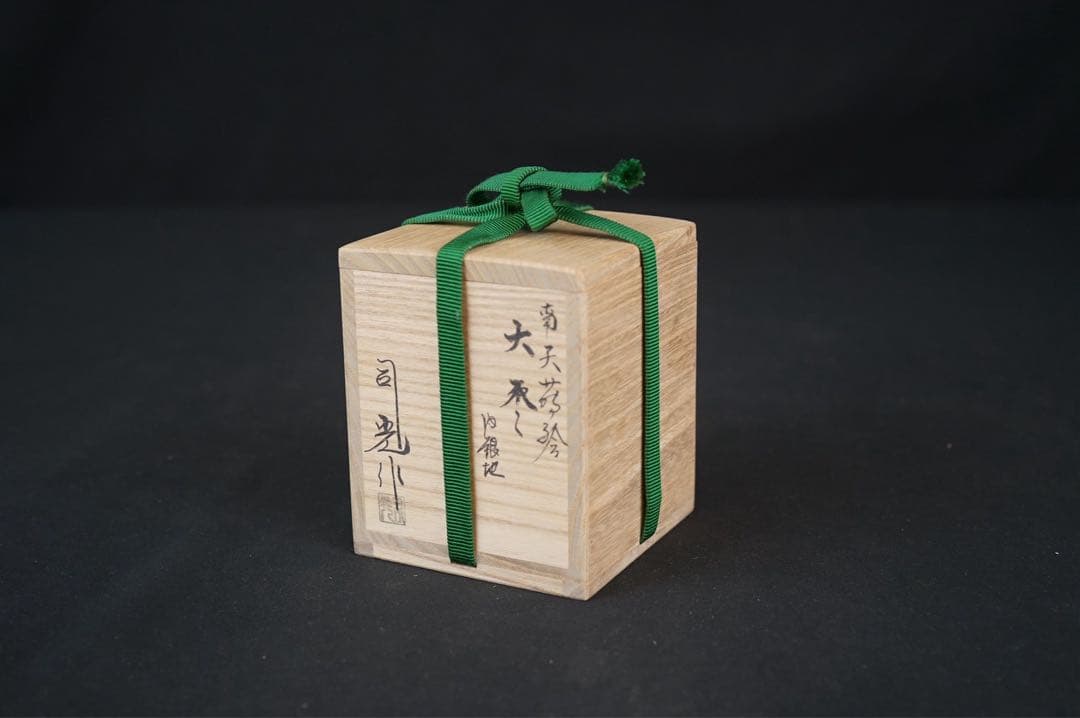
Experience Authentic Japan Art with this Japanese Maki-e Tea Caddy. This Nanten Maki-e Natsume serves as a Japanese Tea Ceremony Caddy and Lacquer Tea Container, featuring Hira Maki-e Lacquerwork and Silver Interior Natsume—a must-have for any Art Collector seeking Signed Wooden Box Antique.
🔹 [ BASIC DETAILS ]
• Artist: Hosokawa Shiko (細川司光), registered maki-e lacquer artist
• Technique: Hira maki-e (flat maki-e) on jet-black lacquer ground; interior finished in silver (gin-ji)
• Era: Late Showa to early Heisei period (est. 1980s–1990s)
• Origin: Japan (Kyoto lacquer tradition)
• Dimensions: Height approx. 7 cm, Diameter approx. 7 cm
• Box: Original signed wooden tomobako with artist seal; cloth (nunobukuro) included
• Condition: Near-mint (極美品); no chips, cracks, or abrasions; lacquer surface retains full gloss
🔹 [ CULTURAL & ARTISTIC INSIGHT ]
The natsume — named for its resemblance to the Chinese jujube fruit — is one of the most intimate utensils in the Japanese tea ceremony. Unlike the heavier, more ceremonial jūko, the natsume belongs to the informal temae known as usucha, the frothy thin tea that closes a gathering with lightness and warmth. To hold one is to hold the moment just before the bowl is raised.
Nanten (Nandina domestica, heavenly bamboo) is among the most auspicious motifs in the Japanese decorative arts. Its name is a homophone for "avert disaster" (難を転ずる — nan wo tenzuru), and its vivid scarlet berries against winter-dark foliage have long announced the New Year in the tea room. Here, Hosokawa Shiko deploys the motif with controlled exuberance: slender green branches cascade across the lacquered ground, precise clusters of persimmon-red berries rendered in raised togidashi dots, while gold-tipped stems anchor the composition. The eye moves naturally, as a branch bends in wind.
The interior silver ground — gin-ji — is not merely decorative. Its cool luminescence reflects the green of matcha at the moment the lid is removed, creating a fleeting, private landscape inside the caddy. Few lacquerers invest this care in a space the guest will see for only a breath.
POETIC LINE: "The red berries hold fast to winter — quiet fire against black silence, promising that warmth will return."
🔹 [ DEEP-DIVE COMMENTARY ]
Hira maki-e, the foundational technique of Japanese lacquer decoration, involves sifting metallic powders — gold, silver, and pigment — directly onto a tacky urushi surface before it cures. The design is first painted onto the cured base coat in sticky urushi, the powders are applied through a fine bamboo tube (tsutsu), and the entire surface is then sealed and polished to a unified plane. The result has no perceptible relief: the motif exists as if woven into the lacquer itself rather than applied above it. This flush quality is what distinguishes hira maki-e from the raised takamaki-e favored for more baroque compositions.
Hosokawa Shiko's nanten design demonstrates the discipline this technique demands. The berries are individually dotted in vermilion lacquer (shu-urushi) and sealed to achieve their spherical tension; each leaf is painted with layered green urushi mixed from ao-urushi and transparent nori-urushi, producing the subtle variation between sun-lit and shadow-cast foliage visible across the caddy's surface. This kind of tonal nuance within a single-stage hira maki-e composition is the signature of a practitioner who has spent decades studying form before deploying simplicity.
The large natsume (ō-natsume) format — wider and taller than the standard — is selected by tea masters for fukuro-dana and other formal shelf arrangements where the caddy serves a display function as well as a functional one. Its proportions reward examination from a distance while rewarding even closer scrutiny of the lacquer surface under direct light.
The gin-ji (silver-ground) interior is a deliberate contrast choice: where the exterior speaks in the vocabulary of winter darkness relieved by fire-red berries, the interior opens into a quiet luminous space — the philosophical interior of the tea moment itself. Silver oxidizes gently over time, deepening to a warm gray that only increases the sense of age and authenticity.
The original tomobako bears Hosokawa Shiko's own calligraphy and seal, confirming authorship and providing the provenance documentation increasingly valued by international collectors of Japanese lacquer.
[ JAPANESE DESCRIPTION / 日本語解説 ]
🔹 【基本情報】
• 作家:細川司光(ほそかわ しこう)— 蒔絵師・漆芸作家
• 技法:平蒔絵(じ漆に粉を蒔き、研ぎ出さず面一に仕上げる)、内銀地
• 年代:昭和後期〜平成初期(推定1980〜1990年代)
• 産地:日本(京都漆芸の伝統)
• 寸法:高さ約7cm、幅(径)約7cm
• 付属:共箱(作家自筆・印入り)、共布(仕覆)
• 状態:極美品。欠け・割れ・摩耗なし。漆面の光沢完全に保持。
🔹 【文化・芸術的背景】
大棗は薄茶点前に用いられる最も親しみ深い棗の形で、「棗」という名はその形が棗の実(なつめ)に似ることに由来します。大きめの胴は棚飾りにも映え、遠くからも存在感を放ちながら、手に取れば繊細な漆の肌が指先に語りかけます。
南天は「難を転ずる」という縁起から、正月や冬の茶席において最も尊ばれる画題のひとつです。細川司光はこの吉祥の植物を漆黒の胴に描き、緑の細枝と朱赤の実のクラスターを平蒔絵で展開しました。金色の葉筋が引き締め役となり、赤い実は朱漆の点描で一粒ずつ丁寧に置かれています。開けた瞬間に現れる内銀地は、抹茶の翠緑を静かに映し、一瞬の風景を茶席に出現させます。
「赤い実は冬に凛と留まる――漆黒の沈黙に宿る静かな火、やがて戻る温もりを約す。」
🔹 【深層解説】
平蒔絵とは、漆を塗って粘着性のある面に金・銀・朱などの粉を蒔き、その後上塗り・研ぎ出しを重ねることで文様を地面と面一に仕上げる技法です。浮き彫り効果を持つ高蒔絵と異なり、平蒔絵の意匠は漆の肌に溶け込んだかのような静謐な存在感を持ちます。この平坦な完結性こそ、研ぎ澄まされた形の語りを可能にします。
細川司光による南天の表現は、この技法の習熟がいかに長い修練を要するかを示しています。葉の緑は青漆と透明漆を重ねて色調の変化を生み出し、日当たりと影の葉が一つの意匠の中に共存しています。朱赤の実は一粒ずつ朱漆で点描され、球形の張りを湛えて完成されています。この種の細部のトーン管理こそ、数十年単位の修練を経た作家の証です。
大棗という形式は通常の棗より胴が広く背が高く、棚飾り(袋棚など)における展示性を高める設計になっています。遠目には画面全体の動きを楽しめ、近寄れば漆の肌に射す光の微妙な変化が目を引きます。
銀地の内部は、外の漆黒と赤実の世界に対する哲学的な応答です。冬の暗闇に宿る火から、内に広がる静かな光空間へ――それは茶の湯の場における「間」の体験そのものです。銀は時とともに渋い灰色へと変化を深め、使い込まれた骨董としての風格をさらに高めていきます。
共箱には細川司光自身の墨書と印が入り、作品の来歴と真筆を証明する貴重な証書として機能します。
🔹 [ SHIPPING & PACKAGING ]
• Dispatch: Within 1-6 business days
• Carrier: Japan Post EMS / UPS (with tracking)
• Packaging: Carefully wrapped with protective materials
🔹 [ BASIC DETAILS ]
• Artist: Hosokawa Shiko (細川司光), registered maki-e lacquer artist
• Technique: Hira maki-e (flat maki-e) on jet-black lacquer ground; interior finished in silver (gin-ji)
• Era: Late Showa to early Heisei period (est. 1980s–1990s)
• Origin: Japan (Kyoto lacquer tradition)
• Dimensions: Height approx. 7 cm, Diameter approx. 7 cm
• Box: Original signed wooden tomobako with artist seal; cloth (nunobukuro) included
• Condition: Near-mint (極美品); no chips, cracks, or abrasions; lacquer surface retains full gloss
🔹 [ CULTURAL & ARTISTIC INSIGHT ]
The natsume — named for its resemblance to the Chinese jujube fruit — is one of the most intimate utensils in the Japanese tea ceremony. Unlike the heavier, more ceremonial jūko, the natsume belongs to the informal temae known as usucha, the frothy thin tea that closes a gathering with lightness and warmth. To hold one is to hold the moment just before the bowl is raised.
Nanten (Nandina domestica, heavenly bamboo) is among the most auspicious motifs in the Japanese decorative arts. Its name is a homophone for "avert disaster" (難を転ずる — nan wo tenzuru), and its vivid scarlet berries against winter-dark foliage have long announced the New Year in the tea room. Here, Hosokawa Shiko deploys the motif with controlled exuberance: slender green branches cascade across the lacquered ground, precise clusters of persimmon-red berries rendered in raised togidashi dots, while gold-tipped stems anchor the composition. The eye moves naturally, as a branch bends in wind.
The interior silver ground — gin-ji — is not merely decorative. Its cool luminescence reflects the green of matcha at the moment the lid is removed, creating a fleeting, private landscape inside the caddy. Few lacquerers invest this care in a space the guest will see for only a breath.
POETIC LINE: "The red berries hold fast to winter — quiet fire against black silence, promising that warmth will return."
🔹 [ DEEP-DIVE COMMENTARY ]
Hira maki-e, the foundational technique of Japanese lacquer decoration, involves sifting metallic powders — gold, silver, and pigment — directly onto a tacky urushi surface before it cures. The design is first painted onto the cured base coat in sticky urushi, the powders are applied through a fine bamboo tube (tsutsu), and the entire surface is then sealed and polished to a unified plane. The result has no perceptible relief: the motif exists as if woven into the lacquer itself rather than applied above it. This flush quality is what distinguishes hira maki-e from the raised takamaki-e favored for more baroque compositions.
Hosokawa Shiko's nanten design demonstrates the discipline this technique demands. The berries are individually dotted in vermilion lacquer (shu-urushi) and sealed to achieve their spherical tension; each leaf is painted with layered green urushi mixed from ao-urushi and transparent nori-urushi, producing the subtle variation between sun-lit and shadow-cast foliage visible across the caddy's surface. This kind of tonal nuance within a single-stage hira maki-e composition is the signature of a practitioner who has spent decades studying form before deploying simplicity.
The large natsume (ō-natsume) format — wider and taller than the standard — is selected by tea masters for fukuro-dana and other formal shelf arrangements where the caddy serves a display function as well as a functional one. Its proportions reward examination from a distance while rewarding even closer scrutiny of the lacquer surface under direct light.
The gin-ji (silver-ground) interior is a deliberate contrast choice: where the exterior speaks in the vocabulary of winter darkness relieved by fire-red berries, the interior opens into a quiet luminous space — the philosophical interior of the tea moment itself. Silver oxidizes gently over time, deepening to a warm gray that only increases the sense of age and authenticity.
The original tomobako bears Hosokawa Shiko's own calligraphy and seal, confirming authorship and providing the provenance documentation increasingly valued by international collectors of Japanese lacquer.
[ JAPANESE DESCRIPTION / 日本語解説 ]
🔹 【基本情報】
• 作家:細川司光(ほそかわ しこう)— 蒔絵師・漆芸作家
• 技法:平蒔絵(じ漆に粉を蒔き、研ぎ出さず面一に仕上げる)、内銀地
• 年代:昭和後期〜平成初期(推定1980〜1990年代)
• 産地:日本(京都漆芸の伝統)
• 寸法:高さ約7cm、幅(径)約7cm
• 付属:共箱(作家自筆・印入り)、共布(仕覆)
• 状態:極美品。欠け・割れ・摩耗なし。漆面の光沢完全に保持。
🔹 【文化・芸術的背景】
大棗は薄茶点前に用いられる最も親しみ深い棗の形で、「棗」という名はその形が棗の実(なつめ)に似ることに由来します。大きめの胴は棚飾りにも映え、遠くからも存在感を放ちながら、手に取れば繊細な漆の肌が指先に語りかけます。
南天は「難を転ずる」という縁起から、正月や冬の茶席において最も尊ばれる画題のひとつです。細川司光はこの吉祥の植物を漆黒の胴に描き、緑の細枝と朱赤の実のクラスターを平蒔絵で展開しました。金色の葉筋が引き締め役となり、赤い実は朱漆の点描で一粒ずつ丁寧に置かれています。開けた瞬間に現れる内銀地は、抹茶の翠緑を静かに映し、一瞬の風景を茶席に出現させます。
「赤い実は冬に凛と留まる――漆黒の沈黙に宿る静かな火、やがて戻る温もりを約す。」
🔹 【深層解説】
平蒔絵とは、漆を塗って粘着性のある面に金・銀・朱などの粉を蒔き、その後上塗り・研ぎ出しを重ねることで文様を地面と面一に仕上げる技法です。浮き彫り効果を持つ高蒔絵と異なり、平蒔絵の意匠は漆の肌に溶け込んだかのような静謐な存在感を持ちます。この平坦な完結性こそ、研ぎ澄まされた形の語りを可能にします。
細川司光による南天の表現は、この技法の習熟がいかに長い修練を要するかを示しています。葉の緑は青漆と透明漆を重ねて色調の変化を生み出し、日当たりと影の葉が一つの意匠の中に共存しています。朱赤の実は一粒ずつ朱漆で点描され、球形の張りを湛えて完成されています。この種の細部のトーン管理こそ、数十年単位の修練を経た作家の証です。
大棗という形式は通常の棗より胴が広く背が高く、棚飾り(袋棚など)における展示性を高める設計になっています。遠目には画面全体の動きを楽しめ、近寄れば漆の肌に射す光の微妙な変化が目を引きます。
銀地の内部は、外の漆黒と赤実の世界に対する哲学的な応答です。冬の暗闇に宿る火から、内に広がる静かな光空間へ――それは茶の湯の場における「間」の体験そのものです。銀は時とともに渋い灰色へと変化を深め、使い込まれた骨董としての風格をさらに高めていきます。
共箱には細川司光自身の墨書と印が入り、作品の来歴と真筆を証明する貴重な証書として機能します。
🔹 [ SHIPPING & PACKAGING ]
• Dispatch: Within 1-6 business days
• Carrier: Japan Post EMS / UPS (with tracking)
• Packaging: Carefully wrapped with protective materials
Quantity
Couldn't load pickup availability
Low stock: 1 left
View full details