1
/
of
16
Nakamura Takaya Suma Landscape Maki-e Natsume — Gold Plovers, Genji Reference, Signed Box
Regular price
Dhs. 2,620.00 AED
Regular price
Sale price
Dhs. 2,620.00 AED
Taxes included.
Shipping calculated at checkout.
Gold plovers cross a black lacquer sky above the shore at Suma — the same shore where Genji was exiled, where longing became poetry. Nakamura Takaya inscribes this landscape not as illustration but as cultural memory, drawn with maki-e's patient gold. The mirror-like black beneath is not background; it is the sea at night, the dark before the plovers arrive.
[ DETAILS ]
• Form: Natsume (tea caddy)
• Dimensions: Diameter 7.5 cm × Height 6.8 cm
• Decoration: Suma-e (須磨絵) landscape with chidori (plovers) in gold maki-e on deep black lacquer
• Artist: Nakamura Takaya (中村孝也)
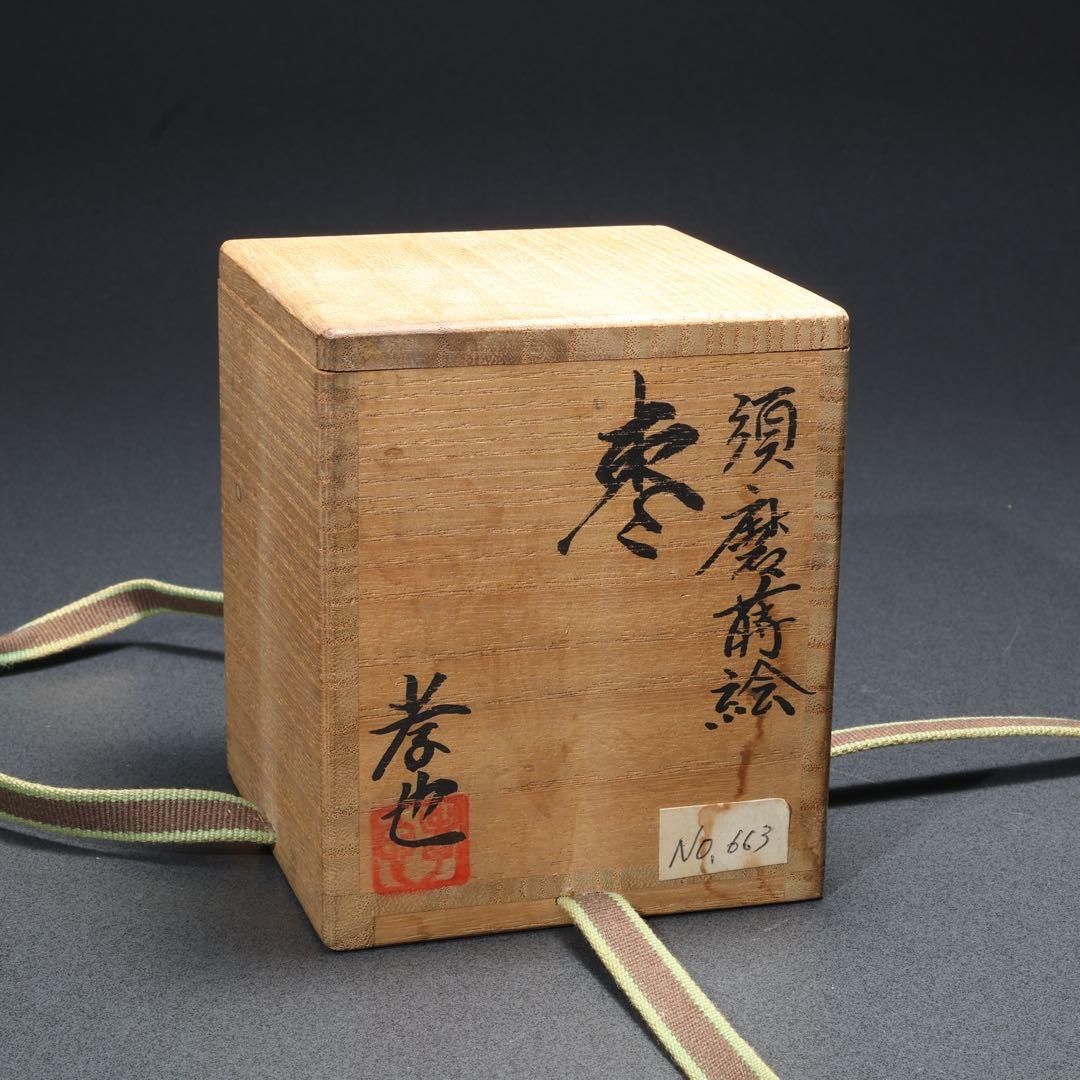
• Provenance: Signed wooden tomobako (共箱) and cloth wrapper (共布) inscribed 須磨蒔絵 棗 孝也
• Condition: Good antique condition with fine lacquer surface
[ CULTURAL CONTEXT ]
Suma is not merely a place on the Hyogo coast. It is a chapter. In The Tale of Genji — the world's first novel, written in 11th-century Heian Japan — Hikaru Genji retreats to Suma in exile, and his poems from that shore became the emotional center of Japanese literary consciousness. The chidori (plover) in flight across the Suma landscape is one of classical Japanese poetry's most resonant images: the bird's cry at night on a winter shore becomes a symbol of loneliness that deepens into beauty.
To commission a natsume with this motif is to invite that literary density into the tea room. Nakamura Takaya understands this weight. The composition on this caddy does not depict Suma — it holds it.
The tomobako bears the artist's inscription in brush: 須磨蒔絵 棗 孝也. Provenance and intention declared together.
[ 日本語説明 ]
中村孝也作、須磨蒔絵棗。黒漆の鏡面に金蒔絵で描かれた千鳥の群れが、源氏物語「須磨」の情景を静かに呼び起こします。直径7.5cm、高さ6.8cmの端正な姿。共箱・共布付きで「須磨蒔絵 棗 孝也」の銘入り。文学的・工芸的双方の価値を持つ茶道具です。
🔹 [ SHIPPING & PACKAGING ]
• Dispatch: Within 1-6 business days
• Carrier: Japan Post EMS / UPS (with tracking)
• Packaging: Carefully wrapped with protective materials
[ DETAILS ]
• Form: Natsume (tea caddy)
• Dimensions: Diameter 7.5 cm × Height 6.8 cm
• Decoration: Suma-e (須磨絵) landscape with chidori (plovers) in gold maki-e on deep black lacquer
• Artist: Nakamura Takaya (中村孝也)
• Provenance: Signed wooden tomobako (共箱) and cloth wrapper (共布) inscribed 須磨蒔絵 棗 孝也
• Condition: Good antique condition with fine lacquer surface
[ CULTURAL CONTEXT ]
Suma is not merely a place on the Hyogo coast. It is a chapter. In The Tale of Genji — the world's first novel, written in 11th-century Heian Japan — Hikaru Genji retreats to Suma in exile, and his poems from that shore became the emotional center of Japanese literary consciousness. The chidori (plover) in flight across the Suma landscape is one of classical Japanese poetry's most resonant images: the bird's cry at night on a winter shore becomes a symbol of loneliness that deepens into beauty.
To commission a natsume with this motif is to invite that literary density into the tea room. Nakamura Takaya understands this weight. The composition on this caddy does not depict Suma — it holds it.
The tomobako bears the artist's inscription in brush: 須磨蒔絵 棗 孝也. Provenance and intention declared together.
[ 日本語説明 ]
中村孝也作、須磨蒔絵棗。黒漆の鏡面に金蒔絵で描かれた千鳥の群れが、源氏物語「須磨」の情景を静かに呼び起こします。直径7.5cm、高さ6.8cmの端正な姿。共箱・共布付きで「須磨蒔絵 棗 孝也」の銘入り。文学的・工芸的双方の価値を持つ茶道具です。
🔹 [ SHIPPING & PACKAGING ]
• Dispatch: Within 1-6 business days
• Carrier: Japan Post EMS / UPS (with tracking)
• Packaging: Carefully wrapped with protective materials
Quantity
Couldn't load pickup availability
Low stock: 1 left
View full details