1
/
of
10
Mother Monkey Matcha Bowl by Sandai Gyokudo Kiln — Ko-Daki-Saru Iro-e on Celadon, Signed Tomobako
Mother Monkey Matcha Bowl by Sandai Gyokudo Kiln — Ko-Daki-Saru Iro-e on Celadon, Signed Tomobako
Regular price
Dhs. 696.00 AED
Regular price
Sale price
Dhs. 696.00 AED
Taxes included.
Shipping calculated at checkout.
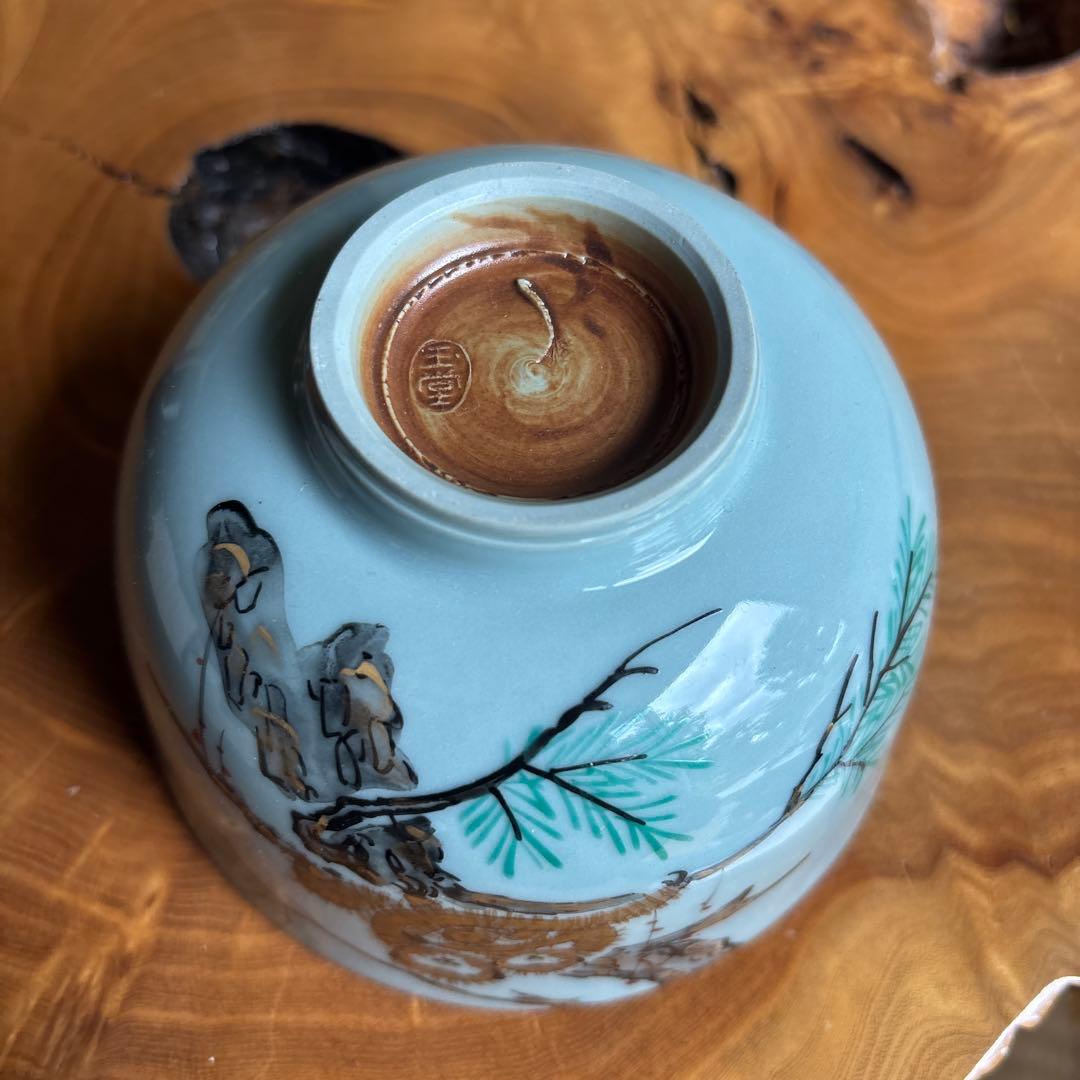
Experience Authentic Japan Art with this Japanese Matcha Bowl. This Iro-e Chawan serves as a Signed Studio Pottery piece and Japanese Tea Ceremony Bowl, featuring Ko-Daki-Saru Monkey Motif and Celadon Interior Glaze—a must-have for any Art Collector. This Gyokudo Kiln Chawan offers Nishiki Overglaze Enamel craftsmanship with Original Wooden Box, perfect as Japanese Zodiac Monkey Art or a Kyoto Ceramics Gift.
🔹 [ BASIC DETAILS ]
• Artist: Sandai Gyokudo (三代 玉堂), Gyokudo Kiln (玉堂窯), Kyoto — third-generation master
• Technique: Iro-e (色絵) overglaze polychrome enamel on celadon-ground porcelain; Nishiki-style painting tradition in the lineage of Nonomura Ninsei / Kenzan
• Era: Late 20th–early 21st century (Post-1980s, Heisei era)
• Origin: Kyoto, Japan (Kyoto ceramic tradition, Nishiki-de / Iro-e school)
• Dimensions: Diameter approx. 12 cm, Height approx. 7.5 cm
• Box: Original signed tomobako (共箱) — lid inscribed "子抱猿 玉堂窯作" with "三代 玉堂" brushed inscription and artist seal
• Condition: Excellent — no cracks, no chips, no repairs; glaze surfaces pristine
🔹 [ CULTURAL & ARTISTIC INSIGHT ]
The ko-daki-saru (子抱猿) — a mother monkey tenderly holding her infant — is among the most beloved motifs in Japanese decorative arts. Associated with maternal love, protection, and the zodiac year of the Monkey, it carries a dual warmth: the intimacy of family and the auspicious promise of new life. Gyokudo Kiln's Kyoto lineage connects directly to the Nishiki-de (錦手) tradition established by 17th-century master Nonomura Ninsei — a tradition of painting brilliant polychrome enamels onto fine white porcelain, blending the refined opulence of court aesthetics with the meditative spirit of chanoyu.
The palette here is deliberately restrained yet vivid: warm amber-gold and burnt sienna brush strokes define the monkeys' expressive fur, while fresh emerald-green pine needles arc above them. The ground is a soft, chalk-white porcelain that amplifies the enamels' luminosity, and the interior is washed with a cool celadon glaze — the color of rain-washed jade — that transforms each bowl of whisked matcha into a moment of quiet contemplation.
*The pine branch does not hold the monkeys — it receives them. In stillness, tenderness finds its form.*
🔹 [ DEEP-DIVE COMMENTARY ]
Gyokudo Kiln (玉堂窯) is a Kyoto studio operating within the classical Iro-e (色絵 / overglaze polychrome enamel) tradition. The term "Iro-e" refers to decoration applied after an initial firing: designs are painted onto the glazed, kiln-fired surface using iron-rich pigments and vitreous enamels, then fired again at a lower temperature (approximately 800°C) to fuse the colors permanently. The resulting palette — warm ochres, deep umbers, greens, and occasional red accents — achieves a jewel-like permanence that sets Iro-e apart from the subtler world of underglaze blue (sometsuke) or celadon-only wares.
The lineage of Kyoto Iro-e traces to Nonomura Ninsei (仁清, active c. 1640–1690), who revolutionized Japanese ceramic painting by applying the painting sensibilities of the Rinpa school directly onto the tea vessel. Sandai (三代 / "third generation") Gyokudo continues this tradition with works that balance the decorative exuberance of Nishiki-de with the functional demands of a working chawan — the form is fluid, the lip softly outward-rolled, the foot ring low and stable, all designed to serve the practice of matcha preparation.
The ko-daki-saru motif has deep roots in Japanese painting (nihonga), Zen ink-wash tradition (suibokuga), and folding-screen art. The monkey (猿, saru) is the ninth animal of the Japanese zodiac, and in the tea room context its imagery invokes longevity, parental devotion, and the natural world's unguarded tenderness — a counterpoint to the austere formality of wabi ceramics. This bowl would be especially appropriate for New Year gatherings, zodiac-year celebrations, and any tea ceremony emphasizing warmth and familial affection.
The interior celadon glaze — a pale blue-green that deepens toward the base — is the bowl's quiet counterpart to the exuberant exterior. Celadon (青磁釉, seiji-yu) is achieved through iron-oxide reduction firing; its cool translucency has been prized for a millennium across Asia as a material approximation of jade. Against this restrained interior, the frothy pale green of whisked matcha achieves a visual dialogue that seasoned tea practitioners describe as "harmony of vessel and water" (器と水の調和).
A signed tomobako (共箱) in paulownia or cedar with the artist's own brushed inscription is the gold standard of Japanese ceramic provenance. Here the lid carries the work's name (子抱猿), kiln attribution (玉堂窯作), and the master's personal signature and seal — making this piece fully documented and attributable to Sandai Gyokudo without question.
🔹 [ SHIPPING & PACKAGING ]
• Dispatch: Within 1-6 business days
• Carrier: Japan Post EMS / UPS (with tracking)
• Packaging: Carefully wrapped with protective materials
🔹 [ 日本語解説 ]
■ 基本情報
• 作家:三代 玉堂(玉堂窯・京都)
• 技法:色絵(上絵付け・多彩釉)、錦手様式。京都仁清写しの伝統に連なる上絵磁器絵付け
• 年代:昭和末期〜平成期(20世紀後半〜21世紀初頭)
• 産地:京都
• サイズ:直径 約12cm、高さ 約7.5cm
• 箱:共箱。蓋表に「子抱猿 玉堂窯作」、側面に「三代 玉堂」の墨書・印あり
• 状態:優良。ヒビ・カケ・補修なし
■ 文化的・美術的解説
子抱猿(こだきさる)は、母猿が幼い子をしっかりと抱きかかえる姿を描いた意匠で、日本美術における「慈愛」と「守護」の象徴として古くから愛されてきました。干支では申(さる)が九番目の動物にあたり、繁栄・長寿・家族の絆を意味する縁起の良い画題でもあります。
玉堂窯は、仁清・乾山に発する京焼・色絵の系譜を現代に継承する窯です。白磁の地に琥珀色・赤褐色の絵具で丹念に描かれた母子の猿、その上に浮かぶ深緑の松の枝——筆致は伸びやかで、まるで一枚の日本画を茶碗に移したかのようです。見込みの青磁釉は翡翠を思わせる静謐な青緑で、点てた抹茶の白緑と織り成す色彩の調和が、茶の湯の「一期一会」を静かに演出します。
*松枝は猿を支えるのではなく、ただそっと受け止めている。沈黙の中に、やさしさは宿る。*
■ 深掘り解説
色絵(Iro-e)とは、本焼きを終えた磁器の釉薬面に上絵具を施し、再度低温(約800℃)で焼成することで色彩を定着させる技法です。高温焼成の染付とは異なり、多彩な顔料を自在に重ねられることから、京焼・錦手の華麗な装飾性はこの技法によって生まれました。
京都色絵の源流は江戸初期の野々村仁清(活動期:1640〜1690年頃)に遡ります。仁清は尾形光琳ら琳派の絵画感覚を茶碗に取り入れ、日本陶磁史に革命をもたらしました。三代 玉堂はその伝統を現代に伝える後継者として、装飾的な豊かさと茶碗としての機能的な美しさを両立させた作品を制作し続けています。
子抱猿の画題は、禅の墨画・日本画・屏風絵を通じて広く親しまれてきたモチーフです。茶席においては、その温かみのある表情が厳格な侘びの美意識に柔らかな対位を与え、特に正月や申年の茶会、家族の祝い事に際した取り合わせに好んで用いられます。
見込みの青磁釉は鉄分を含む釉薬を還元焼成することで生まれる翡翠色。その冷たく透明感ある光沢は、一千年にわたって東アジア全域で珍重されてきた「翡翠に最も近い色彩」です。この碗でいただく一服の抹茶は、器と液体が静かに語らい合う、まさに茶の湯の真髄を体験させてくれます。
共箱の存在は、日本の陶磁器において最も重要な真正性の証です。作家自身の墨書と印が蓋に記された共箱は、この茶碗が三代 玉堂の真作であることを明確に伝えるとともに、将来の鑑定・伝来においても唯一無二の価値を持ちます。
🔹 [ BASIC DETAILS ]
• Artist: Sandai Gyokudo (三代 玉堂), Gyokudo Kiln (玉堂窯), Kyoto — third-generation master
• Technique: Iro-e (色絵) overglaze polychrome enamel on celadon-ground porcelain; Nishiki-style painting tradition in the lineage of Nonomura Ninsei / Kenzan
• Era: Late 20th–early 21st century (Post-1980s, Heisei era)
• Origin: Kyoto, Japan (Kyoto ceramic tradition, Nishiki-de / Iro-e school)
• Dimensions: Diameter approx. 12 cm, Height approx. 7.5 cm
• Box: Original signed tomobako (共箱) — lid inscribed "子抱猿 玉堂窯作" with "三代 玉堂" brushed inscription and artist seal
• Condition: Excellent — no cracks, no chips, no repairs; glaze surfaces pristine
🔹 [ CULTURAL & ARTISTIC INSIGHT ]
The ko-daki-saru (子抱猿) — a mother monkey tenderly holding her infant — is among the most beloved motifs in Japanese decorative arts. Associated with maternal love, protection, and the zodiac year of the Monkey, it carries a dual warmth: the intimacy of family and the auspicious promise of new life. Gyokudo Kiln's Kyoto lineage connects directly to the Nishiki-de (錦手) tradition established by 17th-century master Nonomura Ninsei — a tradition of painting brilliant polychrome enamels onto fine white porcelain, blending the refined opulence of court aesthetics with the meditative spirit of chanoyu.
The palette here is deliberately restrained yet vivid: warm amber-gold and burnt sienna brush strokes define the monkeys' expressive fur, while fresh emerald-green pine needles arc above them. The ground is a soft, chalk-white porcelain that amplifies the enamels' luminosity, and the interior is washed with a cool celadon glaze — the color of rain-washed jade — that transforms each bowl of whisked matcha into a moment of quiet contemplation.
*The pine branch does not hold the monkeys — it receives them. In stillness, tenderness finds its form.*
🔹 [ DEEP-DIVE COMMENTARY ]
Gyokudo Kiln (玉堂窯) is a Kyoto studio operating within the classical Iro-e (色絵 / overglaze polychrome enamel) tradition. The term "Iro-e" refers to decoration applied after an initial firing: designs are painted onto the glazed, kiln-fired surface using iron-rich pigments and vitreous enamels, then fired again at a lower temperature (approximately 800°C) to fuse the colors permanently. The resulting palette — warm ochres, deep umbers, greens, and occasional red accents — achieves a jewel-like permanence that sets Iro-e apart from the subtler world of underglaze blue (sometsuke) or celadon-only wares.
The lineage of Kyoto Iro-e traces to Nonomura Ninsei (仁清, active c. 1640–1690), who revolutionized Japanese ceramic painting by applying the painting sensibilities of the Rinpa school directly onto the tea vessel. Sandai (三代 / "third generation") Gyokudo continues this tradition with works that balance the decorative exuberance of Nishiki-de with the functional demands of a working chawan — the form is fluid, the lip softly outward-rolled, the foot ring low and stable, all designed to serve the practice of matcha preparation.
The ko-daki-saru motif has deep roots in Japanese painting (nihonga), Zen ink-wash tradition (suibokuga), and folding-screen art. The monkey (猿, saru) is the ninth animal of the Japanese zodiac, and in the tea room context its imagery invokes longevity, parental devotion, and the natural world's unguarded tenderness — a counterpoint to the austere formality of wabi ceramics. This bowl would be especially appropriate for New Year gatherings, zodiac-year celebrations, and any tea ceremony emphasizing warmth and familial affection.
The interior celadon glaze — a pale blue-green that deepens toward the base — is the bowl's quiet counterpart to the exuberant exterior. Celadon (青磁釉, seiji-yu) is achieved through iron-oxide reduction firing; its cool translucency has been prized for a millennium across Asia as a material approximation of jade. Against this restrained interior, the frothy pale green of whisked matcha achieves a visual dialogue that seasoned tea practitioners describe as "harmony of vessel and water" (器と水の調和).
A signed tomobako (共箱) in paulownia or cedar with the artist's own brushed inscription is the gold standard of Japanese ceramic provenance. Here the lid carries the work's name (子抱猿), kiln attribution (玉堂窯作), and the master's personal signature and seal — making this piece fully documented and attributable to Sandai Gyokudo without question.
🔹 [ SHIPPING & PACKAGING ]
• Dispatch: Within 1-6 business days
• Carrier: Japan Post EMS / UPS (with tracking)
• Packaging: Carefully wrapped with protective materials
🔹 [ 日本語解説 ]
■ 基本情報
• 作家:三代 玉堂(玉堂窯・京都)
• 技法:色絵(上絵付け・多彩釉)、錦手様式。京都仁清写しの伝統に連なる上絵磁器絵付け
• 年代:昭和末期〜平成期(20世紀後半〜21世紀初頭)
• 産地:京都
• サイズ:直径 約12cm、高さ 約7.5cm
• 箱:共箱。蓋表に「子抱猿 玉堂窯作」、側面に「三代 玉堂」の墨書・印あり
• 状態:優良。ヒビ・カケ・補修なし
■ 文化的・美術的解説
子抱猿(こだきさる)は、母猿が幼い子をしっかりと抱きかかえる姿を描いた意匠で、日本美術における「慈愛」と「守護」の象徴として古くから愛されてきました。干支では申(さる)が九番目の動物にあたり、繁栄・長寿・家族の絆を意味する縁起の良い画題でもあります。
玉堂窯は、仁清・乾山に発する京焼・色絵の系譜を現代に継承する窯です。白磁の地に琥珀色・赤褐色の絵具で丹念に描かれた母子の猿、その上に浮かぶ深緑の松の枝——筆致は伸びやかで、まるで一枚の日本画を茶碗に移したかのようです。見込みの青磁釉は翡翠を思わせる静謐な青緑で、点てた抹茶の白緑と織り成す色彩の調和が、茶の湯の「一期一会」を静かに演出します。
*松枝は猿を支えるのではなく、ただそっと受け止めている。沈黙の中に、やさしさは宿る。*
■ 深掘り解説
色絵(Iro-e)とは、本焼きを終えた磁器の釉薬面に上絵具を施し、再度低温(約800℃)で焼成することで色彩を定着させる技法です。高温焼成の染付とは異なり、多彩な顔料を自在に重ねられることから、京焼・錦手の華麗な装飾性はこの技法によって生まれました。
京都色絵の源流は江戸初期の野々村仁清(活動期:1640〜1690年頃)に遡ります。仁清は尾形光琳ら琳派の絵画感覚を茶碗に取り入れ、日本陶磁史に革命をもたらしました。三代 玉堂はその伝統を現代に伝える後継者として、装飾的な豊かさと茶碗としての機能的な美しさを両立させた作品を制作し続けています。
子抱猿の画題は、禅の墨画・日本画・屏風絵を通じて広く親しまれてきたモチーフです。茶席においては、その温かみのある表情が厳格な侘びの美意識に柔らかな対位を与え、特に正月や申年の茶会、家族の祝い事に際した取り合わせに好んで用いられます。
見込みの青磁釉は鉄分を含む釉薬を還元焼成することで生まれる翡翠色。その冷たく透明感ある光沢は、一千年にわたって東アジア全域で珍重されてきた「翡翠に最も近い色彩」です。この碗でいただく一服の抹茶は、器と液体が静かに語らい合う、まさに茶の湯の真髄を体験させてくれます。
共箱の存在は、日本の陶磁器において最も重要な真正性の証です。作家自身の墨書と印が蓋に記された共箱は、この茶碗が三代 玉堂の真作であることを明確に伝えるとともに、将来の鑑定・伝来においても唯一無二の価値を持ちます。
Quantity
Couldn't load pickup availability
Low stock: 1 left
View full details