1
/
of
5
Mizuno Kenji Aka-Oribe Tea Bowl — Kutsukata Iron Painted Mino Chawan
Mizuno Kenji Aka-Oribe Tea Bowl — Kutsukata Iron Painted Mino Chawan
Regular price
Dhs. 834.00 AED
Regular price
Sale price
Dhs. 834.00 AED
Taxes included.
Shipping calculated at checkout.
An Aka-Oribe tea bowl (赤織部茶碗) by Mizuno Kenji (水野健二) — the Momoyama spirit carried forward in Mino clay and copper-green glaze. This Kutsukata Chawan takes the deliberately warped shoe-shape form that defined Oribe ware four centuries ago, with iron-painted circular medallion patterns (丸紋) on buff sandy clay and dark copper-green glaze cascading from the rim. A Japanese Tea Ceremony piece with the cultural weight of the Mino ceramic lineage — Iron Painted Oribe decoration, Green Copper Glaze, and an unglazed clay body that speaks before the glaze does.
━━━━━━━━━━━━━━━━━━━━
🔹 [ BASIC DETAILS ]
• Artist: Mizuno Kenji (水野健二) — Mino potter
• Technique: Aka-Oribe (赤織部) — iron painting on clay body with partial copper-green glaze
• Form: Kutsukata (沓形) — warped, shoe-shaped rim
• Era: 2010s
• Origin: Mino, Gifu Prefecture, Japan
• Dimensions: W 12.5 cm × D 12 cm × H 7.5 cm (4.9" × 4.7" × 3.0") — slightly oval
• Box: Wooden box (木箱) inscribed "赤織部茶碗 健二"
• Condition: No cracks or chips
━━━━━━━━━━━━━━━━━━━━
🔹 [ CULTURAL & ARTISTIC INSIGHT ]
Aka-Oribe is not red Oribe. It is Oribe that chose to leave the clay visible — to let the body speak alongside the glaze rather than beneath it. Where standard Oribe covers the vessel entirely in copper-green, Aka-Oribe divides the bowl into two territories: glazed and unglazed, green and earth, intention and restraint. The dialogue between these two zones is the work itself.
Mizuno Kenji's bowl holds this dialogue with grounded authority. The sandy buff Mino clay — warm, granular, unhurried — occupies most of the body. On this exposed clay, iron-painted circular medallions appear: cross-hatched geometric patterns within circles, the kind of bold graphic vocabulary that Momoyama potters established when they decided that ceramics could carry the same compositional ambition as painting. These tetsu-e patterns are not ornament. They are declarations — each circle a self-contained world of intersecting lines and dots.
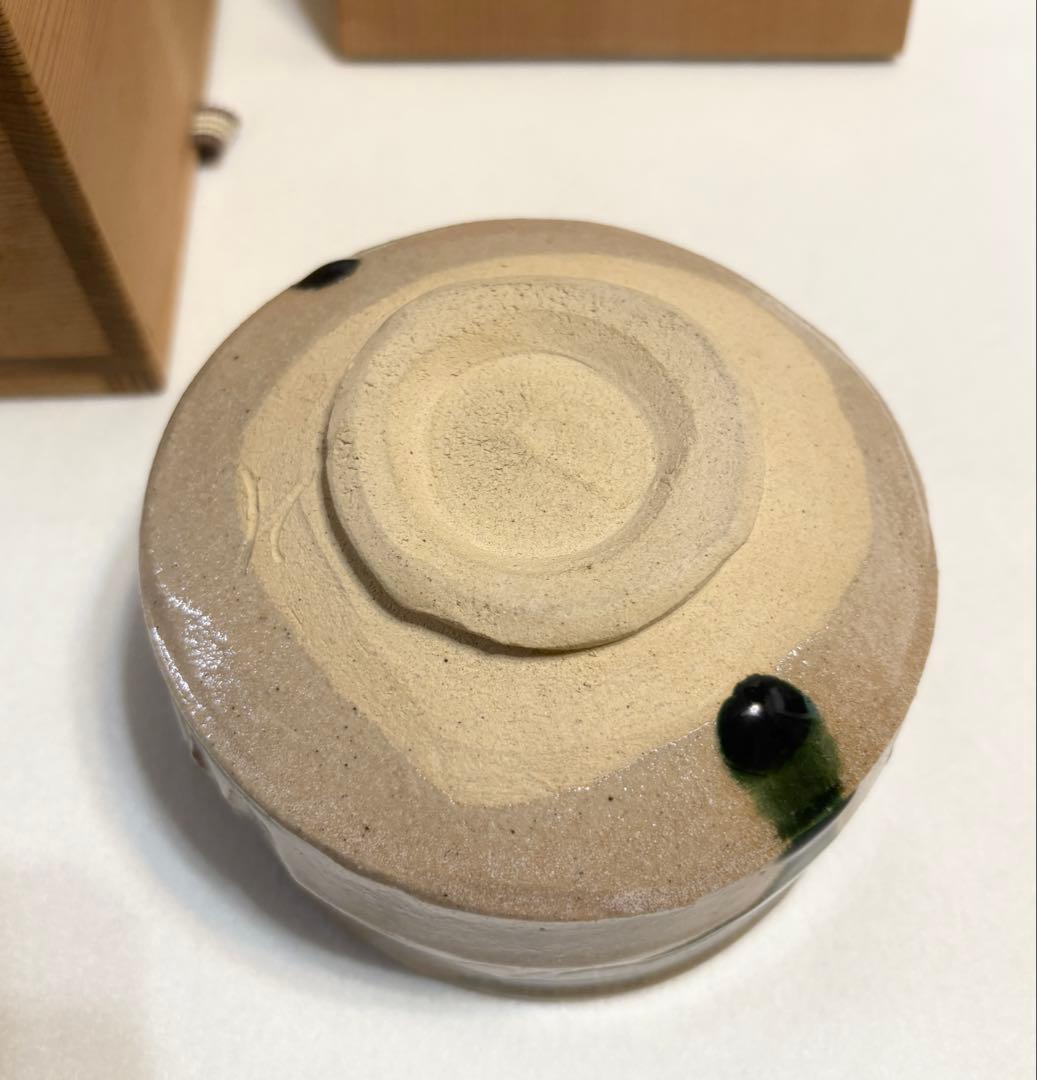
The copper-green Oribe glaze pools at the rim and cascades down one side of the bowl, thick and dark where it gathers, translucent where it thins. At the base edge, small green drips mark where the glaze stopped — the kiln's final punctuation. The kutsukata form — slightly warped, deliberately irregular — rejects the symmetry that a wheel naturally produces. This asymmetry is not accidental. It is the defining gesture of Oribe ware: the choice to find beauty in what bends.
*"The clay was not covered. It was trusted — to carry the weight of four centuries without apology."*
━━━━━━━━━━━━━━━━━━━━
🔹 [ DEEP-DIVE COMMENTARY ]
**Aka-Oribe (赤織部) — The Unglazed Zone**: The Oribe tradition encompasses multiple sub-styles: Ao-Oribe (green Oribe), Kuro-Oribe (black Oribe), and Aka-Oribe (red/unglazed Oribe). Aka-Oribe is distinguished by leaving large portions of the clay body unglazed, allowing the iron-rich Mino clay to fire to warm terracotta, buff, or sandy tones. The exposed clay becomes a canvas for iron painting (鉄絵, tetsu-e) — bold brush-drawn patterns that sit directly on the body without the mediating layer of glaze. This exposed quality gives Aka-Oribe a rawness and directness that fully glazed Oribe does not possess. The vessel reveals its material origin.
**Iron-Painted Medallion Patterns (丸紋 / 鉄絵)**: The circular medallion patterns on this bowl — cross-hatched grids within circles, punctuated by dots — belong to the geometric vocabulary that Momoyama-period Oribe potters developed as an alternative to naturalistic painting. These patterns derive from textile and lacquer design traditions, translated onto clay with an iron-oxide brush. Each circle is drawn freehand, slightly irregular, each grid within it a hand-counted lattice of intersecting lines. The patterns are simultaneously mathematical and organic — the precision of intention meeting the imprecision of the hand.
**Kutsukata (沓形) — The Shoe Shape**: The deliberately warped rim of this bowl — pushed into an oval before firing so that it dries into permanent asymmetry — is called kutsukata, after the shape of a wooden clog. This distortion is the signature of Oribe ware and represents one of the most radical aesthetic decisions in ceramic history. Furuta Oribe, the tea master whose taste shaped this tradition, rejected the perfectly round bowls that Chinese and Korean potters produced. He wanted vessels that carried the evidence of the hand that made them — bowls that could not have been made by a machine, because they deliberately refuse what a machine produces naturally. The kutsukata form is an argument: that irregularity is not a failure of technique, but a form of honesty.
**Copper-Green Glaze — The Oribe Signature**: The deep green glaze that defines Oribe ware derives from copper oxide fired in an oxidizing atmosphere. The glaze ranges from nearly black where it pools thickly to a translucent emerald where it runs thin. On Aka-Oribe, this green is applied to only a portion of the vessel — typically the upper section — creating a dramatic boundary between glazed and unglazed zones. The small green drips at the base of Mizuno Kenji's bowl mark the lowest point of the glaze's journey down the vessel — evidence of the kiln's gravitational pull on molten glass.
**Mino Ceramic Lineage**: Mino, in present-day Gifu Prefecture, is where Oribe ware was born in the late 16th century under the patronage of Furuta Oribe. Alongside Shino, Ki-Seto, and Setoguro, Oribe represents one of the four great Momoyama ceramic traditions that emerged from Mino's kilns. Mizuno Kenji works within this lineage — the same iron-bearing clays, the same copper glazes, the same deliberate warping. The technique persists because the aesthetic argument it makes — that beauty lives in asymmetry, in exposed material, in the visible evidence of process — has never been refuted.
━━━━━━━━━━━━━━━━━━━━
🔹 [ 日本語解説 ]
【基本情報】
• 作家:水野健二(美濃焼)
• 技法:赤織部(鉄絵・銅緑釉)
• 形状:沓形(くつがた)——やや楕円に歪めた口縁
• 時代:2010年代
• 産地:美濃(岐阜県)
• 寸法:幅12.5cm × 奥行12cm × 高さ7.5cm
• 箱:木箱(「赤織部茶碗 健二」)
• 状態:傷・欠けなし
【解説】
水野健二作の赤織部茶碗です。赤織部は、素地の土を大きく露出させ、鉄絵で文様を施した上に、部分的に銅緑釉を掛ける技法です。総釉の青織部とは異なり、美濃の砂気のある素地そのものが景色の主役を担います。
胴部には鉄絵による丸紋(まるもん)が描かれています。格子状の線と点で構成された幾何学文様は、桃山時代の織部焼に特徴的な大胆な意匠であり、絵画というよりも宣言に近い強さを持っています。口縁から片側にかけて銅緑釉が厚く掛かり、溜まった部分は深い暗緑色、薄い部分は透明感のある翡翠色を呈しています。高台脇の緑釉の垂れが、窯の中で釉薬が重力に従って流れた痕跡を見せています。
沓形(くつがた)の口縁は、轆轤の円形を意図的に歪めた織部焼の代名詞的造形です。整った丸さを拒否し、手の痕跡を器に刻むこの不整形は、古田織部の美意識——不均斉の中にこそ誠実さがある——を四百年後の今に伝えています。
ずんぐりとした低い姿勢に土の温もりと緑釉の冷たさが同居する、地に足の着いた一碗です。木箱付き。
━━━━━━━━━━━━━━━━━━━━
🔹 [ SHIPPING & PACKAGING ]
• Dispatch: Within 1-6 business days
• Carrier: Japan Post EMS / UPS (with tracking)
• Packaging: Carefully wrapped with protective materials
*Green descends. Clay holds. Between the glaze and the ground, Mino decides — what to cover, and what to leave standing on its own.*
━━━━━━━━━━━━━━━━━━━━
🔹 [ BASIC DETAILS ]
• Artist: Mizuno Kenji (水野健二) — Mino potter
• Technique: Aka-Oribe (赤織部) — iron painting on clay body with partial copper-green glaze
• Form: Kutsukata (沓形) — warped, shoe-shaped rim
• Era: 2010s
• Origin: Mino, Gifu Prefecture, Japan
• Dimensions: W 12.5 cm × D 12 cm × H 7.5 cm (4.9" × 4.7" × 3.0") — slightly oval
• Box: Wooden box (木箱) inscribed "赤織部茶碗 健二"
• Condition: No cracks or chips
━━━━━━━━━━━━━━━━━━━━
🔹 [ CULTURAL & ARTISTIC INSIGHT ]
Aka-Oribe is not red Oribe. It is Oribe that chose to leave the clay visible — to let the body speak alongside the glaze rather than beneath it. Where standard Oribe covers the vessel entirely in copper-green, Aka-Oribe divides the bowl into two territories: glazed and unglazed, green and earth, intention and restraint. The dialogue between these two zones is the work itself.
Mizuno Kenji's bowl holds this dialogue with grounded authority. The sandy buff Mino clay — warm, granular, unhurried — occupies most of the body. On this exposed clay, iron-painted circular medallions appear: cross-hatched geometric patterns within circles, the kind of bold graphic vocabulary that Momoyama potters established when they decided that ceramics could carry the same compositional ambition as painting. These tetsu-e patterns are not ornament. They are declarations — each circle a self-contained world of intersecting lines and dots.
The copper-green Oribe glaze pools at the rim and cascades down one side of the bowl, thick and dark where it gathers, translucent where it thins. At the base edge, small green drips mark where the glaze stopped — the kiln's final punctuation. The kutsukata form — slightly warped, deliberately irregular — rejects the symmetry that a wheel naturally produces. This asymmetry is not accidental. It is the defining gesture of Oribe ware: the choice to find beauty in what bends.
*"The clay was not covered. It was trusted — to carry the weight of four centuries without apology."*
━━━━━━━━━━━━━━━━━━━━
🔹 [ DEEP-DIVE COMMENTARY ]
**Aka-Oribe (赤織部) — The Unglazed Zone**: The Oribe tradition encompasses multiple sub-styles: Ao-Oribe (green Oribe), Kuro-Oribe (black Oribe), and Aka-Oribe (red/unglazed Oribe). Aka-Oribe is distinguished by leaving large portions of the clay body unglazed, allowing the iron-rich Mino clay to fire to warm terracotta, buff, or sandy tones. The exposed clay becomes a canvas for iron painting (鉄絵, tetsu-e) — bold brush-drawn patterns that sit directly on the body without the mediating layer of glaze. This exposed quality gives Aka-Oribe a rawness and directness that fully glazed Oribe does not possess. The vessel reveals its material origin.
**Iron-Painted Medallion Patterns (丸紋 / 鉄絵)**: The circular medallion patterns on this bowl — cross-hatched grids within circles, punctuated by dots — belong to the geometric vocabulary that Momoyama-period Oribe potters developed as an alternative to naturalistic painting. These patterns derive from textile and lacquer design traditions, translated onto clay with an iron-oxide brush. Each circle is drawn freehand, slightly irregular, each grid within it a hand-counted lattice of intersecting lines. The patterns are simultaneously mathematical and organic — the precision of intention meeting the imprecision of the hand.
**Kutsukata (沓形) — The Shoe Shape**: The deliberately warped rim of this bowl — pushed into an oval before firing so that it dries into permanent asymmetry — is called kutsukata, after the shape of a wooden clog. This distortion is the signature of Oribe ware and represents one of the most radical aesthetic decisions in ceramic history. Furuta Oribe, the tea master whose taste shaped this tradition, rejected the perfectly round bowls that Chinese and Korean potters produced. He wanted vessels that carried the evidence of the hand that made them — bowls that could not have been made by a machine, because they deliberately refuse what a machine produces naturally. The kutsukata form is an argument: that irregularity is not a failure of technique, but a form of honesty.
**Copper-Green Glaze — The Oribe Signature**: The deep green glaze that defines Oribe ware derives from copper oxide fired in an oxidizing atmosphere. The glaze ranges from nearly black where it pools thickly to a translucent emerald where it runs thin. On Aka-Oribe, this green is applied to only a portion of the vessel — typically the upper section — creating a dramatic boundary between glazed and unglazed zones. The small green drips at the base of Mizuno Kenji's bowl mark the lowest point of the glaze's journey down the vessel — evidence of the kiln's gravitational pull on molten glass.
**Mino Ceramic Lineage**: Mino, in present-day Gifu Prefecture, is where Oribe ware was born in the late 16th century under the patronage of Furuta Oribe. Alongside Shino, Ki-Seto, and Setoguro, Oribe represents one of the four great Momoyama ceramic traditions that emerged from Mino's kilns. Mizuno Kenji works within this lineage — the same iron-bearing clays, the same copper glazes, the same deliberate warping. The technique persists because the aesthetic argument it makes — that beauty lives in asymmetry, in exposed material, in the visible evidence of process — has never been refuted.
━━━━━━━━━━━━━━━━━━━━
🔹 [ 日本語解説 ]
【基本情報】
• 作家:水野健二(美濃焼)
• 技法:赤織部(鉄絵・銅緑釉)
• 形状:沓形(くつがた)——やや楕円に歪めた口縁
• 時代:2010年代
• 産地:美濃(岐阜県)
• 寸法:幅12.5cm × 奥行12cm × 高さ7.5cm
• 箱:木箱(「赤織部茶碗 健二」)
• 状態:傷・欠けなし
【解説】
水野健二作の赤織部茶碗です。赤織部は、素地の土を大きく露出させ、鉄絵で文様を施した上に、部分的に銅緑釉を掛ける技法です。総釉の青織部とは異なり、美濃の砂気のある素地そのものが景色の主役を担います。
胴部には鉄絵による丸紋(まるもん)が描かれています。格子状の線と点で構成された幾何学文様は、桃山時代の織部焼に特徴的な大胆な意匠であり、絵画というよりも宣言に近い強さを持っています。口縁から片側にかけて銅緑釉が厚く掛かり、溜まった部分は深い暗緑色、薄い部分は透明感のある翡翠色を呈しています。高台脇の緑釉の垂れが、窯の中で釉薬が重力に従って流れた痕跡を見せています。
沓形(くつがた)の口縁は、轆轤の円形を意図的に歪めた織部焼の代名詞的造形です。整った丸さを拒否し、手の痕跡を器に刻むこの不整形は、古田織部の美意識——不均斉の中にこそ誠実さがある——を四百年後の今に伝えています。
ずんぐりとした低い姿勢に土の温もりと緑釉の冷たさが同居する、地に足の着いた一碗です。木箱付き。
━━━━━━━━━━━━━━━━━━━━
🔹 [ SHIPPING & PACKAGING ]
• Dispatch: Within 1-6 business days
• Carrier: Japan Post EMS / UPS (with tracking)
• Packaging: Carefully wrapped with protective materials
*Green descends. Clay holds. Between the glaze and the ground, Mino decides — what to cover, and what to leave standing on its own.*
Quantity
Couldn't load pickup availability
Low stock: 1 left
View full details