1
/
of
13
Miura Chikusen Kochi-Utsushi Kogo — Cochin Glaze Bird Incense Container, Tomobako
Miura Chikusen Kochi-Utsushi Kogo — Cochin Glaze Bird Incense Container, Tomobako
Regular price
Dhs. 1,217.00 AED
Regular price
Sale price
Dhs. 1,217.00 AED
Taxes included.
Shipping calculated at checkout.
Miura Chikusen kochi utsushi kogo — Cochin-style glaze bird incense container, hana-kui-dori flower-eating bird motif, Japanese tea ceremony kogo, Kyoto pottery figurative incense box, antique kogo signed tomobako, Japanese ceramic kogo collectible, Chikusen lineage kodo utensil. The bird holds still. The scent remembers.
🔹 [ Basic Details ]
• Artist: Miura Chikusen (三浦竹泉) — distinguished Kyoto pottery lineage, multiple generations of masters
• Motif: Hana-kui-dori (花食鳥) — flower-eating bird, rendered in naturalistic sculptural form
• Technique: Kochi-utsushi (交趾写) — Cochin-style glazing; vivid yellow, green, and aubergine-brown lead glazes applied to sculptural stoneware form
• Function: Kogo (香合) — incense container for use in tea ceremony
• Origin: Kyoto, Japan
• Dimensions: H approx. 3.9 cm × W approx. 5.4 cm × D approx. 3.8 cm
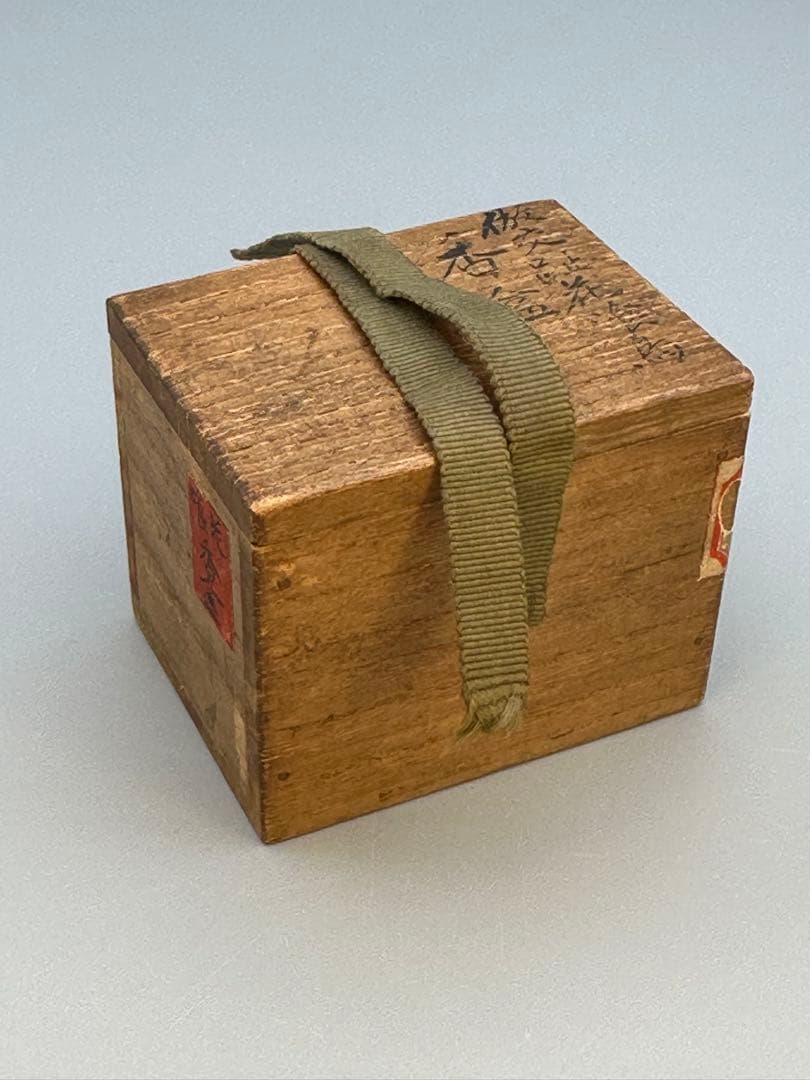
• Box: Tomobako (original signed wooden box with red seal)
• Condition: Good. No chips or glaze loss.
🔹 [ Cultural & Artistic Insight ]
The kogo — incense container — is among the smallest and most intimate objects in the tea ceremony. Held in the host's palm as they add incense to the brazier, it passes briefly through the hands of each guest for appreciation. Its scale demands a density of intention: everything the piece has to say must be said in the space of a closed fist.
The Cochin (交趾, Kochi) style entered Japan via trade ceramics from Southeast Asia in the Edo period, and its vivid polychrome lead glazes became a favored language for small tea utensils. Miura Chikusen, working in Kyoto's Nishigawara district across multiple generations, became one of the foremost interpreters of kochi-utsushi in Japan. The lineage's work is held in major museum collections.
🔹 [ Deep-Dive Commentary ]
This kogo presents as a crouching bird — identified as hana-kui-dori, the flower-eating bird — in fully sculptural three-dimensional form. The head turns slightly, the wings fold against the body in layered contour, and the whole figure sits on an oval base that becomes the floor of the incense well when the lid is removed.
The glaze work is the immediate distinction: saturated yellow covers the head and much of the body; dark aubergine-brown renders the wing feathers in precise layered texture; deep green fills the primary flight feathers in controlled strokes. The three colors relate to each other with the precision of a master colorist — no competition, only harmony.
Close examination of the top view reveals the level of sculptural detail in the wing texture: individual feather groups are modeled in the clay before glazing, so the surface has genuine relief. The yellow areas carry the characteristic fine bubbling of authentic kochi glaze — a result of the lead base firing at relatively low temperatures, trapping minute air in the surface.
The tomobako lid reads 錦月蕊 竹泉製 (Kingetsuzui, made by Chikusen) and bears the red lineage seal, confirming the piece's authentic provenance.
For collectors of kodo (incense) utensils or Kyo-yaki figurative ceramics, this kogo represents the Chikusen lineage at its characteristic best: technical control in service of natural observation, the bird rendered with enough fidelity to be recognizable and enough art to be unforgettable.
【日本語説明】
🔹 [ 基本情報 ]
• 作者:三浦竹泉(京都・交趾焼の名門)
• 絵柄:花食鳥(ハナクイドリ)
• 技法:交趾写(黄・緑・紫の鉛釉)
• 機能:香合(茶道具)
• 寸法:H約3.9cm × W約5.4cm × D約3.8cm
• 箱:共箱(朱印付き)
• 状態:良好、欠け・釉剥げなし
🔹 [ 文化・芸術的背景 ]
香合は茶道具の中でも最も小さく、最も親密な器物。交趾写は江戸時代に東南アジアから入った多彩鉛釉の技法で、三浦竹泉家はその第一人者として名を刻んでいます。
🔹 [ コレクター向け解説 ]
羽の質感を粘土で造形してから施釉するため、表面には本物のレリーフがあります。黄・緑・茄子色の三色が競わず調和する色使いは、歴代の眼と手が培ったもの。共箱蓋書「錦月蕊 竹泉製」と朱印が来歴を証明します。
🔹 [ SHIPPING & PACKAGING ]
• Dispatch: Within 1-6 business days
• Carrier: Japan Post EMS / UPS (with tracking)
• Packaging: Carefully wrapped with protective materials
🔹 [ Basic Details ]
• Artist: Miura Chikusen (三浦竹泉) — distinguished Kyoto pottery lineage, multiple generations of masters
• Motif: Hana-kui-dori (花食鳥) — flower-eating bird, rendered in naturalistic sculptural form
• Technique: Kochi-utsushi (交趾写) — Cochin-style glazing; vivid yellow, green, and aubergine-brown lead glazes applied to sculptural stoneware form
• Function: Kogo (香合) — incense container for use in tea ceremony
• Origin: Kyoto, Japan
• Dimensions: H approx. 3.9 cm × W approx. 5.4 cm × D approx. 3.8 cm
• Box: Tomobako (original signed wooden box with red seal)
• Condition: Good. No chips or glaze loss.
🔹 [ Cultural & Artistic Insight ]
The kogo — incense container — is among the smallest and most intimate objects in the tea ceremony. Held in the host's palm as they add incense to the brazier, it passes briefly through the hands of each guest for appreciation. Its scale demands a density of intention: everything the piece has to say must be said in the space of a closed fist.
The Cochin (交趾, Kochi) style entered Japan via trade ceramics from Southeast Asia in the Edo period, and its vivid polychrome lead glazes became a favored language for small tea utensils. Miura Chikusen, working in Kyoto's Nishigawara district across multiple generations, became one of the foremost interpreters of kochi-utsushi in Japan. The lineage's work is held in major museum collections.
🔹 [ Deep-Dive Commentary ]
This kogo presents as a crouching bird — identified as hana-kui-dori, the flower-eating bird — in fully sculptural three-dimensional form. The head turns slightly, the wings fold against the body in layered contour, and the whole figure sits on an oval base that becomes the floor of the incense well when the lid is removed.
The glaze work is the immediate distinction: saturated yellow covers the head and much of the body; dark aubergine-brown renders the wing feathers in precise layered texture; deep green fills the primary flight feathers in controlled strokes. The three colors relate to each other with the precision of a master colorist — no competition, only harmony.
Close examination of the top view reveals the level of sculptural detail in the wing texture: individual feather groups are modeled in the clay before glazing, so the surface has genuine relief. The yellow areas carry the characteristic fine bubbling of authentic kochi glaze — a result of the lead base firing at relatively low temperatures, trapping minute air in the surface.
The tomobako lid reads 錦月蕊 竹泉製 (Kingetsuzui, made by Chikusen) and bears the red lineage seal, confirming the piece's authentic provenance.
For collectors of kodo (incense) utensils or Kyo-yaki figurative ceramics, this kogo represents the Chikusen lineage at its characteristic best: technical control in service of natural observation, the bird rendered with enough fidelity to be recognizable and enough art to be unforgettable.
【日本語説明】
🔹 [ 基本情報 ]
• 作者:三浦竹泉(京都・交趾焼の名門)
• 絵柄:花食鳥(ハナクイドリ)
• 技法:交趾写(黄・緑・紫の鉛釉)
• 機能:香合(茶道具)
• 寸法:H約3.9cm × W約5.4cm × D約3.8cm
• 箱:共箱(朱印付き)
• 状態:良好、欠け・釉剥げなし
🔹 [ 文化・芸術的背景 ]
香合は茶道具の中でも最も小さく、最も親密な器物。交趾写は江戸時代に東南アジアから入った多彩鉛釉の技法で、三浦竹泉家はその第一人者として名を刻んでいます。
🔹 [ コレクター向け解説 ]
羽の質感を粘土で造形してから施釉するため、表面には本物のレリーフがあります。黄・緑・茄子色の三色が競わず調和する色使いは、歴代の眼と手が培ったもの。共箱蓋書「錦月蕊 竹泉製」と朱印が来歴を証明します。
🔹 [ SHIPPING & PACKAGING ]
• Dispatch: Within 1-6 business days
• Carrier: Japan Post EMS / UPS (with tracking)
• Packaging: Carefully wrapped with protective materials
Quantity
Couldn't load pickup availability
Out of stock
View full details