1
/
of
15
Mentori Chawan with Picasso-Period Abstract Figure — attributed to Kawai Kanjirō, Kyoto Studio Pottery
Mentori Chawan with Picasso-Period Abstract Figure — attributed to Kawai Kanjirō, Kyoto Studio Pottery
Regular price
Dhs. 3,020.00 AED
Regular price
Sale price
Dhs. 3,020.00 AED
Taxes included.
Shipping calculated at checkout.
Experience Authentic Japan Art with this Mentori Chawan Tea Bowl. This Kawai Kanjirō Attributed Chawan serves as a Japanese Tea Ceremony Bowl and Kyoto Studio Pottery, featuring Indigo Glaze Stoneware and an Abstract Figure Incised Motif—a Faceted Tea Bowl with Tomobako and Kyofukuro Silk Bag, a Mingei Movement Chawan presence for any Art Collector.
🔹 [ BASIC DETAILS ]
• Artist: Attributed to Kawai Kanjirō (河井寛次郎, 1890–1966) by tomobako inscription
• Technique: Mentori (面取, faceted) hand-formed stoneware; indigo cobalt glaze with iron and white slip; incised figure drawing
• Era: Circa 1950s–1960s — Kawai's late abstract period
• Origin: Kyoto, Japan (Shōgō-in workshop area)
• Dimensions: Height approx. 8 cm, Diameter approx. 12 cm
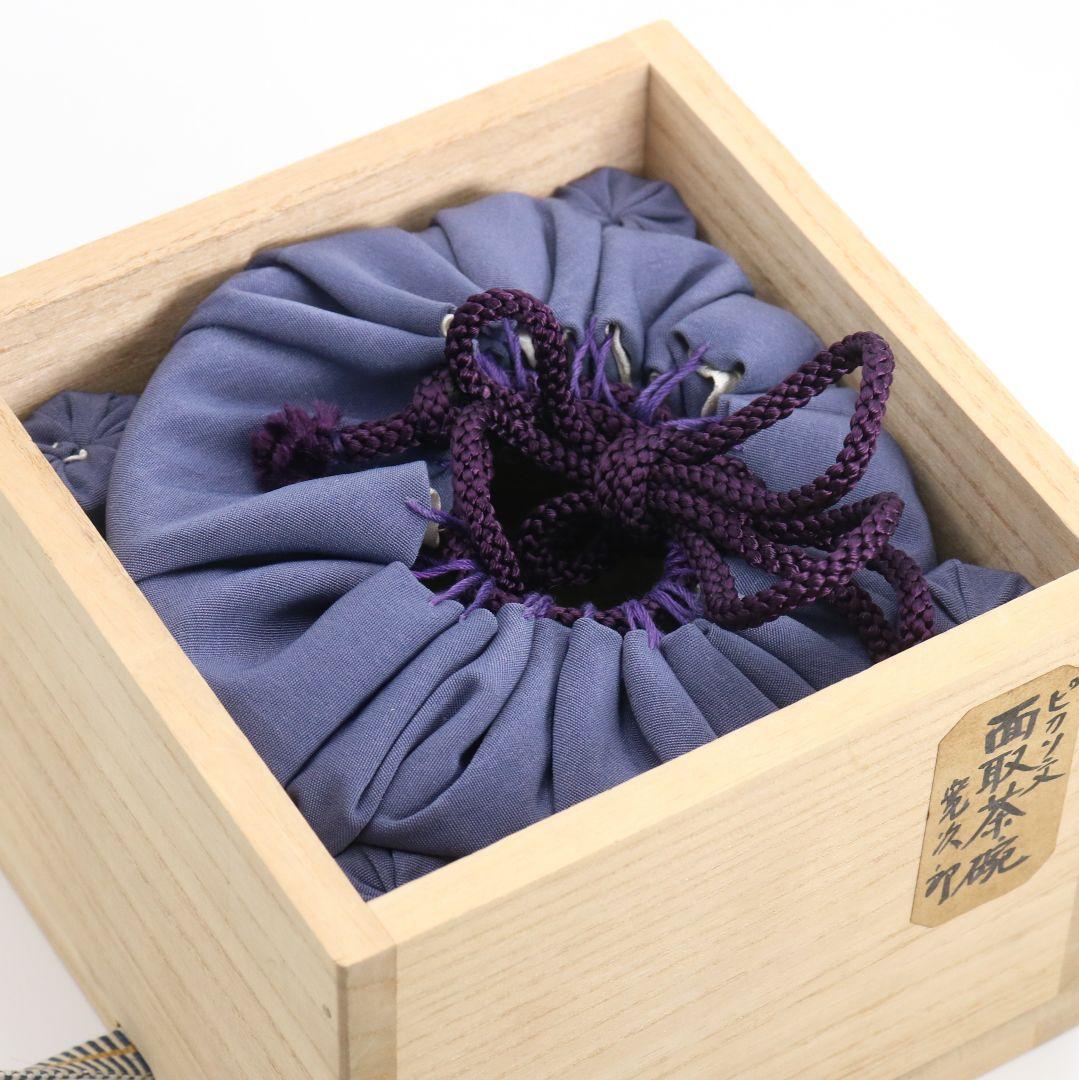
• Box: Signed paulownia tomobako with hakogaki reading『ピカソ文 面取茶碗 寛次郎』; original tomonuno (cloth wrap) and kyōfukuro (silk presentation bag) included
• Condition: Sound, no chips or cracks; surface carries the warmth of careful storage
🔹 [ CULTURAL & ARTISTIC INSIGHT ]
Kawai Kanjirō stood at the centre of the Mingei movement alongside Yanagi Sōetsu and Hamada Shōji, and famously declined the Living National Treasure designation in 1955 — a refusal that itself became part of his authorship. From the early 1950s onward, his vocabulary opened toward the abstract: figures and animals drawn with the same economy of line that Picasso and Klee had been pursuing in Europe. This bowl belongs to that late dialogue, where the brush stops describing and begins to inscribe.
The form is mentori — faceted while the clay was still soft, so each plane carries the memory of the hand that pressed it. Indigo cobalt pools against white slip; an iron-rich glaze runs in olive bands across the lower body; a single incised figure floats inside a panel like a notation half-remembered. There is a quietness that comes only from a maker who has stopped trying to be understood.
🔹 [ DEEP-DIVE COMMENTARY ]
Mentori is the faceting technique by which a still-soft thrown form is cut or pressed into discrete planes — a method that asks the maker to relinquish the wheel's symmetry and accept the geometry of the hand. In Kawai's hands the facets are not decorative; they are structural decisions that determine how light, glaze, and gesture will read across the body.
The surface here speaks in three registers. The white kaolin-rich slip carries the drawing; the indigo cobalt provides the punctuation — a few firm strokes, deliberately unfinished; the iron-bearing glaze on the foot and waist gathers into the green-brown of riverbed stone. The figure inside the white panel is reduced to a horizon line and two paused ovals — a face read sideways, or a body folded into geometry. Picasso's late ceramic work at Vallauris reached Japan through publications in the 1950s, and Kawai answered not by imitation but by translating the language into stoneware grammar.
For collectors of post-war Japanese studio pottery, the layered provenance matters: tomobako with hakogaki attributing the piece, tomonuno (signed cloth), and kyōfukuro — the silk drawstring bag normally reserved for objects held in particular regard within a collection. The bag does not authenticate; it records esteem. Together these elements describe how the bowl was kept, not merely what it is.
Cultural weight here is carried lightly. The bowl is small enough to hold in one palm, abstract enough to read as twentieth-century, traditional enough to receive matcha. It is a working chawan — meant to be lifted, turned, and warmed — that happens to record the moment when a major Japanese maker stood in conversation with European modernism without surrendering his ground.
In the contemporary tea room and the contemporary collection alike, pieces from Kawai's late abstract period continue to anchor displays of twentieth-century Mingei. The density of intention is unmistakable: every facet, every drawn line, every glaze break was a decision made by someone who had nothing left to prove.
[ JAPANESE DESCRIPTION / 日本語解説 ]
河井寛次郎(1890–1966)の作と伝わる、面取造形の茶碗。共箱の蓋裏には「ピカソ文 面取茶碗 寛次郎」と箱書きが認められ、共布および御物袋(きょうふくろ)が添う。柳宗悦・濱田庄司らとともに民藝運動の中心を担い、昭和三十年に人間国宝の指定を辞退したことでも知られる作家の、晩年の抽象期に位置づけられる一碗である。
面取は、轆轤で挽き上げた素地が柔らかいうちに面を切り取り、または押して平面を立てる技法で、轆轤の対称性を手放し、手の幾何に身を委ねる仕事である。胴には鉄釉が緑褐の帯となって流れ、白化粧の上に呉須の藍が幾筋か置かれ、白い枠の中に図像が線刻されている。横顔とも、折りたたまれた身体とも読める。ピカソやクレーの抽象が一九五〇年代に日本に届いたとき、寛次郎はそれを模倣でなく、自らの陶の文法に翻訳した。本作はその対話の延長線上にある。
寸法は高さ約8cm、口径約12cm。共箱・共布に加え、特に大切に扱われた器に添えられる御物袋を伴う点は、この茶碗が長く丁寧に守られてきた来歴を静かに物語る。掌に収まる大きさ、抹茶を点てるに足る深さ、抽象的でありながら茶碗としての作法を外さない佇まい——晩年の寛次郎が、西洋の近代と日本の用の美のあいだに置いた、ひとつの応答である。
🔹 [ SHIPPING & PACKAGING ]
• Dispatch: Within 1-6 business days
• Carrier: Japan Post EMS / UPS (with tracking)
• Packaging: Carefully wrapped with protective materials
🔹 [ BASIC DETAILS ]
• Artist: Attributed to Kawai Kanjirō (河井寛次郎, 1890–1966) by tomobako inscription
• Technique: Mentori (面取, faceted) hand-formed stoneware; indigo cobalt glaze with iron and white slip; incised figure drawing
• Era: Circa 1950s–1960s — Kawai's late abstract period
• Origin: Kyoto, Japan (Shōgō-in workshop area)
• Dimensions: Height approx. 8 cm, Diameter approx. 12 cm
• Box: Signed paulownia tomobako with hakogaki reading『ピカソ文 面取茶碗 寛次郎』; original tomonuno (cloth wrap) and kyōfukuro (silk presentation bag) included
• Condition: Sound, no chips or cracks; surface carries the warmth of careful storage
🔹 [ CULTURAL & ARTISTIC INSIGHT ]
Kawai Kanjirō stood at the centre of the Mingei movement alongside Yanagi Sōetsu and Hamada Shōji, and famously declined the Living National Treasure designation in 1955 — a refusal that itself became part of his authorship. From the early 1950s onward, his vocabulary opened toward the abstract: figures and animals drawn with the same economy of line that Picasso and Klee had been pursuing in Europe. This bowl belongs to that late dialogue, where the brush stops describing and begins to inscribe.
The form is mentori — faceted while the clay was still soft, so each plane carries the memory of the hand that pressed it. Indigo cobalt pools against white slip; an iron-rich glaze runs in olive bands across the lower body; a single incised figure floats inside a panel like a notation half-remembered. There is a quietness that comes only from a maker who has stopped trying to be understood.
🔹 [ DEEP-DIVE COMMENTARY ]
Mentori is the faceting technique by which a still-soft thrown form is cut or pressed into discrete planes — a method that asks the maker to relinquish the wheel's symmetry and accept the geometry of the hand. In Kawai's hands the facets are not decorative; they are structural decisions that determine how light, glaze, and gesture will read across the body.
The surface here speaks in three registers. The white kaolin-rich slip carries the drawing; the indigo cobalt provides the punctuation — a few firm strokes, deliberately unfinished; the iron-bearing glaze on the foot and waist gathers into the green-brown of riverbed stone. The figure inside the white panel is reduced to a horizon line and two paused ovals — a face read sideways, or a body folded into geometry. Picasso's late ceramic work at Vallauris reached Japan through publications in the 1950s, and Kawai answered not by imitation but by translating the language into stoneware grammar.
For collectors of post-war Japanese studio pottery, the layered provenance matters: tomobako with hakogaki attributing the piece, tomonuno (signed cloth), and kyōfukuro — the silk drawstring bag normally reserved for objects held in particular regard within a collection. The bag does not authenticate; it records esteem. Together these elements describe how the bowl was kept, not merely what it is.
Cultural weight here is carried lightly. The bowl is small enough to hold in one palm, abstract enough to read as twentieth-century, traditional enough to receive matcha. It is a working chawan — meant to be lifted, turned, and warmed — that happens to record the moment when a major Japanese maker stood in conversation with European modernism without surrendering his ground.
In the contemporary tea room and the contemporary collection alike, pieces from Kawai's late abstract period continue to anchor displays of twentieth-century Mingei. The density of intention is unmistakable: every facet, every drawn line, every glaze break was a decision made by someone who had nothing left to prove.
[ JAPANESE DESCRIPTION / 日本語解説 ]
河井寛次郎(1890–1966)の作と伝わる、面取造形の茶碗。共箱の蓋裏には「ピカソ文 面取茶碗 寛次郎」と箱書きが認められ、共布および御物袋(きょうふくろ)が添う。柳宗悦・濱田庄司らとともに民藝運動の中心を担い、昭和三十年に人間国宝の指定を辞退したことでも知られる作家の、晩年の抽象期に位置づけられる一碗である。
面取は、轆轤で挽き上げた素地が柔らかいうちに面を切り取り、または押して平面を立てる技法で、轆轤の対称性を手放し、手の幾何に身を委ねる仕事である。胴には鉄釉が緑褐の帯となって流れ、白化粧の上に呉須の藍が幾筋か置かれ、白い枠の中に図像が線刻されている。横顔とも、折りたたまれた身体とも読める。ピカソやクレーの抽象が一九五〇年代に日本に届いたとき、寛次郎はそれを模倣でなく、自らの陶の文法に翻訳した。本作はその対話の延長線上にある。
寸法は高さ約8cm、口径約12cm。共箱・共布に加え、特に大切に扱われた器に添えられる御物袋を伴う点は、この茶碗が長く丁寧に守られてきた来歴を静かに物語る。掌に収まる大きさ、抹茶を点てるに足る深さ、抽象的でありながら茶碗としての作法を外さない佇まい——晩年の寛次郎が、西洋の近代と日本の用の美のあいだに置いた、ひとつの応答である。
🔹 [ SHIPPING & PACKAGING ]
• Dispatch: Within 1-6 business days
• Carrier: Japan Post EMS / UPS (with tracking)
• Packaging: Carefully wrapped with protective materials
Quantity
Couldn't load pickup availability
Low stock: 1 left
View full details