1
/
of
9
Matcha Bowl Seizan Blue Mountain Iron Painting by Kasho Seizan-en | Chawan Tea Ceremony
Matcha Bowl Seizan Blue Mountain Iron Painting by Kasho Seizan-en | Chawan Tea Ceremony
Regular price
Dhs. 610.00 AED
Regular price
Sale price
Dhs. 610.00 AED
Taxes included.
Shipping calculated at checkout.
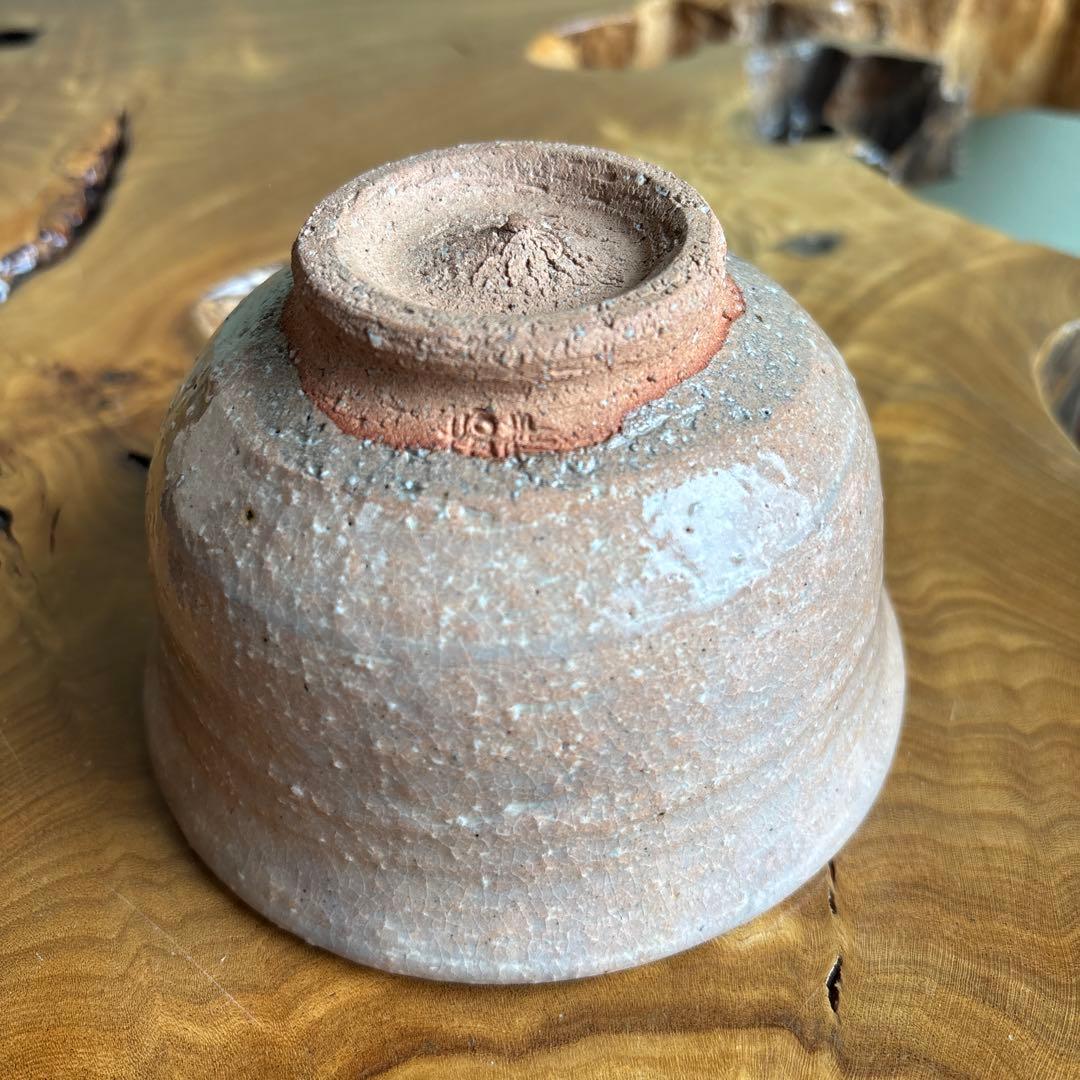
A rust-fired stoneware chawan from Kasho of Seizan-en studio — the exterior carrying an expansive mountain landscape in iron-oxide brushwork, bold and abbreviated, as though the peaks exist only in the moment of their making. Enclosed in original signed tomobako. #chawan #matcha #teaceremony #japanesepottery #茶碗 #抹茶碗 #茶道具 #ironpainting
🔹 [ BASIC DETAILS ]
Artist: Kasho (嘉祥), Seizan-en studio (青山園)
Subject: Seizan-zu — Blue Mountain Landscape
Technique: Iron-oxide brushwork on iron-rich stoneware body
Dimensions: approx. 12.5 cm diameter × 8 cm height
Condition: Excellent vintage condition; no chips, cracks, or repairs
Enclosure: Original tomobako (signed wooden box) — 「青山圖」inscription on lid, Kasho seal on box side
〔 日本語解説 — 基本情報 〕
作家:嘉祥(青山園)
題材:青山圖(山水景)
技法:鉄絵(酸化鉄による絵付け)
サイズ:口径約12.5cm、高さ約8cm
状態:良好。欠け・ひび・金継ぎなし
付属:共箱(「青山圖」墨書・嘉祥落款)
🔹 [ CULTURAL & ARTISTIC INSIGHT ]
The painted landscape tradition in Japanese ceramics runs from the e-garatsu ware of sixteenth-century Karatsu kilns — where anonymous potters first drew reed, heron, and mountain in swift iron strokes on unglazed clay — through centuries of refinement in which the image never lost its original quality of speed. What Kasho paints on this bowl is not a finished scene but a gesture: dark iron masses that the eye resolves into peaks, their silhouettes hanging above the clay the way actual mountains appear through early morning mist — present, legible, and already receding.
青山 (seizan, "blue mountain") carries its own poetic weight in classical Chinese and Japanese literature. It appears in Tang poetry as a fixed image of permanence and distance — the mountain that remains when the traveler departs, unchanged, indifferent, quietly enduring. To paint 青山圖 on a tea bowl is to bring that classical field of reference into the hands of whoever lifts it. The mountain encircles the bowl; the drinker, for a moment, sits inside the landscape.
The iron-red body — Karatsu-adjacent in spirit — fires to the color of autumn mountain earth. Against it, the brushwork reads in deep graphite and warm ochre, tones the glaze has drawn from the same iron that shaped the clay. Material and image arrive from identical sources.
*A mountain that asks nothing. A bowl that holds everything.*
〔 日本語解説 — 文化・美術的考察 〕
鉄絵の伝統は16世紀の唐津窯に端を発する。名もなき陶工たちが素焼きの土に酸化鉄の筆を走らせ、葦・鷺・山をひと息に描いた。その速度と省略こそが鉄絵の本質であり、嘉祥の筆もその系譜を正確に引き継ぐ。このぐい呑みではない——碗の外周を走る山容は完成した絵ではなく、筆が「解く」直前の形として留まっている。見る者の目が峰を結ぶのであって、作家が結んだのではない。
青山という語は漢詩・和歌において「永遠と距離」の定型意象である。旅人が去った後にも山は変わらず在る。その青山を茶碗に描くことは、古典詩の静けさをたなごころへ持ち込む行為だ。碗を持つ手が、山の稜線を廻る。
🔹 [ DEEP-DIVE COMMENTARY ]
E-garatsu — painted Karatsu — occupies a singular position in the history of Japanese tea ceramics. While most Karatsu ware is celebrated for its quiet glazes and restrained form, the e-garatsu kilns (particularly those active in Saga and Nagasaki prefectures from the late Momoyama period) introduced a second intelligence into the stoneware: the intelligence of the brush. What resulted was not decoration in the Western sense — applied ornament to a finished object — but something closer to the Zen principle of ichigo ichie, the brush mark as an unrepeatable event.
Kasho's Seizan-en studio works within this inherited sensibility. The studio name itself, 青山園 (Blue Mountain Garden), declares its central motif: the mountain as axis, the garden as the bounded space within which mountain consciousness can be received. The tomobako inscription — 「青山圖」, Blue Mountain Picture — is not a modest title but an announcement of intent: this bowl carries a picture, and the picture is a mountain, and the mountain is a world.
Iron-oxide painting on raw stoneware behaves differently from glaze painting on porcelain. The pigment sinks into the clay body during the first firing, then fuses in the glaze firing to produce tones that range from warm ochre through deep graphite, depending on the thickness of application and the atmospheric conditions inside the kiln. Kasho's brushwork here is confident and economic: broad lateral strokes for the mountain mass, a single abbreviated calligraphic mark — the character 圖 (picture/map) — written directly into the landscape as both signature and commentary. The bowl announces that it is its own image.
In the context of the tea gathering, a landscape chawan carries a specific function that goes beyond the aesthetic. Traditional tea practice values the "flower of the moment" — the seasonal reference, the window opened onto nature within the toko-no-ma alcove, the view carried by the utensils themselves when no garden is visible. A mountain-painted bowl, placed in the hands of a guest in a small room, becomes the view. The guest turns it, the peaks move, the horizon shifts. It is a portable window into distance.
The raw, iron-fired body of this bowl also participates in the meaning. Unlike the smooth coolness of porcelain, the gritty stoneware surface retains heat differently, wears the memory of past use in its slight patina, communicates a texture that asks to be held rather than examined. This is the quality the Japanese tea aesthetic calls te-no-uchi — "within the hand" — the knowledge a bowl yields only through physical contact, not through sight alone.
For a collector, this piece represents an accessible entry into the painted Karatsu tradition with clear provenance: studio attribution, signed tomobako, and a subject — the blue mountain — that belongs to one of the longest-running poetic traditions in East Asian culture.
〔 日本語解説 — 深層解説 〕
絵唐津は唐津焼の中でも特異な位置を占める。多くの唐津が釉薬と形の静けさで語るのに対し、絵唐津は筆という第二の知性を土に加えた。その筆の跡は装飾ではなく、一期一会——繰り返せない出来事そのものである。
嘉祥の青山園は、この系譜を意識的に継ぐ。スタジオ名「青山園」は主題の宣言であり、共箱の「青山圖」という墨書は茶碗の世界観を確定する——この碗は山を運ぶ。
鉄絵は素地の窯変によって表情を変える。厚塗りは深いグラファイト色に、薄塗りは暖かい黄鉄色に。嘉祥の筆致は横方向への大きなストローク(山塊)と、「圖」という一文字の書き込みによって完結する。絵と言葉が同一の筆で描かれ、碗は自身の映像となる。
茶席において山水の茶碗は「その場にない景色」を持ち込む道具でもある。客の手の中で峰が回り、地平が動く——それは携帯できる遠景である。粗土の肌が伝える熱と質感は、目ではなく手で理解するもの。「手の内」という美的概念がここに体現される。
🔹 [ SHIPPING & PACKAGING ]
• Dispatch: Within 1-6 business days
• Carrier: Japan Post EMS / UPS (with tracking)
• Packaging: Carefully wrapped with protective materials
🔹 [ BASIC DETAILS ]
Artist: Kasho (嘉祥), Seizan-en studio (青山園)
Subject: Seizan-zu — Blue Mountain Landscape
Technique: Iron-oxide brushwork on iron-rich stoneware body
Dimensions: approx. 12.5 cm diameter × 8 cm height
Condition: Excellent vintage condition; no chips, cracks, or repairs
Enclosure: Original tomobako (signed wooden box) — 「青山圖」inscription on lid, Kasho seal on box side
〔 日本語解説 — 基本情報 〕
作家:嘉祥(青山園)
題材:青山圖(山水景)
技法:鉄絵(酸化鉄による絵付け)
サイズ:口径約12.5cm、高さ約8cm
状態:良好。欠け・ひび・金継ぎなし
付属:共箱(「青山圖」墨書・嘉祥落款)
🔹 [ CULTURAL & ARTISTIC INSIGHT ]
The painted landscape tradition in Japanese ceramics runs from the e-garatsu ware of sixteenth-century Karatsu kilns — where anonymous potters first drew reed, heron, and mountain in swift iron strokes on unglazed clay — through centuries of refinement in which the image never lost its original quality of speed. What Kasho paints on this bowl is not a finished scene but a gesture: dark iron masses that the eye resolves into peaks, their silhouettes hanging above the clay the way actual mountains appear through early morning mist — present, legible, and already receding.
青山 (seizan, "blue mountain") carries its own poetic weight in classical Chinese and Japanese literature. It appears in Tang poetry as a fixed image of permanence and distance — the mountain that remains when the traveler departs, unchanged, indifferent, quietly enduring. To paint 青山圖 on a tea bowl is to bring that classical field of reference into the hands of whoever lifts it. The mountain encircles the bowl; the drinker, for a moment, sits inside the landscape.
The iron-red body — Karatsu-adjacent in spirit — fires to the color of autumn mountain earth. Against it, the brushwork reads in deep graphite and warm ochre, tones the glaze has drawn from the same iron that shaped the clay. Material and image arrive from identical sources.
*A mountain that asks nothing. A bowl that holds everything.*
〔 日本語解説 — 文化・美術的考察 〕
鉄絵の伝統は16世紀の唐津窯に端を発する。名もなき陶工たちが素焼きの土に酸化鉄の筆を走らせ、葦・鷺・山をひと息に描いた。その速度と省略こそが鉄絵の本質であり、嘉祥の筆もその系譜を正確に引き継ぐ。このぐい呑みではない——碗の外周を走る山容は完成した絵ではなく、筆が「解く」直前の形として留まっている。見る者の目が峰を結ぶのであって、作家が結んだのではない。
青山という語は漢詩・和歌において「永遠と距離」の定型意象である。旅人が去った後にも山は変わらず在る。その青山を茶碗に描くことは、古典詩の静けさをたなごころへ持ち込む行為だ。碗を持つ手が、山の稜線を廻る。
🔹 [ DEEP-DIVE COMMENTARY ]
E-garatsu — painted Karatsu — occupies a singular position in the history of Japanese tea ceramics. While most Karatsu ware is celebrated for its quiet glazes and restrained form, the e-garatsu kilns (particularly those active in Saga and Nagasaki prefectures from the late Momoyama period) introduced a second intelligence into the stoneware: the intelligence of the brush. What resulted was not decoration in the Western sense — applied ornament to a finished object — but something closer to the Zen principle of ichigo ichie, the brush mark as an unrepeatable event.
Kasho's Seizan-en studio works within this inherited sensibility. The studio name itself, 青山園 (Blue Mountain Garden), declares its central motif: the mountain as axis, the garden as the bounded space within which mountain consciousness can be received. The tomobako inscription — 「青山圖」, Blue Mountain Picture — is not a modest title but an announcement of intent: this bowl carries a picture, and the picture is a mountain, and the mountain is a world.
Iron-oxide painting on raw stoneware behaves differently from glaze painting on porcelain. The pigment sinks into the clay body during the first firing, then fuses in the glaze firing to produce tones that range from warm ochre through deep graphite, depending on the thickness of application and the atmospheric conditions inside the kiln. Kasho's brushwork here is confident and economic: broad lateral strokes for the mountain mass, a single abbreviated calligraphic mark — the character 圖 (picture/map) — written directly into the landscape as both signature and commentary. The bowl announces that it is its own image.
In the context of the tea gathering, a landscape chawan carries a specific function that goes beyond the aesthetic. Traditional tea practice values the "flower of the moment" — the seasonal reference, the window opened onto nature within the toko-no-ma alcove, the view carried by the utensils themselves when no garden is visible. A mountain-painted bowl, placed in the hands of a guest in a small room, becomes the view. The guest turns it, the peaks move, the horizon shifts. It is a portable window into distance.
The raw, iron-fired body of this bowl also participates in the meaning. Unlike the smooth coolness of porcelain, the gritty stoneware surface retains heat differently, wears the memory of past use in its slight patina, communicates a texture that asks to be held rather than examined. This is the quality the Japanese tea aesthetic calls te-no-uchi — "within the hand" — the knowledge a bowl yields only through physical contact, not through sight alone.
For a collector, this piece represents an accessible entry into the painted Karatsu tradition with clear provenance: studio attribution, signed tomobako, and a subject — the blue mountain — that belongs to one of the longest-running poetic traditions in East Asian culture.
〔 日本語解説 — 深層解説 〕
絵唐津は唐津焼の中でも特異な位置を占める。多くの唐津が釉薬と形の静けさで語るのに対し、絵唐津は筆という第二の知性を土に加えた。その筆の跡は装飾ではなく、一期一会——繰り返せない出来事そのものである。
嘉祥の青山園は、この系譜を意識的に継ぐ。スタジオ名「青山園」は主題の宣言であり、共箱の「青山圖」という墨書は茶碗の世界観を確定する——この碗は山を運ぶ。
鉄絵は素地の窯変によって表情を変える。厚塗りは深いグラファイト色に、薄塗りは暖かい黄鉄色に。嘉祥の筆致は横方向への大きなストローク(山塊)と、「圖」という一文字の書き込みによって完結する。絵と言葉が同一の筆で描かれ、碗は自身の映像となる。
茶席において山水の茶碗は「その場にない景色」を持ち込む道具でもある。客の手の中で峰が回り、地平が動く——それは携帯できる遠景である。粗土の肌が伝える熱と質感は、目ではなく手で理解するもの。「手の内」という美的概念がここに体現される。
🔹 [ SHIPPING & PACKAGING ]
• Dispatch: Within 1-6 business days
• Carrier: Japan Post EMS / UPS (with tracking)
• Packaging: Carefully wrapped with protective materials
Quantity
Couldn't load pickup availability
Low stock: 1 left
View full details