1
/
of
15
Mashiko Yaki Nuka Glaze Matcha Bowl Signed Take Artist Tomobako Chawan
Mashiko Yaki Nuka Glaze Matcha Bowl Signed Take Artist Tomobako Chawan
Regular price
Dhs. 761.00 AED
Regular price
Sale price
Dhs. 761.00 AED
Taxes included.
Shipping calculated at checkout.
A Mashiko-yaki matcha tea bowl by the potter Take, glazed in nuka-yu — the rice bran ash glaze technique that defines Mashiko's ceramic identity. Layered blue-grey tones shift from pale lavender at the rim to deep teal and warm ochre across the body, each firing pass building a landscape of atmospheric color. A Japanese tea ceremony bowl where earth, ash, and flame speak without mediation.
━━━━━━━━━━━━━━━━━━━━
🔹 [ BASIC DETAILS ]
• Artist: Take (武)
• Technique: Nuka-yu (糠釉) — rice bran ash glaze
• Era: Heisei–Reiwa period
• Origin: Mashiko, Tochigi Prefecture, Japan
• Dimensions: 12 cm × 7 cm (4.7" dia × 2.8" h)
• Box: Tomobako (signed wooden box — 「益子焼 糠釉抹茶盌 武作」)
• Condition: Good — minor signs of use consistent with tea practice; no chips, cracks, or structural repairs
━━━━━━━━━━━━━━━━━━━━
🔹 [ CULTURAL & ARTISTIC INSIGHT ]
Mashiko ware occupies a foundational place in Japanese folk ceramic history. When Hamada Shoji settled in this Tochigi Prefecture pottery town in 1924, he did not merely establish a workshop — he crystallized a philosophy: that beauty resides in the honest convergence of local clay, local glaze, and the potter's unaffected hand. The nuka-yu technique — grinding rice bran ash into a glaze that yields soft, atmospheric blue-grey tones — became one of Mashiko's most recognizable expressions of that philosophy.
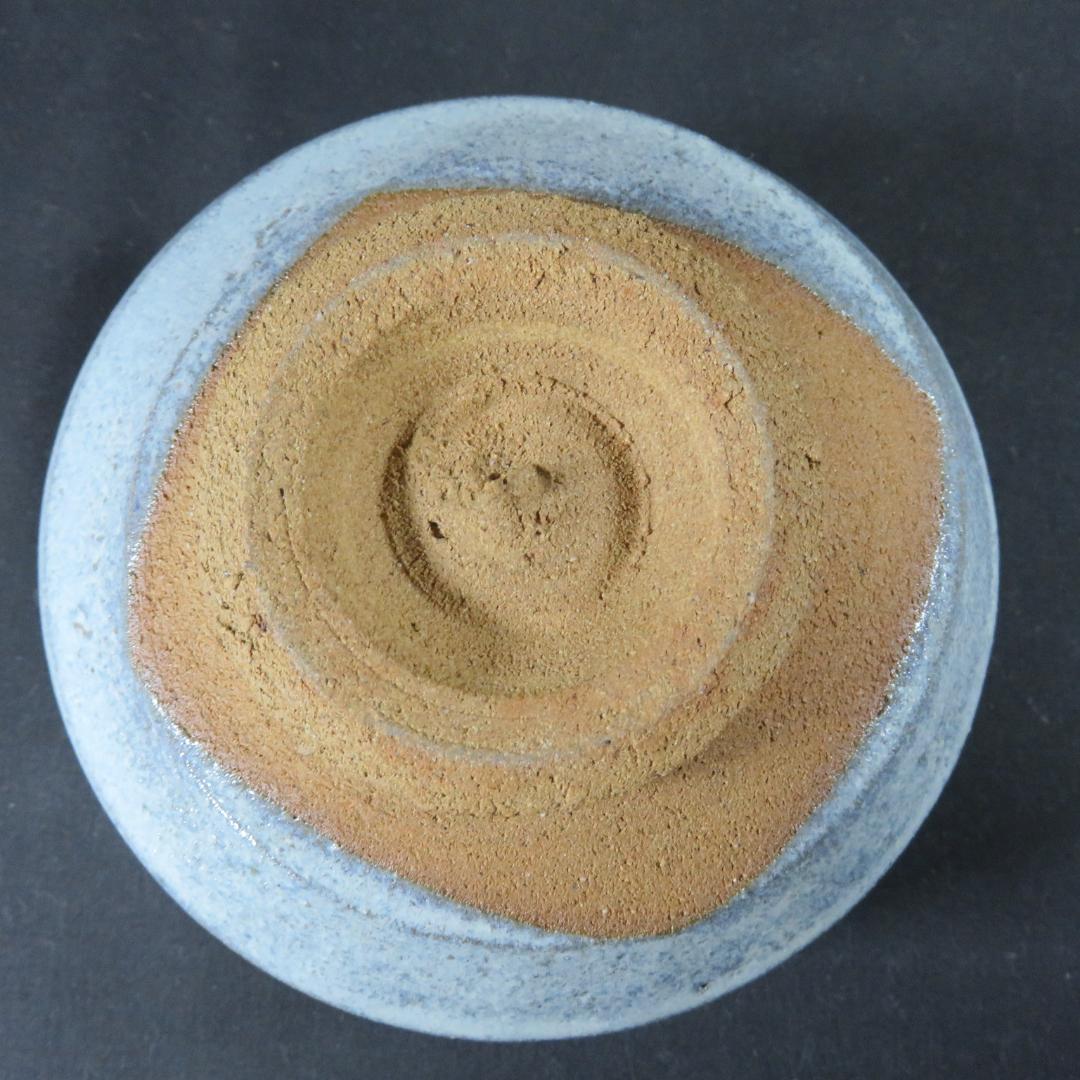
Take's matcha bowl inherits this lineage with quiet conviction. The nuka glaze has been applied in deliberate layers, each pass contributing a different register of color. Horizontal striations emerge where the potter's hands shaped the wet clay on the wheel, now fossilized beneath the glaze as landscape-like bands of lavender, steel blue, and earth brown. The exposed sandy kodai (foot ring) anchors the composition in Mashiko's iron-rich local clay — a material signature that connects this bowl to the specific geology of its origin.
The form is generous without excess. It sits naturally in cupped hands, its weight distributed for the rhythmic turning motion of temae. The interior pools the nuka glaze into a deeper, more uniform tone — a calm surface against which the frothy green of whisked matcha achieves its full visual resonance.
*"Ash remembers the grain it once was. The glaze carries that memory into blue."*
━━━━━━━━━━━━━━━━━━━━
🔹 [ DEEP-DIVE COMMENTARY ]
**Nuka-yu (Rice Bran Ash Glaze)**: The nuka technique transforms an agricultural byproduct — the silica-rich husk of rice — into a glaze of remarkable atmospheric depth. When fired in a reduction kiln, the ash glaze develops its characteristic blue-grey palette, with iron content in the clay body bleeding through at thinner areas to create warm brown accents. The unpredictability of this interaction between ash, clay, and atmosphere means no two nuka-glazed vessels are alike. Each bowl is a unique record of a specific firing.
**Mashiko Ceramic Heritage**: Mashiko's ceramic identity was shaped by the mingei (folk craft) movement's conviction that utilitarian objects could embody the deepest aesthetic values. The town's potters work with local Mashiko clay — a coarse, iron-bearing stoneware body — and local glaze materials including nuka ash, kaki (persimmon) glaze, and tetsu-yu (iron glaze). This commitment to regional materials gives Mashiko ware its unmistakable earthy character, a quality that distinguishes it from the refined porcelains of Kyoto or Arita.
**Layered Glaze Application**: The visible striations on this bowl are not decorative effects applied after the fact. They emerge from the interaction between wheel-throwing marks in the clay body and multiple layers of nuka glaze. Where the glaze pools thickly, it reads as deep blue-grey; where it thins over ridges, the warm ochre of the clay body asserts itself. This dialogue between surface and substrate is central to Mashiko aesthetics — the glaze does not conceal the clay but collaborates with it.
**The Kodai (Foot Ring)**: The unglazed foot ring reveals the raw Mashiko clay in its fired state — sandy, warm, slightly rough to the touch. In tea practice, the kodai is among the most scrutinized elements of a chawan. Guests turn the bowl to examine the foot, reading in its texture and cut the potter's relationship with their material. Here, the honest exposure of Mashiko clay serves as both structural foundation and philosophical statement.
━━━━━━━━━━━━━━━━━━━━
🔹 [ 日本語解説 ]
【基本情報】
• 作家:武(Take)
• 技法:糠釉(ぬかゆう)
• 時代:平成〜令和
• 産地:栃木県 益子
• 寸法:口径約12cm × 高さ約7cm
• 付属:共箱(「益子焼 糠釉抹茶盌 武作」)
• 状態:良好 — 使用に伴う経年感あり、欠け・ヒビ・構造的な直しなし
【解説】
武による益子焼の糠釉抹茶碗。淡いラベンダーから深い藍緑、温かな褐色へと移ろう大気的な色調が特徴。轆轤の痕跡が釉薬の下に横縞として残り、山並みを思わせる景色を生み出しています。
口縁部の淡いラベンダー色から胴部の深い藍緑色へと移ろう色の推移は、一度の窯焚きで生まれた偶然と必然の交差点です。高台には益子の鉄分を含んだ砂気のある素地が露出し、この碗が生まれた土地の地質を静かに証言しています。
手に取れば程よい重みがあり、茶を点てる所作に自然と馴染む造形です。内側に溜まった糠釉の均一な藍色は、抹茶の緑を引き立てる静かな舞台となります。
━━━━━━━━━━━━━━━━━━━━
🔹 [ SHIPPING & PACKAGING ]
• Dispatch: Within 1-6 business days
• Carrier: Japan Post EMS / UPS (with tracking)
• Packaging: Carefully wrapped with protective materials
*Where ash meets flame, the grain's last gift becomes blue silence on clay.*
━━━━━━━━━━━━━━━━━━━━
🔹 [ BASIC DETAILS ]
• Artist: Take (武)
• Technique: Nuka-yu (糠釉) — rice bran ash glaze
• Era: Heisei–Reiwa period
• Origin: Mashiko, Tochigi Prefecture, Japan
• Dimensions: 12 cm × 7 cm (4.7" dia × 2.8" h)
• Box: Tomobako (signed wooden box — 「益子焼 糠釉抹茶盌 武作」)
• Condition: Good — minor signs of use consistent with tea practice; no chips, cracks, or structural repairs
━━━━━━━━━━━━━━━━━━━━
🔹 [ CULTURAL & ARTISTIC INSIGHT ]
Mashiko ware occupies a foundational place in Japanese folk ceramic history. When Hamada Shoji settled in this Tochigi Prefecture pottery town in 1924, he did not merely establish a workshop — he crystallized a philosophy: that beauty resides in the honest convergence of local clay, local glaze, and the potter's unaffected hand. The nuka-yu technique — grinding rice bran ash into a glaze that yields soft, atmospheric blue-grey tones — became one of Mashiko's most recognizable expressions of that philosophy.
Take's matcha bowl inherits this lineage with quiet conviction. The nuka glaze has been applied in deliberate layers, each pass contributing a different register of color. Horizontal striations emerge where the potter's hands shaped the wet clay on the wheel, now fossilized beneath the glaze as landscape-like bands of lavender, steel blue, and earth brown. The exposed sandy kodai (foot ring) anchors the composition in Mashiko's iron-rich local clay — a material signature that connects this bowl to the specific geology of its origin.
The form is generous without excess. It sits naturally in cupped hands, its weight distributed for the rhythmic turning motion of temae. The interior pools the nuka glaze into a deeper, more uniform tone — a calm surface against which the frothy green of whisked matcha achieves its full visual resonance.
*"Ash remembers the grain it once was. The glaze carries that memory into blue."*
━━━━━━━━━━━━━━━━━━━━
🔹 [ DEEP-DIVE COMMENTARY ]
**Nuka-yu (Rice Bran Ash Glaze)**: The nuka technique transforms an agricultural byproduct — the silica-rich husk of rice — into a glaze of remarkable atmospheric depth. When fired in a reduction kiln, the ash glaze develops its characteristic blue-grey palette, with iron content in the clay body bleeding through at thinner areas to create warm brown accents. The unpredictability of this interaction between ash, clay, and atmosphere means no two nuka-glazed vessels are alike. Each bowl is a unique record of a specific firing.
**Mashiko Ceramic Heritage**: Mashiko's ceramic identity was shaped by the mingei (folk craft) movement's conviction that utilitarian objects could embody the deepest aesthetic values. The town's potters work with local Mashiko clay — a coarse, iron-bearing stoneware body — and local glaze materials including nuka ash, kaki (persimmon) glaze, and tetsu-yu (iron glaze). This commitment to regional materials gives Mashiko ware its unmistakable earthy character, a quality that distinguishes it from the refined porcelains of Kyoto or Arita.
**Layered Glaze Application**: The visible striations on this bowl are not decorative effects applied after the fact. They emerge from the interaction between wheel-throwing marks in the clay body and multiple layers of nuka glaze. Where the glaze pools thickly, it reads as deep blue-grey; where it thins over ridges, the warm ochre of the clay body asserts itself. This dialogue between surface and substrate is central to Mashiko aesthetics — the glaze does not conceal the clay but collaborates with it.
**The Kodai (Foot Ring)**: The unglazed foot ring reveals the raw Mashiko clay in its fired state — sandy, warm, slightly rough to the touch. In tea practice, the kodai is among the most scrutinized elements of a chawan. Guests turn the bowl to examine the foot, reading in its texture and cut the potter's relationship with their material. Here, the honest exposure of Mashiko clay serves as both structural foundation and philosophical statement.
━━━━━━━━━━━━━━━━━━━━
🔹 [ 日本語解説 ]
【基本情報】
• 作家:武(Take)
• 技法:糠釉(ぬかゆう)
• 時代:平成〜令和
• 産地:栃木県 益子
• 寸法:口径約12cm × 高さ約7cm
• 付属:共箱(「益子焼 糠釉抹茶盌 武作」)
• 状態:良好 — 使用に伴う経年感あり、欠け・ヒビ・構造的な直しなし
【解説】
武による益子焼の糠釉抹茶碗。淡いラベンダーから深い藍緑、温かな褐色へと移ろう大気的な色調が特徴。轆轤の痕跡が釉薬の下に横縞として残り、山並みを思わせる景色を生み出しています。
口縁部の淡いラベンダー色から胴部の深い藍緑色へと移ろう色の推移は、一度の窯焚きで生まれた偶然と必然の交差点です。高台には益子の鉄分を含んだ砂気のある素地が露出し、この碗が生まれた土地の地質を静かに証言しています。
手に取れば程よい重みがあり、茶を点てる所作に自然と馴染む造形です。内側に溜まった糠釉の均一な藍色は、抹茶の緑を引き立てる静かな舞台となります。
━━━━━━━━━━━━━━━━━━━━
🔹 [ SHIPPING & PACKAGING ]
• Dispatch: Within 1-6 business days
• Carrier: Japan Post EMS / UPS (with tracking)
• Packaging: Carefully wrapped with protective materials
*Where ash meets flame, the grain's last gift becomes blue silence on clay.*
Quantity
Couldn't load pickup availability
Low stock: 1 left
View full details