1
/
of
16
Makuzu Ware Mizusashi Water Jar with Shippo Enamel by Makuzu Kosai, Omotesenke Box
Makuzu Ware Mizusashi Water Jar with Shippo Enamel by Makuzu Kosai, Omotesenke Box
Regular price
Dhs. 7,279.00 AED
Regular price
Sale price
Dhs. 7,279.00 AED
Taxes included.
Shipping calculated at checkout.
Experience Authentic Japan Art with this Makuzu Ware Mizusashi Water Jar. This Japanese Tea Ceremony Vessel serves as a Hand Painted Shippo Enamel Jar and Amber Ame Glaze Pottery, featuring a Black Lacquer Lid Mizusashi and Cloisonne Pattern Ceramic by Makuzu Kosai Kyoto, certified with an Omotesenke Tea Master Box—a Signed Japanese Pottery and museum-grade Collectible Tea Ceremony Art, a must-have for any Art Collector.
🔹 [ BASIC DETAILS ]
• Artist: Makuzu Kosai (真葛香斎), Makuzu kiln, Kyoto lineage
• Technique: Wheel-thrown stoneware, ame (amber) glaze with fine throwing rings, hand-painted shippo (cloisonne-style seven-treasures) overglaze enamel band, black-lacquered lid with metal lifting ring
• Era: Showa to Heisei period (Before 2007)
• Origin: Kyoto, Japan (Kyo-yaki / Makuzu tradition)
• Dimensions: Height approx. 16 cm, Diameter approx. 20 cm
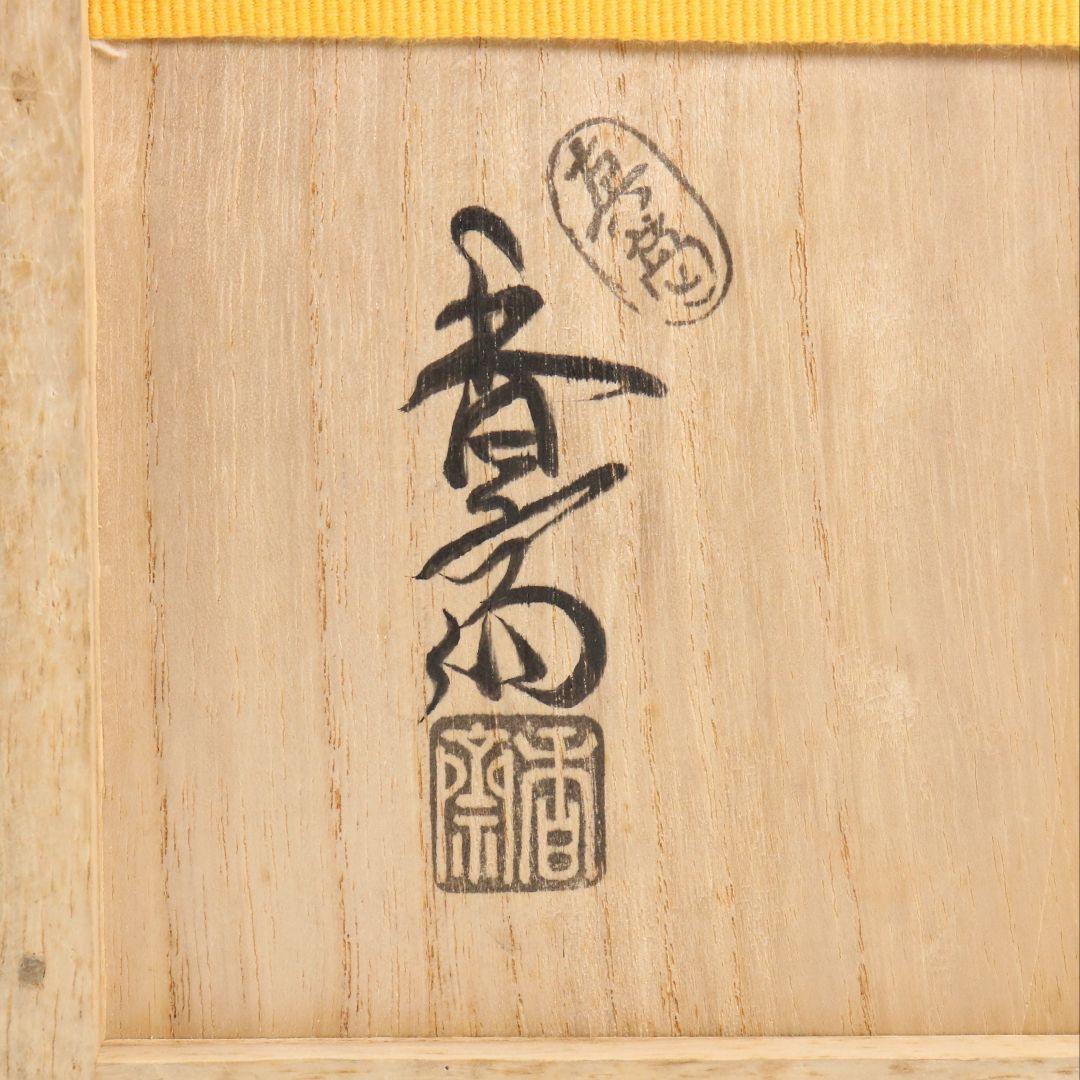
• Box: Original signed tomobako (paulownia wood box), inscribed and certified by Sokuchusai (即中斎), the 13th-generation grand master (iemoto) of the Omotesenke tea school
• Condition: Excellent, well-preserved condition with no significant damage; glaze, enamel band, and lid intact
🔹 [ CULTURAL & ARTISTIC INSIGHT ]
This mizusashi (fresh-water jar) belongs to the heart of the Japanese tea ceremony (chanoyu), where it holds the pure water used to replenish the kettle and rinse the tea bowl. More than a utensil, the mizusashi is a quiet anchor on the tatami—chosen to set the mood of the entire gathering.
Historical Context: The Makuzu name carries deep weight in Kyoto ceramics, a lineage celebrated for refined Kyo-yaki tea wares. Successive generations bearing the Kosai name continued a tradition prized by tea practitioners, where the maker's hand and the box certification together define authenticity and value. The accompanying box, inscribed by Sokuchusai of Omotesenke, places this vessel within one of the great living schools of tea, transforming it from a beautiful object into a documented part of tea culture.
Technique & Aesthetic: The body rises in a generous, full-shouldered form, its surface scored with countless fine horizontal throwing rings that catch the light like the grain of old wood. Over this warm amber (ame) ground, a single band of jewel-like enamel encircles the shoulder—a shippo pattern of interlocking circles in green, coral red, sky blue, and cream, each cell built up like miniature cloisonne. The deep black lid, glossy as still water, answers the warmth of the clay with cool restraint. Here the wabi-sabi sensibility lives not in roughness but in balance: the humble earthen body, the disciplined ornament, the silence of the dark lid.
Philosophical Reflection: The amber clay holds the patience of fire, while the band of color rests upon it like spring blossoms on bare earth—quiet, deliberate, and alive.
🔹 [ DEEP-DIVE COMMENTARY ]
Makuzu ware refers to the celebrated Kyoto ceramic lineage associated with the Makuzu kiln, a name long synonymous with high-grade Kyo-yaki tea utensils. Unlike the rustic stonewares of Bizen or Shigaraki, the Kyoto tradition favors elegance, controlled decoration, and a courtly refinement suited to the formal tea room. A signed Makuzu piece, especially one paired with an iemoto box inscription, is regarded as a serious collector's object.
The shippo (seven-treasures) motif seen here is achieved through painstaking overglaze enamel work. After the body is glazed and fired, the artist applies fine colored enamels by hand—green, red, blue, and white—into a geometric lattice of overlapping circles, then re-fires the piece at a lower temperature to fuse the colors permanently. The raised, glassy quality of each cell echoes true cloisonne metalwork, which is precisely the visual reference the motif is meant to evoke.
The ame (amber) glaze that covers the body is an iron-rich glaze fired to a translucent caramel-brown, deepened along the throwing rings where it pools. This interplay of glaze thickness over the turned ridges creates the subtle vertical striping that gives the jar its warmth and depth—an effect that can only emerge from skilled wheel work followed by careful firing.
For collectors, the value lies in the convergence of three things: the Makuzu maker's mark, the deliberate marriage of amber ground with jewel-toned enamel, and the certifying box from Omotesenke's 13th grand master. This is the lineage logic of tea: object, maker, and school authenticated together. Such pieces remain highly sought because they document a verifiable place within the canon of Japanese tea culture.
In contemporary use, a mizusashi of this caliber serves equally as a working tea utensil and as a sculptural presence in a modern interior—a vessel that carries centuries of intention into a quiet present-day room.
🔹 [ 日本語解説 ]
🔹 [ 基本情報 ]
• 作家: 真葛香斎(真葛焼・京都の名跡)
• 技法: 轆轤成形の陶器、飴釉に細やかな轆轤目、手描きの七宝繋ぎ色絵帯、黒塗(黒釉)蓋に金属の摘み環
• 年代: 昭和〜平成期(2007年以前)
• 産地: 日本・京都(京焼/真葛の伝統)
• 寸法: 高さ 約16cm、直径 約20cm
• 共箱: 表千家十三代家元・即中斎による書付のある共箱(桐箱)付属
• 状態: 良好。目立った損傷なく、釉・色絵帯・蓋ともに健全
🔹 [ 文化的・芸術的考察 ]
この水指は、茶道(茶の湯)の中心にある道具です。釜に water を足し、茶碗をすすぐための清水を湛える器であり、単なる実用具を超えて、点前の場全体の趣を静かに定める存在です。
真葛の名は京焼において重く、洗練された茶道具で名高い系譜を担ってきました。香斎を襲名した歴代は茶人に愛される伝統を継ぎ、作家の手と箱の極めが相まって真贋と価値を定めます。即中斎による書付の箱は、本器を表千家という現存する大流派の文脈に置き、美しい器を「茶の文化の記録」へと昇華させています。
胴は堂々とした肩の張った姿に立ち上がり、表面には無数の細い轆轤目が走り、古木の木目のように光を捉えます。温かな飴地の上に、肩を一周する宝石のような色絵帯——緑・珊瑚色の赤・空色・生成の七宝繋ぎ文が、小さな七宝(cloisonne)のように盛り上げられています。漆黒の蓋は静水のように艶やかで、土の温もりに冷たい静けさで応えます。侘び寂びの感性は粗さではなく均衡に宿ります。素朴な土の胴、抑制された装飾、黒蓋の沈黙——その調和の中に。
詩的省察: 飴色の土は炎の忍耐を抱き、色帯はその上に春の花のように据えられる——静かに、確かに、生きている。
🔹 [ 深掘り解説 ]
真葛焼は、京焼の高格な茶道具で知られる京都の名窯・真葛の系譜を指します。備前や信楽の素朴な焼締とは異なり、京の伝統は優美さ、制御された装飾、茶室にふさわしい雅を尊びます。署名のある真葛、ことに家元書付の箱を伴う一点は、本格的な蒐集対象と見なされます。
本器の七宝繋ぎ文は、丹念な上絵付によって成されます。本焼後の器に、緑・赤・青・白の色絵具を手で円の重なる幾何文に置き、低火度で再度焼き付けて発色を定着させます。各区画の盛り上がった硝子質の質感は、まさに本物の七宝細工を想起させる意匠です。
胴を覆う飴釉は鉄分に富む釉が透明感ある飴色に焼き上がり、轆轤目に沿って溜まることで深みを増します。轆轤の稜線に重なる釉の厚薄が、温かな縦の景色を生み——熟練の轆轤と慎重な焼成からのみ生まれる効果です。
蒐集家にとっての価値は三つの収斂にあります。真葛の作家銘、飴地と宝石色絵の意図的な取り合わせ、そして表千家十三代家元・即中斎の極め箱。器・作家・流派が共に証される——これが茶の系譜の論理です。検証可能な正統の位置を記録するがゆえに、こうした器は今なお強く求められます。
現代においては、この格の水指は実用の茶道具としても、また現代空間の彫刻的存在としても等しく機能し、幾世紀の意図を静かな今日の部屋へと運びます。
🔹 [ SHIPPING & PACKAGING ]
• Dispatch: Within 1-6 business days
• Carrier: Japan Post EMS / UPS (with tracking)
• Packaging: Carefully wrapped with protective materials
🔹 [ BASIC DETAILS ]
• Artist: Makuzu Kosai (真葛香斎), Makuzu kiln, Kyoto lineage
• Technique: Wheel-thrown stoneware, ame (amber) glaze with fine throwing rings, hand-painted shippo (cloisonne-style seven-treasures) overglaze enamel band, black-lacquered lid with metal lifting ring
• Era: Showa to Heisei period (Before 2007)
• Origin: Kyoto, Japan (Kyo-yaki / Makuzu tradition)
• Dimensions: Height approx. 16 cm, Diameter approx. 20 cm
• Box: Original signed tomobako (paulownia wood box), inscribed and certified by Sokuchusai (即中斎), the 13th-generation grand master (iemoto) of the Omotesenke tea school
• Condition: Excellent, well-preserved condition with no significant damage; glaze, enamel band, and lid intact
🔹 [ CULTURAL & ARTISTIC INSIGHT ]
This mizusashi (fresh-water jar) belongs to the heart of the Japanese tea ceremony (chanoyu), where it holds the pure water used to replenish the kettle and rinse the tea bowl. More than a utensil, the mizusashi is a quiet anchor on the tatami—chosen to set the mood of the entire gathering.
Historical Context: The Makuzu name carries deep weight in Kyoto ceramics, a lineage celebrated for refined Kyo-yaki tea wares. Successive generations bearing the Kosai name continued a tradition prized by tea practitioners, where the maker's hand and the box certification together define authenticity and value. The accompanying box, inscribed by Sokuchusai of Omotesenke, places this vessel within one of the great living schools of tea, transforming it from a beautiful object into a documented part of tea culture.
Technique & Aesthetic: The body rises in a generous, full-shouldered form, its surface scored with countless fine horizontal throwing rings that catch the light like the grain of old wood. Over this warm amber (ame) ground, a single band of jewel-like enamel encircles the shoulder—a shippo pattern of interlocking circles in green, coral red, sky blue, and cream, each cell built up like miniature cloisonne. The deep black lid, glossy as still water, answers the warmth of the clay with cool restraint. Here the wabi-sabi sensibility lives not in roughness but in balance: the humble earthen body, the disciplined ornament, the silence of the dark lid.
Philosophical Reflection: The amber clay holds the patience of fire, while the band of color rests upon it like spring blossoms on bare earth—quiet, deliberate, and alive.
🔹 [ DEEP-DIVE COMMENTARY ]
Makuzu ware refers to the celebrated Kyoto ceramic lineage associated with the Makuzu kiln, a name long synonymous with high-grade Kyo-yaki tea utensils. Unlike the rustic stonewares of Bizen or Shigaraki, the Kyoto tradition favors elegance, controlled decoration, and a courtly refinement suited to the formal tea room. A signed Makuzu piece, especially one paired with an iemoto box inscription, is regarded as a serious collector's object.
The shippo (seven-treasures) motif seen here is achieved through painstaking overglaze enamel work. After the body is glazed and fired, the artist applies fine colored enamels by hand—green, red, blue, and white—into a geometric lattice of overlapping circles, then re-fires the piece at a lower temperature to fuse the colors permanently. The raised, glassy quality of each cell echoes true cloisonne metalwork, which is precisely the visual reference the motif is meant to evoke.
The ame (amber) glaze that covers the body is an iron-rich glaze fired to a translucent caramel-brown, deepened along the throwing rings where it pools. This interplay of glaze thickness over the turned ridges creates the subtle vertical striping that gives the jar its warmth and depth—an effect that can only emerge from skilled wheel work followed by careful firing.
For collectors, the value lies in the convergence of three things: the Makuzu maker's mark, the deliberate marriage of amber ground with jewel-toned enamel, and the certifying box from Omotesenke's 13th grand master. This is the lineage logic of tea: object, maker, and school authenticated together. Such pieces remain highly sought because they document a verifiable place within the canon of Japanese tea culture.
In contemporary use, a mizusashi of this caliber serves equally as a working tea utensil and as a sculptural presence in a modern interior—a vessel that carries centuries of intention into a quiet present-day room.
🔹 [ 日本語解説 ]
🔹 [ 基本情報 ]
• 作家: 真葛香斎(真葛焼・京都の名跡)
• 技法: 轆轤成形の陶器、飴釉に細やかな轆轤目、手描きの七宝繋ぎ色絵帯、黒塗(黒釉)蓋に金属の摘み環
• 年代: 昭和〜平成期(2007年以前)
• 産地: 日本・京都(京焼/真葛の伝統)
• 寸法: 高さ 約16cm、直径 約20cm
• 共箱: 表千家十三代家元・即中斎による書付のある共箱(桐箱)付属
• 状態: 良好。目立った損傷なく、釉・色絵帯・蓋ともに健全
🔹 [ 文化的・芸術的考察 ]
この水指は、茶道(茶の湯)の中心にある道具です。釜に water を足し、茶碗をすすぐための清水を湛える器であり、単なる実用具を超えて、点前の場全体の趣を静かに定める存在です。
真葛の名は京焼において重く、洗練された茶道具で名高い系譜を担ってきました。香斎を襲名した歴代は茶人に愛される伝統を継ぎ、作家の手と箱の極めが相まって真贋と価値を定めます。即中斎による書付の箱は、本器を表千家という現存する大流派の文脈に置き、美しい器を「茶の文化の記録」へと昇華させています。
胴は堂々とした肩の張った姿に立ち上がり、表面には無数の細い轆轤目が走り、古木の木目のように光を捉えます。温かな飴地の上に、肩を一周する宝石のような色絵帯——緑・珊瑚色の赤・空色・生成の七宝繋ぎ文が、小さな七宝(cloisonne)のように盛り上げられています。漆黒の蓋は静水のように艶やかで、土の温もりに冷たい静けさで応えます。侘び寂びの感性は粗さではなく均衡に宿ります。素朴な土の胴、抑制された装飾、黒蓋の沈黙——その調和の中に。
詩的省察: 飴色の土は炎の忍耐を抱き、色帯はその上に春の花のように据えられる——静かに、確かに、生きている。
🔹 [ 深掘り解説 ]
真葛焼は、京焼の高格な茶道具で知られる京都の名窯・真葛の系譜を指します。備前や信楽の素朴な焼締とは異なり、京の伝統は優美さ、制御された装飾、茶室にふさわしい雅を尊びます。署名のある真葛、ことに家元書付の箱を伴う一点は、本格的な蒐集対象と見なされます。
本器の七宝繋ぎ文は、丹念な上絵付によって成されます。本焼後の器に、緑・赤・青・白の色絵具を手で円の重なる幾何文に置き、低火度で再度焼き付けて発色を定着させます。各区画の盛り上がった硝子質の質感は、まさに本物の七宝細工を想起させる意匠です。
胴を覆う飴釉は鉄分に富む釉が透明感ある飴色に焼き上がり、轆轤目に沿って溜まることで深みを増します。轆轤の稜線に重なる釉の厚薄が、温かな縦の景色を生み——熟練の轆轤と慎重な焼成からのみ生まれる効果です。
蒐集家にとっての価値は三つの収斂にあります。真葛の作家銘、飴地と宝石色絵の意図的な取り合わせ、そして表千家十三代家元・即中斎の極め箱。器・作家・流派が共に証される——これが茶の系譜の論理です。検証可能な正統の位置を記録するがゆえに、こうした器は今なお強く求められます。
現代においては、この格の水指は実用の茶道具としても、また現代空間の彫刻的存在としても等しく機能し、幾世紀の意図を静かな今日の部屋へと運びます。
🔹 [ SHIPPING & PACKAGING ]
• Dispatch: Within 1-6 business days
• Carrier: Japan Post EMS / UPS (with tracking)
• Packaging: Carefully wrapped with protective materials
Quantity
Couldn't load pickup availability
Low stock: 1 left
View full details