1
/
of
9
Maki-e Kogo Incense Container by Kaga Zuizan — Koma & Seigaiha Urushi Lacquer, Tea Ceremony, Tomobako
Maki-e Kogo Incense Container by Kaga Zuizan — Koma & Seigaiha Urushi Lacquer, Tea Ceremony, Tomobako
Regular price
Dhs. 1,076.00 AED
Regular price
Sale price
Dhs. 1,076.00 AED
Taxes included.
Shipping calculated at checkout.
Experience Authentic Japanese Lacquer Art with this Maki-e Kogo Incense Container. This Japanese Tea Ceremony Incense Box serves as a Urushi Lacquer Kogo and Maki-e Tea Caddy, featuring Kaga Zuizan Artist Signed Work and Seigaiha Wave Pattern Lacquer — a must-have for any Lacquer Art Collector seeking Archive-worthy Kogo Tea Utensil.
🔹 [ BASIC DETAILS ]
• Artist: Kaga Zuizan (加賀瑞山) — maki-e / urushi lacquer artist
• Technique: Maki-e (gold dust lacquer) and urushi multilayer lacquer
• Era: Before 2007
• Origin: Japan
• Dimensions: Height approx. 5.8 cm, Diameter approx. 6.8 cm
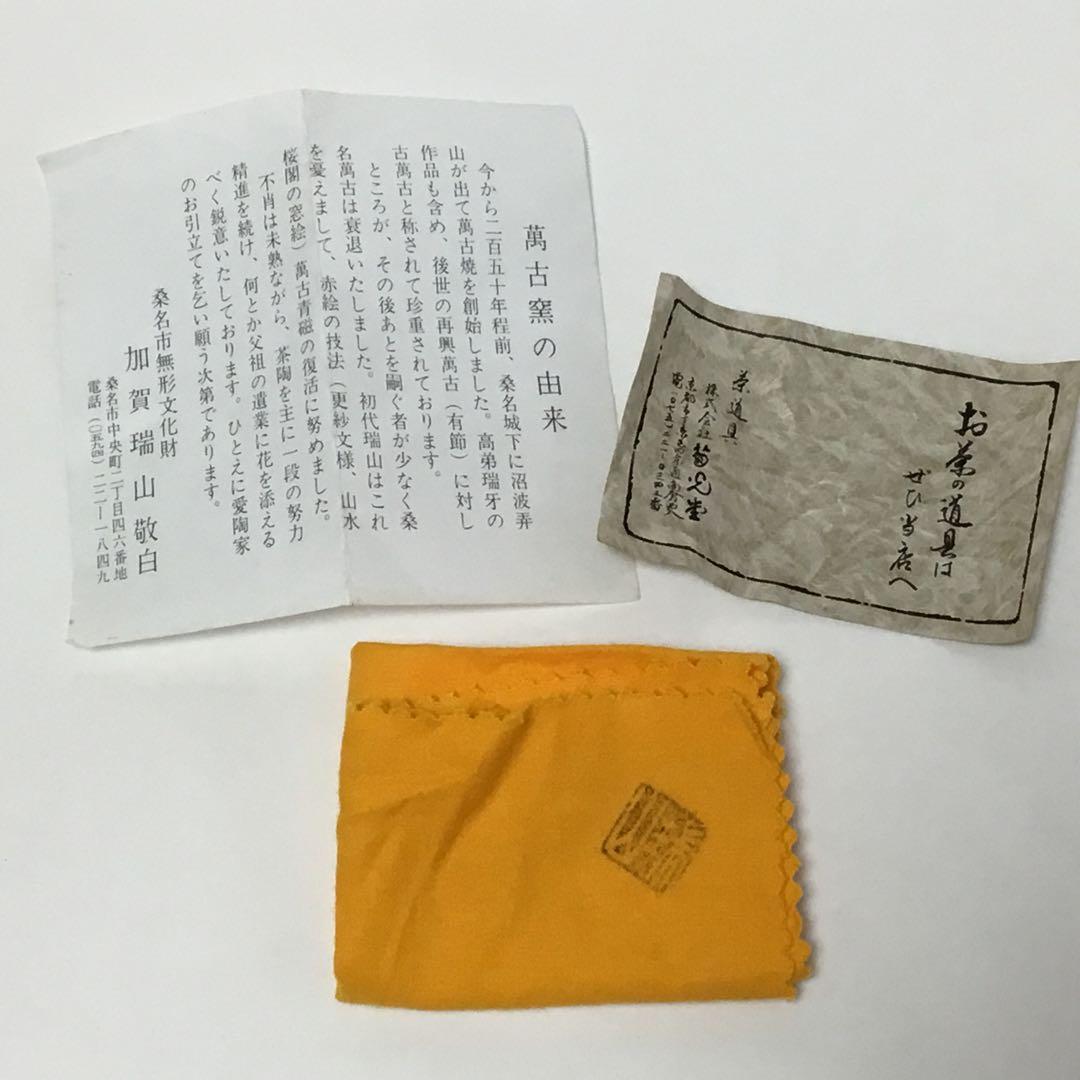
• Box: Tomobako (original wooden box) with artist's inscription and seal
• Condition: Unused. No chips, no scratches, no wear.
🔹 [ CULTURAL & ARTISTIC INSIGHT ]
A kogo — the small lidded vessel that holds incense in the tea ceremony — occupies a singular position among tea utensils. Its role is ceremonial and intimate: to carry fragrance into the moment of encounter between host and guest. The object need not be large. It must be present.
Kaga Zuizan's design for this kogo is unusually animated. The lid carries a field of koma (spinning tops) rendered in red, yellow, green, and gold maki-e — forms that spin without moving, carrying the cultural weight of festivity, childhood memory, and New Year ritual. The body is wrapped in seigaiha (青海波), the ancient wave-scale pattern, inlaid with gold arrow-feather motifs (yabane) against a deep lacquer ground. The contrast between the playful lid and the rhythmic, almost architectural body is deliberate. Two registers of time — joy and continuity — held in a vessel that fits in the palm.
The gold work is precise. The lacquer ground is smooth, with depth that only urushi achieves: not shiny in the way of synthetics, but alive, luminous from within. Authorship is confirmed: tomobako, hakogaki (box inscription), and seal are all present.
POETIC LINE: "A spinning top in lacquer does not fall. It holds the moment still."
🔹 [ DEEP-DIVE COMMENTARY ]
Maki-e is Japan's most technically demanding decorative lacquer tradition. Gold, silver, or colored powders are dusted onto wet urushi and sealed beneath additional lacquer layers. The process requires precise timing — the urushi window for adhesion is narrow — and the final surface is polished to reveal depth, not gloss.
Seigaiha (青海波 — "blue sea wave") is one of Japan's oldest geometric patterns, traced to Nara-period textiles and Heian court music. In ceramics and lacquer, it appears as an overlapping scale field suggesting calm, infinite water. Its presence on a kogo places this object within a continuum of Japanese aesthetic consciousness that predates the tea ceremony itself.
The koma (独楽) motif on the lid belongs to a different register: auspicious, festive, rooted in New Year and childhood ritual. Maki-e artists occasionally pair contrasting visual vocabularies — formal and joyful, classical and vernacular — to create objects that hold multiple cultural frequencies simultaneously. This kogo is such an object.
Kaga Zuizan works in the tradition of Japanese decorative urushi, where technical mastery and compositional originality are equally weighted. The tomobako with hakogaki and personal seal confirms the work as fully documented — an important consideration for collectors who require provenance. Unused condition means the lacquer surface retains its original polish and integrity.
For collectors of Japanese lacquerware, tea ceremony utensils, or maki-e art objects, a kogo of this quality and documentation density is an anchor piece: small in scale, complete in authorship.
[ JAPANESE DESCRIPTION / 日本語解説 ]
🔹 [ 基本仕様 ]
• 作家:加賀瑞山(蒔絵・漆芸作家)
• 技法:蒔絵(金粉蒔き)+ 漆多層塗り
• 時代:2007年以前
• 産地:日本
• 寸法:高さ約5.8cm、直径約6.8cm
• 箱:共箱(箱書・印完備)
• 状態:未使用品。欠け・傷・使用感なし。
🔹 [ 文化・芸術的背景 ]
香合は、茶の湯において香を納める小さな蓋物であり、茶道具の中でも特異な存在感を持つ。その役割は儀礼的かつ親密なものだ。香りを、主と客の出会いの瞬間へと運ぶ器。大きさは問わない。ただ、そこに在ること。
加賀瑞山によるこの香合の意匠は、ひとつの驚きを持っている。蓋天には独楽文——赤・黄・緑・金の蒔絵で描かれた、止まったまま回り続けるような独楽——が、正月と幼少期の記憶を同時に呼び起こす。胴部には青海波地に金の矢羽根を配し、波の律動が静かな建築のように展開する。蓋の祝祭性と胴の格調が交差する意匠は、時間の二つの層——喜びと継続性——を掌に収まる器に封じ込めたものだ。
蒔絵の金は精緻で、漆地は深い。合成塗料のような表面的な光沢ではなく、漆特有の内側から発する輝き。作家性の証明は完備している:共箱、箱書、印。
詩的一句:「漆の独楽は倒れない。その瞬間を静止させる。」
🔹 [ 深層解説 ]
蒔絵は、日本漆芸の中でも最も高度な加飾技法のひとつである。金・銀・色粉を湿った漆の上に蒔き、さらに漆を重ねて固定する。漆の硬化窓は狭く、工程全体に精密なタイミングが要求される。最終的な表面は研磨によって深みが引き出され、艶ではなく奥行きが現れる。
青海波は、奈良時代の染織や平安朝の雅楽装束にまで遡る、日本最古の幾何学文様のひとつ。漆器や陶器において、穏やかで無限に続く水面を示す。この香合に青海波が現れることで、本作は茶道以前から連続する日本の美意識の系譜に接続される。
蓋の独楽文は、それとは異なる次元に属する。縁起物として、また新年と幼少期の遊びの象徴として。蒔絵作家はときに相反する視覚の語彙——格式と祝祭、古典と民俗——を重ね、複数の文化的周波数を同時に保持する器を作ることがある。この香合はそのような作例である。
共箱・箱書・印が揃い、未使用の状態で残るこの香合は、漆工芸・茶道具・蒔絵を収集するコレクターにとって、小品でありながら存在感のある一点である。
🔹 [ SHIPPING & PACKAGING ]
• Dispatch: Within 1-6 business days
• Carrier: Japan Post EMS / UPS (with tracking)
• Packaging: Carefully wrapped with protective materials
🔹 [ BASIC DETAILS ]
• Artist: Kaga Zuizan (加賀瑞山) — maki-e / urushi lacquer artist
• Technique: Maki-e (gold dust lacquer) and urushi multilayer lacquer
• Era: Before 2007
• Origin: Japan
• Dimensions: Height approx. 5.8 cm, Diameter approx. 6.8 cm
• Box: Tomobako (original wooden box) with artist's inscription and seal
• Condition: Unused. No chips, no scratches, no wear.
🔹 [ CULTURAL & ARTISTIC INSIGHT ]
A kogo — the small lidded vessel that holds incense in the tea ceremony — occupies a singular position among tea utensils. Its role is ceremonial and intimate: to carry fragrance into the moment of encounter between host and guest. The object need not be large. It must be present.
Kaga Zuizan's design for this kogo is unusually animated. The lid carries a field of koma (spinning tops) rendered in red, yellow, green, and gold maki-e — forms that spin without moving, carrying the cultural weight of festivity, childhood memory, and New Year ritual. The body is wrapped in seigaiha (青海波), the ancient wave-scale pattern, inlaid with gold arrow-feather motifs (yabane) against a deep lacquer ground. The contrast between the playful lid and the rhythmic, almost architectural body is deliberate. Two registers of time — joy and continuity — held in a vessel that fits in the palm.
The gold work is precise. The lacquer ground is smooth, with depth that only urushi achieves: not shiny in the way of synthetics, but alive, luminous from within. Authorship is confirmed: tomobako, hakogaki (box inscription), and seal are all present.
POETIC LINE: "A spinning top in lacquer does not fall. It holds the moment still."
🔹 [ DEEP-DIVE COMMENTARY ]
Maki-e is Japan's most technically demanding decorative lacquer tradition. Gold, silver, or colored powders are dusted onto wet urushi and sealed beneath additional lacquer layers. The process requires precise timing — the urushi window for adhesion is narrow — and the final surface is polished to reveal depth, not gloss.
Seigaiha (青海波 — "blue sea wave") is one of Japan's oldest geometric patterns, traced to Nara-period textiles and Heian court music. In ceramics and lacquer, it appears as an overlapping scale field suggesting calm, infinite water. Its presence on a kogo places this object within a continuum of Japanese aesthetic consciousness that predates the tea ceremony itself.
The koma (独楽) motif on the lid belongs to a different register: auspicious, festive, rooted in New Year and childhood ritual. Maki-e artists occasionally pair contrasting visual vocabularies — formal and joyful, classical and vernacular — to create objects that hold multiple cultural frequencies simultaneously. This kogo is such an object.
Kaga Zuizan works in the tradition of Japanese decorative urushi, where technical mastery and compositional originality are equally weighted. The tomobako with hakogaki and personal seal confirms the work as fully documented — an important consideration for collectors who require provenance. Unused condition means the lacquer surface retains its original polish and integrity.
For collectors of Japanese lacquerware, tea ceremony utensils, or maki-e art objects, a kogo of this quality and documentation density is an anchor piece: small in scale, complete in authorship.
[ JAPANESE DESCRIPTION / 日本語解説 ]
🔹 [ 基本仕様 ]
• 作家:加賀瑞山(蒔絵・漆芸作家)
• 技法:蒔絵(金粉蒔き)+ 漆多層塗り
• 時代:2007年以前
• 産地:日本
• 寸法:高さ約5.8cm、直径約6.8cm
• 箱:共箱(箱書・印完備)
• 状態:未使用品。欠け・傷・使用感なし。
🔹 [ 文化・芸術的背景 ]
香合は、茶の湯において香を納める小さな蓋物であり、茶道具の中でも特異な存在感を持つ。その役割は儀礼的かつ親密なものだ。香りを、主と客の出会いの瞬間へと運ぶ器。大きさは問わない。ただ、そこに在ること。
加賀瑞山によるこの香合の意匠は、ひとつの驚きを持っている。蓋天には独楽文——赤・黄・緑・金の蒔絵で描かれた、止まったまま回り続けるような独楽——が、正月と幼少期の記憶を同時に呼び起こす。胴部には青海波地に金の矢羽根を配し、波の律動が静かな建築のように展開する。蓋の祝祭性と胴の格調が交差する意匠は、時間の二つの層——喜びと継続性——を掌に収まる器に封じ込めたものだ。
蒔絵の金は精緻で、漆地は深い。合成塗料のような表面的な光沢ではなく、漆特有の内側から発する輝き。作家性の証明は完備している:共箱、箱書、印。
詩的一句:「漆の独楽は倒れない。その瞬間を静止させる。」
🔹 [ 深層解説 ]
蒔絵は、日本漆芸の中でも最も高度な加飾技法のひとつである。金・銀・色粉を湿った漆の上に蒔き、さらに漆を重ねて固定する。漆の硬化窓は狭く、工程全体に精密なタイミングが要求される。最終的な表面は研磨によって深みが引き出され、艶ではなく奥行きが現れる。
青海波は、奈良時代の染織や平安朝の雅楽装束にまで遡る、日本最古の幾何学文様のひとつ。漆器や陶器において、穏やかで無限に続く水面を示す。この香合に青海波が現れることで、本作は茶道以前から連続する日本の美意識の系譜に接続される。
蓋の独楽文は、それとは異なる次元に属する。縁起物として、また新年と幼少期の遊びの象徴として。蒔絵作家はときに相反する視覚の語彙——格式と祝祭、古典と民俗——を重ね、複数の文化的周波数を同時に保持する器を作ることがある。この香合はそのような作例である。
共箱・箱書・印が揃い、未使用の状態で残るこの香合は、漆工芸・茶道具・蒔絵を収集するコレクターにとって、小品でありながら存在感のある一点である。
🔹 [ SHIPPING & PACKAGING ]
• Dispatch: Within 1-6 business days
• Carrier: Japan Post EMS / UPS (with tracking)
• Packaging: Carefully wrapped with protective materials
Quantity
Couldn't load pickup availability
Low stock: 1 left
View full details