1
/
of
11
Lavender Grey Chawan with Iron Painting — Fujimoto Meisei, Shinshōji Tōshin Kiln
Lavender Grey Chawan with Iron Painting — Fujimoto Meisei, Shinshōji Tōshin Kiln
Regular price
Dhs. 629.00 AED
Regular price
Sale price
Dhs. 629.00 AED
Taxes included.
Shipping calculated at checkout.
A Fujimoto Meisei Chawan from Shinshōji Tōshin Kiln brings together Iron Painting Ceramic and Turquoise Glaze Accent in a quiet form built for the Tea Ceremony Bowl. This Japanese Studio Pottery piece doubles as a Zen Temple Kiln Ware and Hiroshima Ceramic Art object, expressing Lavender Grey Glaze and a Wabi Sabi Tea Bowl sensibility — a natural draw for any Ceramic Art Collector.
🔹 [ BASIC DETAILS ]
• Artist: Fujimoto Meisei (藤本明成)
• Technique: Lavender-grey glaze ground with iron painting (iron-red crackle panel interior, iron-brown sweep exterior) and turquoise copper-green accent drops
• Era: 2000 – 2006 or 2010 – 2019
• Origin: Shinshōji Tōshin Kiln, Fukuyama (Hiroshima Prefecture), Japan — kiln established within the grounds of Shinshōji, a Rinzai Zen temple
• Dimensions: Height approx. 7 cm, Diameter approx. 11 cm
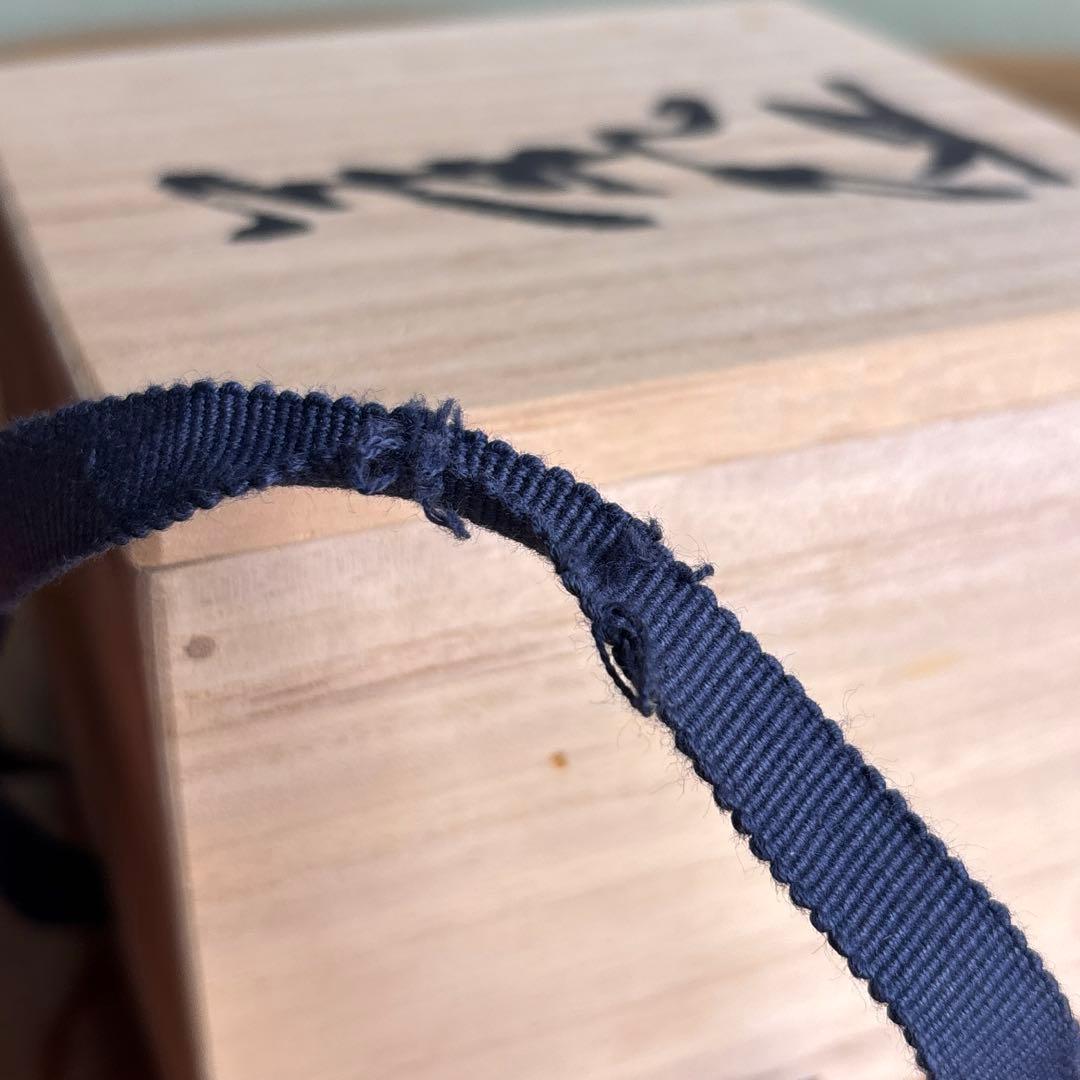
• Box: Tomobako (signed wooden box, calligraphy in artist's hand)
• Condition: Good. No chips or cracks. Natural kiln variation in glaze pooling near the foot ring; intentional firing character throughout.
🔹 [ CULTURAL & ARTISTIC INSIGHT ]
Shinshōji, built in 1965 in Fukuyama, Hiroshima, is among Japan's most quietly significant postwar Rinzai Zen foundations — a site of gardens, sculpture, and contemplative architecture rather than a conventional temple precinct. A kiln set within its grounds carries that weight naturally: objects made here are not merely shaped by a craftsman but by an environment where attention is structural. Fujimoto Meisei's work from the Tōshin kiln carries that density of intention. The lavender-grey glaze — neither assertive nor passive — reads differently in each light: silver-blue in shadow, faintly violet in morning, bone-white in direct sun. It is a glaze that does not declare itself.
The interior is where this bowl makes its argument. A broad panel of iron-red with visible crackle texture — the iron slip fired and fractured under the glaze — anchors the floor, with three turquoise copper-green drops placed across it. These are not decorative flourishes. They are intervals. The eye moves between them the way attention moves between breaths.
Philosophical reflection: Some objects hold a room still. This bowl is the kind that does that from inside a cabinet.
🔹 [ DEEP-DIVE COMMENTARY ]
Iron painting (鉄絵, tetsue) in the Japanese ceramic tradition refers to the application of iron oxide slip — either brushed in gestural strokes or flooded as a field — beneath or within the glaze layer. At high-fire temperatures, the iron reduces and oxidizes in ways that are partially controlled, partially surrendered. The crackle pattern visible on the interior floor of this bowl is the result of differential shrinkage between the iron-slip layer and the surrounding glaze: the clay body, glaze, and iron each pull against each other as the kiln cools, and the fine network of cracks that results is preserved in the finished surface. It is a record of tension resolved.
The turquoise accents are achieved through copper oxide, which yields green-teal tones in an oxidizing or lightly reducing atmosphere. Fujimoto has placed these deliberately — three points, asymmetrically — against the rust-red crackle ground. The effect is not contrast for its own sake but punctuation: the turquoise dots function the way a pause functions in speech, marking something that would otherwise pass unnoticed.
The exterior carries a quieter language: the lavender-grey glaze wraps the form continuously, interrupted near the base by a single arcing iron-brown stroke and one red brushmark with a small turquoise touch. From outside, the bowl offers restraint. The interior reverses this — it opens into something richer, more layered. That inward revelation is a deliberate structural choice in chawan design, and here it is fully inhabited.
For collectors, a bowl from a named kiln within a Rinzai Zen temple grounds is unusual enough to mark. Tōshin kiln is not a commercial operation in any ordinary sense. Objects from it are made at the pace of that environment: considered, unhurried, numbered by context rather than production run. The tomobako, signed in the artist's hand, confirms the object's direct provenance and completes the form of its authorship.
The small size — slightly below standard chawan diameter — makes this bowl equally suited to thick matcha (koicha) service, where a more contained interior suits the denser preparation. It is a bowl that knows its function and does not exceed it.
[ JAPANESE DESCRIPTION / 日本語解説 ]
藤本明成は広島県福山市、臨済宗の名刹・神勝寺の境内に構えた陶信窯で制作する陶芸家です。境内という制作環境がもたらす静けさと集中は、その作品に自ずと映り込みます。この茶碗は、ラベンダーグレイの釉薬を基調に、鉄絵と銅緑釉の点景を配した、抑制の中に豊かさを宿す一椀です。
外側は淡いラベンダーグレイが全体を包み、腰から高台にかけて鉄釉の大きな刷毛目と小さな朱点が一筆描かれています。外から見れば、このうつわは静かです。しかし内側を覗くと、表情は一変します。鉄絵による赤錆色のパネルが見込みを大きく占め、そのひび割れた肌の上に三つの緑青点が不規則に置かれています。このひびは、焼成時に鉄釉と素地の収縮率の差が生み出す必然の紋様であり、緑青点は銅釉の還元発色。どちらも技法として意図されながら、自然の力に委ねられた結果として現れます。
小ぶりのサイズは濃茶にも適し、日常の一服にも静かな時間をもたらします。共箱には作家自身の書が記されており、作品の来歴と誠実さを証しています。神勝寺という場所で生まれたうつわが持つ文化的な重みは、そこに込められた眼差しの密度として、手に触れるときに伝わってくるものがあります。
🔹 [ SHIPPING & PACKAGING ]
• Dispatch: Within 1-6 business days
• Carrier: Japan Post EMS / UPS (with tracking)
• Packaging: Carefully wrapped with protective materials
🔹 [ BASIC DETAILS ]
• Artist: Fujimoto Meisei (藤本明成)
• Technique: Lavender-grey glaze ground with iron painting (iron-red crackle panel interior, iron-brown sweep exterior) and turquoise copper-green accent drops
• Era: 2000 – 2006 or 2010 – 2019
• Origin: Shinshōji Tōshin Kiln, Fukuyama (Hiroshima Prefecture), Japan — kiln established within the grounds of Shinshōji, a Rinzai Zen temple
• Dimensions: Height approx. 7 cm, Diameter approx. 11 cm
• Box: Tomobako (signed wooden box, calligraphy in artist's hand)
• Condition: Good. No chips or cracks. Natural kiln variation in glaze pooling near the foot ring; intentional firing character throughout.
🔹 [ CULTURAL & ARTISTIC INSIGHT ]
Shinshōji, built in 1965 in Fukuyama, Hiroshima, is among Japan's most quietly significant postwar Rinzai Zen foundations — a site of gardens, sculpture, and contemplative architecture rather than a conventional temple precinct. A kiln set within its grounds carries that weight naturally: objects made here are not merely shaped by a craftsman but by an environment where attention is structural. Fujimoto Meisei's work from the Tōshin kiln carries that density of intention. The lavender-grey glaze — neither assertive nor passive — reads differently in each light: silver-blue in shadow, faintly violet in morning, bone-white in direct sun. It is a glaze that does not declare itself.
The interior is where this bowl makes its argument. A broad panel of iron-red with visible crackle texture — the iron slip fired and fractured under the glaze — anchors the floor, with three turquoise copper-green drops placed across it. These are not decorative flourishes. They are intervals. The eye moves between them the way attention moves between breaths.
Philosophical reflection: Some objects hold a room still. This bowl is the kind that does that from inside a cabinet.
🔹 [ DEEP-DIVE COMMENTARY ]
Iron painting (鉄絵, tetsue) in the Japanese ceramic tradition refers to the application of iron oxide slip — either brushed in gestural strokes or flooded as a field — beneath or within the glaze layer. At high-fire temperatures, the iron reduces and oxidizes in ways that are partially controlled, partially surrendered. The crackle pattern visible on the interior floor of this bowl is the result of differential shrinkage between the iron-slip layer and the surrounding glaze: the clay body, glaze, and iron each pull against each other as the kiln cools, and the fine network of cracks that results is preserved in the finished surface. It is a record of tension resolved.
The turquoise accents are achieved through copper oxide, which yields green-teal tones in an oxidizing or lightly reducing atmosphere. Fujimoto has placed these deliberately — three points, asymmetrically — against the rust-red crackle ground. The effect is not contrast for its own sake but punctuation: the turquoise dots function the way a pause functions in speech, marking something that would otherwise pass unnoticed.
The exterior carries a quieter language: the lavender-grey glaze wraps the form continuously, interrupted near the base by a single arcing iron-brown stroke and one red brushmark with a small turquoise touch. From outside, the bowl offers restraint. The interior reverses this — it opens into something richer, more layered. That inward revelation is a deliberate structural choice in chawan design, and here it is fully inhabited.
For collectors, a bowl from a named kiln within a Rinzai Zen temple grounds is unusual enough to mark. Tōshin kiln is not a commercial operation in any ordinary sense. Objects from it are made at the pace of that environment: considered, unhurried, numbered by context rather than production run. The tomobako, signed in the artist's hand, confirms the object's direct provenance and completes the form of its authorship.
The small size — slightly below standard chawan diameter — makes this bowl equally suited to thick matcha (koicha) service, where a more contained interior suits the denser preparation. It is a bowl that knows its function and does not exceed it.
[ JAPANESE DESCRIPTION / 日本語解説 ]
藤本明成は広島県福山市、臨済宗の名刹・神勝寺の境内に構えた陶信窯で制作する陶芸家です。境内という制作環境がもたらす静けさと集中は、その作品に自ずと映り込みます。この茶碗は、ラベンダーグレイの釉薬を基調に、鉄絵と銅緑釉の点景を配した、抑制の中に豊かさを宿す一椀です。
外側は淡いラベンダーグレイが全体を包み、腰から高台にかけて鉄釉の大きな刷毛目と小さな朱点が一筆描かれています。外から見れば、このうつわは静かです。しかし内側を覗くと、表情は一変します。鉄絵による赤錆色のパネルが見込みを大きく占め、そのひび割れた肌の上に三つの緑青点が不規則に置かれています。このひびは、焼成時に鉄釉と素地の収縮率の差が生み出す必然の紋様であり、緑青点は銅釉の還元発色。どちらも技法として意図されながら、自然の力に委ねられた結果として現れます。
小ぶりのサイズは濃茶にも適し、日常の一服にも静かな時間をもたらします。共箱には作家自身の書が記されており、作品の来歴と誠実さを証しています。神勝寺という場所で生まれたうつわが持つ文化的な重みは、そこに込められた眼差しの密度として、手に触れるときに伝わってくるものがあります。
🔹 [ SHIPPING & PACKAGING ]
• Dispatch: Within 1-6 business days
• Carrier: Japan Post EMS / UPS (with tracking)
• Packaging: Carefully wrapped with protective materials
Quantity
Couldn't load pickup availability
Low stock: 1 left
View full details