1
/
of
14
Lacquer Tea Caddy Natsume Willow Maki-e by Nawate Masaharu
Lacquer Tea Caddy Natsume Willow Maki-e by Nawate Masaharu
Regular price
Dhs. 1,614.00 AED
Regular price
Sale price
Dhs. 1,614.00 AED
Taxes included.
Shipping calculated at checkout.
Gold willow branches sweep across jet-black urushi in a natsume by Nawate Masaharu — a tea caddy where the maki-e is not decoration but landscape. Nashiji gold dusting lines the lid interior. Excellent craftsmanship throughout. Shared box. An object that holds silence the way lacquer holds light.
🔹 [ Basic Details ]
• Artist: 縄手昌晴 (Nawate Masaharu)
• Technique: Maki-e lacquerwork on urushi ground, nashiji interior
• Era: Contemporary
• Origin: Japan
• Dimensions: H 7.5 cm × D 7.3 cm
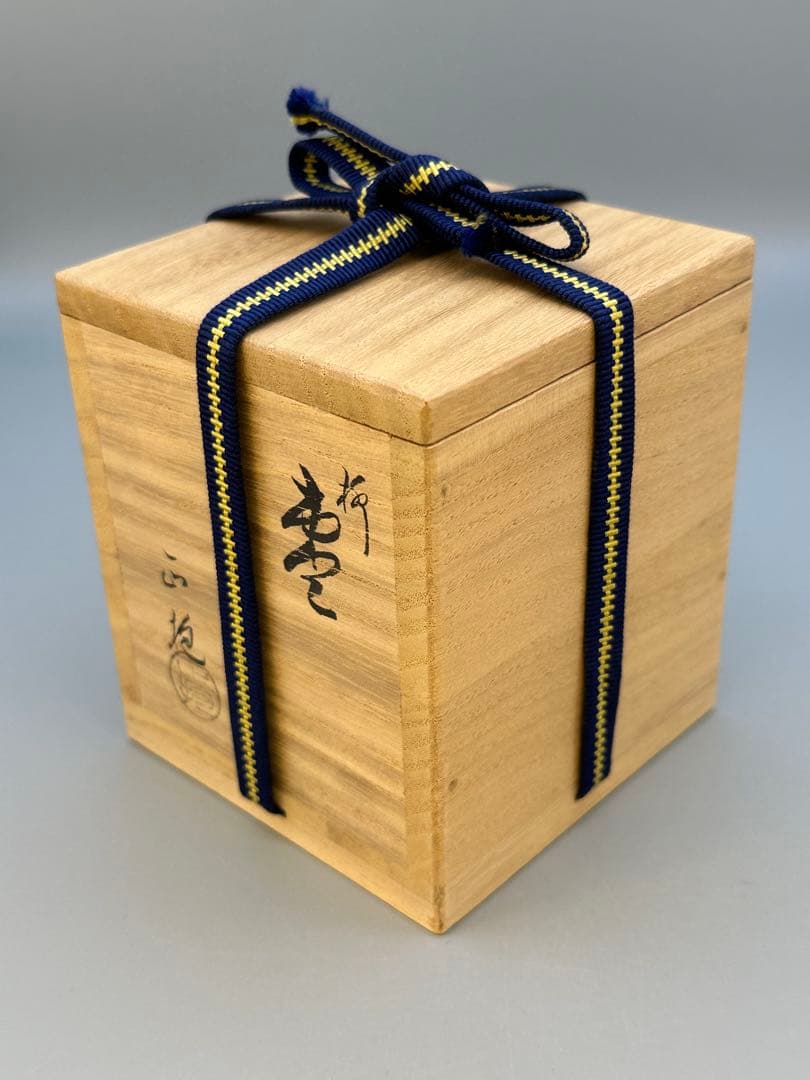
• Box: Shared wooden box (共箱) included
• Condition: Excellent; no scratches, cracks, or surface damage
🔹 [ Cultural & Artistic Insight ]
The natsume — named for its resemblance to the jujube fruit — is the most intimate vessel in the tea ceremony, cradled in both palms when presented to the host. A willow maki-e natsume carries the cultural weight of Japanese seasonal poetry: the weeping willow appears in waka as a symbol of spring's yielding grace, branches bending without breaking. On a lacquered surface, the gold maki-e willow does not merely represent the tree; it enacts its movement. Each gold particle, suspended in the lacquer matrix, catches and releases light as the object turns — the tree perpetually in wind.
Nashiji, the gold-dust ground used on the interior lid, is among the most demanding maki-e techniques: gold and silver particles are sprinkled at varying densities into wet lacquer, then sealed under transparent overcoats to create the illusion of depth. The effect is like looking into still water at dusk.
🔹 [ Deep-Dive Commentary ]
Nawate Masaharu works in the tradition of Japanese urushi maki-e lacquerware, a craft that requires years of apprenticeship before a practitioner can reliably control the drying environment, viscosity, and application sequence that maki-e demands. The willow maki-e on this natsume demonstrates command of the e-maki-e (picture maki-e) subcategory: the branching structure is compositionally resolved, neither crowded nor sparse, using the circular geometry of the natsume form to suggest a complete landscape rather than a fragment.
The black lacquer ground — likely roiro-nuri, the mirror-polished finish achieved through successive grinding and polishing of multiple lacquer layers — provides a ground of extraordinary depth. Against it, the gold willow branches read with jewel-like precision. The transition between the maki-e image and the ground is seamless, indicating proper technique where gold particles are sealed rather than merely applied to the surface.
At H 7.5 cm × D 7.3 cm, the proportions conform to the standard natsume used in both thin and thick tea preparation, making this a fully functional tea-ceremony vessel rather than a display-only piece. The shared box, with the artist's inscription, confirms the work as a complete presentation object suitable for gifting or use at formal chakai.
For collectors of Japanese lacquerware, a willow maki-e natsume in excellent condition represents one of the most appealing entry points: the motif is seasonally flexible (willow bridges spring and summer), the form is iconic, and maki-e quality is immediately legible even to the inexperienced eye.
【日本語説明】
🔹 [ 基本情報 ]
• 作者:縄手昌晴
• 技法:蒔絵(柳文)、梨子地蓋裏
• 時代:現代
• 産地:日本
• 寸法:高さ7.5cm × 径7.3cm
• 箱:共箱付
• 状態:優品。傷・割れ・剥げなし
🔹 [ 文化・芸術的背景 ]
柳の蒔絵は和歌の世界から茶道具へと移された意匠で、春の柔らかな風を金の粒子で表現します。梨子地を蓋裏に施すことで、開けた瞬間に金の深みが広がり、所有者に静かな驚きを与えます。縄手昌晴の確かな技法が随所に感じられる一品です。
🔹 [ 詳細解説 ]
蒔絵棗は茶道具の中でも最も手に馴染む器であり、その仕上がりの精度が茶会の格を左右します。本作は艶やかな黒漆地に柳の枝が伸びやかに描かれ、蓋裏の梨子地と相まって格調高い一碗を形成しています。共箱付きで贈り物・お稽古用として最適です。
🔹 [ SHIPPING & PACKAGING ]
• Dispatch: Within 1-6 business days
• Carrier: Japan Post EMS / UPS (with tracking)
• Packaging: Carefully wrapped with protective materials
🔹 [ Basic Details ]
• Artist: 縄手昌晴 (Nawate Masaharu)
• Technique: Maki-e lacquerwork on urushi ground, nashiji interior
• Era: Contemporary
• Origin: Japan
• Dimensions: H 7.5 cm × D 7.3 cm
• Box: Shared wooden box (共箱) included
• Condition: Excellent; no scratches, cracks, or surface damage
🔹 [ Cultural & Artistic Insight ]
The natsume — named for its resemblance to the jujube fruit — is the most intimate vessel in the tea ceremony, cradled in both palms when presented to the host. A willow maki-e natsume carries the cultural weight of Japanese seasonal poetry: the weeping willow appears in waka as a symbol of spring's yielding grace, branches bending without breaking. On a lacquered surface, the gold maki-e willow does not merely represent the tree; it enacts its movement. Each gold particle, suspended in the lacquer matrix, catches and releases light as the object turns — the tree perpetually in wind.
Nashiji, the gold-dust ground used on the interior lid, is among the most demanding maki-e techniques: gold and silver particles are sprinkled at varying densities into wet lacquer, then sealed under transparent overcoats to create the illusion of depth. The effect is like looking into still water at dusk.
🔹 [ Deep-Dive Commentary ]
Nawate Masaharu works in the tradition of Japanese urushi maki-e lacquerware, a craft that requires years of apprenticeship before a practitioner can reliably control the drying environment, viscosity, and application sequence that maki-e demands. The willow maki-e on this natsume demonstrates command of the e-maki-e (picture maki-e) subcategory: the branching structure is compositionally resolved, neither crowded nor sparse, using the circular geometry of the natsume form to suggest a complete landscape rather than a fragment.
The black lacquer ground — likely roiro-nuri, the mirror-polished finish achieved through successive grinding and polishing of multiple lacquer layers — provides a ground of extraordinary depth. Against it, the gold willow branches read with jewel-like precision. The transition between the maki-e image and the ground is seamless, indicating proper technique where gold particles are sealed rather than merely applied to the surface.
At H 7.5 cm × D 7.3 cm, the proportions conform to the standard natsume used in both thin and thick tea preparation, making this a fully functional tea-ceremony vessel rather than a display-only piece. The shared box, with the artist's inscription, confirms the work as a complete presentation object suitable for gifting or use at formal chakai.
For collectors of Japanese lacquerware, a willow maki-e natsume in excellent condition represents one of the most appealing entry points: the motif is seasonally flexible (willow bridges spring and summer), the form is iconic, and maki-e quality is immediately legible even to the inexperienced eye.
【日本語説明】
🔹 [ 基本情報 ]
• 作者:縄手昌晴
• 技法:蒔絵(柳文)、梨子地蓋裏
• 時代:現代
• 産地:日本
• 寸法:高さ7.5cm × 径7.3cm
• 箱:共箱付
• 状態:優品。傷・割れ・剥げなし
🔹 [ 文化・芸術的背景 ]
柳の蒔絵は和歌の世界から茶道具へと移された意匠で、春の柔らかな風を金の粒子で表現します。梨子地を蓋裏に施すことで、開けた瞬間に金の深みが広がり、所有者に静かな驚きを与えます。縄手昌晴の確かな技法が随所に感じられる一品です。
🔹 [ 詳細解説 ]
蒔絵棗は茶道具の中でも最も手に馴染む器であり、その仕上がりの精度が茶会の格を左右します。本作は艶やかな黒漆地に柳の枝が伸びやかに描かれ、蓋裏の梨子地と相まって格調高い一碗を形成しています。共箱付きで贈り物・お稽古用として最適です。
🔹 [ SHIPPING & PACKAGING ]
• Dispatch: Within 1-6 business days
• Carrier: Japan Post EMS / UPS (with tracking)
• Packaging: Carefully wrapped with protective materials
Quantity
Couldn't load pickup availability
Out of stock
View full details