1
/
of
8
Kyoyaki Iroe Chawan by Shozaemon, Oshikoji-yaki Matcha Tea Bowl with Sakura and Flowing Water Design, Signed Tomobako
Kyoyaki Iroe Chawan by Shozaemon, Oshikoji-yaki Matcha Tea Bowl with Sakura and Flowing Water Design, Signed Tomobako
Regular price
Dhs. 814.00 AED
Regular price
Sale price
Dhs. 814.00 AED
Taxes included.
Shipping calculated at checkout.
Experience Authentic Japan Art with this Kyoyaki Iroe Chawan Shozaemon. This Oshikoji Yaki Matcha Bowl serves as a Japanese Tea Ceremony Vessel and Sakura Flower Tea Bowl, featuring Gold Overglaze Enamel and Crackled White Glaze—a must-have for any Art Collector.
🔹 [ BASIC DETAILS ]
• Artist: Shozaemon (庄左衛門), Kyoto Oshikoji Kiln lineage
• Technique: Iroe (overglaze polychrome enamel) with gold leaf embellishment over crackled white glaze
• Era: Showa to Heisei period, late 20th century
• Origin: Kyoto, Japan (Oshikoji-yaki / 押小路焼)
• Dimensions: Diameter approx. 12 cm (4.7 in) / Height approx. 7.8 cm (3.1 in)
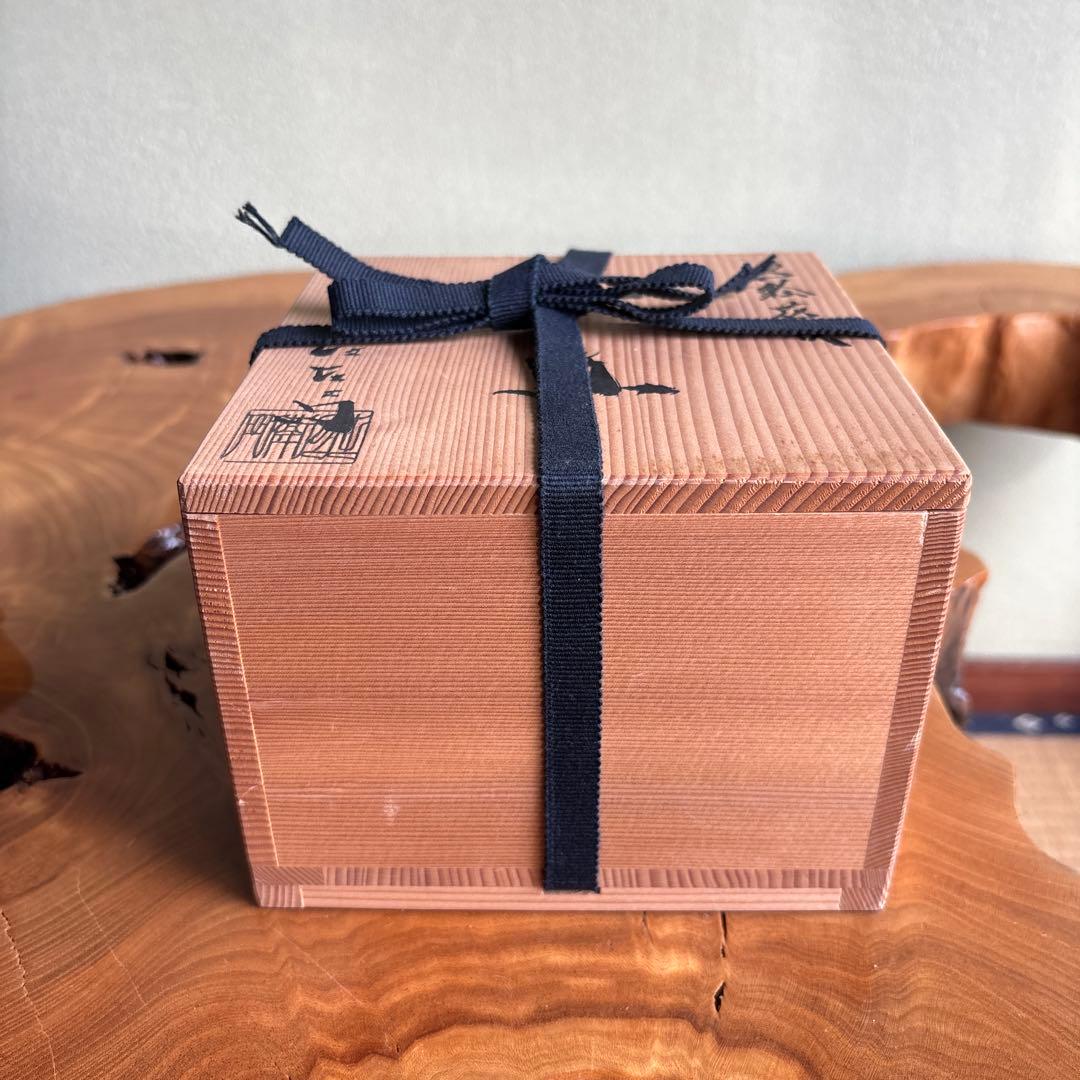
• Box: Signed kiri wood tomobako with calligraphy reading “Iroe Hanayabu Chawan” (color-painted flower thicket tea bowl)
• Condition: Excellent preserved condition. No cracks, no chips. Natural crackled glaze (kannyu) throughout—an intended feature, not damage.
🔹 [ Cultural & Artistic Insight ]
Historical Context: Oshikoji-yaki is one of the historic Kyoto kilns tracing its roots to the Momoyama and early Edo periods, when tea masters sought refined yet softly expressive ceramics for the chanoyu gathering. The Shozaemon lineage continues this tradition of restrained luxury, producing tea bowls that balance literati elegance with the ritual discipline of the tea room.
Technique & Aesthetic: The bowl is decorated in iroe—overglaze polychrome enamels—depicting a bundled thicket of sakura blossoms floating along a stylized current of gold-leafed water. The cream-white ground bears a fine, all-over kannyu crackle, softening the surface into something almost textile-like. Interior remains pristine and ivory-pale, allowing the whisked matcha to glow vivid green.
Philosophical Reflection: In Kyoto tea culture, a spring bowl is not merely decorated—it is a small frame through which the fleeting season is acknowledged and then released.
🔹 [ Deep-Dive Commentary ]
Iroe, meaning “color picture,” is the technique in which finely ground pigments—iron red, malachite green, purple, yellow, and deep blue—are painted onto an already-glazed and fired vessel, then re-fired at lower temperature so the enamels fuse to the surface as glass-like jewels. In Kyoto’s Oshikoji tradition, this technique is deployed with exceptional restraint: the decoration is never allowed to dominate the pot; it must coexist with the silence of the tea room.
On this bowl, the artist Shozaemon has composed a classic spring motif known as hana-yabu, “flower thicket.” Clusters of cherry blossoms in crimson, violet, and white are tied into a dense bouquet and swept across the exterior on rails of gold leaf representing flowing water. The contrast between the soft, crazed white ground and the reflective gilt bands gives the bowl a shimmering, almost lacquered quality—reminiscent of Rinpa school painting applied to three-dimensional ceramic form.
For collectors, a signed and boxed Kyoto iroe chawan from a named lineage kiln is the core of any chanoyu collection. It is the bowl one reserves for early April, when cherry blossoms are at peak, and brings out only for the one or two weeks of the year when its imagery and the season align. This is the discipline of kisetsukan—seasonal feeling—that separates a working tea practitioner’s cabinet from a merely decorative shelf.
In contemporary interiors, the bowl reads equally well beyond the tea room. Paired with a single branch of white plum on a dark wood shelf, or displayed alone under a soft downlight, it brings the atmosphere of a Kyoto machiya tearoom into any modern space—quiet, seasonal, and unmistakably authored.
[ JAPANESE DESCRIPTION / 日本語解説 ]
🔹 【 基本情報 】
• 作者:庄左衛門(押小路焼系譜)
• 技法:色絵、金彩、貫入白釉
• 時代:昭和~平成期
• 産地:京都押小路
• 寸法:径約12cm、高さ約7.8cm
• 箱:共箱、箱書「色絵花薮茶碗」
• 状態:ヒビ・カケなし。貫入は意図的な景です。
🔹 【 文化・芸術的洞察 】
歴史的文脈:押小路焼は桃山から江戸初期に見える京焼の流れを汲み、茶人に愛された窯の一つ。茶の湯に求められる「抗わずして深い」技術を今に伝えています。
技法と美学:貫入の入った亭目白地の上に、色絵で桜の花束を描き、金彩で流水を走らせています。内面は白く素のまま残し、抹茶の緑が美しく映えるよう計算されています。
哲学的省察:京の茶の湯において、春の茶碗とは、移ろう季節を一つの案内枠に収め、やがて放すために操るものです。
🔹 【 深層解説 】
「色絵」とは、釉の上に赤、緑、紫、黄、群青などの上絵具を筆で丁寧に彩った上で、低温で再焙して催き付ける京焼の代表技法です。押小路の系譜では、この色絵が控えめに通され、茶室の静参に滁てように入ることが作家に求められます。
本作は、桜の花束を「花薮」として捕え、金彩の流水に乗せて緰に差しかけた构図を採ります。貫入の白地と金彩の塗の対比は、まるで焚結派絵画を立体に移したような華やぎをもたらします。
このような共箱付きの京焼色絵茶碗は、茶道を実践するコレクターにとって「四月の一有」とも言える存在です。桜が儀い、震え、散るまでのわずか二週間にのみ茶碗に盛る、その季節感が茶人の身体性を育てます。
現代の生活空間においても、黒木の杉板に白梅一枝を添えて飾るならば、本作は京町家の茶室を一角に移したかのような静かな空気をもたらすはずです。
🔹 [ SHIPPING & PACKAGING ]
• Dispatch: Within 1-6 business days
• Carrier: Japan Post EMS / UPS (with tracking)
• Packaging: Carefully wrapped with protective materials
🔹 [ BASIC DETAILS ]
• Artist: Shozaemon (庄左衛門), Kyoto Oshikoji Kiln lineage
• Technique: Iroe (overglaze polychrome enamel) with gold leaf embellishment over crackled white glaze
• Era: Showa to Heisei period, late 20th century
• Origin: Kyoto, Japan (Oshikoji-yaki / 押小路焼)
• Dimensions: Diameter approx. 12 cm (4.7 in) / Height approx. 7.8 cm (3.1 in)
• Box: Signed kiri wood tomobako with calligraphy reading “Iroe Hanayabu Chawan” (color-painted flower thicket tea bowl)
• Condition: Excellent preserved condition. No cracks, no chips. Natural crackled glaze (kannyu) throughout—an intended feature, not damage.
🔹 [ Cultural & Artistic Insight ]
Historical Context: Oshikoji-yaki is one of the historic Kyoto kilns tracing its roots to the Momoyama and early Edo periods, when tea masters sought refined yet softly expressive ceramics for the chanoyu gathering. The Shozaemon lineage continues this tradition of restrained luxury, producing tea bowls that balance literati elegance with the ritual discipline of the tea room.
Technique & Aesthetic: The bowl is decorated in iroe—overglaze polychrome enamels—depicting a bundled thicket of sakura blossoms floating along a stylized current of gold-leafed water. The cream-white ground bears a fine, all-over kannyu crackle, softening the surface into something almost textile-like. Interior remains pristine and ivory-pale, allowing the whisked matcha to glow vivid green.
Philosophical Reflection: In Kyoto tea culture, a spring bowl is not merely decorated—it is a small frame through which the fleeting season is acknowledged and then released.
🔹 [ Deep-Dive Commentary ]
Iroe, meaning “color picture,” is the technique in which finely ground pigments—iron red, malachite green, purple, yellow, and deep blue—are painted onto an already-glazed and fired vessel, then re-fired at lower temperature so the enamels fuse to the surface as glass-like jewels. In Kyoto’s Oshikoji tradition, this technique is deployed with exceptional restraint: the decoration is never allowed to dominate the pot; it must coexist with the silence of the tea room.
On this bowl, the artist Shozaemon has composed a classic spring motif known as hana-yabu, “flower thicket.” Clusters of cherry blossoms in crimson, violet, and white are tied into a dense bouquet and swept across the exterior on rails of gold leaf representing flowing water. The contrast between the soft, crazed white ground and the reflective gilt bands gives the bowl a shimmering, almost lacquered quality—reminiscent of Rinpa school painting applied to three-dimensional ceramic form.
For collectors, a signed and boxed Kyoto iroe chawan from a named lineage kiln is the core of any chanoyu collection. It is the bowl one reserves for early April, when cherry blossoms are at peak, and brings out only for the one or two weeks of the year when its imagery and the season align. This is the discipline of kisetsukan—seasonal feeling—that separates a working tea practitioner’s cabinet from a merely decorative shelf.
In contemporary interiors, the bowl reads equally well beyond the tea room. Paired with a single branch of white plum on a dark wood shelf, or displayed alone under a soft downlight, it brings the atmosphere of a Kyoto machiya tearoom into any modern space—quiet, seasonal, and unmistakably authored.
[ JAPANESE DESCRIPTION / 日本語解説 ]
🔹 【 基本情報 】
• 作者:庄左衛門(押小路焼系譜)
• 技法:色絵、金彩、貫入白釉
• 時代:昭和~平成期
• 産地:京都押小路
• 寸法:径約12cm、高さ約7.8cm
• 箱:共箱、箱書「色絵花薮茶碗」
• 状態:ヒビ・カケなし。貫入は意図的な景です。
🔹 【 文化・芸術的洞察 】
歴史的文脈:押小路焼は桃山から江戸初期に見える京焼の流れを汲み、茶人に愛された窯の一つ。茶の湯に求められる「抗わずして深い」技術を今に伝えています。
技法と美学:貫入の入った亭目白地の上に、色絵で桜の花束を描き、金彩で流水を走らせています。内面は白く素のまま残し、抹茶の緑が美しく映えるよう計算されています。
哲学的省察:京の茶の湯において、春の茶碗とは、移ろう季節を一つの案内枠に収め、やがて放すために操るものです。
🔹 【 深層解説 】
「色絵」とは、釉の上に赤、緑、紫、黄、群青などの上絵具を筆で丁寧に彩った上で、低温で再焙して催き付ける京焼の代表技法です。押小路の系譜では、この色絵が控えめに通され、茶室の静参に滁てように入ることが作家に求められます。
本作は、桜の花束を「花薮」として捕え、金彩の流水に乗せて緰に差しかけた构図を採ります。貫入の白地と金彩の塗の対比は、まるで焚結派絵画を立体に移したような華やぎをもたらします。
このような共箱付きの京焼色絵茶碗は、茶道を実践するコレクターにとって「四月の一有」とも言える存在です。桜が儀い、震え、散るまでのわずか二週間にのみ茶碗に盛る、その季節感が茶人の身体性を育てます。
現代の生活空間においても、黒木の杉板に白梅一枝を添えて飾るならば、本作は京町家の茶室を一角に移したかのような静かな空気をもたらすはずです。
🔹 [ SHIPPING & PACKAGING ]
• Dispatch: Within 1-6 business days
• Carrier: Japan Post EMS / UPS (with tracking)
• Packaging: Carefully wrapped with protective materials
Quantity
Couldn't load pickup availability
Low stock: 1 left
View full details