1
/
of
9
Kyo Ware Matcha Bowl — Ninsei Style Green Maple and Flowing Water, Ueyama Ikko, Signed Box
Kyo Ware Matcha Bowl — Ninsei Style Green Maple and Flowing Water, Ueyama Ikko, Signed Box
Regular price
Dhs. 772.00 AED
Regular price
Sale price
Dhs. 772.00 AED
Taxes included.
Shipping calculated at checkout.
Green maple leaves drift across white crackled glaze. At the base, blue waves — two currents, quietly flowing.
🔹 [ BASIC DETAILS ]
• Artist: Ueyama Ikko
• Origin: Kyoto, Japan
• Material: Kyo ware ceramic
• Motif: Green Maple and Flowing Water (Ninsei style)
• Era: 1990s
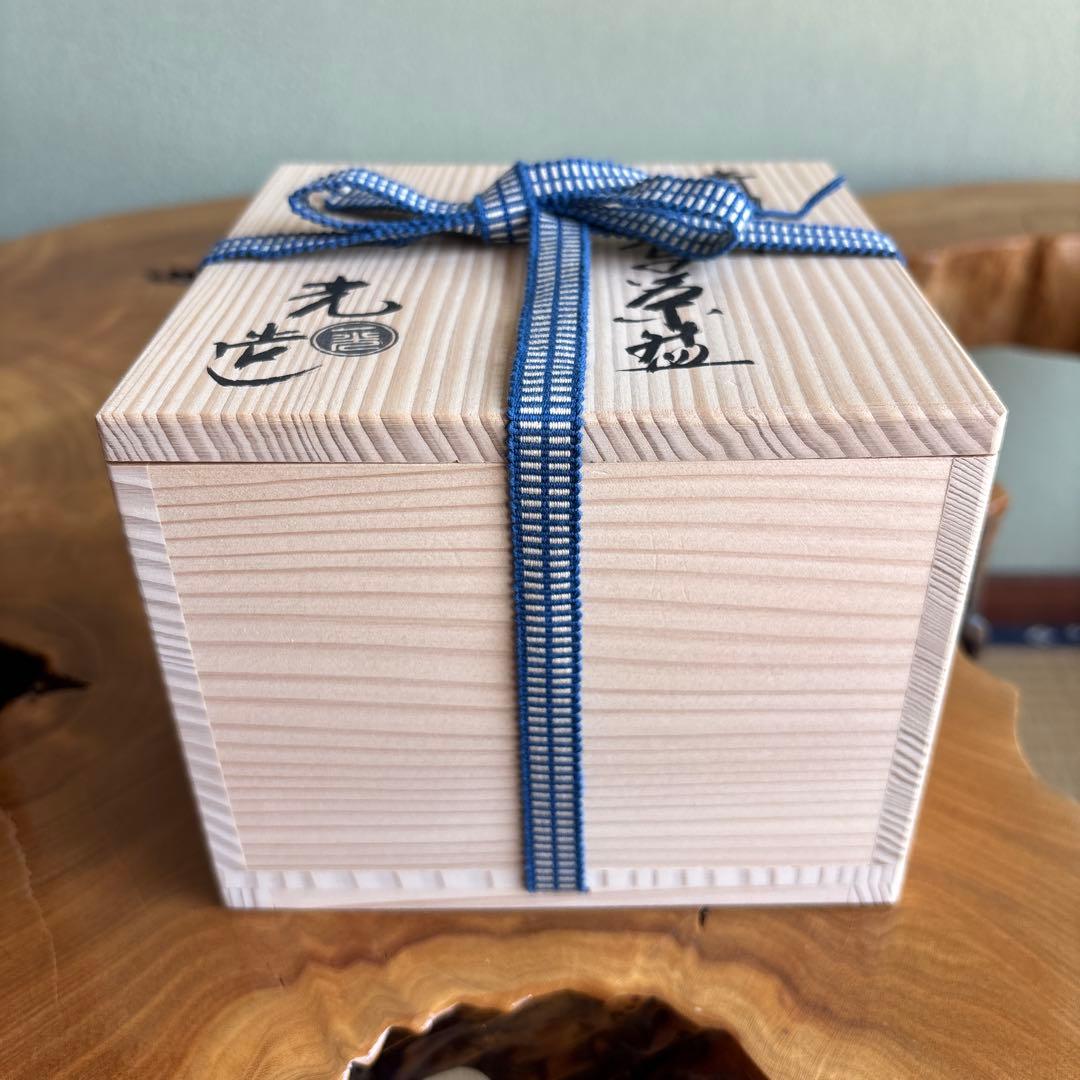
• Box: Tomobako (artist's wooden presentation box)
• Condition: Good, carefully inspected
🔹 [ Cultural & Artistic Insight ]
This is Ninsei-style Kyo ware: not imitation, but continuation. Ueyama Ikko works within a tradition that has run unbroken since the seventeenth century, when Nonomura Ninsei gave Kyoto ceramics their defining character — overglaze enamels applied with a painter's discipline onto ground so white it seems to hold light.
The motif is aoi-kaede futamizu, green maple over double water. Summer into autumn, stillness into movement. The leaves are rendered in layered green, gold, blue, and brown, each one distinct — no two at the same angle, no two the same weight. The flowing water at the foot is a reference to classical waka imagery: water as time, maple as what time carries.
The clay body is fine-grained Kyoto stoneware. The white glaze shows fine crazing — the controlled crackle that identifies hand-applied Kyo ware and that deepens, faintly, with each use. The form is clean: a moderate flare at the rim, a steady foot, proportioned for a single full whisk of matcha.
Condition: no chips, no cracks, no repairs. Original signed tomobako (wooden presentation box) included.
---
Cultural and Artistic Insight
Nonomura Ninsei (active c.1640–1690) transformed Japanese ceramics by bringing the sophistication of Kyoto painting directly onto tea wares. His work made Kyo ware synonymous with overglaze polychrome — a technique demanding precise layering of colored enamels fired at low temperature over a completed glaze surface. Ninsei-style work, as practiced by later Kyoto potters, carries this same technical standard: the colors must be stable, the design must have compositional logic, and the ground must be white enough to let each color speak.
🔹 [ Deep-Dive Commentary ]
Aoi-kaede, the green maple, is a seasonal motif tied to early summer and the transition into autumn. Combined with futamizu — the double or flowing water — the motif carries classical literary resonance. In Japanese poetry, water flowing past maple leaves signals the passing of seasons without sorrow; presence without attachment. This is not decoration placed on a bowl. This is a subject that belongs to a bowl used in the act of making tea.
Ueyama Ikko trained within the Kyoto ceramic tradition and signs his work with the chop mark visible on the tomobako lid. The box itself is paulownia wood, hand-inscribed — the standard for documented tea wares intended for regular use, not display alone.
---
Dimensions
• Diameter: approx. 12.5 cm
• Height: approx. 8.2 cm
• Condition: no chips, no cracks
What is included
• Matcha bowl (chawan)
• Original signed tomobako (wooden presentation box)
Suitable for
• Usucha (thin tea) and koicha (thick tea)
• Seasonal use: summer / early autumn
• Tea ceremony practice or collected display
---
🔹 [ 日本語解説 ]
京焼の白地に青楓と流水を多彩に描いた仁清写の抹茶碗。緑・金・青・茶の楓葉が裾の流水文と呼応し、季節の移ろいを静かに伝えます。細かな貫入が入った白釉は使い込むほどに表情を深め、日常の茶に品格を与えます。
🔹 [ SHIPPING & PACKAGING ]
• Dispatch: Within 1-6 business days
• Carrier: Japan Post EMS / UPS (with tracking)
• Packaging: Carefully wrapped with protective materials
🔹 [ BASIC DETAILS ]
• Artist: Ueyama Ikko
• Origin: Kyoto, Japan
• Material: Kyo ware ceramic
• Motif: Green Maple and Flowing Water (Ninsei style)
• Era: 1990s
• Box: Tomobako (artist's wooden presentation box)
• Condition: Good, carefully inspected
🔹 [ Cultural & Artistic Insight ]
This is Ninsei-style Kyo ware: not imitation, but continuation. Ueyama Ikko works within a tradition that has run unbroken since the seventeenth century, when Nonomura Ninsei gave Kyoto ceramics their defining character — overglaze enamels applied with a painter's discipline onto ground so white it seems to hold light.
The motif is aoi-kaede futamizu, green maple over double water. Summer into autumn, stillness into movement. The leaves are rendered in layered green, gold, blue, and brown, each one distinct — no two at the same angle, no two the same weight. The flowing water at the foot is a reference to classical waka imagery: water as time, maple as what time carries.
The clay body is fine-grained Kyoto stoneware. The white glaze shows fine crazing — the controlled crackle that identifies hand-applied Kyo ware and that deepens, faintly, with each use. The form is clean: a moderate flare at the rim, a steady foot, proportioned for a single full whisk of matcha.
Condition: no chips, no cracks, no repairs. Original signed tomobako (wooden presentation box) included.
---
Cultural and Artistic Insight
Nonomura Ninsei (active c.1640–1690) transformed Japanese ceramics by bringing the sophistication of Kyoto painting directly onto tea wares. His work made Kyo ware synonymous with overglaze polychrome — a technique demanding precise layering of colored enamels fired at low temperature over a completed glaze surface. Ninsei-style work, as practiced by later Kyoto potters, carries this same technical standard: the colors must be stable, the design must have compositional logic, and the ground must be white enough to let each color speak.
🔹 [ Deep-Dive Commentary ]
Aoi-kaede, the green maple, is a seasonal motif tied to early summer and the transition into autumn. Combined with futamizu — the double or flowing water — the motif carries classical literary resonance. In Japanese poetry, water flowing past maple leaves signals the passing of seasons without sorrow; presence without attachment. This is not decoration placed on a bowl. This is a subject that belongs to a bowl used in the act of making tea.
Ueyama Ikko trained within the Kyoto ceramic tradition and signs his work with the chop mark visible on the tomobako lid. The box itself is paulownia wood, hand-inscribed — the standard for documented tea wares intended for regular use, not display alone.
---
Dimensions
• Diameter: approx. 12.5 cm
• Height: approx. 8.2 cm
• Condition: no chips, no cracks
What is included
• Matcha bowl (chawan)
• Original signed tomobako (wooden presentation box)
Suitable for
• Usucha (thin tea) and koicha (thick tea)
• Seasonal use: summer / early autumn
• Tea ceremony practice or collected display
---
🔹 [ 日本語解説 ]
京焼の白地に青楓と流水を多彩に描いた仁清写の抹茶碗。緑・金・青・茶の楓葉が裾の流水文と呼応し、季節の移ろいを静かに伝えます。細かな貫入が入った白釉は使い込むほどに表情を深め、日常の茶に品格を与えます。
🔹 [ SHIPPING & PACKAGING ]
• Dispatch: Within 1-6 business days
• Carrier: Japan Post EMS / UPS (with tracking)
• Packaging: Carefully wrapped with protective materials
Quantity
Couldn't load pickup availability
Low stock: 1 left
View full details