1
/
of
9
Kutani Ware Matcha Bowl by Meizan — Gold Ground Shippou-Kuzushi with Waka Poetry Interior, Signed Wooden Box
Kutani Ware Matcha Bowl by Meizan — Gold Ground Shippou-Kuzushi with Waka Poetry Interior, Signed Wooden Box
Regular price
Dhs. 592.00 AED
Regular price
Sale price
Dhs. 592.00 AED
Taxes included.
Shipping calculated at checkout.
Experience Authentic Japan Art with this Kutani Porcelain Matcha Bowl. This Japanese Tea Ceremony Bowl serves as a Gold Ground Chawan and Waka Poetry Bowl, featuring Shippou-Kuzushi Overglaze Enamel and Signed Wooden Box—a must-have for any Art Collector seeking Antique Kutani Pottery and Japanese Calligraphy Art.
🔹 [ BASIC DETAILS ]
• Artist: Meizan (明山) — signed in red seal inside the bowl and on the tomobako lid
• Technique: Kutani-style polychrome overglaze enamel (iro-e) on a burnished gold ground (kin-ji); shippou-kuzushi (fragmented cloisonné wave) pattern; waka poetry painted in cursive kana calligraphy on the interior
• Era: Estimated mid-to-late Showa period (circa 1960s–1980s)
• Origin: Kutani, Ishikawa Prefecture, Japan
• Dimensions: Diameter approx. 11 cm, Height approx. 7 cm
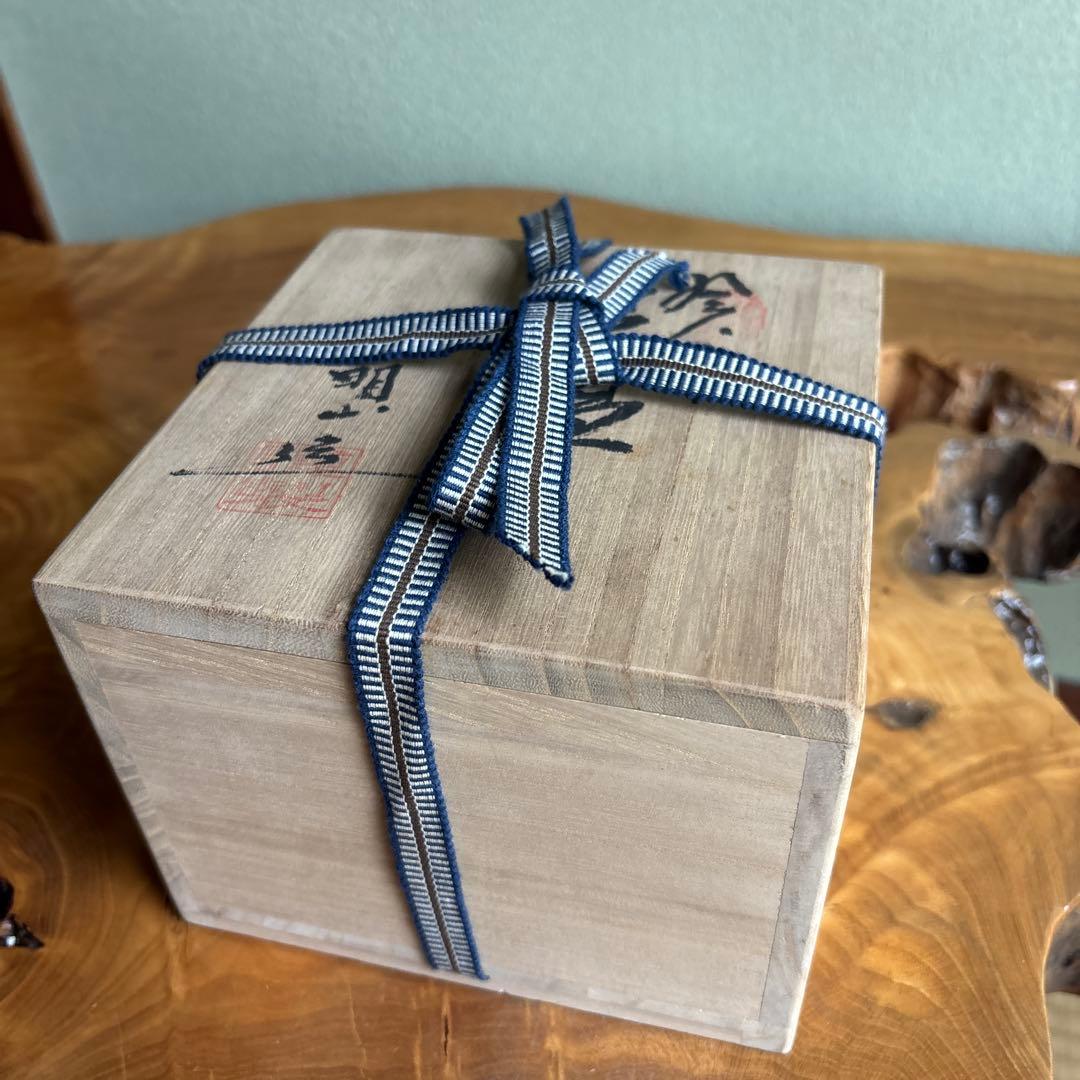
• Box: Signed wooden tomobako (共箱) with artist's calligraphy and red seal on the lid
• Condition: Excellent — no chips, no cracks, no repairs; natural age craquelure on interior glaze only
🔹 [ CULTURAL & ARTISTIC INSIGHT ]
Kutani ware (九谷焼) has long been regarded as one of Japan's most visually commanding ceramic traditions. Emerging in the mid-seventeenth century in what is now Ishikawa Prefecture, Kutani distinguished itself through bold, jewel-like overglaze enamels applied with a painterly confidence that set it apart from the subtler vocabularies of Kyoto or the rustic directness of Karatsu. The school suffered a prolonged closure before being revived in the early nineteenth century — the "Saiko Kutani" (再興九谷) era — after which several regional substyles flourished: the delicate red-and-gold of Yoshidaya, the dense polychrome of Miyamoto, and the calligraphy-forward traditions that inform this bowl.
The shippou-kuzushi (七宝崩し) pattern that wraps the exterior of this chawan carries deep cultural resonance. "Shippou" — the Seven Treasures of Buddhism — evokes boundless good fortune and completeness. When rendered in the "kuzushi" (崩し, loosened or deconstructed) register, the rigid geometry of the original interlocking circles dissolves into flowing, wave-like forms that undulate around the bowl's shoulder like clouds or ocean swells. Each rounded field is packed with miniature floral sprigs — sakura-like petals and clover forms — rendered in red, green, amber, and darkened iron, all set against a ground of burnished gold that catches and holds the eye.
What elevates this piece beyond decorative skill is its interior. Where most Kutani chawan offer only a swept white or pale celadon ground, Meizan has inscribed the entire inner surface with flowing waka poetry in kana calligraphy — the intimate, feminine script of the Heian court. To drink matcha from this bowl is to receive a poem: a private transmission from artist to drinker, folded into the ceremony itself.
Poetic line: "The gold shifts with the light, and the poem waits inside — unhurried, like the tea itself."
🔹 [ DEEP-DIVE COMMENTARY ]
Kutani's revival in the early 1800s produced not one monolithic style but a constellation of workshop traditions, each emphasizing different aspects of the original bold aesthetic. Among these, the kin-ji (金地, gold-ground) tradition stands as one of the most formally demanding. Achieving a stable, even burnished gold ground requires the application of gold overglaze in multiple firings at relatively low temperatures (typically 700–800°C), with careful attention to the ground clay and initial glaze coat so that the metallic layer adheres without crazing or flaking. The luminous, tactile quality of the gold on this bowl — warm and slightly matte rather than harsh — suggests confident, experienced hand application rather than mechanical transfer printing.
The shippou-kuzushi pattern itself derives from textile design, particularly Nishijin-ori woven silk, where interlocking circle motifs were a staple of auspicious court dress. When ceramic painters translated these patterns into overglaze enamel, they adapted them to the curved surface of the vessel, allowing the circles to loosen and interweave with greater freedom. The result here — a rolling landscape of colored wave-forms each densely filled with tiny repeated floral units — demonstrates a technical mastery of miniature-scale overglaze painting that aligns with the finest Kutani workshop tradition.
The decision to inscribe waka poetry on the interior is a deliberate artistic statement that connects this bowl to the literary traditions of the chanoyu (tea ceremony). In formal tea practice, the chawan is examined closely by guests — its foot, its form, its glaze — as part of a meditative aesthetic appreciation (haiken). A bowl whose interior reveals poetry upon examination invites a deeper, more personal encounter: the guest pauses, reads, and brings the poem into dialogue with the moment of drinking. This technique, known broadly as "waka chawan," was practiced by literati potters who saw the bowl as an extension of the poem card (tanzaku).
The signed tomobako authenticates the work as a deliberate artistic object rather than production ware, and Meizan's dual signing — red seal inside the bowl and calligraphic inscription on the lid — reflects the care of a maker who understood their work would be preserved and passed on.
🔹 [ 日本語解説 ]
■ 基本情報
• 作家:明山(署名赤印 — 見込み内および共箱蓋に捺印)
• 技法:九谷焼 金地色絵・七宝崩し文 / 見込みに仮名書き和歌
• 年代:昭和中期〜後期(1960〜1980年代頃)推定
• 産地:石川県 九谷
• 寸法:口径 約11cm、高さ 約7cm
• 箱:共箱(作家筆書き・赤印)
• 状態:良好。チップ・欠け・金継ぎなし。見込み釉薬に経年貫入あり(景色として美しい)
■ 文化的背景と美的考察
九谷焼は、加賀・石川の地から生まれた日本を代表する色絵磁器の一系譜です。十七世紀中頃に端を発し、十九世紀初頭の再興九谷を経て、赤絵・染付・金彩・色絵など多彩な表現技法が花開きました。金地を用いた作品群は、金をベースに色絵を重ねるという高度な技術を要求するもので、加賀の工房の高い職人技を象徴します。
本作の外壁を飾る七宝崩し文様は、西陣織などの絹織物に端を発する瑞祥文様を、曲面の磁器に転換したものです。仏教における七宝(しっぽう)が象徴する福徳と円満の意を、「崩し」によって流動的な波状形に展開し、その中に緑・朱・金・鉄錆色の小花文様を細密に描き込んでいます。金地の輝きとの対比が、格調高い美しさをつくりあげています。
特筆すべきは見込みの和歌です。一面に流麗な仮名書きで和歌を書き付けた見込みは、飲茶の作法の中で茶を一服いただく際に、詩歌との対話を生む仕掛けとなっています。茶碗を通じて、詩と茶と沈黙が交わる——これはまさに数寄者文化の精髄です。
■ 上級コレクター向け解説
金地色絵の焼成は、素地と釉薬の安定を確保したうえで、金の上絵具を低温(700〜800℃前後)で複数回焼き付けるという技術的難度の高い工程です。本作の金地は均質かつ温もりのある光沢を持ち、量産的な転写印刷ではなく、熟練の手仕事による施工が感じられます。
七宝崩し文の各区画に描き込まれた小花文様は、きわめて細密で整然とした仕事ぶりを示しており、九谷工房の中でも上位の技術水準に属する作品です。文様の構成は端正でありながら、崩し表現によって流動感と生命感が生まれており、単純な装飾に留まらない絵画的な力があります。
和歌を見込みに書き付けるという手法は、文人陶芸の系譜に連なるものです。茶席において茶碗を拝見する際に詩歌が現れるという趣向は、「器は詩である」という日本的な美意識の表明であり、コレクターにとって真の鑑賞対象となります。共箱に作家自筆の書き込みと捺印があることも、本作が制作者の強い意図のもとに完結した芸術作品であることを証明しています。
🔹 [ SHIPPING & PACKAGING ]
• Dispatch: Within 1-6 business days
• Carrier: Japan Post EMS / UPS (with tracking)
• Packaging: Carefully wrapped with protective materials
🔹 [ BASIC DETAILS ]
• Artist: Meizan (明山) — signed in red seal inside the bowl and on the tomobako lid
• Technique: Kutani-style polychrome overglaze enamel (iro-e) on a burnished gold ground (kin-ji); shippou-kuzushi (fragmented cloisonné wave) pattern; waka poetry painted in cursive kana calligraphy on the interior
• Era: Estimated mid-to-late Showa period (circa 1960s–1980s)
• Origin: Kutani, Ishikawa Prefecture, Japan
• Dimensions: Diameter approx. 11 cm, Height approx. 7 cm
• Box: Signed wooden tomobako (共箱) with artist's calligraphy and red seal on the lid
• Condition: Excellent — no chips, no cracks, no repairs; natural age craquelure on interior glaze only
🔹 [ CULTURAL & ARTISTIC INSIGHT ]
Kutani ware (九谷焼) has long been regarded as one of Japan's most visually commanding ceramic traditions. Emerging in the mid-seventeenth century in what is now Ishikawa Prefecture, Kutani distinguished itself through bold, jewel-like overglaze enamels applied with a painterly confidence that set it apart from the subtler vocabularies of Kyoto or the rustic directness of Karatsu. The school suffered a prolonged closure before being revived in the early nineteenth century — the "Saiko Kutani" (再興九谷) era — after which several regional substyles flourished: the delicate red-and-gold of Yoshidaya, the dense polychrome of Miyamoto, and the calligraphy-forward traditions that inform this bowl.
The shippou-kuzushi (七宝崩し) pattern that wraps the exterior of this chawan carries deep cultural resonance. "Shippou" — the Seven Treasures of Buddhism — evokes boundless good fortune and completeness. When rendered in the "kuzushi" (崩し, loosened or deconstructed) register, the rigid geometry of the original interlocking circles dissolves into flowing, wave-like forms that undulate around the bowl's shoulder like clouds or ocean swells. Each rounded field is packed with miniature floral sprigs — sakura-like petals and clover forms — rendered in red, green, amber, and darkened iron, all set against a ground of burnished gold that catches and holds the eye.
What elevates this piece beyond decorative skill is its interior. Where most Kutani chawan offer only a swept white or pale celadon ground, Meizan has inscribed the entire inner surface with flowing waka poetry in kana calligraphy — the intimate, feminine script of the Heian court. To drink matcha from this bowl is to receive a poem: a private transmission from artist to drinker, folded into the ceremony itself.
Poetic line: "The gold shifts with the light, and the poem waits inside — unhurried, like the tea itself."
🔹 [ DEEP-DIVE COMMENTARY ]
Kutani's revival in the early 1800s produced not one monolithic style but a constellation of workshop traditions, each emphasizing different aspects of the original bold aesthetic. Among these, the kin-ji (金地, gold-ground) tradition stands as one of the most formally demanding. Achieving a stable, even burnished gold ground requires the application of gold overglaze in multiple firings at relatively low temperatures (typically 700–800°C), with careful attention to the ground clay and initial glaze coat so that the metallic layer adheres without crazing or flaking. The luminous, tactile quality of the gold on this bowl — warm and slightly matte rather than harsh — suggests confident, experienced hand application rather than mechanical transfer printing.
The shippou-kuzushi pattern itself derives from textile design, particularly Nishijin-ori woven silk, where interlocking circle motifs were a staple of auspicious court dress. When ceramic painters translated these patterns into overglaze enamel, they adapted them to the curved surface of the vessel, allowing the circles to loosen and interweave with greater freedom. The result here — a rolling landscape of colored wave-forms each densely filled with tiny repeated floral units — demonstrates a technical mastery of miniature-scale overglaze painting that aligns with the finest Kutani workshop tradition.
The decision to inscribe waka poetry on the interior is a deliberate artistic statement that connects this bowl to the literary traditions of the chanoyu (tea ceremony). In formal tea practice, the chawan is examined closely by guests — its foot, its form, its glaze — as part of a meditative aesthetic appreciation (haiken). A bowl whose interior reveals poetry upon examination invites a deeper, more personal encounter: the guest pauses, reads, and brings the poem into dialogue with the moment of drinking. This technique, known broadly as "waka chawan," was practiced by literati potters who saw the bowl as an extension of the poem card (tanzaku).
The signed tomobako authenticates the work as a deliberate artistic object rather than production ware, and Meizan's dual signing — red seal inside the bowl and calligraphic inscription on the lid — reflects the care of a maker who understood their work would be preserved and passed on.
🔹 [ 日本語解説 ]
■ 基本情報
• 作家:明山(署名赤印 — 見込み内および共箱蓋に捺印)
• 技法:九谷焼 金地色絵・七宝崩し文 / 見込みに仮名書き和歌
• 年代:昭和中期〜後期(1960〜1980年代頃)推定
• 産地:石川県 九谷
• 寸法:口径 約11cm、高さ 約7cm
• 箱:共箱(作家筆書き・赤印)
• 状態:良好。チップ・欠け・金継ぎなし。見込み釉薬に経年貫入あり(景色として美しい)
■ 文化的背景と美的考察
九谷焼は、加賀・石川の地から生まれた日本を代表する色絵磁器の一系譜です。十七世紀中頃に端を発し、十九世紀初頭の再興九谷を経て、赤絵・染付・金彩・色絵など多彩な表現技法が花開きました。金地を用いた作品群は、金をベースに色絵を重ねるという高度な技術を要求するもので、加賀の工房の高い職人技を象徴します。
本作の外壁を飾る七宝崩し文様は、西陣織などの絹織物に端を発する瑞祥文様を、曲面の磁器に転換したものです。仏教における七宝(しっぽう)が象徴する福徳と円満の意を、「崩し」によって流動的な波状形に展開し、その中に緑・朱・金・鉄錆色の小花文様を細密に描き込んでいます。金地の輝きとの対比が、格調高い美しさをつくりあげています。
特筆すべきは見込みの和歌です。一面に流麗な仮名書きで和歌を書き付けた見込みは、飲茶の作法の中で茶を一服いただく際に、詩歌との対話を生む仕掛けとなっています。茶碗を通じて、詩と茶と沈黙が交わる——これはまさに数寄者文化の精髄です。
■ 上級コレクター向け解説
金地色絵の焼成は、素地と釉薬の安定を確保したうえで、金の上絵具を低温(700〜800℃前後)で複数回焼き付けるという技術的難度の高い工程です。本作の金地は均質かつ温もりのある光沢を持ち、量産的な転写印刷ではなく、熟練の手仕事による施工が感じられます。
七宝崩し文の各区画に描き込まれた小花文様は、きわめて細密で整然とした仕事ぶりを示しており、九谷工房の中でも上位の技術水準に属する作品です。文様の構成は端正でありながら、崩し表現によって流動感と生命感が生まれており、単純な装飾に留まらない絵画的な力があります。
和歌を見込みに書き付けるという手法は、文人陶芸の系譜に連なるものです。茶席において茶碗を拝見する際に詩歌が現れるという趣向は、「器は詩である」という日本的な美意識の表明であり、コレクターにとって真の鑑賞対象となります。共箱に作家自筆の書き込みと捺印があることも、本作が制作者の強い意図のもとに完結した芸術作品であることを証明しています。
🔹 [ SHIPPING & PACKAGING ]
• Dispatch: Within 1-6 business days
• Carrier: Japan Post EMS / UPS (with tracking)
• Packaging: Carefully wrapped with protective materials
Quantity
Couldn't load pickup availability
Low stock: 1 left
View full details