1
/
of
6
Kutani Guinomi 'Tama-Usagi' — Moon Rabbit Sake Cup by Tetsuji, Tomobako
Kutani Guinomi 'Tama-Usagi' — Moon Rabbit Sake Cup by Tetsuji, Tomobako
Regular price
Dhs. 488.00 AED
Regular price
Sale price
Dhs. 488.00 AED
Taxes included.
Shipping calculated at checkout.
Experience Authentic Japan Art with this Kutani Guinomi Sake Cup. This Kutani Ware Porcelain serves as a Moon Rabbit Guinomi and Japanese Sake Cup, featuring Tama-Usagi Moon Rabbit and Kutani Green Glaze—a must-have for any Art Collector drawn to Kutani Overglaze Enamel and Japanese Zodiac Art.
🔹 [ BASIC DETAILS ]
• Artist: Tetsuji (哲治), with red seal; box side inscription reads 松お哲治造
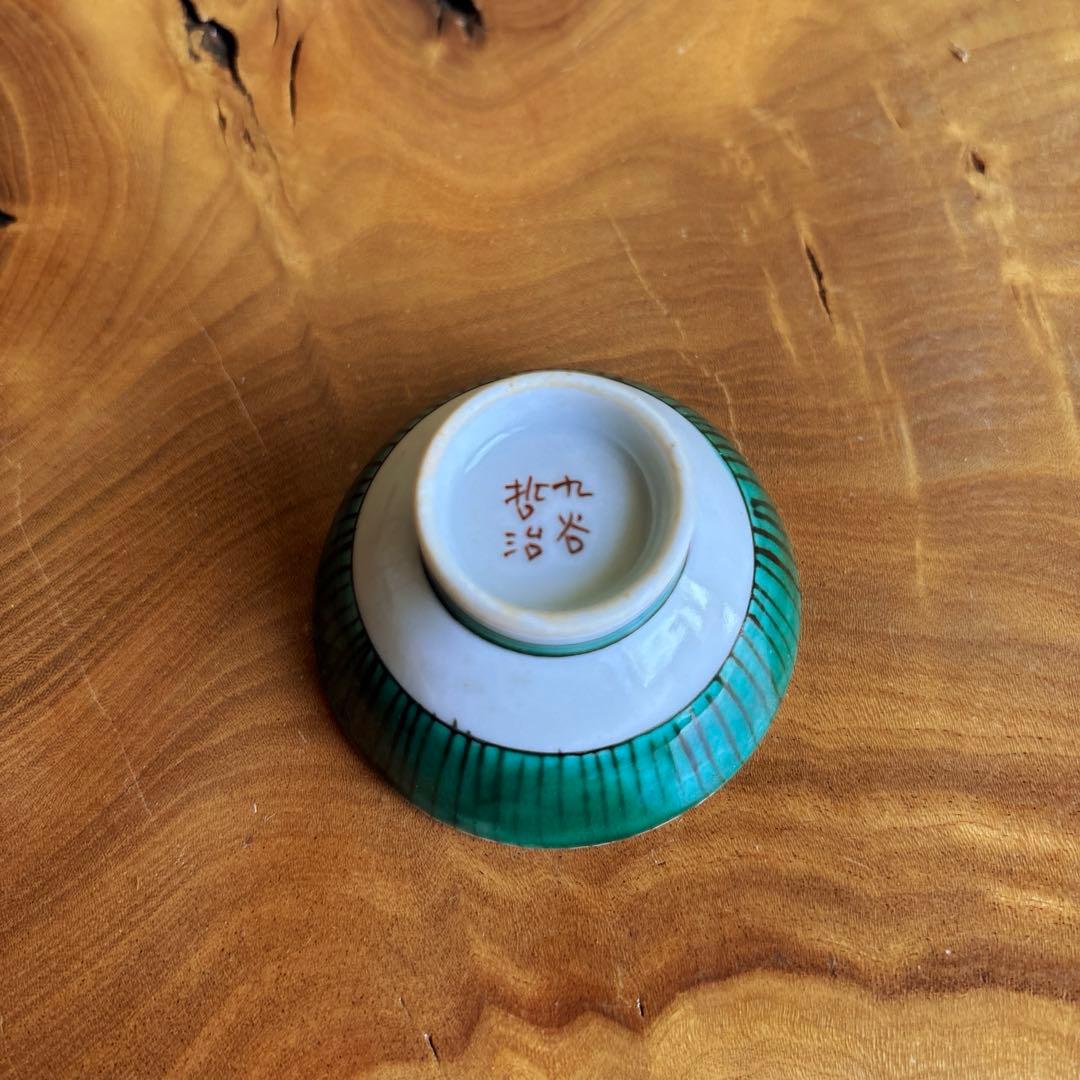
• Technique: Kutani overglaze enamel (上絵付); green ground (ao-Kutani palette) with hand-painted gold medallion, white-slip hare, and chrysanthemum motifs; fine vertical brushed line texture on exterior
• Era: 2000 – 2006
• Origin: Kutani, Ishikawa, Japan
• Dimensions: Height approx. 3.2 cm, Diameter approx. 5.5 cm
• Box: Tomobako — signed wooden box, lid inscribed 玉兎 酒盃, artist seal on side
• Condition: Very good overall. Minor soiling at foot ring (kōdai); glaze and painting fully intact
🔹 [ CULTURAL & ARTISTIC INSIGHT ]
The moon rabbit — tsuki no usagi — inhabits Japanese cultural memory at a depth that English-language mythology rarely reaches. Where the West reads a man in the moon, Japan sees a hare pounding mochi in gold light. Tetsuji places this hare inside a bordered gold medallion at the center of the cup's interior: when sake is poured, the rabbit appears to float within the liquid, suspended in its own lunar orbit.
The exterior treatment — deep green ground with vertical incised or painted stripes running from foot to rim — belongs to the ao-Kutani lineage, the green-dominant palette that distinguished Kutani ware from the more flamboyant red-gold traditions. The chrysanthemums (kiku) placed around the interior wall are not decorative filler; they are a second symbol of longevity and imperial refinement, holding the rabbit's mythic charge in quiet counterpoint. The composition reads differently every time the cup is tilted.
🔹 [ DEEP-DIVE COMMENTARY ]
Kutani ware has been produced in Ishikawa Prefecture since the mid-Edo period. The ao-Kutani (green Kutani) style, characterized by a vivid green ground layered with fine line work, emerged as one of the tradition's defining voices — quieter in palette than the red-and-gold gosai-de (five-color style), but no less demanding in execution.
Overglaze enamel on Kutani porcelain requires multiple firings. The base white porcelain is shaped and kiln-fired first; enamels are then applied by hand and the piece is returned to a lower-temperature enamel kiln. The gold medallion framing the rabbit requires a separate gold application step, giving it the warm depth visible in the images — not printed, but built up through the artist's hand.
The tama-usagi (jeweled hare) motif carries auspicious weight in Japanese culture: longevity, good fortune, and the cycle of the moon. On a sake cup, it also carries a quiet humor — the hare appears only when the cup is brought close, a private encounter between drinker and image.
For collectors, the presence of a tomobako is significant beyond provenance. The box inscription 玉兎 酒盃 confirms that the artist named this specific piece, not simply a production type. The red seal on the box side is consistent with Tetsuji's signing practice. This is a small object that contains a considered world.
At 3.2 cm tall and 5.5 cm in diameter, this guinomi sits precisely in the hand — not so small as to feel toylike, not so large as to lose intimacy. The white foot ring with its single green accent line is the kind of detail that rewards examination: even what is hidden when the cup rests on a table is finished with intention.
[ JAPANESE DESCRIPTION / 日本語解説 ]
九谷焼 ぐい呑「玉兎」は、哲治による上絵付の盃です。青九谷の深い緑釉を地として、外側には細い縦線が規則正しく引かれ、静かな緊張感を帯びた景色を作り出しています。
内側の景色はさらに豊かです。碗底の金地の円形メダリオンの中に、白い兎が跳ねるように描かれています。日本の月見の伝承において、兎は月の中で餅を搗く存在として親しまれてきました。盃に酒を注ぐと、その兎が液面に浮かび上がるように見える——この仕掛けこそが「玉兎」という名の由来でしょう。
内壁には菊の花が三輪、間隔を置いて配置されています。菊は長寿と高貴を象徴する文様であり、兎の縁起と重なりながら、盃全体に吉祥の気配を満たしています。
共箱の蓋には「玉兎 酒盃」と揮毫され、側面に「哲治造」の銘と朱印が捺されています。箱書きによって、この一点が量産品ではなく、作家が命名した個別の作品であることが示されます。
高さ3.2cm、口径5.5cmという手のひらに収まる寸法は、ぐい呑みとして理想的な親密さを持ちます。高台には微細な汚れが見られますが、釉薬・絵付けともに良好な状態を保っています。
酒を介して兎に出会う、静かな一夜のための盃です。
🔹 [ SHIPPING & PACKAGING ]
• Dispatch: Within 1-6 business days
• Carrier: Japan Post EMS / UPS (with tracking)
• Packaging: Carefully wrapped with protective materials
🔹 [ BASIC DETAILS ]
• Artist: Tetsuji (哲治), with red seal; box side inscription reads 松お哲治造
• Technique: Kutani overglaze enamel (上絵付); green ground (ao-Kutani palette) with hand-painted gold medallion, white-slip hare, and chrysanthemum motifs; fine vertical brushed line texture on exterior
• Era: 2000 – 2006
• Origin: Kutani, Ishikawa, Japan
• Dimensions: Height approx. 3.2 cm, Diameter approx. 5.5 cm
• Box: Tomobako — signed wooden box, lid inscribed 玉兎 酒盃, artist seal on side
• Condition: Very good overall. Minor soiling at foot ring (kōdai); glaze and painting fully intact
🔹 [ CULTURAL & ARTISTIC INSIGHT ]
The moon rabbit — tsuki no usagi — inhabits Japanese cultural memory at a depth that English-language mythology rarely reaches. Where the West reads a man in the moon, Japan sees a hare pounding mochi in gold light. Tetsuji places this hare inside a bordered gold medallion at the center of the cup's interior: when sake is poured, the rabbit appears to float within the liquid, suspended in its own lunar orbit.
The exterior treatment — deep green ground with vertical incised or painted stripes running from foot to rim — belongs to the ao-Kutani lineage, the green-dominant palette that distinguished Kutani ware from the more flamboyant red-gold traditions. The chrysanthemums (kiku) placed around the interior wall are not decorative filler; they are a second symbol of longevity and imperial refinement, holding the rabbit's mythic charge in quiet counterpoint. The composition reads differently every time the cup is tilted.
🔹 [ DEEP-DIVE COMMENTARY ]
Kutani ware has been produced in Ishikawa Prefecture since the mid-Edo period. The ao-Kutani (green Kutani) style, characterized by a vivid green ground layered with fine line work, emerged as one of the tradition's defining voices — quieter in palette than the red-and-gold gosai-de (five-color style), but no less demanding in execution.
Overglaze enamel on Kutani porcelain requires multiple firings. The base white porcelain is shaped and kiln-fired first; enamels are then applied by hand and the piece is returned to a lower-temperature enamel kiln. The gold medallion framing the rabbit requires a separate gold application step, giving it the warm depth visible in the images — not printed, but built up through the artist's hand.
The tama-usagi (jeweled hare) motif carries auspicious weight in Japanese culture: longevity, good fortune, and the cycle of the moon. On a sake cup, it also carries a quiet humor — the hare appears only when the cup is brought close, a private encounter between drinker and image.
For collectors, the presence of a tomobako is significant beyond provenance. The box inscription 玉兎 酒盃 confirms that the artist named this specific piece, not simply a production type. The red seal on the box side is consistent with Tetsuji's signing practice. This is a small object that contains a considered world.
At 3.2 cm tall and 5.5 cm in diameter, this guinomi sits precisely in the hand — not so small as to feel toylike, not so large as to lose intimacy. The white foot ring with its single green accent line is the kind of detail that rewards examination: even what is hidden when the cup rests on a table is finished with intention.
[ JAPANESE DESCRIPTION / 日本語解説 ]
九谷焼 ぐい呑「玉兎」は、哲治による上絵付の盃です。青九谷の深い緑釉を地として、外側には細い縦線が規則正しく引かれ、静かな緊張感を帯びた景色を作り出しています。
内側の景色はさらに豊かです。碗底の金地の円形メダリオンの中に、白い兎が跳ねるように描かれています。日本の月見の伝承において、兎は月の中で餅を搗く存在として親しまれてきました。盃に酒を注ぐと、その兎が液面に浮かび上がるように見える——この仕掛けこそが「玉兎」という名の由来でしょう。
内壁には菊の花が三輪、間隔を置いて配置されています。菊は長寿と高貴を象徴する文様であり、兎の縁起と重なりながら、盃全体に吉祥の気配を満たしています。
共箱の蓋には「玉兎 酒盃」と揮毫され、側面に「哲治造」の銘と朱印が捺されています。箱書きによって、この一点が量産品ではなく、作家が命名した個別の作品であることが示されます。
高さ3.2cm、口径5.5cmという手のひらに収まる寸法は、ぐい呑みとして理想的な親密さを持ちます。高台には微細な汚れが見られますが、釉薬・絵付けともに良好な状態を保っています。
酒を介して兎に出会う、静かな一夜のための盃です。
🔹 [ SHIPPING & PACKAGING ]
• Dispatch: Within 1-6 business days
• Carrier: Japan Post EMS / UPS (with tracking)
• Packaging: Carefully wrapped with protective materials
Quantity
Couldn't load pickup availability
Low stock: 1 left
View full details