1
/
of
10
Kutani Chawan with Ao-Chibu and Gold Tessen by Shoka — Matcha Bowl, Tomobako
Kutani Chawan with Ao-Chibu and Gold Tessen by Shoka — Matcha Bowl, Tomobako
Regular price
Dhs. 615.00 AED
Regular price
Sale price
Dhs. 615.00 AED
Taxes included.
Shipping calculated at checkout.
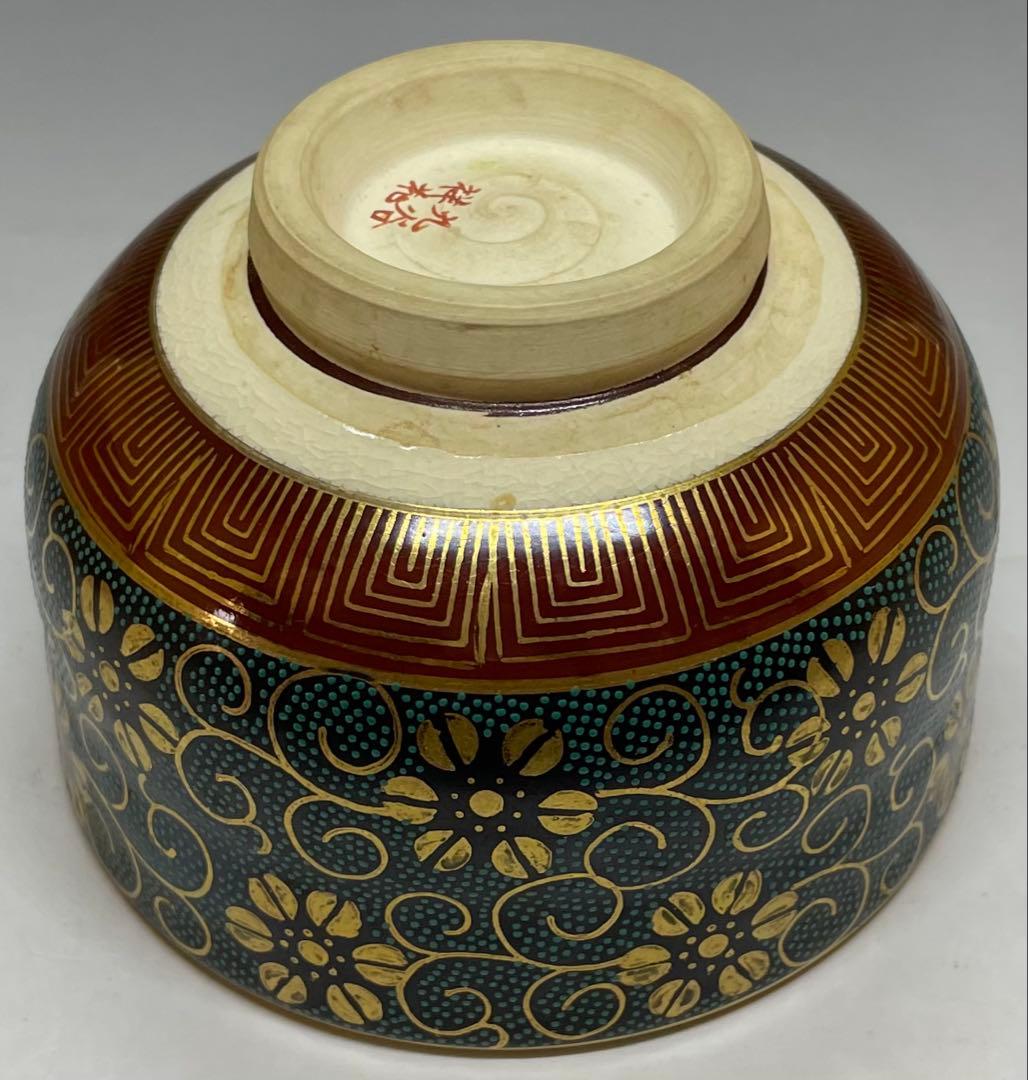
A Kutani matcha bowl by Shoka — the entire outer surface given over to ao-chibu dotwork: thousands of raised teal-green points on a deep black-blue ground, interrupted by sinuous gold arabesques carrying clematis (tessen) in full bloom. At the foot, a band of iron-red geometric fret anchors the composition. The interior is plain cream-white with fine crackle glaze, the rim edged in a continuous band of gold. The surface is not decorative in the casual sense; it is dense with intention.
🔹 [ BASIC DETAILS ]
• Artist: Shoka (祥花) — Kutani ware, contemporary
• Technique: Ao-chibu (blue-green raised dotwork) with overglaze gold (kinrande) tessen arabesque; iron-red fret border at foot
• Era: Contemporary (post-2000)
• Origin: Kutani, Ishikawa Prefecture, Japan
• Dimensions: Height approx. 7.7 cm, Mouth diameter approx. 10.4 cm, Foot diameter approx. 5.1 cm
• Box: Tomobako (original signed wooden box) included — lid inscribed 九谷焼 抹茶碗 祥花造 with red seal
• Condition: No chips, cracks, or repairs. Interior clean and unblemished.
🔹 [ CULTURAL & ARTISTIC INSIGHT ]
Kutani ware (九谷焼) from Ishikawa Prefecture carries one of the most visually assertive traditions in Japanese ceramics. Where Kyoto ware tends toward restraint and suggestion, Kutani declares — dense fields of color, layered overglaze enamels, surfaces that compete with the space around them. The ao-chibu technique places this bowl within one of Kutani's most labor-intensive registers: each tiny dot of blue-green enamel is applied individually, building a field of texture across the entire body before the gold work is added on top. The result is a surface that changes quality in different light — cooler and more aquatic when diffused, shimmering when lit directly.
The tessen (鉄仙), or clematis, carries in Japanese aesthetics an association with climbing persistence and the particular beauty of a vine that finds its way through difficulty. Here it appears as a formal motif — rhythmic, gold, moving across the dark ground as if the flowers themselves are light passing through deep water.
POETIC LINE: Ten thousand points of green holding gold flowers above an iron border — the bowl asks no questions. It simply waits.
🔹 [ DEEP-DIVE COMMENTARY ]
Ao-chibu, literally "blue dotwork," is a subtype within Kutani's broader tradition of e-Kutani (painted Kutani) and later kinrande (gold brocade ware). The technique emerged as Kutani potters sought ways to create a field ground that would carry overglaze gold without the starkness of plain black or the visual competition of a colored glaze beneath. By applying hundreds — sometimes thousands — of individual raised enamel dots in teal or blue-green, the artisan creates a ground that is simultaneously dark and alive, giving the gold motifs above them a sense of depth rather than flatness.
The discipline required is considerable. Each dot must be consistent in size and spacing, applied before firing, and the gold arabesques added afterward in a separate firing. A single bowl of this dot density may represent many hours of surface work before the gold is touched. This is why ao-chibu pieces, particularly with fine consistent dotwork, are regarded by collectors not merely as decorative objects but as technical records — evidence of training, patience, and practiced eye.
The tessen arabesque (鉄仙唐草) format used here has precedent in both Chinese-influenced brocade ware and the later Meiji-era Kutani export tradition, where it appeared frequently on pieces made for Western markets. Contemporary Kutani artists working in this format are in dialogue with that history — choosing to continue a technique that was once associated with commercial production and reclaiming it as a vehicle for serious craft.
The interior — plain cream crackle over a smooth, well-formed well — reflects a practical understanding of the chawan's function. The exterior carries the full weight of the maker's formal statement. The interior offers the person drinking matcha a moment of plain quiet after the surface of the outside. That contrast is not incidental.
The tomobako, inscribed in the maker's hand and sealed, is part of the object's completeness. In the Japanese tradition of craft, the box is not packaging; it is the work's second skin, the document that travels with it.
[ JAPANESE DESCRIPTION / 日本語解説 ]
祥花造による九谷焼の抹茶碗。胴全体に青粒を精細に施し、深みある黒青の地に無数の青緑色の点が浮かぶ。その上を金彩の唐草が流れ、鉄仙の花が咲き乱れる。腰廻りには鉄赤の雷文が帯状に走り、構図を引き締める。口縁には金の線が一本。見込みは貫入の入った白磁地で、静かで清澄な空間が広がる。
作者の祥花は九谷焼の作家で、青粒と金彩を組み合わせた精緻な仕事で知られる。青粒技法は、点を一つひとつ手で置いていく根気の要る作業であり、その密度と均一さが作行きの水準を示す。本作はその点粒が細かく揃い、金彩の流れと呼応して、光の当たり方によって表情が変わる。
九谷焼は石川県に根ざす焼物で、色絵の豊かさと装飾の密度において日本陶芸の中でも独自の地位を占める。金襴手(きんらんで)の伝統の中で、この碗は青粒と金彩を組み合わせた技法の典型的な達成を示す。鉄仙(クレマチス)の唐草文は、日本の茶道具に用いられる格調ある文様のひとつで、勁さと優美さを兼ね備える。
内側の見込みの白は、外側の絢爛な装飾と対をなす「余白」である。茶碗として使う者は、華やかな外をひとたび置いて、内の静けさに向き合う。その構造は意図的なものだと思われる。
共箱には「九谷焼 抹茶碗 祥花造」と記され、朱の印が押されている。箱は作品と一体の記録であり、作者の署名がその作行きを保証する。
🔹 [ SHIPPING & PACKAGING ]
• Dispatch: Within 1-6 business days
• Carrier: Japan Post EMS / UPS / FedEx (with tracking)
• Packaging: Carefully wrapped with protective materials
🔹 [ BASIC DETAILS ]
• Artist: Shoka (祥花) — Kutani ware, contemporary
• Technique: Ao-chibu (blue-green raised dotwork) with overglaze gold (kinrande) tessen arabesque; iron-red fret border at foot
• Era: Contemporary (post-2000)
• Origin: Kutani, Ishikawa Prefecture, Japan
• Dimensions: Height approx. 7.7 cm, Mouth diameter approx. 10.4 cm, Foot diameter approx. 5.1 cm
• Box: Tomobako (original signed wooden box) included — lid inscribed 九谷焼 抹茶碗 祥花造 with red seal
• Condition: No chips, cracks, or repairs. Interior clean and unblemished.
🔹 [ CULTURAL & ARTISTIC INSIGHT ]
Kutani ware (九谷焼) from Ishikawa Prefecture carries one of the most visually assertive traditions in Japanese ceramics. Where Kyoto ware tends toward restraint and suggestion, Kutani declares — dense fields of color, layered overglaze enamels, surfaces that compete with the space around them. The ao-chibu technique places this bowl within one of Kutani's most labor-intensive registers: each tiny dot of blue-green enamel is applied individually, building a field of texture across the entire body before the gold work is added on top. The result is a surface that changes quality in different light — cooler and more aquatic when diffused, shimmering when lit directly.
The tessen (鉄仙), or clematis, carries in Japanese aesthetics an association with climbing persistence and the particular beauty of a vine that finds its way through difficulty. Here it appears as a formal motif — rhythmic, gold, moving across the dark ground as if the flowers themselves are light passing through deep water.
POETIC LINE: Ten thousand points of green holding gold flowers above an iron border — the bowl asks no questions. It simply waits.
🔹 [ DEEP-DIVE COMMENTARY ]
Ao-chibu, literally "blue dotwork," is a subtype within Kutani's broader tradition of e-Kutani (painted Kutani) and later kinrande (gold brocade ware). The technique emerged as Kutani potters sought ways to create a field ground that would carry overglaze gold without the starkness of plain black or the visual competition of a colored glaze beneath. By applying hundreds — sometimes thousands — of individual raised enamel dots in teal or blue-green, the artisan creates a ground that is simultaneously dark and alive, giving the gold motifs above them a sense of depth rather than flatness.
The discipline required is considerable. Each dot must be consistent in size and spacing, applied before firing, and the gold arabesques added afterward in a separate firing. A single bowl of this dot density may represent many hours of surface work before the gold is touched. This is why ao-chibu pieces, particularly with fine consistent dotwork, are regarded by collectors not merely as decorative objects but as technical records — evidence of training, patience, and practiced eye.
The tessen arabesque (鉄仙唐草) format used here has precedent in both Chinese-influenced brocade ware and the later Meiji-era Kutani export tradition, where it appeared frequently on pieces made for Western markets. Contemporary Kutani artists working in this format are in dialogue with that history — choosing to continue a technique that was once associated with commercial production and reclaiming it as a vehicle for serious craft.
The interior — plain cream crackle over a smooth, well-formed well — reflects a practical understanding of the chawan's function. The exterior carries the full weight of the maker's formal statement. The interior offers the person drinking matcha a moment of plain quiet after the surface of the outside. That contrast is not incidental.
The tomobako, inscribed in the maker's hand and sealed, is part of the object's completeness. In the Japanese tradition of craft, the box is not packaging; it is the work's second skin, the document that travels with it.
[ JAPANESE DESCRIPTION / 日本語解説 ]
祥花造による九谷焼の抹茶碗。胴全体に青粒を精細に施し、深みある黒青の地に無数の青緑色の点が浮かぶ。その上を金彩の唐草が流れ、鉄仙の花が咲き乱れる。腰廻りには鉄赤の雷文が帯状に走り、構図を引き締める。口縁には金の線が一本。見込みは貫入の入った白磁地で、静かで清澄な空間が広がる。
作者の祥花は九谷焼の作家で、青粒と金彩を組み合わせた精緻な仕事で知られる。青粒技法は、点を一つひとつ手で置いていく根気の要る作業であり、その密度と均一さが作行きの水準を示す。本作はその点粒が細かく揃い、金彩の流れと呼応して、光の当たり方によって表情が変わる。
九谷焼は石川県に根ざす焼物で、色絵の豊かさと装飾の密度において日本陶芸の中でも独自の地位を占める。金襴手(きんらんで)の伝統の中で、この碗は青粒と金彩を組み合わせた技法の典型的な達成を示す。鉄仙(クレマチス)の唐草文は、日本の茶道具に用いられる格調ある文様のひとつで、勁さと優美さを兼ね備える。
内側の見込みの白は、外側の絢爛な装飾と対をなす「余白」である。茶碗として使う者は、華やかな外をひとたび置いて、内の静けさに向き合う。その構造は意図的なものだと思われる。
共箱には「九谷焼 抹茶碗 祥花造」と記され、朱の印が押されている。箱は作品と一体の記録であり、作者の署名がその作行きを保証する。
🔹 [ SHIPPING & PACKAGING ]
• Dispatch: Within 1-6 business days
• Carrier: Japan Post EMS / UPS / FedEx (with tracking)
• Packaging: Carefully wrapped with protective materials
Quantity
Couldn't load pickup availability
Low stock: 1 left
View full details