1
/
of
9
Kuro-Satsuma Black Glaze Matcha Chawan Tea Bowl by 14th Chin Jukan, Signed Tomobako, Satsuma Ware Japanese Pottery
Kuro-Satsuma Black Glaze Matcha Chawan Tea Bowl by 14th Chin Jukan, Signed Tomobako, Satsuma Ware Japanese Pottery
Regular price
Dhs. 1,170.00 AED
Regular price
Sale price
Dhs. 1,170.00 AED
Taxes included.
Shipping calculated at checkout.
Experience Authentic Japan Art with this Kuro-Satsuma Black Glaze Chawan. This Satsuma Ware Matcha Tea Bowl serves as a Japanese Tea Ceremony Bowl and Collectible Pottery Gift, featuring Ame-yu Amber Pooling and a Signed Tomobako Wooden Box by 14th Chin Jukan Master Potter—a must-have for any Japanese Art Collector.
🔹 [ BASIC DETAILS ]
• Artist: 14th Chin Jukan (沈壽官 / Chin Jukan XIV), head of the Satsuma ware lineage
• Technique: Kuro-Satsuma (black Satsuma) — iron-rich black glaze with ame-yu amber pooling
• Era: Mid–late Showa to Heisei period (mid 20th–early 21st century)
• Origin: Naeshirogawa, Hioki, Kagoshima, Japan (Satsuma ware / 薩摩焼)
• Dimensions: Diameter approx. 14.2 cm, Height approx. 10 cm
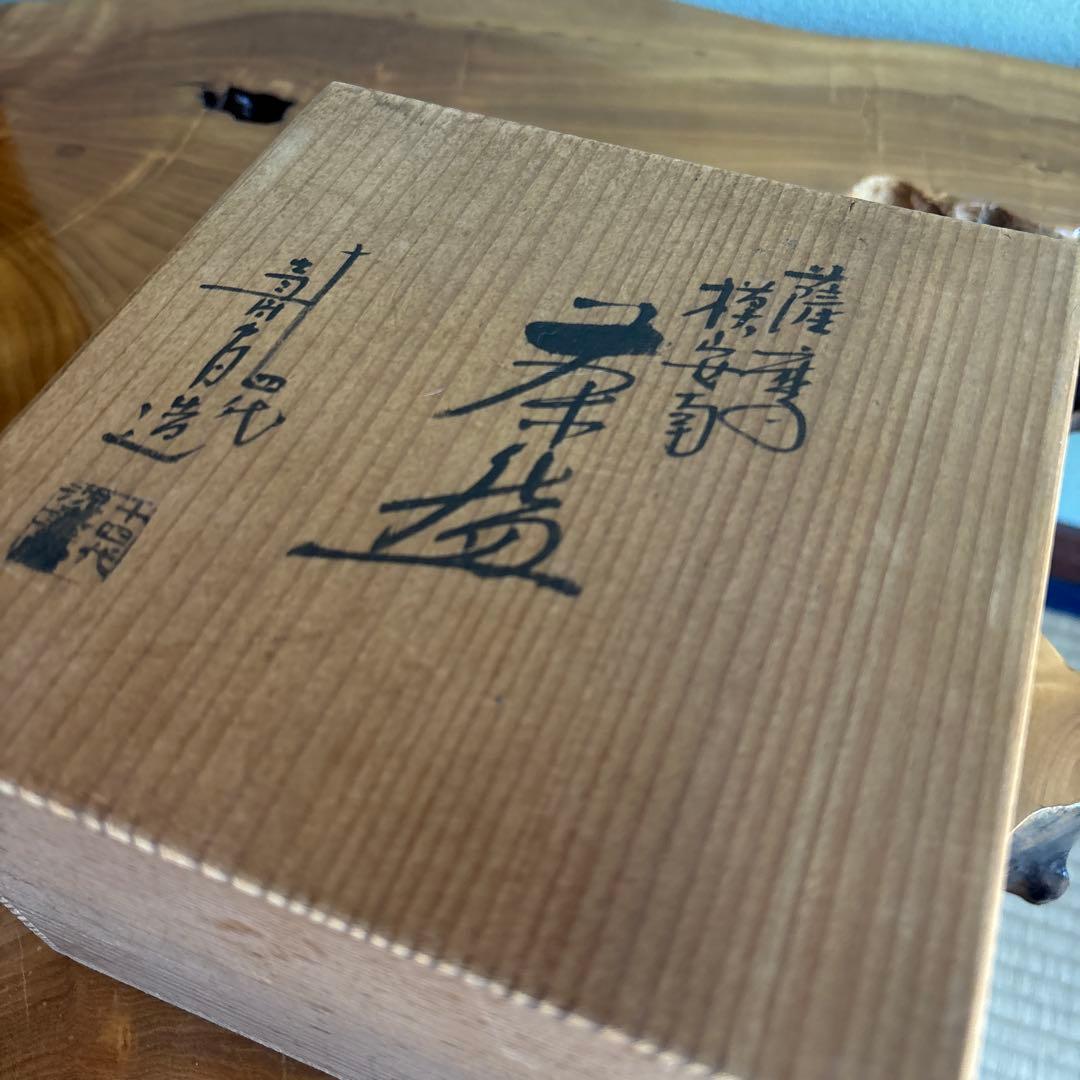
• Box: Original kiri-wood tomobako with sumi calligraphy and the red seal "壽官造" (Jukan-zō)
• Condition: Excellent — no cracks, no chips, no restoration; natural kiln character intact
🔹 [ CULTURAL & ARTISTIC INSIGHT ]
The Chin (Shim) family lineage was founded in 1598 by Korean potters brought to Satsuma after Hideyoshi's campaigns on the peninsula. Over four centuries the kiln at Naeshirogawa refined two parallel traditions — the ivory-bodied Shiro-Satsuma favoured by the daimyo and the daily, deeply human Kuro-Satsuma destined for the tea room. This bowl belongs to the latter river: a vessel made for breath and warmth rather than display.
The surface carries the signature dialogue of black Satsuma — a dense iron-saturated ground that drinks light, broken by translucent rivulets of ame-yu (amber glaze) which gather where the wheel slowed and the glaze pooled. The bare foot ring exposes the warm, gritty Satsuma clay; the contrast between unglazed earth and lacquer-like glaze is the chawan's quiet conversation between body and skin.
The interior reveals a small constellation of glaze movement — a still pond seen at dusk, holding whatever light the room offers.
Philosophical Reflection: The black glaze gathers the room into itself; the amber stream remembers fire — stillness held inside motion.
🔹 [ DEEP-DIVE COMMENTARY ]
Satsuma ware (薩摩焼) is one of Japan's six great regional ceramic traditions, distinguished by its dual identity: the polished, gold-overglazed Shiro-Satsuma developed for export and aristocratic use, and the unassuming Kuro-Satsuma made for the everyday tables of the southern Kyushu domain. The Chin Jukan studio, holding the family name unbroken since the sixteenth century, is the lineage that carried both streams into the modern era.
The black surface is achieved through a high-iron glaze layered over a coarse, iron-bearing local clay, fired in reduction at roughly 1230–1280 °C. Where the glaze runs thicker the iron crystallises into a near-lacquer black; where it thins or pools against a foot or rim, the iron oxidises and reveals the warm amber tones called ame-yu — literally "candy glaze." No two pieces are identical; the kiln decides.
For collectors, a tomobako-signed chawan from the Chin Jukan lineage is a piece of living history. It documents the four-hundred-year arc from a displaced Korean potter community to a present-day master kiln, and it carries the wabi-sabi sensibility the tea ceremony has always asked of its bowls — quietness, weight, a body that warms the hands of whoever holds it.
The original kiri-wood tomobako, with its sumi-brushed inscription and the red "壽官造" seal, is essential to the work's provenance. In Japanese ceramic culture the box is not packaging — it is the certificate, the witness, and the resting place of the bowl across generations.
Received today, this chawan continues a conversation between Kagoshima clay, Korean lineage, and Japanese tea — a conversation the next caretaker is invited to join.
🔹 [ 日本語解説 ]
🔹 [ 基本情報 ]
・作家: 十四代 沈壽官(Chin Jukan XIV)― 薩摩焼宗家
・技法: 黒薩摩 ― 鉄分の濃い黒釉に飴釉(ame-yu)の景色
・時代: 昭和中後期〜平成期
・産地: 鹿児島県日置市苗代川(薩摩焼)
・寸法: 直径 約14.2cm/高さ 約10cm
・付属: 共箱(桐箱・墨書・「壽官造」朱印)
・状態: 良好(ヒビ・カケ・直しなし)
🔹 [ 文化的・美的所見 ]
沈家の窯は、1598年に薩摩へ渡った朝鮮の陶工たちを祖とし、四百年以上にわたり苗代川で焼き継がれてきました。白薩摩が藩主や輸出向けの華やかな相手とすれば、黒薩摩は茶室と日常のための、もう一本の静かな水脈です。本碗はその後者の流れに属します。
鉄を多く含む黒釉が光を吸い込み、轆轤の動きが止まった場所に飴釉が溜まり、釉の流れがそのまま景色になっています。露わになった高台の砂気を含む土肌と、漆のような釉膚との対比は、黒薩摩の本質的な対話 ― 土と釉、暗と暖 ― を見せてくれます。見込みには小さな釉の池があり、夕暮れの水面のように室内の光をひそかに映します。
哲学的余韻: 黒は部屋を吸い込み、飴の流れは火を覚えている ― 動きの中に保たれた静けさ。
🔹 [ 深層考察 ]
薩摩焼は日本六古窯に並ぶ南九州の代表的な窯業であり、輸出向けに発達した白薩摩と、地元生活と茶の場のための黒薩摩という二本柱を持ちます。沈壽官家はその両方を一つの家系で継承してきた稀有な存在です。
黒釉は、鉄分を多く含む地元の荒い陶土の上に高鉄釉を重ね、1230〜1280℃前後の還元焼成によって完成します。釉が厚く溜まれば漆黒に近い艶へ、薄く流れた場所では鉄が酸化し、温かい飴色 ― 飴釉(ame-yu)― が現れます。窯の中の偶然が、ひとつとして同じでない景色を生みます。
共箱・箱書・「壽官造」朱印を伴う本作は、流派の正統な現代継承を証する重要な要素です。日本の陶芸文化において、共箱は単なる包装ではなく、来歴を語り、次の所蔵者へと渡す器の「家」そのものです。
薩摩の土、朝鮮系の系譜、日本の茶 ― それらの長い対話の現在地として、本碗は次の手のひらに受け継がれるのを静かに待っています。
🔹 [ SHIPPING & PACKAGING ]
• Dispatch: Within 1-6 business days
• Carrier: Japan Post EMS / UPS (with tracking)
• Packaging: Carefully wrapped with protective materials
🔹 [ BASIC DETAILS ]
• Artist: 14th Chin Jukan (沈壽官 / Chin Jukan XIV), head of the Satsuma ware lineage
• Technique: Kuro-Satsuma (black Satsuma) — iron-rich black glaze with ame-yu amber pooling
• Era: Mid–late Showa to Heisei period (mid 20th–early 21st century)
• Origin: Naeshirogawa, Hioki, Kagoshima, Japan (Satsuma ware / 薩摩焼)
• Dimensions: Diameter approx. 14.2 cm, Height approx. 10 cm
• Box: Original kiri-wood tomobako with sumi calligraphy and the red seal "壽官造" (Jukan-zō)
• Condition: Excellent — no cracks, no chips, no restoration; natural kiln character intact
🔹 [ CULTURAL & ARTISTIC INSIGHT ]
The Chin (Shim) family lineage was founded in 1598 by Korean potters brought to Satsuma after Hideyoshi's campaigns on the peninsula. Over four centuries the kiln at Naeshirogawa refined two parallel traditions — the ivory-bodied Shiro-Satsuma favoured by the daimyo and the daily, deeply human Kuro-Satsuma destined for the tea room. This bowl belongs to the latter river: a vessel made for breath and warmth rather than display.
The surface carries the signature dialogue of black Satsuma — a dense iron-saturated ground that drinks light, broken by translucent rivulets of ame-yu (amber glaze) which gather where the wheel slowed and the glaze pooled. The bare foot ring exposes the warm, gritty Satsuma clay; the contrast between unglazed earth and lacquer-like glaze is the chawan's quiet conversation between body and skin.
The interior reveals a small constellation of glaze movement — a still pond seen at dusk, holding whatever light the room offers.
Philosophical Reflection: The black glaze gathers the room into itself; the amber stream remembers fire — stillness held inside motion.
🔹 [ DEEP-DIVE COMMENTARY ]
Satsuma ware (薩摩焼) is one of Japan's six great regional ceramic traditions, distinguished by its dual identity: the polished, gold-overglazed Shiro-Satsuma developed for export and aristocratic use, and the unassuming Kuro-Satsuma made for the everyday tables of the southern Kyushu domain. The Chin Jukan studio, holding the family name unbroken since the sixteenth century, is the lineage that carried both streams into the modern era.
The black surface is achieved through a high-iron glaze layered over a coarse, iron-bearing local clay, fired in reduction at roughly 1230–1280 °C. Where the glaze runs thicker the iron crystallises into a near-lacquer black; where it thins or pools against a foot or rim, the iron oxidises and reveals the warm amber tones called ame-yu — literally "candy glaze." No two pieces are identical; the kiln decides.
For collectors, a tomobako-signed chawan from the Chin Jukan lineage is a piece of living history. It documents the four-hundred-year arc from a displaced Korean potter community to a present-day master kiln, and it carries the wabi-sabi sensibility the tea ceremony has always asked of its bowls — quietness, weight, a body that warms the hands of whoever holds it.
The original kiri-wood tomobako, with its sumi-brushed inscription and the red "壽官造" seal, is essential to the work's provenance. In Japanese ceramic culture the box is not packaging — it is the certificate, the witness, and the resting place of the bowl across generations.
Received today, this chawan continues a conversation between Kagoshima clay, Korean lineage, and Japanese tea — a conversation the next caretaker is invited to join.
🔹 [ 日本語解説 ]
🔹 [ 基本情報 ]
・作家: 十四代 沈壽官(Chin Jukan XIV)― 薩摩焼宗家
・技法: 黒薩摩 ― 鉄分の濃い黒釉に飴釉(ame-yu)の景色
・時代: 昭和中後期〜平成期
・産地: 鹿児島県日置市苗代川(薩摩焼)
・寸法: 直径 約14.2cm/高さ 約10cm
・付属: 共箱(桐箱・墨書・「壽官造」朱印)
・状態: 良好(ヒビ・カケ・直しなし)
🔹 [ 文化的・美的所見 ]
沈家の窯は、1598年に薩摩へ渡った朝鮮の陶工たちを祖とし、四百年以上にわたり苗代川で焼き継がれてきました。白薩摩が藩主や輸出向けの華やかな相手とすれば、黒薩摩は茶室と日常のための、もう一本の静かな水脈です。本碗はその後者の流れに属します。
鉄を多く含む黒釉が光を吸い込み、轆轤の動きが止まった場所に飴釉が溜まり、釉の流れがそのまま景色になっています。露わになった高台の砂気を含む土肌と、漆のような釉膚との対比は、黒薩摩の本質的な対話 ― 土と釉、暗と暖 ― を見せてくれます。見込みには小さな釉の池があり、夕暮れの水面のように室内の光をひそかに映します。
哲学的余韻: 黒は部屋を吸い込み、飴の流れは火を覚えている ― 動きの中に保たれた静けさ。
🔹 [ 深層考察 ]
薩摩焼は日本六古窯に並ぶ南九州の代表的な窯業であり、輸出向けに発達した白薩摩と、地元生活と茶の場のための黒薩摩という二本柱を持ちます。沈壽官家はその両方を一つの家系で継承してきた稀有な存在です。
黒釉は、鉄分を多く含む地元の荒い陶土の上に高鉄釉を重ね、1230〜1280℃前後の還元焼成によって完成します。釉が厚く溜まれば漆黒に近い艶へ、薄く流れた場所では鉄が酸化し、温かい飴色 ― 飴釉(ame-yu)― が現れます。窯の中の偶然が、ひとつとして同じでない景色を生みます。
共箱・箱書・「壽官造」朱印を伴う本作は、流派の正統な現代継承を証する重要な要素です。日本の陶芸文化において、共箱は単なる包装ではなく、来歴を語り、次の所蔵者へと渡す器の「家」そのものです。
薩摩の土、朝鮮系の系譜、日本の茶 ― それらの長い対話の現在地として、本碗は次の手のひらに受け継がれるのを静かに待っています。
🔹 [ SHIPPING & PACKAGING ]
• Dispatch: Within 1-6 business days
• Carrier: Japan Post EMS / UPS (with tracking)
• Packaging: Carefully wrapped with protective materials
Quantity
Couldn't load pickup availability
Low stock: 1 left
View full details