1
/
of
7
Kuro Raku Tea Bowl by Nishimura Ichiraku — Hoen Kiln Black Chawan, Japanese Tea Ceremony
Kuro Raku Tea Bowl by Nishimura Ichiraku — Hoen Kiln Black Chawan, Japanese Tea Ceremony
Regular price
Dhs. 994.00 AED
Regular price
Sale price
Dhs. 994.00 AED
Taxes included.
Shipping calculated at checkout.
Experience Authentic Japan Art with this Kuro Raku Tea Bowl by Nishimura Ichiraku. This Hoen Kiln Black Chawan serves as a Japanese Tea Ceremony Bowl and Wabi Sabi Matcha Bowl, featuring Iron Glaze Keshiki Texture and Hand-Built Raku Ceramics — a must-have for any Art Collector seeking a Black Raku Collector Piece or Kyoto Studio Pottery Gift.
🔹 [ BASIC DETAILS ]
• Artist: Nishimura Ichiraku (西村壹楽), Hoen Kiln (方円窯)
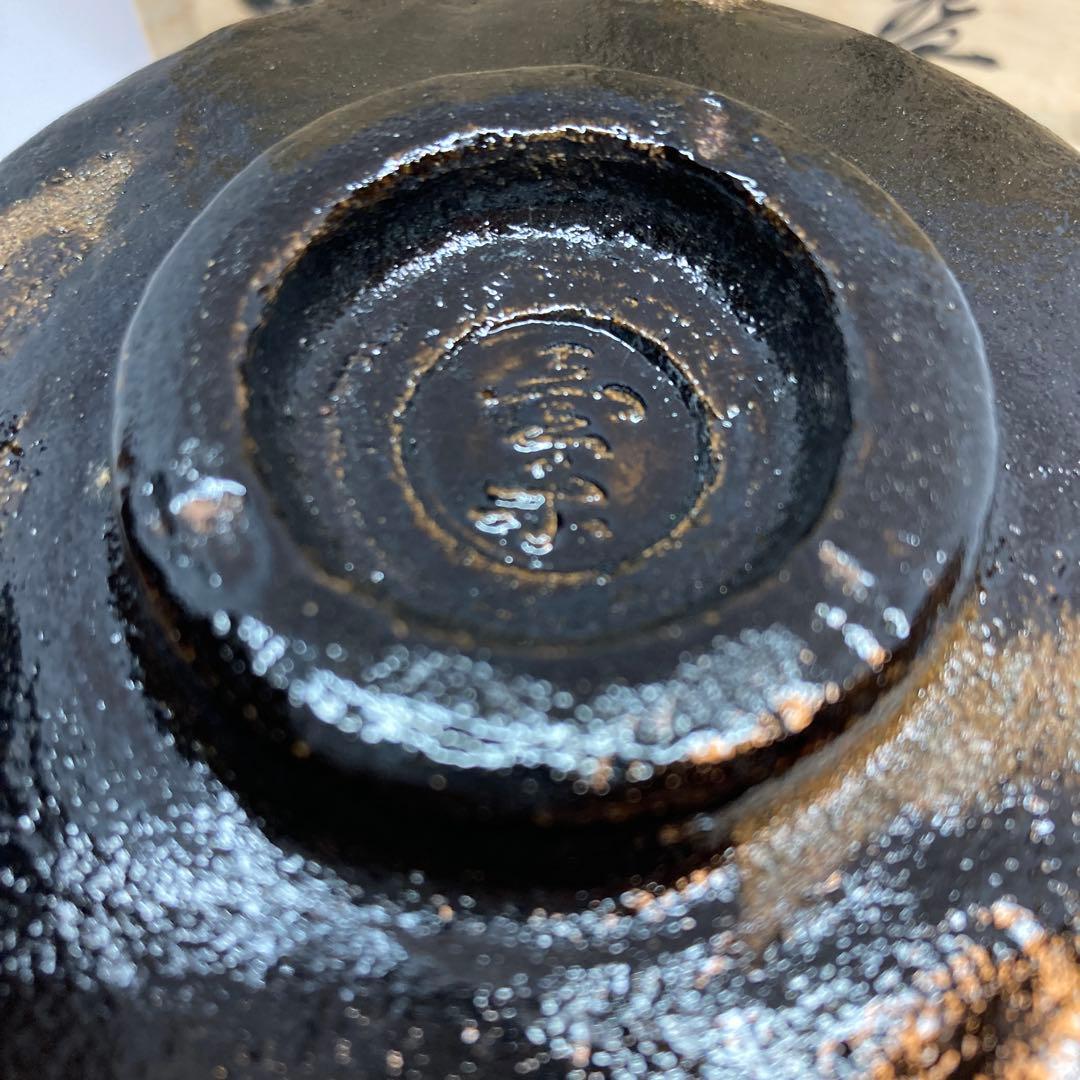
• Technique: Kuro Raku (Black Raku) — hand-built, low-temperature fired with iron-rich black glaze; warm iron-brown keshiki (景色, surface scenery) passages across the shoulder
• Era: Before 2007 (post-war Kyoto-tradition studio work)
• Origin: Kyoto tradition, Japan
• Dimensions: Height approx. 8.5 cm, Diameter approx. 11.5 cm
• Box: Original wooden box (hakogake) included with calligraphic inscription
• Condition: Very good used condition — no cracks, no repairs. Minor age-appropriate surface variation consistent with authentic raku character
🔹 [ CULTURAL & ARTISTIC INSIGHT ]
Kuro Raku — Black Raku — is the original form of Raku ware and the most closely associated with the founding philosophy of the Japanese tea ceremony. When Sen no Rikyu commissioned the tile-maker Chojiro to create bowls in the mid-sixteenth century, they chose a deeply matte, iron-rich black glaze that absorbed light rather than reflected it. In a tea room lit by a single paper lantern, a kuro raku bowl does not shine — it deepens, drawing the gaze inward. This was the intended effect: a bowl that quiets the mind before the first sip.
The Hoen Kiln (方円窯) operates within the Kyoto raku tradition with a distinctive name: "hoen" (方円) means "square and round" — a reference to the Taoist and Zen concept that all forms emerge from the interplay of the angular (heaven's will) and the circular (earth's completeness). In naming a kiln thus, Nishimura Ichiraku declared an aesthetic philosophy before shaping a single bowl.
This particular bowl demonstrates the keshiki (景色) that distinguishes a truly observed raku piece: across the dark exterior, warm iron-brown passages emerge where the glaze thinned slightly during firing, or where a shift in kiln atmosphere altered the reduction chemistry. These are not decorative additions but the record of the fire itself — a second author whose contribution cannot be scripted. The slightly irregular rim, gently flowing rather than precisely leveled, carries the hand's direct pressure: the moment of shaping is permanent.
The interior is the bowl's quiet core: deep, smooth, and uniformly black — a space that holds the vivid green of whisked matcha in a contrast of restrained power. Against such darkness, even a modest amount of matcha appears luminous.
Poetic Line: "In the black bowl, the green tea glows as if lit from within — presence without performance."
🔹 [ DEEP-DIVE COMMENTARY ]
Kuro Raku is defined by the use of an iron-rich black glaze applied to a coarse, often dark clay body, fired at low temperature (approximately 750–1100°C) in an individual kiln. Unlike high-fire ceramics where glazes fuse smoothly, raku firing allows the glaze to freeze mid-flow — capturing movement as permanent form. The result is a surface that is simultaneously rough and glossy, matte and alive, depending on angle and light.
Nishimura Ichiraku belongs to a lineage of independent studio potters who work within the Raku philosophical framework without belonging to the Raku family line (whose craft is reserved for the hereditary Raku iemoto). This distinction is important: independent raku-tradition potters bring their own sensibilities to the form while honoring its core principles of hand-building, individual firing, and wabi aesthetics. The Hoen Kiln's "square and round" premise introduces a conceptual tension — the rectangular is imposed by mind, the circular by nature — that Ichiraku resolves through each bowl's slightly asymmetric form.
The keshiki on this bowl's exterior — the warm tobacco-brown passages across the predominantly black surface — are caused by localized variations in glaze thickness and kiln atmosphere. Where glaze was thinner, iron oxide remained at the surface rather than being drawn into the black matrix, producing a warmer, slightly matte tone that contrasts against the deeper black of fully developed glaze. This effect is called "hi-iro" (fire color) in Japanese ceramic language, and its presence is considered a mark of authentic, careful firing.
For the collector, a kuro raku chawan from a named studio kiln with box inscription offers a complete provenance at an accessible price point. The form is compact and usable — sized for both thin tea (usucha) and thick tea (koicha) — and the proportions are those of a classic Rikyu-gata (Rikyu shape): wide enough for comfortable whisking, deep enough to retain heat, and heavy enough to feel grounded in the hands. This is a bowl made to be used, not merely displayed.
The Hoen Kiln works in a tradition that prizes permanence of character over novelty. Each Ichiraku bowl is a meditation on the same formal problem: how to make something that looks inevitable — as if it could not have been otherwise — from clay and fire and the pressure of two hands.
🔹 [ 日本語解説 ]
【基本情報】
作家:西村壹楽(方円窯)
技法:黒楽——手づくり・低温焼成・鉄釉。肩部に温かみのある鉄茶の景色
産地:京都楽焼の伝統
寸法:高さ約8.5cm、径約11.5cm
付属:共箱(墨書あり)
状態:美品(疵・金継ぎなし)
【文化・芸術的解説】
黒楽は楽焼の原型であり、日本の茶の湯の創成期の哲学と最も密接に結びついた形式です。十六世紀中頃、千利休が瓦師・長次郎に茶碗の制作を求めた時、彼らが選んだのは光を反射しない深く沈んだ鉄釉の黒でした。和紙の行燈が一灯ともる茶室において、黒楽の茶碗は輝かず、深まります——視線を内側へと引き込み、最初の一口の前に心を静める。それが意図された効果でした。
方円窯(ほうえんがま)はその名において美学的宣言をしています。「方円」は、角(天の意志)と円(地の完全性)の相互作用からすべての形が生まれるという道教・禅の概念への言及です。一碗を成形する前に、西村壹楽はすでに哲学を語っています。
この茶碗が示す景色——暗い外側に広がる温かい鉄茶の流れ——は装飾ではなく、炎の記録です。釉薬が薄い部分、あるいは窯の雰囲気が微妙に変化した場所で鉄分が表面に留まり、より温かく、わずかにマットな色調を生み出しています。この「火色」と呼ばれる効果は、真摯な焼成の証です。わずかに流れるような口縁は、手の圧力の直接の痕跡——成形の瞬間が永遠になっています。
詩的一文:「黒い茶碗の中で、緑茶が内側から光るように輝く——演出なき存在感。」
【詳細解説】
黒楽は、鉄分を多く含む黒釉を粗い素地土に施し、個別の窯で低温(摂氏750〜1100度程度)焼成することで定義されます。高火度の陶芸とは異なり、楽焼は釉薬を流動の途中で凍らせ、運動を永久的な形として捉えます。その結果は角度と光によって粗くも艶やかにも、マットにも生き生きとも見える表面です。
西村壹楽は、楽家の家元制度には属さず、楽焼の哲学的枠組みの中で自らの感性を持って制作する独立の陶芸家の系譜に属します。この区別は重要です:独立した楽伝統の陶芸家は、手づくり・個別焼成・侘び美学という核心的原則を尊重しながら、それぞれ独自の視点をもたらします。方円窯の「方と円」という前提は概念的な緊張——角は心によって課され、円は自然によって——を導入し、壹楽はそれを各茶碗のわずかな非対称形によって解決しています。
コレクターにとって、名前のある窯の黒楽茶碗に共箱が付くことは、手の届きやすい価格帯での完全な来歴を意味します。形は薄茶にも濃茶にも対応できる古典的な利休形——泡立てに十分な広さ、保温のための深さ、両手に落ち着く重さ。これは展示するためではなく、使うために作られた器です。
🔹 [ SHIPPING & PACKAGING ]
• Dispatch: Within 1-6 business days
• Carrier: Japan Post EMS / UPS (with tracking)
• Packaging: Carefully wrapped with protective materials
🔹 [ BASIC DETAILS ]
• Artist: Nishimura Ichiraku (西村壹楽), Hoen Kiln (方円窯)
• Technique: Kuro Raku (Black Raku) — hand-built, low-temperature fired with iron-rich black glaze; warm iron-brown keshiki (景色, surface scenery) passages across the shoulder
• Era: Before 2007 (post-war Kyoto-tradition studio work)
• Origin: Kyoto tradition, Japan
• Dimensions: Height approx. 8.5 cm, Diameter approx. 11.5 cm
• Box: Original wooden box (hakogake) included with calligraphic inscription
• Condition: Very good used condition — no cracks, no repairs. Minor age-appropriate surface variation consistent with authentic raku character
🔹 [ CULTURAL & ARTISTIC INSIGHT ]
Kuro Raku — Black Raku — is the original form of Raku ware and the most closely associated with the founding philosophy of the Japanese tea ceremony. When Sen no Rikyu commissioned the tile-maker Chojiro to create bowls in the mid-sixteenth century, they chose a deeply matte, iron-rich black glaze that absorbed light rather than reflected it. In a tea room lit by a single paper lantern, a kuro raku bowl does not shine — it deepens, drawing the gaze inward. This was the intended effect: a bowl that quiets the mind before the first sip.
The Hoen Kiln (方円窯) operates within the Kyoto raku tradition with a distinctive name: "hoen" (方円) means "square and round" — a reference to the Taoist and Zen concept that all forms emerge from the interplay of the angular (heaven's will) and the circular (earth's completeness). In naming a kiln thus, Nishimura Ichiraku declared an aesthetic philosophy before shaping a single bowl.
This particular bowl demonstrates the keshiki (景色) that distinguishes a truly observed raku piece: across the dark exterior, warm iron-brown passages emerge where the glaze thinned slightly during firing, or where a shift in kiln atmosphere altered the reduction chemistry. These are not decorative additions but the record of the fire itself — a second author whose contribution cannot be scripted. The slightly irregular rim, gently flowing rather than precisely leveled, carries the hand's direct pressure: the moment of shaping is permanent.
The interior is the bowl's quiet core: deep, smooth, and uniformly black — a space that holds the vivid green of whisked matcha in a contrast of restrained power. Against such darkness, even a modest amount of matcha appears luminous.
Poetic Line: "In the black bowl, the green tea glows as if lit from within — presence without performance."
🔹 [ DEEP-DIVE COMMENTARY ]
Kuro Raku is defined by the use of an iron-rich black glaze applied to a coarse, often dark clay body, fired at low temperature (approximately 750–1100°C) in an individual kiln. Unlike high-fire ceramics where glazes fuse smoothly, raku firing allows the glaze to freeze mid-flow — capturing movement as permanent form. The result is a surface that is simultaneously rough and glossy, matte and alive, depending on angle and light.
Nishimura Ichiraku belongs to a lineage of independent studio potters who work within the Raku philosophical framework without belonging to the Raku family line (whose craft is reserved for the hereditary Raku iemoto). This distinction is important: independent raku-tradition potters bring their own sensibilities to the form while honoring its core principles of hand-building, individual firing, and wabi aesthetics. The Hoen Kiln's "square and round" premise introduces a conceptual tension — the rectangular is imposed by mind, the circular by nature — that Ichiraku resolves through each bowl's slightly asymmetric form.
The keshiki on this bowl's exterior — the warm tobacco-brown passages across the predominantly black surface — are caused by localized variations in glaze thickness and kiln atmosphere. Where glaze was thinner, iron oxide remained at the surface rather than being drawn into the black matrix, producing a warmer, slightly matte tone that contrasts against the deeper black of fully developed glaze. This effect is called "hi-iro" (fire color) in Japanese ceramic language, and its presence is considered a mark of authentic, careful firing.
For the collector, a kuro raku chawan from a named studio kiln with box inscription offers a complete provenance at an accessible price point. The form is compact and usable — sized for both thin tea (usucha) and thick tea (koicha) — and the proportions are those of a classic Rikyu-gata (Rikyu shape): wide enough for comfortable whisking, deep enough to retain heat, and heavy enough to feel grounded in the hands. This is a bowl made to be used, not merely displayed.
The Hoen Kiln works in a tradition that prizes permanence of character over novelty. Each Ichiraku bowl is a meditation on the same formal problem: how to make something that looks inevitable — as if it could not have been otherwise — from clay and fire and the pressure of two hands.
🔹 [ 日本語解説 ]
【基本情報】
作家:西村壹楽(方円窯)
技法:黒楽——手づくり・低温焼成・鉄釉。肩部に温かみのある鉄茶の景色
産地:京都楽焼の伝統
寸法:高さ約8.5cm、径約11.5cm
付属:共箱(墨書あり)
状態:美品(疵・金継ぎなし)
【文化・芸術的解説】
黒楽は楽焼の原型であり、日本の茶の湯の創成期の哲学と最も密接に結びついた形式です。十六世紀中頃、千利休が瓦師・長次郎に茶碗の制作を求めた時、彼らが選んだのは光を反射しない深く沈んだ鉄釉の黒でした。和紙の行燈が一灯ともる茶室において、黒楽の茶碗は輝かず、深まります——視線を内側へと引き込み、最初の一口の前に心を静める。それが意図された効果でした。
方円窯(ほうえんがま)はその名において美学的宣言をしています。「方円」は、角(天の意志)と円(地の完全性)の相互作用からすべての形が生まれるという道教・禅の概念への言及です。一碗を成形する前に、西村壹楽はすでに哲学を語っています。
この茶碗が示す景色——暗い外側に広がる温かい鉄茶の流れ——は装飾ではなく、炎の記録です。釉薬が薄い部分、あるいは窯の雰囲気が微妙に変化した場所で鉄分が表面に留まり、より温かく、わずかにマットな色調を生み出しています。この「火色」と呼ばれる効果は、真摯な焼成の証です。わずかに流れるような口縁は、手の圧力の直接の痕跡——成形の瞬間が永遠になっています。
詩的一文:「黒い茶碗の中で、緑茶が内側から光るように輝く——演出なき存在感。」
【詳細解説】
黒楽は、鉄分を多く含む黒釉を粗い素地土に施し、個別の窯で低温(摂氏750〜1100度程度)焼成することで定義されます。高火度の陶芸とは異なり、楽焼は釉薬を流動の途中で凍らせ、運動を永久的な形として捉えます。その結果は角度と光によって粗くも艶やかにも、マットにも生き生きとも見える表面です。
西村壹楽は、楽家の家元制度には属さず、楽焼の哲学的枠組みの中で自らの感性を持って制作する独立の陶芸家の系譜に属します。この区別は重要です:独立した楽伝統の陶芸家は、手づくり・個別焼成・侘び美学という核心的原則を尊重しながら、それぞれ独自の視点をもたらします。方円窯の「方と円」という前提は概念的な緊張——角は心によって課され、円は自然によって——を導入し、壹楽はそれを各茶碗のわずかな非対称形によって解決しています。
コレクターにとって、名前のある窯の黒楽茶碗に共箱が付くことは、手の届きやすい価格帯での完全な来歴を意味します。形は薄茶にも濃茶にも対応できる古典的な利休形——泡立てに十分な広さ、保温のための深さ、両手に落ち着く重さ。これは展示するためではなく、使うために作られた器です。
🔹 [ SHIPPING & PACKAGING ]
• Dispatch: Within 1-6 business days
• Carrier: Japan Post EMS / UPS (with tracking)
• Packaging: Carefully wrapped with protective materials
Quantity
Couldn't load pickup availability
Low stock: 1 left
View full details