1
/
of
10
Kuro-Oribe Chawan by Sakakibara Wahei — Utsumi Kiln Matcha Bowl with Tomobako
Kuro-Oribe Chawan by Sakakibara Wahei — Utsumi Kiln Matcha Bowl with Tomobako
Regular price
Dhs. 751.00 AED
Regular price
Sale price
Dhs. 751.00 AED
Taxes included.
Shipping calculated at checkout.
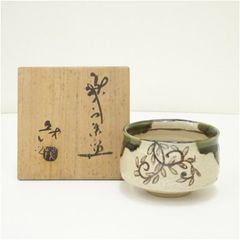
Experience Authentic Japan Art with this Kuro-Oribe Chawan. This Utsumi Kiln Matcha Bowl serves as a Wabi Sabi Tea Ceremony Bowl and Sakakibara Wahei Pottery, featuring Black Oribe Glaze Ceramic and Signed Tomobako Box—a must-have for any Art Collector.
🔹 [ BASIC DETAILS ]
• Artist: Sakakibara Wahei (榊原和平), Utsumi Kiln (うつみ焼)
• Technique: Kuro-Oribe (黒織部) — black iron glaze over deeply textured hand-formed clay, lower body left unglazed with dynamic finger-incised markings
• Era: Heisei period (estimated 1990s–2000s)
• Origin: Utsumi, Aichi Prefecture, Japan
• Dimensions: Mouth diameter approx. 12.4 cm, Foot diameter approx. 6.0 cm, Height approx. 8.3 cm
• Box: Original tomobako (共箱) with artist's brushed calligraphy and red seal
• Condition: Excellent — no chips, cracks, or repairs
🔹 [ CULTURAL & ARTISTIC INSIGHT ]
The Oribe style — named after tea master Furuta Oribe, Rikyu's most illustrious disciple — represents one of the most expressive traditions in Japanese ceramic history. Where Rikyu favored restraint and plainness, Oribe embraced the theatrically distorted: asymmetrical forms, bold contrasting surfaces, irregular glazing, and a joyful willingness to let accident and intention coexist. Kuro-Oribe (black Oribe) is the darkest and most intense expression of this tradition.
Sakakibara Wahei's bowl embodies Oribe sensibility with full conviction. The upper body carries a rich, dark iron glaze that pools near the slightly faceted rim and flows down in bold glossy arcs — in places catching warm amber undertones beneath the black, like embers glimpsed through smoke. Below, the glaze withdraws, revealing an extraordinarily textured lower body: the natural buff-gray clay is deeply worked with what appear to be finger-combed or spatula-incised horizontal and diagonal striations — rhythmic, vigorous, almost calligraphic. Traces of dark iron pigment fill some grooves while others remain raw, creating a surface that reads like a ploughed field or the bark of an ancient tree.
The contrast between the smooth, glazed upper register and the rough, unglazed lower register is the defining visual drama of this bowl. The two zones do not simply divide the bowl — they stage a conversation between control and release, between the liquid and the solid, between the made and the found.
Poetic Line: "The glaze descends like nightfall over stone — above, stillness; below, the earth's own voice."
🔹 [ DEEP-DIVE COMMENTARY ]
Kuro-Oribe (黒織部) is defined by its dense black iron-oxide glaze applied to a partially or fully hand-built form, frequently leaving one zone unglazed to expose the raw clay body. This deliberate two-zone composition is one of the characteristic signatures of the Oribe ceramic sensibility: the refusal of uniformity, the embrace of contrasts, the staging of dialogue between material states.
The technique requires precise control over glaze viscosity and application — the black iron glaze must flow convincingly but not overwhelm the unglazed zone, and the boundary between the two areas is often gestural rather than precisely delineated. In this bowl, Sakakibara has allowed the glaze to drip and pool in irregular patterns, creating areas of varying depth and tonality within the black field.
Utsumi (うつみ) is a kiln center located in the Chita Peninsula area of Aichi Prefecture. Historically connected to the broader Tokai ceramic region — which includes the great traditions of Seto, Mino, and Tokoname — Utsumi potters have worked within and alongside the Oribe aesthetic tradition, developing their own regional inflections of the style while remaining connected to its Momoyama-period philosophical roots.
The incised and combed lower body of this bowl places it in dialogue with ancient Japanese clay-working traditions, where the physical marks of making — finger pressures, tool traces, paddle and anvil rhythms — were considered part of the object's visual language rather than evidence of incompletion. In the context of Kuro-Oribe, these marks acquire additional resonance: they are the earth's own texture speaking through the clay before the glaze silences it above.
For the collector, a signed Kuro-Oribe chawan from an identified regional studio with an original tomobako represents both an aesthetic statement and a piece of living ceramic history. The Oribe aesthetic continues to be debated, celebrated, and reinterpreted by contemporary studio potters — and Sakakibara Wahei's work stands as a confident contribution to that ongoing conversation.
🔹 [ 日本語解説 ]
■ 基本情報
作家:榊原和平(うつみ焼)
技法:黒織部(鉄釉部分掛け・手びねり成形・刻文下部)
年代:平成期(推定1990〜2000年代)
産地:愛知県うつみ(知多半島)
寸法:口径12.4cm、高台径6.0cm、高さ8.3cm
付属:共箱(作家箱書・朱印)
状態:良好(欠け・ニュウ・金継ぎなし)
■ 文化・芸術的解説
織部焼は、茶人・古田織部——千利休の最も著名な弟子——の名を冠した日本陶芸史上最も表現的な様式のひとつです。利休が沈黙と抑制を好んだのに対し、織部は歪み・対比・大胆な施釉の非対称性を喜びました。黒織部はその最も暗く、最も力強い表現形態です。
榊原和平の黒織部茶碗は、その精神を確信を持って体現しています。上部の鉄釉は深くシックな黒で、わずかに面取りされた口縁から大きな弧を描きながら流れ落ち、ところどころに琥珀色の暖かい下地色が燻る炭のように透けて見えます。そして釉薬が退いた下部には、圧倒的な質感の世界が広がっています。指や篦で刻まれた水平・斜めの条線が、まるで田起こし後の土のように、あるいは古木の樹皮のように、素地の灰褐色の肌に深く刻み込まれています。鉄絵具が一部の溝を暗く染め、他は素のまま残され、その対比が全体の景色を生んでいます。
釉薬のかかった上部と無釉の下部の対比は、この碗の視覚的な主題です。二つの領域はただ分かれているのではなく、制御と解放、液体と固体、作られたものと見出されたものとの間の対話を演出しています。
■ 深掘り解説
黒織部は、鉄分の多い黒釉を部分的に掛け、一部を無釉のまま残す技法が特徴です。この二領域の構成は、織部の陶芸観の核心——均一性の拒絶、対比の受容、素材状態の対話の演出——を最も鮮明に表現するものです。
釉薬の粘度コントロールは精密さを要します。黒釉は説得力をもって流れなければならないが、無釉の領域を飲み込んではいけない。その境界線は、精密に引かれるというよりも身振りとして描かれます。この碗で榊原は、釉薬を不規則に垂らし溜まらせ、黒の領域内にさまざまな深みと色調を生み出しています。
うつみ焼は、愛知県知多半島に位置する窯業地で、瀬戸・美濃・常滑という日本有数の陶磁器産地群を擁する東海地方の陶芸的文脈に根ざしています。この地域の陶工たちは、桃山時代の精神を継承しながら、各自の地域的解釈を加え続けてきました。
下部の刻文は、日本の古陶に連なる「作ることの痕跡」の伝統に属します。指の圧力、篦の跡、道具の律動——これらは未完成の証拠ではなく、対象物の視覚的言語の一部として積極的に評価されてきました。黒織部の文脈において、これらの痕跡はさらなる共鳴を帯びます——上の釉薬が沈黙させる前に、大地自身の声が素地を通じて語りかけているのです。
🔹 [ SHIPPING & PACKAGING ]
• Dispatch: Within 1-6 business days
• Carrier: Japan Post EMS / UPS (with tracking)
• Packaging: Carefully wrapped with protective materials
🔹 [ BASIC DETAILS ]
• Artist: Sakakibara Wahei (榊原和平), Utsumi Kiln (うつみ焼)
• Technique: Kuro-Oribe (黒織部) — black iron glaze over deeply textured hand-formed clay, lower body left unglazed with dynamic finger-incised markings
• Era: Heisei period (estimated 1990s–2000s)
• Origin: Utsumi, Aichi Prefecture, Japan
• Dimensions: Mouth diameter approx. 12.4 cm, Foot diameter approx. 6.0 cm, Height approx. 8.3 cm
• Box: Original tomobako (共箱) with artist's brushed calligraphy and red seal
• Condition: Excellent — no chips, cracks, or repairs
🔹 [ CULTURAL & ARTISTIC INSIGHT ]
The Oribe style — named after tea master Furuta Oribe, Rikyu's most illustrious disciple — represents one of the most expressive traditions in Japanese ceramic history. Where Rikyu favored restraint and plainness, Oribe embraced the theatrically distorted: asymmetrical forms, bold contrasting surfaces, irregular glazing, and a joyful willingness to let accident and intention coexist. Kuro-Oribe (black Oribe) is the darkest and most intense expression of this tradition.
Sakakibara Wahei's bowl embodies Oribe sensibility with full conviction. The upper body carries a rich, dark iron glaze that pools near the slightly faceted rim and flows down in bold glossy arcs — in places catching warm amber undertones beneath the black, like embers glimpsed through smoke. Below, the glaze withdraws, revealing an extraordinarily textured lower body: the natural buff-gray clay is deeply worked with what appear to be finger-combed or spatula-incised horizontal and diagonal striations — rhythmic, vigorous, almost calligraphic. Traces of dark iron pigment fill some grooves while others remain raw, creating a surface that reads like a ploughed field or the bark of an ancient tree.
The contrast between the smooth, glazed upper register and the rough, unglazed lower register is the defining visual drama of this bowl. The two zones do not simply divide the bowl — they stage a conversation between control and release, between the liquid and the solid, between the made and the found.
Poetic Line: "The glaze descends like nightfall over stone — above, stillness; below, the earth's own voice."
🔹 [ DEEP-DIVE COMMENTARY ]
Kuro-Oribe (黒織部) is defined by its dense black iron-oxide glaze applied to a partially or fully hand-built form, frequently leaving one zone unglazed to expose the raw clay body. This deliberate two-zone composition is one of the characteristic signatures of the Oribe ceramic sensibility: the refusal of uniformity, the embrace of contrasts, the staging of dialogue between material states.
The technique requires precise control over glaze viscosity and application — the black iron glaze must flow convincingly but not overwhelm the unglazed zone, and the boundary between the two areas is often gestural rather than precisely delineated. In this bowl, Sakakibara has allowed the glaze to drip and pool in irregular patterns, creating areas of varying depth and tonality within the black field.
Utsumi (うつみ) is a kiln center located in the Chita Peninsula area of Aichi Prefecture. Historically connected to the broader Tokai ceramic region — which includes the great traditions of Seto, Mino, and Tokoname — Utsumi potters have worked within and alongside the Oribe aesthetic tradition, developing their own regional inflections of the style while remaining connected to its Momoyama-period philosophical roots.
The incised and combed lower body of this bowl places it in dialogue with ancient Japanese clay-working traditions, where the physical marks of making — finger pressures, tool traces, paddle and anvil rhythms — were considered part of the object's visual language rather than evidence of incompletion. In the context of Kuro-Oribe, these marks acquire additional resonance: they are the earth's own texture speaking through the clay before the glaze silences it above.
For the collector, a signed Kuro-Oribe chawan from an identified regional studio with an original tomobako represents both an aesthetic statement and a piece of living ceramic history. The Oribe aesthetic continues to be debated, celebrated, and reinterpreted by contemporary studio potters — and Sakakibara Wahei's work stands as a confident contribution to that ongoing conversation.
🔹 [ 日本語解説 ]
■ 基本情報
作家:榊原和平(うつみ焼)
技法:黒織部(鉄釉部分掛け・手びねり成形・刻文下部)
年代:平成期(推定1990〜2000年代)
産地:愛知県うつみ(知多半島)
寸法:口径12.4cm、高台径6.0cm、高さ8.3cm
付属:共箱(作家箱書・朱印)
状態:良好(欠け・ニュウ・金継ぎなし)
■ 文化・芸術的解説
織部焼は、茶人・古田織部——千利休の最も著名な弟子——の名を冠した日本陶芸史上最も表現的な様式のひとつです。利休が沈黙と抑制を好んだのに対し、織部は歪み・対比・大胆な施釉の非対称性を喜びました。黒織部はその最も暗く、最も力強い表現形態です。
榊原和平の黒織部茶碗は、その精神を確信を持って体現しています。上部の鉄釉は深くシックな黒で、わずかに面取りされた口縁から大きな弧を描きながら流れ落ち、ところどころに琥珀色の暖かい下地色が燻る炭のように透けて見えます。そして釉薬が退いた下部には、圧倒的な質感の世界が広がっています。指や篦で刻まれた水平・斜めの条線が、まるで田起こし後の土のように、あるいは古木の樹皮のように、素地の灰褐色の肌に深く刻み込まれています。鉄絵具が一部の溝を暗く染め、他は素のまま残され、その対比が全体の景色を生んでいます。
釉薬のかかった上部と無釉の下部の対比は、この碗の視覚的な主題です。二つの領域はただ分かれているのではなく、制御と解放、液体と固体、作られたものと見出されたものとの間の対話を演出しています。
■ 深掘り解説
黒織部は、鉄分の多い黒釉を部分的に掛け、一部を無釉のまま残す技法が特徴です。この二領域の構成は、織部の陶芸観の核心——均一性の拒絶、対比の受容、素材状態の対話の演出——を最も鮮明に表現するものです。
釉薬の粘度コントロールは精密さを要します。黒釉は説得力をもって流れなければならないが、無釉の領域を飲み込んではいけない。その境界線は、精密に引かれるというよりも身振りとして描かれます。この碗で榊原は、釉薬を不規則に垂らし溜まらせ、黒の領域内にさまざまな深みと色調を生み出しています。
うつみ焼は、愛知県知多半島に位置する窯業地で、瀬戸・美濃・常滑という日本有数の陶磁器産地群を擁する東海地方の陶芸的文脈に根ざしています。この地域の陶工たちは、桃山時代の精神を継承しながら、各自の地域的解釈を加え続けてきました。
下部の刻文は、日本の古陶に連なる「作ることの痕跡」の伝統に属します。指の圧力、篦の跡、道具の律動——これらは未完成の証拠ではなく、対象物の視覚的言語の一部として積極的に評価されてきました。黒織部の文脈において、これらの痕跡はさらなる共鳴を帯びます——上の釉薬が沈黙させる前に、大地自身の声が素地を通じて語りかけているのです。
🔹 [ SHIPPING & PACKAGING ]
• Dispatch: Within 1-6 business days
• Carrier: Japan Post EMS / UPS (with tracking)
• Packaging: Carefully wrapped with protective materials
Quantity
Couldn't load pickup availability
Low stock: 1 left
View full details