1
/
of
9
Kuro-Ninsei Fan Motif Matcha Bowl by Miyaji Eika — Black Ground, Polychrome Enamel
Kuro-Ninsei Fan Motif Matcha Bowl by Miyaji Eika — Black Ground, Polychrome Enamel
Regular price
Dhs. 483.00 AED
Regular price
Sale price
Dhs. 483.00 AED
Taxes included.
Shipping calculated at checkout.
A kuro-Ninsei chawan by Miyaji Eika — lacquer-black ground with layered polychrome fan panels in red, blue, purple and gold depicting arched bridge, pine, asanoha and bamboo. Japanese tea bowl, kuro chawan, fan motif, iro-e enamel, Kyoto ceramic, Japanese collector gift.
🔹 [ BASIC DETAILS ]
• Artist: Miyaji Eika (宮地英香造)
• Form: Matcha chawan — rounded body, short foot ring, slightly flared lip
• Technique: Kuro-Ninsei style — black crackle glaze ground with polychrome overglaze enamel (red, blue, purple, gold, green); fan (ogi) motif
• Era: Contemporary (Showa–Heisei period)
• Origin: Kyoto, Japan
• Dimensions: Diameter approx. 12 cm, height approx. 8 cm
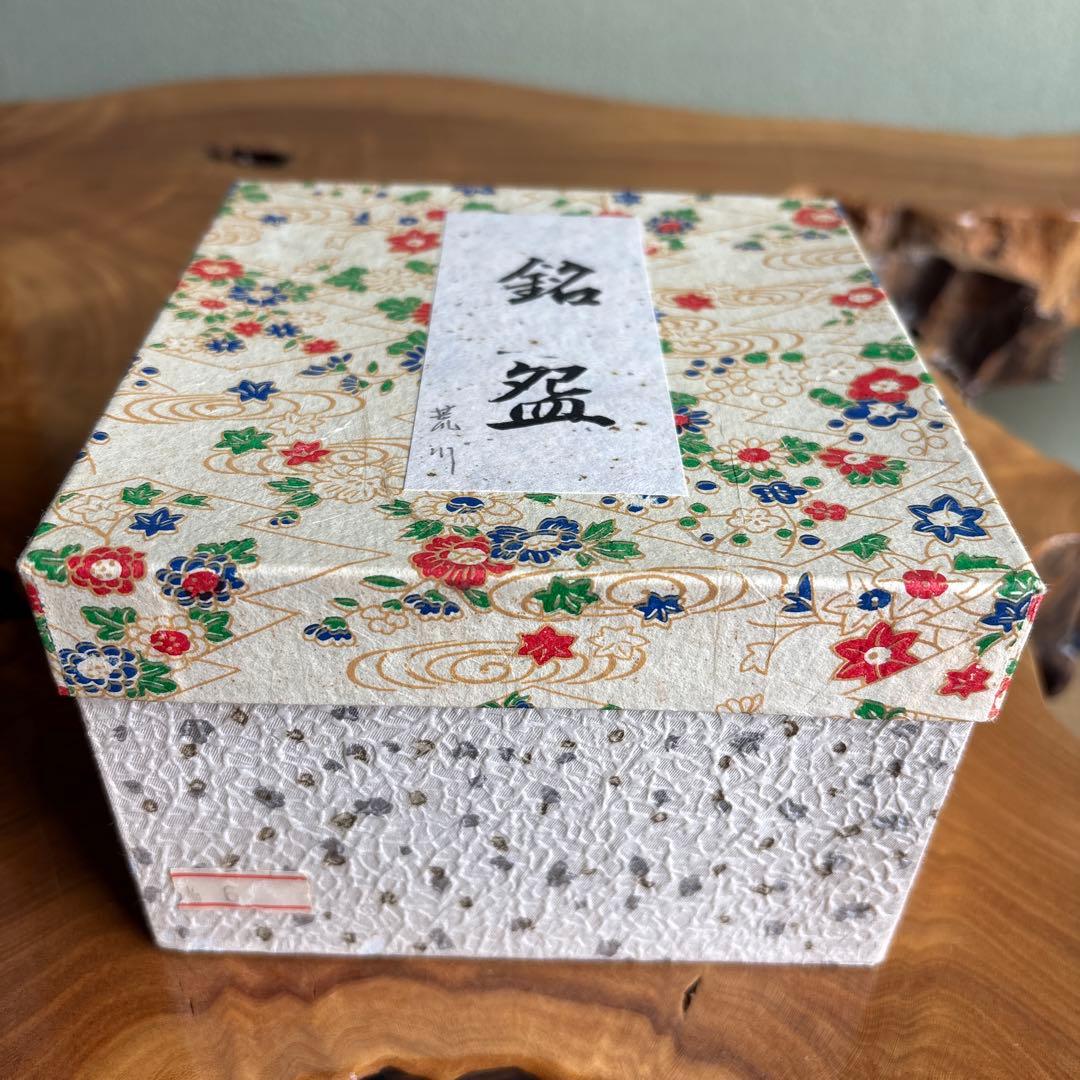
• Box: Kamibako (paper box) included
• Condition: Excellent; enamel colors vivid and intact; interior black glaze with fine crackle and pale grey tea pool at base
🔹 [ CULTURAL & ARTISTIC INSIGHT ]
Ninsei — Nonomura Ninsei, the seventeenth-century Kyoto master — did not invent overglaze enamel on ceramics. But he reimagined it, taking a technique associated with porcelain refinement and applying it to the earthenware of the tea ceremony with a decorative ambition that had no precedent. His signature move was the kuro base: a dense black glaze beneath layers of enamel color so vivid they seem to generate their own light against the darkness. Miyaji Eika works in this inheritance, deploying the fan motif — a symbol of aristocratic refinement and auspicious dispersal — as the organizing frame for a composition that contains multitudes. Each fan panel on this bowl is a complete world: the arched red bridge over scrolling waves; the pine in its permanence; the asanoha hemp-leaf pattern in its geometric insistence; the bamboo in its yielding strength. Together they constitute not decoration but a statement about what Japanese visual culture considers worth carrying into the tea room.
🔹 [ DEEP-DIVE COMMENTARY ]
The first exterior photograph reveals the primary face of this bowl: a large fan with sky-blue ground depicts the iconic arched bridge (taiko-bashi), red lacquer over water and pine — a scene from classical Japanese garden imagery that every literate viewer of the Heian and Muromachi periods would have recognized as a reference to temple precincts and poetic gathering places. Flanking this central fan are a geometric lattice panel in teal and gold, and a purple radial fan below.
The second exterior angle shows the reverse composition: a bamboo grove rendered in olive and gold against a white fan ground, accompanied by a bold red fan filled with the asanoha (hemp-leaf) geometric pattern in white on red — one of the most formally significant family patterns in Japanese textile and ceramic design. The asanoha here is executed with miniaturist precision, each six-pointed star intersecting correctly with its neighbors.
The interior shot is the most surprising element. The black crackle glaze that covers the inner surface has a completely different character from the smooth exterior: fine craze lines radiate across the surface, and at the center base, the glaze opens to a pale, nearly ash-grey pool — the point of maximum thinness where every bowl meets the brush of the matcha. This interior quality — the quiet ground against the spectacular exterior — is the complete kuro-Ninsei proposition: theatrical without, contemplative within.
The kamibako (paper box) is the appropriate storage for a piece of this type — not a tomobako, but a box that protects without the additional formality that the lacquer-black and polychrome enamel already carry. For collectors new to Japanese ceramics, this bowl is the most immediately accessible in this group: it requires no knowledge of wabi aesthetics to recognize its quality. But it also rewards that knowledge, because beneath the spectacle is a bowl that holds matcha with full competence.
[ JAPANESE DESCRIPTION / 日本語解説 ]
🔹 【基本情報】
• 作者:宮地英香造
• 形状:抹茶碗、丸形、低高台、やや開いた口縁
• 技法:黒仁清——黒貫入釉地に多彩色絵(赤・青・紫・金・緑)、扇文
• 時代:昭和〜平成期
• 産地:京都
• 寸法:直径約12cm、高さ約8cm
• 箱:紙箱付き
• 状態:優良。色絵鮮やか。内側の黒釉貫入に淡い灰色の茶溜まり
🔹 【文化・芸術的背景】
仁清——野々村仁清は17世紀京都の陶芸の革命者であり、黒釉地に鮮烈な色絵を重ねる技法で茶の湯の器に前例のない装飾性をもたらした。宮地英香はその系譜に立ち、扇文という日本の視覚文化が「茶室に持ち込む価値ある世界」として選んだ意匠——橋、松、麻の葉、竹——を黒地の上に展開する。それは装飾ではなく、宣言である。
🔹 【コレクター向け解説】
第一面には太鼓橋・松・波を描く水色地の大扇と幾何文扇、第二面には竹林と赤地麻の葉文扇が展開する。麻の葉文は六角形が精緻に連鎖し、和の図案の中でも最も格式の高い文様の一つ。内側は黒貫入地に中央の淡灰色の茶溜まりという静かな対比を見せ、外の華やかさと内の沈黙が完全な構成をなす。国際的なコレクターにとって最もわかりやすく、かつ深い日本陶芸の一点。
🔹 [ SHIPPING & PACKAGING ]
• Dispatch: Within 1-6 business days
• Carrier: Japan Post EMS / UPS (with tracking)
• Packaging: Carefully wrapped with protective materials
🔹 [ BASIC DETAILS ]
• Artist: Miyaji Eika (宮地英香造)
• Form: Matcha chawan — rounded body, short foot ring, slightly flared lip
• Technique: Kuro-Ninsei style — black crackle glaze ground with polychrome overglaze enamel (red, blue, purple, gold, green); fan (ogi) motif
• Era: Contemporary (Showa–Heisei period)
• Origin: Kyoto, Japan
• Dimensions: Diameter approx. 12 cm, height approx. 8 cm
• Box: Kamibako (paper box) included
• Condition: Excellent; enamel colors vivid and intact; interior black glaze with fine crackle and pale grey tea pool at base
🔹 [ CULTURAL & ARTISTIC INSIGHT ]
Ninsei — Nonomura Ninsei, the seventeenth-century Kyoto master — did not invent overglaze enamel on ceramics. But he reimagined it, taking a technique associated with porcelain refinement and applying it to the earthenware of the tea ceremony with a decorative ambition that had no precedent. His signature move was the kuro base: a dense black glaze beneath layers of enamel color so vivid they seem to generate their own light against the darkness. Miyaji Eika works in this inheritance, deploying the fan motif — a symbol of aristocratic refinement and auspicious dispersal — as the organizing frame for a composition that contains multitudes. Each fan panel on this bowl is a complete world: the arched red bridge over scrolling waves; the pine in its permanence; the asanoha hemp-leaf pattern in its geometric insistence; the bamboo in its yielding strength. Together they constitute not decoration but a statement about what Japanese visual culture considers worth carrying into the tea room.
🔹 [ DEEP-DIVE COMMENTARY ]
The first exterior photograph reveals the primary face of this bowl: a large fan with sky-blue ground depicts the iconic arched bridge (taiko-bashi), red lacquer over water and pine — a scene from classical Japanese garden imagery that every literate viewer of the Heian and Muromachi periods would have recognized as a reference to temple precincts and poetic gathering places. Flanking this central fan are a geometric lattice panel in teal and gold, and a purple radial fan below.
The second exterior angle shows the reverse composition: a bamboo grove rendered in olive and gold against a white fan ground, accompanied by a bold red fan filled with the asanoha (hemp-leaf) geometric pattern in white on red — one of the most formally significant family patterns in Japanese textile and ceramic design. The asanoha here is executed with miniaturist precision, each six-pointed star intersecting correctly with its neighbors.
The interior shot is the most surprising element. The black crackle glaze that covers the inner surface has a completely different character from the smooth exterior: fine craze lines radiate across the surface, and at the center base, the glaze opens to a pale, nearly ash-grey pool — the point of maximum thinness where every bowl meets the brush of the matcha. This interior quality — the quiet ground against the spectacular exterior — is the complete kuro-Ninsei proposition: theatrical without, contemplative within.
The kamibako (paper box) is the appropriate storage for a piece of this type — not a tomobako, but a box that protects without the additional formality that the lacquer-black and polychrome enamel already carry. For collectors new to Japanese ceramics, this bowl is the most immediately accessible in this group: it requires no knowledge of wabi aesthetics to recognize its quality. But it also rewards that knowledge, because beneath the spectacle is a bowl that holds matcha with full competence.
[ JAPANESE DESCRIPTION / 日本語解説 ]
🔹 【基本情報】
• 作者:宮地英香造
• 形状:抹茶碗、丸形、低高台、やや開いた口縁
• 技法:黒仁清——黒貫入釉地に多彩色絵(赤・青・紫・金・緑)、扇文
• 時代:昭和〜平成期
• 産地:京都
• 寸法:直径約12cm、高さ約8cm
• 箱:紙箱付き
• 状態:優良。色絵鮮やか。内側の黒釉貫入に淡い灰色の茶溜まり
🔹 【文化・芸術的背景】
仁清——野々村仁清は17世紀京都の陶芸の革命者であり、黒釉地に鮮烈な色絵を重ねる技法で茶の湯の器に前例のない装飾性をもたらした。宮地英香はその系譜に立ち、扇文という日本の視覚文化が「茶室に持ち込む価値ある世界」として選んだ意匠——橋、松、麻の葉、竹——を黒地の上に展開する。それは装飾ではなく、宣言である。
🔹 【コレクター向け解説】
第一面には太鼓橋・松・波を描く水色地の大扇と幾何文扇、第二面には竹林と赤地麻の葉文扇が展開する。麻の葉文は六角形が精緻に連鎖し、和の図案の中でも最も格式の高い文様の一つ。内側は黒貫入地に中央の淡灰色の茶溜まりという静かな対比を見せ、外の華やかさと内の沈黙が完全な構成をなす。国際的なコレクターにとって最もわかりやすく、かつ深い日本陶芸の一点。
🔹 [ SHIPPING & PACKAGING ]
• Dispatch: Within 1-6 business days
• Carrier: Japan Post EMS / UPS (with tracking)
• Packaging: Carefully wrapped with protective materials
Quantity
Couldn't load pickup availability
Low stock: 1 left
View full details