1
/
of
16
Kotaka Shoho Hagi Ware Tea Bowl Amber Glaze Kannyu Crazing Tomobako
Kotaka Shoho Hagi Ware Tea Bowl Amber Glaze Kannyu Crazing Tomobako
Regular price
Dhs. 711.00 AED
Regular price
Sale price
Dhs. 711.00 AED
Taxes included.
Shipping calculated at checkout.
Experience Authentic Japan Art with this Hagi Yaki Tea Bowl by Kotaka Shoho. This Japanese Matcha Chawan serves as a Wabi-Sabi Ceramic — a Hagi Ware Pottery piece with Amber Glaze Kannyu that speaks to the living tradition of Yamaguchi tea ceramics. A Signed Japanese Tea Bowl with Tomobako and Shiori leaflet, carrying the density of intention that places Hagi second in the ancient ranking of tea ware.
🔹 [ Basic Details ]
• Artist: Kotaka Shoho (小高正峰), Shoho kiln (正峰窯)
• Technique: Hagi ware (萩焼) — hand-formed stoneware with layered Hagi glaze
• Form: Matcha chawan (茶碗) — well-proportioned rounded form with hand-shaped irregular rim
• Glaze: Multi-tonal — warm cream/white base with greenish-yellow (amber) tones pooling near the rim and interior. White crawl/drip visible on one side
• Dimensions: Height 8.4 cm × Rim diameter 10.7 cm × Foot ring 5.2 cm
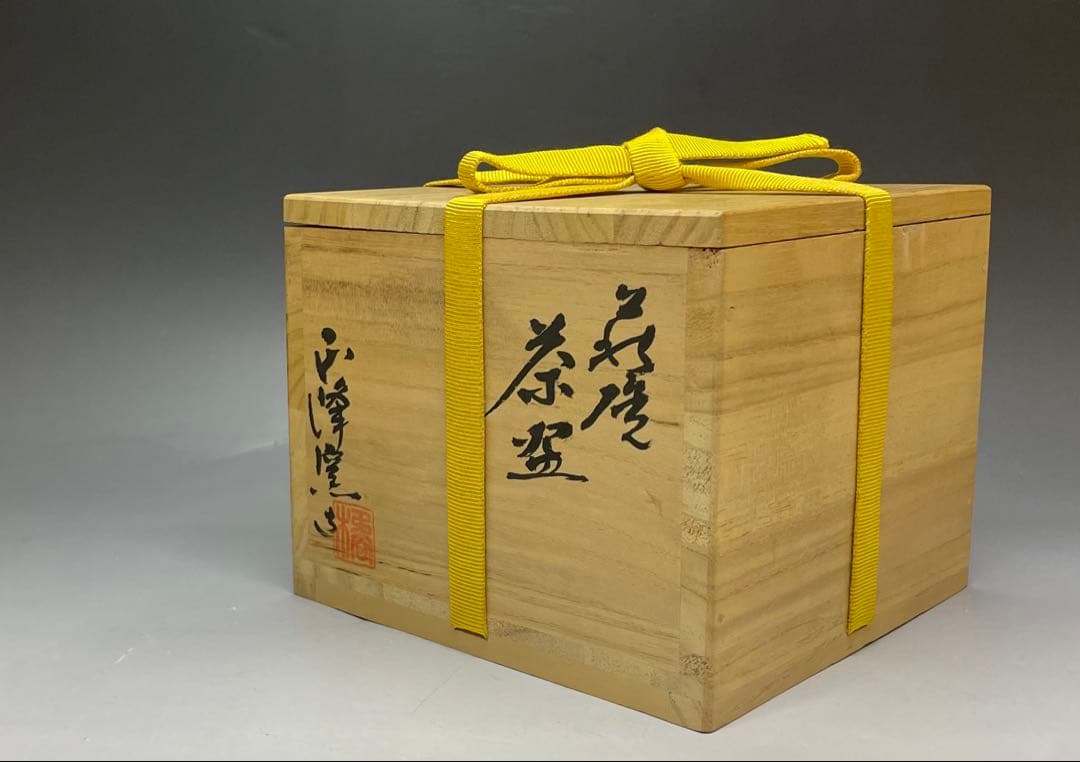
• Box: Paulownia shihozan tomobako (四方桟共箱) inscribed 萩焼 茶碗 / 正峰窯造 with red seal. Yellow silk cord tie.
• Included: Paper leaflet (栞/shiori)
• Condition: Excellent
• Origin: Hagi, Yamaguchi Prefecture, Japan
🔹 [ Cultural & Artistic Insight ]
"Ichi Raku, Ni Hagi, San Karatsu" — this centuries-old hierarchy of tea ceramics endures because Hagi ware embodies something that technique alone cannot produce. The soft glaze breathes. The crazing deepens. The bowl and its keeper grow old together.
Kotaka Shoho's bowl carries a distinctive amber-green tone at the rim — a result of glaze chemistry and kiln atmosphere that no formula can fully predict. Where the greenish-yellow meets the cream, a gradient forms like light filtering through still water.
Presence is not something applied. It is something allowed to emerge.
🔹 [ Deep-Dive Commentary ]
The history of Hagi ware begins in the aftermath of Toyotomi Hideyoshi's campaigns in Korea, when the Mōri clan brought Korean potters Ri Shakko (李勺光) and Ri Kei (李敬) to the coast of Yamaguchi Prefecture. From the kilns they established — first at Matsumoto, then spreading through the Hagi region — emerged a ceramic tradition that would become inseparable from the culture of tea.
What distinguishes Hagi from other Japanese tea ceramics is the relationship between glaze and time. Fired at comparatively low temperatures, the stoneware body retains a porosity that invites interaction. The glaze — characteristically soft, opaque, and prone to kannyu (crazing) — develops new tonal shifts with each use. This is the essence of "Hagi no nanabake," the seven transformations: a bowl purchased in cream may, over decades, deepen into tones of amber, rose, or grey.
Kotaka Shoho's work shows a mature command of this unpredictable medium. The amber-green tone that gathers near the rim and pools in the interior is a mark of the Shoho kiln's particular glaze formulation — a subtle departure from the pure white that defines many Hagi potters. The white drip visible on one side records a moment in the kiln when gravity and heat collaborated beyond the potter's control.
The extensive crazing network across the entire surface is uniform and fine — evidence of careful cooling and a well-matched glaze-clay coefficient. The pinkish-brown lines threading through the cream ground anticipate the deeper transformations that daily use will bring.
The shiori (paper leaflet) included with the tomobako is a detail of provenance that collectors value — a direct communication from the kiln to the keeper, completing the chain of authorship.
[ JAPANESE DESCRIPTION / 日本語解説 ]
🔹 [ 基本情報 ]
• 作家:小高正峰(こたか しょうほう)、正峰窯
• 技法:萩焼 — 手びねり成形、多層の萩釉
• 形状:茶碗 — 均整の取れた丸みある姿に、手造りの口縁
• 釉薬:多色調 — 白萩の地に、口縁付近と見込みに緑がかった黄(琥珀色)が溜まる。片側に白い釉だれ
• 寸法:高さ 約8.4cm × 口径 約10.7cm × 高台径 約5.2cm
• 箱:桐四方桟共箱(「萩焼 茶碗 / 正峰窯造」の箱書き・朱印あり)黄色絹紐
• 付属:栞(しおり)
• 状態:優品
• 産地:山口県萩市
🔹 [ 文化的背景 ]
「一楽二萩三唐津」——この格付けが今なお生きているのは、萩焼が技術だけでは生み出せないものを体現しているからです。柔らかな釉は呼吸し、貫入は深まり、器と持ち主が共に歳を重ねていきます。
小高正峰のこの茶碗は、口縁に独特の琥珀色を帯びています。釉薬の化学反応と窯の雰囲気が生んだ色であり、白地との境に、水底に差す光のような勾配が生まれています。
存在感とは、加えるものではなく、立ち現れるものです。
🔹 [ 鑑賞のために ]
萩焼の歴史は、豊臣秀吉の朝鮮出兵の後、毛利氏が朝鮮陶工の李勺光と李敬を山口の海岸に招いたことに始まります。比較的低温で焼成される素地は気孔を残し、釉薬との対話を長い年月にわたって続けます。これが「萩の七化け」の本質です。
小高正峰の作品は、この予測しがたい素材への成熟した理解を示しています。片側に残る白い釉だれは、窯の中で重力と熱が陶工の手を離れて共演した一瞬の記録です。全面に広がる細やかな貫入は、日々の使用がもたらす深い変容を静かに予感させています。
共箱に添えられた栞は、窯から持ち主への直接の伝言であり、作品の来歴の連鎖を完成させるものです。
🔹 [ SHIPPING & PACKAGING ]
• Dispatch: Within 1-6 business days
• Carrier: Japan Post EMS / UPS (with tracking)
• Packaging: Carefully wrapped with protective materials
🔹 [ Basic Details ]
• Artist: Kotaka Shoho (小高正峰), Shoho kiln (正峰窯)
• Technique: Hagi ware (萩焼) — hand-formed stoneware with layered Hagi glaze
• Form: Matcha chawan (茶碗) — well-proportioned rounded form with hand-shaped irregular rim
• Glaze: Multi-tonal — warm cream/white base with greenish-yellow (amber) tones pooling near the rim and interior. White crawl/drip visible on one side
• Dimensions: Height 8.4 cm × Rim diameter 10.7 cm × Foot ring 5.2 cm
• Box: Paulownia shihozan tomobako (四方桟共箱) inscribed 萩焼 茶碗 / 正峰窯造 with red seal. Yellow silk cord tie.
• Included: Paper leaflet (栞/shiori)
• Condition: Excellent
• Origin: Hagi, Yamaguchi Prefecture, Japan
🔹 [ Cultural & Artistic Insight ]
"Ichi Raku, Ni Hagi, San Karatsu" — this centuries-old hierarchy of tea ceramics endures because Hagi ware embodies something that technique alone cannot produce. The soft glaze breathes. The crazing deepens. The bowl and its keeper grow old together.
Kotaka Shoho's bowl carries a distinctive amber-green tone at the rim — a result of glaze chemistry and kiln atmosphere that no formula can fully predict. Where the greenish-yellow meets the cream, a gradient forms like light filtering through still water.
Presence is not something applied. It is something allowed to emerge.
🔹 [ Deep-Dive Commentary ]
The history of Hagi ware begins in the aftermath of Toyotomi Hideyoshi's campaigns in Korea, when the Mōri clan brought Korean potters Ri Shakko (李勺光) and Ri Kei (李敬) to the coast of Yamaguchi Prefecture. From the kilns they established — first at Matsumoto, then spreading through the Hagi region — emerged a ceramic tradition that would become inseparable from the culture of tea.
What distinguishes Hagi from other Japanese tea ceramics is the relationship between glaze and time. Fired at comparatively low temperatures, the stoneware body retains a porosity that invites interaction. The glaze — characteristically soft, opaque, and prone to kannyu (crazing) — develops new tonal shifts with each use. This is the essence of "Hagi no nanabake," the seven transformations: a bowl purchased in cream may, over decades, deepen into tones of amber, rose, or grey.
Kotaka Shoho's work shows a mature command of this unpredictable medium. The amber-green tone that gathers near the rim and pools in the interior is a mark of the Shoho kiln's particular glaze formulation — a subtle departure from the pure white that defines many Hagi potters. The white drip visible on one side records a moment in the kiln when gravity and heat collaborated beyond the potter's control.
The extensive crazing network across the entire surface is uniform and fine — evidence of careful cooling and a well-matched glaze-clay coefficient. The pinkish-brown lines threading through the cream ground anticipate the deeper transformations that daily use will bring.
The shiori (paper leaflet) included with the tomobako is a detail of provenance that collectors value — a direct communication from the kiln to the keeper, completing the chain of authorship.
[ JAPANESE DESCRIPTION / 日本語解説 ]
🔹 [ 基本情報 ]
• 作家:小高正峰(こたか しょうほう)、正峰窯
• 技法:萩焼 — 手びねり成形、多層の萩釉
• 形状:茶碗 — 均整の取れた丸みある姿に、手造りの口縁
• 釉薬:多色調 — 白萩の地に、口縁付近と見込みに緑がかった黄(琥珀色)が溜まる。片側に白い釉だれ
• 寸法:高さ 約8.4cm × 口径 約10.7cm × 高台径 約5.2cm
• 箱:桐四方桟共箱(「萩焼 茶碗 / 正峰窯造」の箱書き・朱印あり)黄色絹紐
• 付属:栞(しおり)
• 状態:優品
• 産地:山口県萩市
🔹 [ 文化的背景 ]
「一楽二萩三唐津」——この格付けが今なお生きているのは、萩焼が技術だけでは生み出せないものを体現しているからです。柔らかな釉は呼吸し、貫入は深まり、器と持ち主が共に歳を重ねていきます。
小高正峰のこの茶碗は、口縁に独特の琥珀色を帯びています。釉薬の化学反応と窯の雰囲気が生んだ色であり、白地との境に、水底に差す光のような勾配が生まれています。
存在感とは、加えるものではなく、立ち現れるものです。
🔹 [ 鑑賞のために ]
萩焼の歴史は、豊臣秀吉の朝鮮出兵の後、毛利氏が朝鮮陶工の李勺光と李敬を山口の海岸に招いたことに始まります。比較的低温で焼成される素地は気孔を残し、釉薬との対話を長い年月にわたって続けます。これが「萩の七化け」の本質です。
小高正峰の作品は、この予測しがたい素材への成熟した理解を示しています。片側に残る白い釉だれは、窯の中で重力と熱が陶工の手を離れて共演した一瞬の記録です。全面に広がる細やかな貫入は、日々の使用がもたらす深い変容を静かに予感させています。
共箱に添えられた栞は、窯から持ち主への直接の伝言であり、作品の来歴の連鎖を完成させるものです。
🔹 [ SHIPPING & PACKAGING ]
• Dispatch: Within 1-6 business days
• Carrier: Japan Post EMS / UPS (with tracking)
• Packaging: Carefully wrapped with protective materials
Quantity
Couldn't load pickup availability
Low stock: 1 left
View full details