Experience Authentic Japanese Tea Ceremony Art with this Kosobe Yaki Chawan. This Hakeme Tea Bowl serves as an Antique Japanese Ceramic and Hand Thrown Tea Bowl, featuring Wabi Sabi Pottery and Brushwork Slip Glaze — an essential Edo Period Revival piece for any Tea Ceremony Bowl collector seeking Osaka Kiln Pottery with a Paulownia Tomobako.
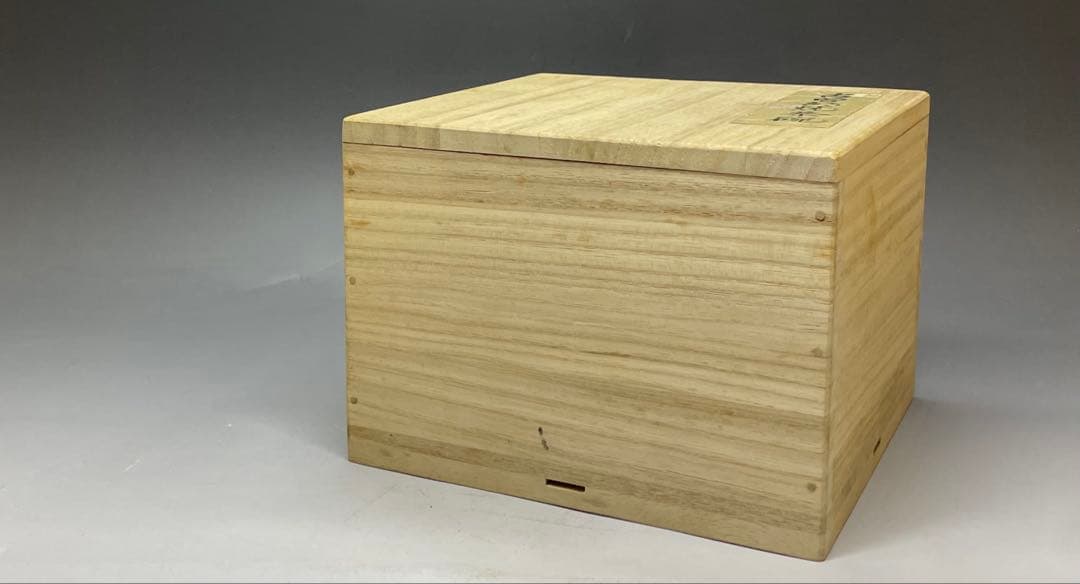
🔹 [ Basic Details ] • Kiln: Kosobe-yaki (古曽部焼), Takatsuki, Osaka • Technique: Hakeme (brushmark) — white slip over warm clay body • Era: Pre-2007 • Origin: Takatsuki, Osaka Prefecture, Japan • Dimensions: Height approx. 8.3 cm, Rim diameter approx. 13.4 cm, Foot diameter approx. 5.4 cm • Box: Yohozan-awasebako (four-sided paulownia box) inscribed 古曽部焼茶碗 with decorative brocade strip • Condition: Good — brushwork intact, warm character throughout
🔹 [ Cultural & Artistic Insight ] Kosobe ware traces its roots to the early Edo period in Takatsuki, Osaka. The tradition was revived after a long silence, carrying forward the frank, unpretentious character that originally defined it. This chawan wears its hakeme without apology — white and rose-toned slip swept across the body in wide, unhurried strokes.
The throwing lines hold visible memory of the wheel. Inside, the brushwork spirals from rim to center, each pass of the brush recorded, nothing smoothed away. The foot ring burns an unglazed reddish-orange.
"Where the slip thins, the clay beneath answers — a conversation between gesture and ground."
🔹 [ Deep-Dive Commentary ] Kosobe-yaki belongs to the lineage of Osaka-area kilns that served both tea ceremony and daily use. Unlike the more famous traditions of Kyoto or Mino, Kosobe maintained a directness that tea masters valued for its lack of pretension.
The hakeme technique — dipping a coarse brush in white slip and sweeping it across the form — creates marks that are simultaneously decorative and documentary. Each stroke records speed, pressure, and the moisture content of the slip at that moment.
The deep cylindrical form of this chawan invites the whisk and holds heat well. The pink undertones in the hakeme result from iron in the clay bleeding through the thin white slip during firing — a phenomenon that cannot be precisely controlled, only permitted.
🔹 [ SHIPPING & PACKAGING ] • Dispatch: Within 1-6 business days • Carrier: Japan Post EMS / UPS (with tracking) • Packaging: Carefully wrapped with protective materials