1
/
of
16
Korean Celadon Sanggam Inlaid Tea Bowl by Yu Hae-gang, Bird & Willow Motif, Signed Box
Korean Celadon Sanggam Inlaid Tea Bowl by Yu Hae-gang, Bird & Willow Motif, Signed Box
Regular price
Dhs. 1,077.00 AED
Regular price
Sale price
Dhs. 1,077.00 AED
Taxes included.
Shipping calculated at checkout.
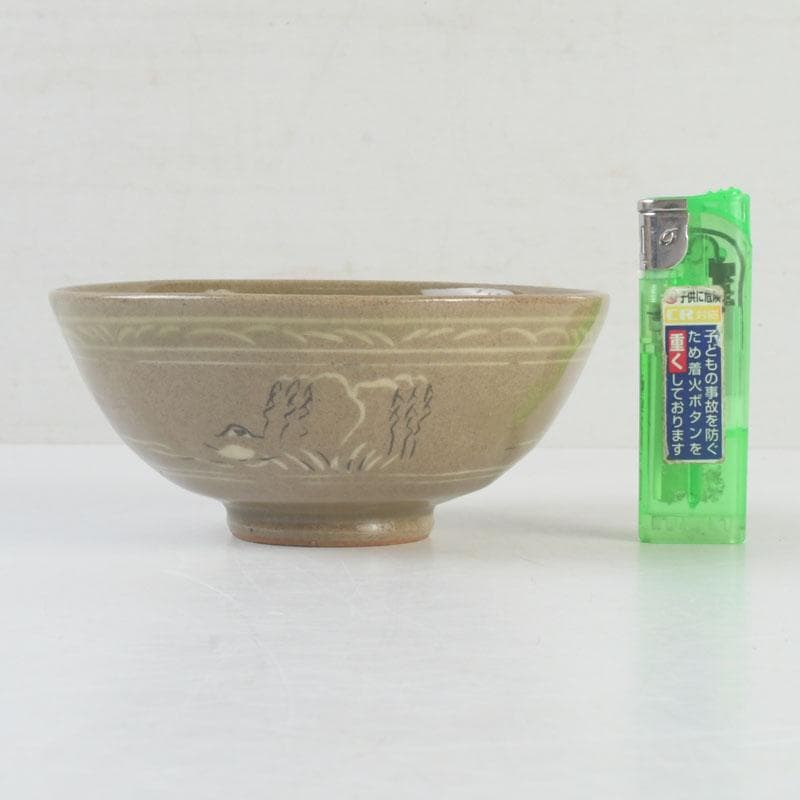
Experience Authentic Korean Celadon Art with this Korean Sanggam Inlaid Bowl. This Yu Hae-gang Celadon Bowl serves as a Goryeo Celadon Chawan and Inlaid Tea Bowl, featuring a Bird and Willow Motif and a Signed Paulownia Box—a quiet object for any Celadon Tea Collector who values Korean Ceramic Art.
🔹 [ BASIC DETAILS ]
• Artist: Yu Hae-gang (柳海剛 / 柳根瀅), Korean Intangible Cultural Property holder
• Technique: Celadon (青磁) with sanggam (象嵌) inlay decoration
• Era: Late Shōwa to Heisei, 20th century
• Origin: Icheon, Republic of Korea — Goryeo celadon revival lineage
• Dimensions: Height approx. 5.5 cm, Diameter approx. 12.7 cm, Weight approx. 152 g
• Box: Original signed paulownia tomobako with the maker's seal and inscription
• Condition: Very good, honest signs of careful handling; glaze with fine natural crackle
🔹 [ CULTURAL & ARTISTIC INSIGHT ]
Goryeo celadon (cheongja) is one of the great achievements of East Asian ceramics, and its inlay technique—sanggam—is a Korean invention without close parallel elsewhere. Designs are first carved into the leather-hard clay, then filled with white and dark slips, scraped flush, and sealed beneath a translucent celadon glaze. The result is drawing held inside the surface rather than painted upon it.
This bowl carries a bird-and-willow composition: slender willow fronds drawn in fine line, a small waterbird resting below a band of foliate inlay that circles the rim. The glaze is a soft greenish-grey, the colour the old texts called bisaek, the "kingfisher" tone that potters chased for centuries. Light pools in the well and catches the fine crackle; the exposed clay at the foot shows a warm reddish body where the glaze was wiped clean before firing.
The pale green mirrors river willow at first light—still water, a single bird, the morning unhurried.
Yu Hae-gang (1894–1993) was the master most responsible for reviving the lost Goryeo celadon tradition in the modern era, and was recognised as a holder of Korean Intangible Cultural Property. Work bearing his signed box belongs to that revival lineage and is read by collectors as a measured, scholarly continuation rather than a reproduction.
🔹 [ DEEP-DIVE COMMENTARY ]
Sanggam inlay defines Goryeo celadon at its height. Unlike incised or carved decoration, the motif is inlaid: carved channels are packed with contrasting slips so the design survives as crisp white and grey lines under the glaze. It is slow, exacting work, and the clarity of the line is one measure by which such pieces are judged.
The celadon glaze itself is the second axis of appreciation. Fired in reduction, iron in the glaze shifts toward green; the prized bisaek tone sits between grey, jade and the colour of distant pine. Here the glaze is restrained and matte-leaning rather than glassy, with a fine crackle network that softens the light—an effect Japanese tea culture reads as quiet depth rather than flaw.
Within the Japanese tea room, Korean celadon has long held a particular standing. Tea masters valued the Korean potter's unforced hand and the cool, contemplative colour, and celadon chawan of this character are used in the warmer seasons for the calm their surface brings to the hand and eye.
The form is grounded and usable: a low, open bowl with a trimmed foot, comfortable to cradle. The bird-and-willow motif belongs to a long East Asian vocabulary of seasonal poetry, where willow and water signal renewal and passage. Carried by Yu Hae-gang's revival workshop and accompanied by its signed paulownia box, the bowl stands as both a working tea object and a document of how a near-lost tradition was carried forward into the present century.
🔹 [ SHIPPING & PACKAGING ]
• Dispatch: Within 1-6 business days
• Carrier: Japan Post EMS / UPS (with tracking)
• Packaging: Carefully wrapped with protective materials
🔹 [ 日本語解説 ]
【基本情報】
・作家:柳海剛(柳根瀅)— 韓国人間文化財。高麗青磁復興の巨匠
・技法:青磁(せいじ)象嵌(ぞうがん)
・年代:20世紀、昭和後期〜平成
・産地:韓国・利川(イチョン)、高麗青磁復興の系譜
・寸法:高さ約5.5cm、幅約12.7cm、重さ約152g
・共箱:本人作を示す落款印・銘入りの桐共箱
・状態:良好。釉に自然な貫入。丁寧な使用感
【文化的・芸術的解説】
高麗青磁は東アジア陶磁の到達点のひとつであり、その象嵌技法は他に類を見ない韓国独自の発明です。半乾きの素地に文様を彫り、白土・黒土を象嵌してかき取り、半透明の青磁釉をかけて焼成する。文様は表面に描かれるのではなく、釉のなかに封じ込められて立ち上がります。本碗は鳥柳文。細い柳の葉と、口縁を巡る連続文様の下に佇む一羽の水鳥が、静かに構成されています。釉色は柔らかな緑灰、古くは翡色(ひしょく)と称された青磁の理想に連なる調子で、見込みに光が溜まり、細やかな貫入が景色をつくります。高台の畳付には釉を拭った赤みのある素地が覗き、青磁の透明感と対をなしています。淡い緑は、夜明けの川辺の柳を映すよう。静かな水、一羽の鳥、急がない朝。柳海剛(1894–1993)は、近代において失われた高麗青磁の伝統を蘇らせた第一人者であり、韓国人間文化財に認定された人物です。その共箱を伴う作は、複製ではなく、抑制された学究的な継承として読まれます。
【ディープダイブ解説】
象嵌は高麗青磁の最盛期を定義する技法です。彫った溝に対照的な色土を詰めて文様を残すため、線の明瞭さがそのまま品位の物差しとなります。青磁釉そのものが第二の鑑賞軸であり、還元焼成によって鉄分が緑へと転じ、灰・翡・遠い松の色のあいだに理想の翡色が宿ります。本碗の釉はガラス質に過ぎず、やや艶を抑えた落ち着きと、光を和らげる貫入をもち、日本の茶の湯ではこれを欠点ではなく静かな深みとして受け取ってきました。日本の茶席において韓国青磁は古くから特別な位置を占め、茶人はその作為のない手と、涼やかで思索的な色を尊びました。低く開いた器形に削り出された高台は手に収まりよく、鳥柳文は柳と水が再生と移ろいを示す東アジアの季節詩の語彙に連なります。柳海剛の復興工房から生まれ、銘入りの桐共箱を伴うこの碗は、実用の茶碗であると同時に、ほとんど失われかけた伝統が現代へ受け継がれた証として在ります。
🔹 [ BASIC DETAILS ]
• Artist: Yu Hae-gang (柳海剛 / 柳根瀅), Korean Intangible Cultural Property holder
• Technique: Celadon (青磁) with sanggam (象嵌) inlay decoration
• Era: Late Shōwa to Heisei, 20th century
• Origin: Icheon, Republic of Korea — Goryeo celadon revival lineage
• Dimensions: Height approx. 5.5 cm, Diameter approx. 12.7 cm, Weight approx. 152 g
• Box: Original signed paulownia tomobako with the maker's seal and inscription
• Condition: Very good, honest signs of careful handling; glaze with fine natural crackle
🔹 [ CULTURAL & ARTISTIC INSIGHT ]
Goryeo celadon (cheongja) is one of the great achievements of East Asian ceramics, and its inlay technique—sanggam—is a Korean invention without close parallel elsewhere. Designs are first carved into the leather-hard clay, then filled with white and dark slips, scraped flush, and sealed beneath a translucent celadon glaze. The result is drawing held inside the surface rather than painted upon it.
This bowl carries a bird-and-willow composition: slender willow fronds drawn in fine line, a small waterbird resting below a band of foliate inlay that circles the rim. The glaze is a soft greenish-grey, the colour the old texts called bisaek, the "kingfisher" tone that potters chased for centuries. Light pools in the well and catches the fine crackle; the exposed clay at the foot shows a warm reddish body where the glaze was wiped clean before firing.
The pale green mirrors river willow at first light—still water, a single bird, the morning unhurried.
Yu Hae-gang (1894–1993) was the master most responsible for reviving the lost Goryeo celadon tradition in the modern era, and was recognised as a holder of Korean Intangible Cultural Property. Work bearing his signed box belongs to that revival lineage and is read by collectors as a measured, scholarly continuation rather than a reproduction.
🔹 [ DEEP-DIVE COMMENTARY ]
Sanggam inlay defines Goryeo celadon at its height. Unlike incised or carved decoration, the motif is inlaid: carved channels are packed with contrasting slips so the design survives as crisp white and grey lines under the glaze. It is slow, exacting work, and the clarity of the line is one measure by which such pieces are judged.
The celadon glaze itself is the second axis of appreciation. Fired in reduction, iron in the glaze shifts toward green; the prized bisaek tone sits between grey, jade and the colour of distant pine. Here the glaze is restrained and matte-leaning rather than glassy, with a fine crackle network that softens the light—an effect Japanese tea culture reads as quiet depth rather than flaw.
Within the Japanese tea room, Korean celadon has long held a particular standing. Tea masters valued the Korean potter's unforced hand and the cool, contemplative colour, and celadon chawan of this character are used in the warmer seasons for the calm their surface brings to the hand and eye.
The form is grounded and usable: a low, open bowl with a trimmed foot, comfortable to cradle. The bird-and-willow motif belongs to a long East Asian vocabulary of seasonal poetry, where willow and water signal renewal and passage. Carried by Yu Hae-gang's revival workshop and accompanied by its signed paulownia box, the bowl stands as both a working tea object and a document of how a near-lost tradition was carried forward into the present century.
🔹 [ SHIPPING & PACKAGING ]
• Dispatch: Within 1-6 business days
• Carrier: Japan Post EMS / UPS (with tracking)
• Packaging: Carefully wrapped with protective materials
🔹 [ 日本語解説 ]
【基本情報】
・作家:柳海剛(柳根瀅)— 韓国人間文化財。高麗青磁復興の巨匠
・技法:青磁(せいじ)象嵌(ぞうがん)
・年代:20世紀、昭和後期〜平成
・産地:韓国・利川(イチョン)、高麗青磁復興の系譜
・寸法:高さ約5.5cm、幅約12.7cm、重さ約152g
・共箱:本人作を示す落款印・銘入りの桐共箱
・状態:良好。釉に自然な貫入。丁寧な使用感
【文化的・芸術的解説】
高麗青磁は東アジア陶磁の到達点のひとつであり、その象嵌技法は他に類を見ない韓国独自の発明です。半乾きの素地に文様を彫り、白土・黒土を象嵌してかき取り、半透明の青磁釉をかけて焼成する。文様は表面に描かれるのではなく、釉のなかに封じ込められて立ち上がります。本碗は鳥柳文。細い柳の葉と、口縁を巡る連続文様の下に佇む一羽の水鳥が、静かに構成されています。釉色は柔らかな緑灰、古くは翡色(ひしょく)と称された青磁の理想に連なる調子で、見込みに光が溜まり、細やかな貫入が景色をつくります。高台の畳付には釉を拭った赤みのある素地が覗き、青磁の透明感と対をなしています。淡い緑は、夜明けの川辺の柳を映すよう。静かな水、一羽の鳥、急がない朝。柳海剛(1894–1993)は、近代において失われた高麗青磁の伝統を蘇らせた第一人者であり、韓国人間文化財に認定された人物です。その共箱を伴う作は、複製ではなく、抑制された学究的な継承として読まれます。
【ディープダイブ解説】
象嵌は高麗青磁の最盛期を定義する技法です。彫った溝に対照的な色土を詰めて文様を残すため、線の明瞭さがそのまま品位の物差しとなります。青磁釉そのものが第二の鑑賞軸であり、還元焼成によって鉄分が緑へと転じ、灰・翡・遠い松の色のあいだに理想の翡色が宿ります。本碗の釉はガラス質に過ぎず、やや艶を抑えた落ち着きと、光を和らげる貫入をもち、日本の茶の湯ではこれを欠点ではなく静かな深みとして受け取ってきました。日本の茶席において韓国青磁は古くから特別な位置を占め、茶人はその作為のない手と、涼やかで思索的な色を尊びました。低く開いた器形に削り出された高台は手に収まりよく、鳥柳文は柳と水が再生と移ろいを示す東アジアの季節詩の語彙に連なります。柳海剛の復興工房から生まれ、銘入りの桐共箱を伴うこの碗は、実用の茶碗であると同時に、ほとんど失われかけた伝統が現代へ受け継がれた証として在ります。
Quantity
Couldn't load pickup availability
Low stock: 1 left
View full details