1
/
of
11
Kohiki Chawan by Yanase Katsushige, Hagi-Style Tea Bowl, Kubayashi Kiln, Signed Tomobako
Kohiki Chawan by Yanase Katsushige, Hagi-Style Tea Bowl, Kubayashi Kiln, Signed Tomobako
Regular price
Dhs. 921.00 AED
Regular price
Sale price
Dhs. 921.00 AED
Taxes included.
Shipping calculated at checkout.
White slip flows over a darker clay body, catching light along ridges the wheel left behind. One side breaks into an olive-grey-green pool, unhurried, uneven — the glaze finding its own path down the wall. A wide, low-footed chawan in the kohiki tradition, made by Yanase Katsushige at Kubayashi-gama, a kiln working within the Hagi lineage. The mouth opens generously, built for use rather than display.
🔹 [ BASIC DETAILS ]
• Artist: Yanase Katsushige (柳楽勝重)
• Technique: Kohiki (white slip over stoneware), Hagi-style glazing
• Era: Contemporary
• Origin: Kubayashi-gama, Hagi region, Yamaguchi, Japan
• Dimensions: Height approx. 6.5 cm, Diameter approx. 13.5 cm
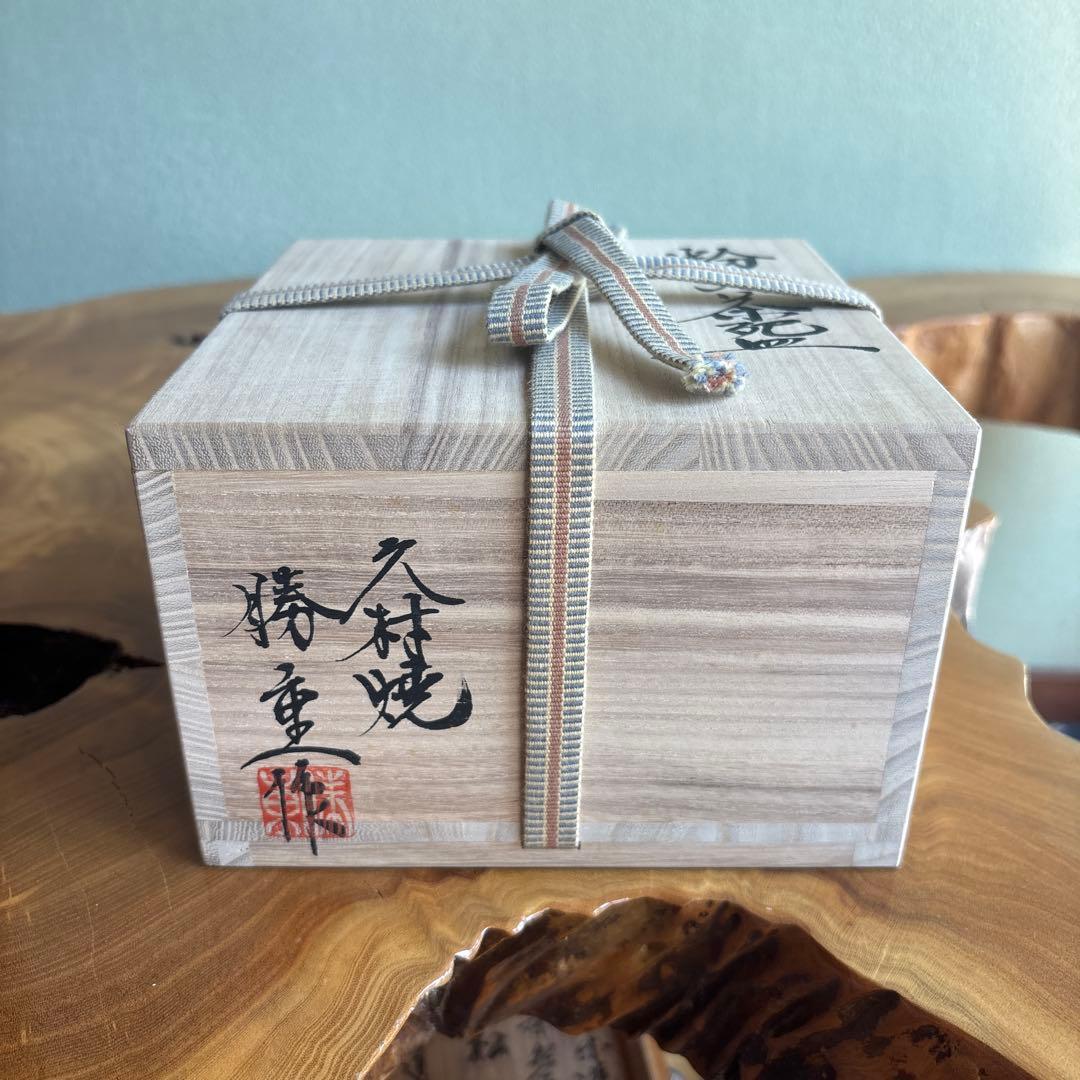
• Box: Signed wooden tomobako, inscribed "粉引茶盌" (Kohiki Chawan), kiln mark "久村焼", artist's seal
• Condition: Excellent, no cracks or chips
🔹 [ CULTURAL & ARTISTIC INSIGHT ]
Kohiki, literally "flour-brushed," names a technique of coating a dark clay body with white slip before glazing — a method that traveled from the Korean peninsula and settled into Japanese tea practice for the quiet contrast it produces between iron-dark clay and soft white surface. Within Hagi-yaki, this contrast pairs with the region's long-standing regard for asymmetry: a glaze pool left to move where it will, ridges from the wheel left unsmoothed, a form that declines to correct itself into symmetry. The bowl does not resolve into a single reading. It changes with the hand that holds it, and with the tea that passes through it over years of use.
🔹 [ DEEP-DIVE COMMENTARY ]
The surname Yanase (柳楽) carries recognition within Hagi pottery circles, a lineage name attached to generations of kiln work in the region. Yanase Katsushige's individual record within that lineage is not yet fully documented in our archive, but the object itself carries the marks of trained hands — controlled slip application, a glaze pour that reads as deliberate restraint rather than accident, a form thrown with confidence at a scale meant for daily tea.
The kohiki process asks for patience before it asks for skill. Slip must be brushed or dipped onto leather-hard clay at the right moisture, thin enough to let the clay's texture show through, thick enough to hold its own white field. Firing then does the rest: the glaze moves across the slip, sometimes pooling, sometimes thinning to near-transparency, leaving a surface that no two firings repeat.
Hagi ware is known among collectors for what is called nanabake — the "seven transformations" — the idea that a Hagi bowl's glaze and surface continue to shift in appearance over years of use, as tea seeps into the clay's porous body and changes its color and sheen. This is not a defect to be prevented but a property to be lived with. A Hagi chawan bought today will not look the same in ten years, and that slow change is part of what collectors of this ware seek out.
Work at kilns like Kubayashi-gama continues this tradition without freezing it in place — each potter finding a personal register within inherited technique. This bowl sits in that continuity: recognizably kohiki, recognizably Hagi, and still its own object.
[ JAPANESE DESCRIPTION / 日本語解説 ]
白い化粧土が、成形時の轆轤目を残したまま、やや黒みを帯びた素地の上を流れる。片側には、olive-grey-greenの釉薬が非対称に溜まり、他の面の柔らかな白地と対比を成す。久林焼にて柳楽勝重氏が手掛けた、粉引の低め広口の茶碗。口縁は大きく開き、鑑賞よりも実用を前提とした佇まい。
🔹 [ 基本情報 ]
• 作家: 柳楽勝重
• 技法: 粉引(化粧土がけ)、萩焼系の釉薬表現
• 時代: 現代
• 産地: 久林焼、萩地方、山口県
• サイズ: 高さ約6.5cm、直径約13.5cm
• 箱: 共箱(「粉引茶盌」銘、「久村焼」印、作家印)
• 状態: 良好、割れ・欠けなし
🔹 [ 文化的背景と鑑賞のポイント ]
粉引とは、黒みを帯びた素地に白い化粧土を掛けてから施釉する技法で、朝鮮半島より伝わり、日本の茶の湯の中でその静かな対比によって定着した。萩焼においては、この対比が非対称の美意識と結びつく——釉薬が思うままに流れるのに任せ、轆轤目をあえて残し、左右対称へと整えることを避ける。この茶碗は一度の見方に収まらない。手に取るたびに、また長年の使用を経るごとに、表情を変えていく。
🔹 [ 深掘り解説 ]
柳楽という姓は、萩焼の窯元筋において認識される名であり、地域における陶芸の系譜に連なる。柳楽勝重氏個人の詳細な経歴は当アーカイブでは未だ十分に把握できていないが、この器そのものが、訓練を積んだ手の痕跡を伝えている——制御された化粧土の掛け方、偶然ではなく意図された抑制を感じさせる釉薬の流れ、日常の茶に見合う大きさで自信を持って轆轤挽きされた形。
粉引の工程は、技術以前にまず忍耐を要する。化粧土は生乾きの素地に、適切な水分量のもとで刷毛掛けまたは浸し掛けされる——素地の質感を透かせるほど薄く、白い層を保てるほど厚く。あとは焼成が仕上げる。釉薬は化粧土の上を移動し、時に溜まり、時にほとんど透明に薄れ、二度と同じ焼き上がりを繰り返さない表情を残す。
萩焼は「七化け」と呼ばれる現象で知られる。長年の使用を通じて、茶が多孔質の素地に染み込み、釉薬や表面の見え方が少しずつ変化していくという考え方である。これは防ぐべき欠点ではなく、共に生きるべき性質とされる。今日購入された萩の茶碗が十年後に同じ表情をしているとは限らない。その緩やかな変化こそ、この焼き物を求める人々が見出す価値の一部である。
久林焼のような窯での仕事は、この伝統を固定化することなく継承している——それぞれの作り手が、受け継がれた技法の中に自らの調子を見出す。この茶碗もまたその連続性の中にある。粉引であることも、萩であることも紛れもなく、それでいて独自の一器である。
🔹 [ SHIPPING & PACKAGING ]
• Dispatch: Within 1-6 business days
• Carrier: Japan Post EMS / UPS / FedEx (with tracking)
• Packaging: Carefully wrapped with protective materials
Quantity
Couldn't load pickup availability
Low stock: 1 left
View full details