1
/
of
10
Kohiki Chawan by Onaga Shunji — White Slip Crackle Glaze Matcha Tea Bowl, Signed Box
Kohiki Chawan by Onaga Shunji — White Slip Crackle Glaze Matcha Tea Bowl, Signed Box
Regular price
Dhs. 495.00 AED
Regular price
Sale price
Dhs. 495.00 AED
Taxes included.
Shipping calculated at checkout.
A kohiki matcha tea bowl by Onaga Shunji — Japanese white slip pottery chawan with dense crackle glaze network, clean conical silhouette, signed wooden box. A kohiki tea bowl of quiet structural authority, where the glaze speaks in thousands of fine lines rather than color.
🔹 [ BASIC DETAILS ]
• Artist: Onaga Shunji (大長俊二)
• Technique: Kohiki (粉引 — white slip over stoneware body, transparent glaze over)
• Era: Contemporary
• Origin: Japan
• Dimensions: Diameter approx. 13.2 cm, Height approx. 7.6 cm
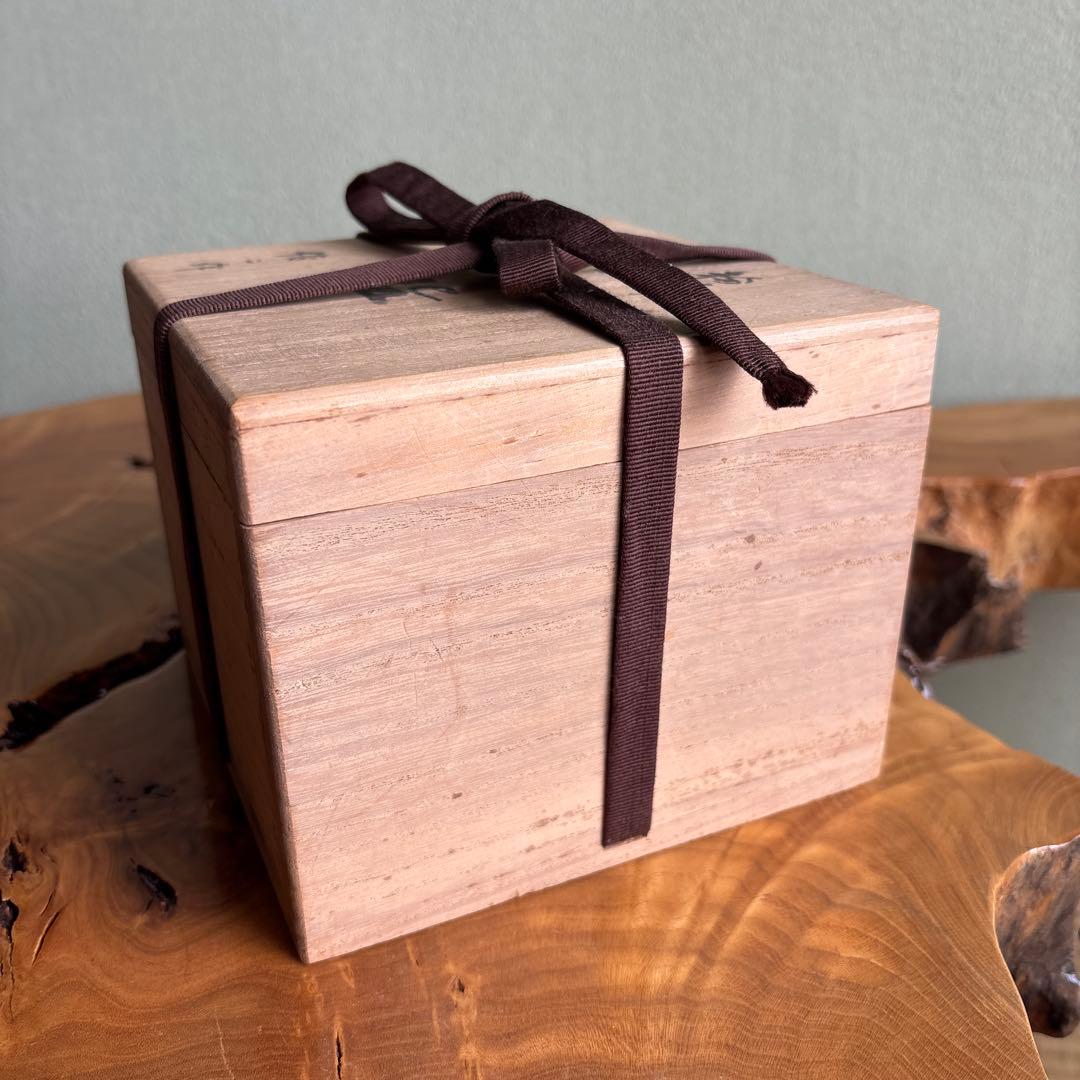
• Box: Signed wooden box (tomobako) inscribed 粉引茶碗 / 俊二作
• Condition: Very good; crackle (kairagi) is inherent to the kohiki technique
🔹 [ CULTURAL & ARTISTIC INSIGHT ]
Kohiki is the technique of covering a dark or red stoneware body with a thick white slip, then applying a transparent or semi-transparent glaze over the slip. The result is a surface that appears white or gray-white at a distance but reveals extraordinary depth on close inspection — the dark clay body showing through translucent slip where it is thinnest, the glaze crackle (kairagi) mapping the differential contraction between slip and glaze during cooling. The bowl before us is a large-mouthed, upright kohiki chawan — the open conical form associated with summer use (natsu chawan), designed to allow the matcha to cool slightly as it is prepared. The white of the slip is not the white of purity but of fog, of morning light before color arrives.
🔹 [ DEEP-DIVE COMMENTARY ]
The outer surface presents a landscape of dense crackle — fine, dark lines running in all directions across the white-gray slip, with occasional larger fractures where the slip separated more decisively from the clay beneath. This kairagi pattern is prized in tea ceramics; it represents age and use, and pieces with well-developed kairagi are considered to have acquired character through time. In a new piece such as this, the crackle is a structural feature of the technique rather than the accumulation of decades — but the effect is identical visually.
The interior of the bowl — seen in direct overhead view — shows an extraordinarily even and fine kairagi network. The glaze pools very slightly at the base, creating a subtle bowl-within-a-bowl effect. The color of the interior is a pure cool white with a very faint celadon tint, which matcha will transform completely when tea is present.
The form is notably large for a matcha bowl: 13.2 cm in diameter allows a wide whisking area. The silhouette is a clean cone — steady and calm. The foot ring is modest, sitting the bowl close to the mat. Onaga Shunji works in a tradition that honors Korean yi-dynasty kohiki forms as its antecedents while remaining fully Japanese in sensibility — the whiteness is not borrowed nostalgia but active authorship.
[ JAPANESE DESCRIPTION / 日本語解説 ]
🔹 [ 基本情報 ]
• 作者:大長俊二
• 技法:粉引(赤土または鉄土に白化粧土、透明釉掛け)
• 時代:現代
• 産地:日本
• 寸法:直径約13.2cm、高さ約7.6cm
• 箱:俊二作書付の共箱
• 状態:非常に良好。貫入(鎧)は粉引の特性です。
🔹 [ 文化・芸術的考察 ]
粉引の白は、白磁の白とは異なる。鉄土の上に白化粧を施し、その上から釉薬をかけた粉引の肌は、距離を置けば霞のような白さだが、近づくと無数の貫入線が地図のように広がっている。この茶碗の細密な鎧(かいらぎ)は、焼成後の冷却過程で化粧土と釉薬が異なる速度で収縮した記録だ。
🔹 [ 詳細解説 ]
口径13.2cmの大きめの碗形は、夏茶碗の趣を持つ。広い茶溜まりは茶筅を振りやすく、抹茶が適度に冷める開口部を持つ。外面は細かい貫入線が全面を覆い、時に大きな亀裂が加わって変化を見せる。内面は極めて均一な白灰色で、わずかに青みを帯びた透明釉が貫入と相まって深みを作る。高台は低く、茶碗を安定させている。大長俊二の粉引は朝鮮李朝の粉引碗を精神的な先行者としながら、日本の茶の美意識の中で自立した存在感を示す。
🔹 [ SHIPPING & PACKAGING ]
• Dispatch: Within 1-6 business days
• Carrier: Japan Post EMS / UPS (with tracking)
• Packaging: Carefully wrapped with protective materials
🔹 [ BASIC DETAILS ]
• Artist: Onaga Shunji (大長俊二)
• Technique: Kohiki (粉引 — white slip over stoneware body, transparent glaze over)
• Era: Contemporary
• Origin: Japan
• Dimensions: Diameter approx. 13.2 cm, Height approx. 7.6 cm
• Box: Signed wooden box (tomobako) inscribed 粉引茶碗 / 俊二作
• Condition: Very good; crackle (kairagi) is inherent to the kohiki technique
🔹 [ CULTURAL & ARTISTIC INSIGHT ]
Kohiki is the technique of covering a dark or red stoneware body with a thick white slip, then applying a transparent or semi-transparent glaze over the slip. The result is a surface that appears white or gray-white at a distance but reveals extraordinary depth on close inspection — the dark clay body showing through translucent slip where it is thinnest, the glaze crackle (kairagi) mapping the differential contraction between slip and glaze during cooling. The bowl before us is a large-mouthed, upright kohiki chawan — the open conical form associated with summer use (natsu chawan), designed to allow the matcha to cool slightly as it is prepared. The white of the slip is not the white of purity but of fog, of morning light before color arrives.
🔹 [ DEEP-DIVE COMMENTARY ]
The outer surface presents a landscape of dense crackle — fine, dark lines running in all directions across the white-gray slip, with occasional larger fractures where the slip separated more decisively from the clay beneath. This kairagi pattern is prized in tea ceramics; it represents age and use, and pieces with well-developed kairagi are considered to have acquired character through time. In a new piece such as this, the crackle is a structural feature of the technique rather than the accumulation of decades — but the effect is identical visually.
The interior of the bowl — seen in direct overhead view — shows an extraordinarily even and fine kairagi network. The glaze pools very slightly at the base, creating a subtle bowl-within-a-bowl effect. The color of the interior is a pure cool white with a very faint celadon tint, which matcha will transform completely when tea is present.
The form is notably large for a matcha bowl: 13.2 cm in diameter allows a wide whisking area. The silhouette is a clean cone — steady and calm. The foot ring is modest, sitting the bowl close to the mat. Onaga Shunji works in a tradition that honors Korean yi-dynasty kohiki forms as its antecedents while remaining fully Japanese in sensibility — the whiteness is not borrowed nostalgia but active authorship.
[ JAPANESE DESCRIPTION / 日本語解説 ]
🔹 [ 基本情報 ]
• 作者:大長俊二
• 技法:粉引(赤土または鉄土に白化粧土、透明釉掛け)
• 時代:現代
• 産地:日本
• 寸法:直径約13.2cm、高さ約7.6cm
• 箱:俊二作書付の共箱
• 状態:非常に良好。貫入(鎧)は粉引の特性です。
🔹 [ 文化・芸術的考察 ]
粉引の白は、白磁の白とは異なる。鉄土の上に白化粧を施し、その上から釉薬をかけた粉引の肌は、距離を置けば霞のような白さだが、近づくと無数の貫入線が地図のように広がっている。この茶碗の細密な鎧(かいらぎ)は、焼成後の冷却過程で化粧土と釉薬が異なる速度で収縮した記録だ。
🔹 [ 詳細解説 ]
口径13.2cmの大きめの碗形は、夏茶碗の趣を持つ。広い茶溜まりは茶筅を振りやすく、抹茶が適度に冷める開口部を持つ。外面は細かい貫入線が全面を覆い、時に大きな亀裂が加わって変化を見せる。内面は極めて均一な白灰色で、わずかに青みを帯びた透明釉が貫入と相まって深みを作る。高台は低く、茶碗を安定させている。大長俊二の粉引は朝鮮李朝の粉引碗を精神的な先行者としながら、日本の茶の美意識の中で自立した存在感を示す。
🔹 [ SHIPPING & PACKAGING ]
• Dispatch: Within 1-6 business days
• Carrier: Japan Post EMS / UPS (with tracking)
• Packaging: Carefully wrapped with protective materials
Quantity
Couldn't load pickup availability
Low stock: 1 left
View full details