1
/
of
8
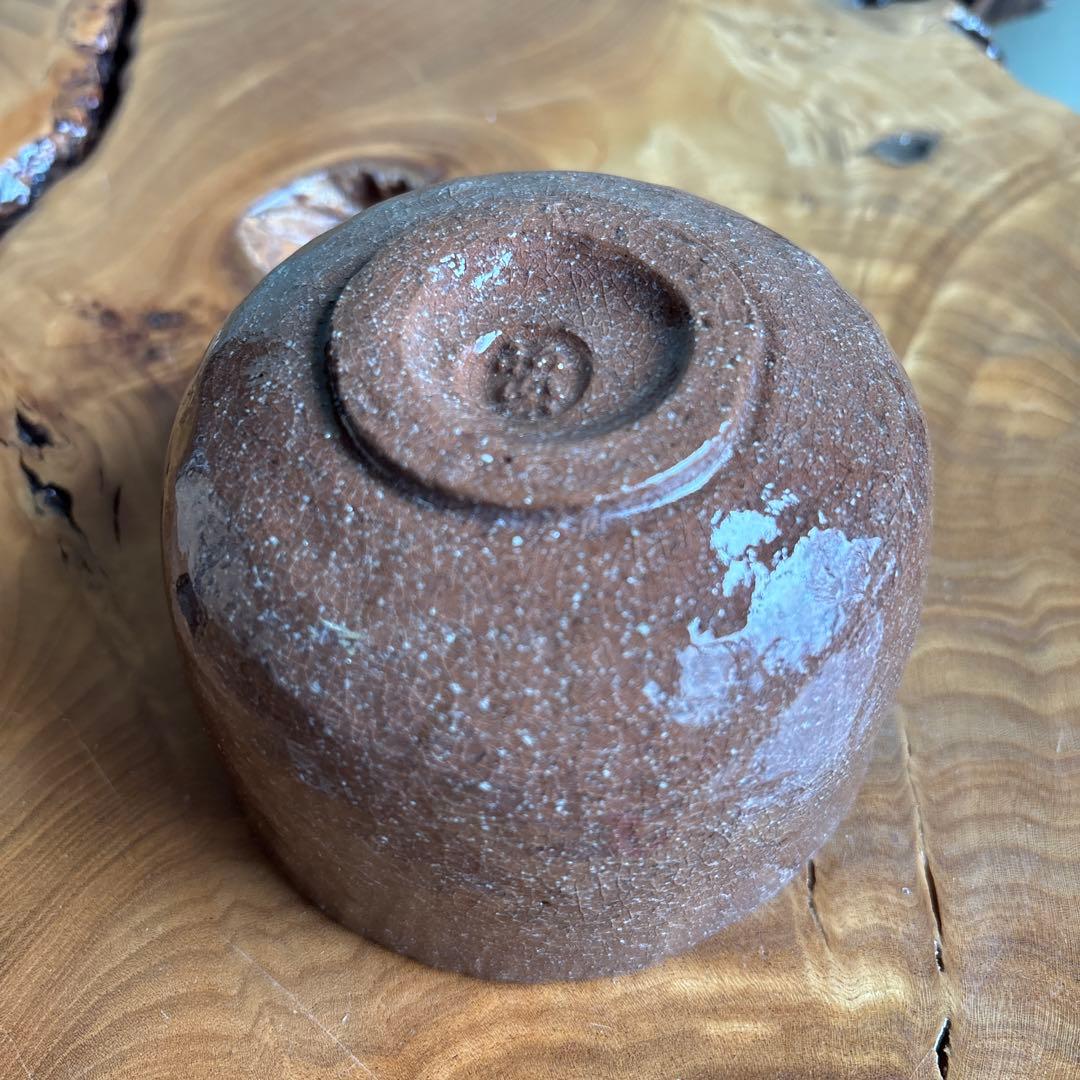
Koetsu Copy Shoji Matcha Bowl Aka Raku by Sasaki Shoraku Kyoto Tomobako
Koetsu Copy Shoji Matcha Bowl Aka Raku by Sasaki Shoraku Kyoto Tomobako
Regular price
Dhs. 1,076.00 AED
Regular price
Sale price
Dhs. 1,076.00 AED
Taxes included.
Shipping calculated at checkout.
A faithful utsushi of Hon'ami Koetsu's named bowl "Shoji" — rendered in red Raku clay by Sasaki Shoraku, one of Kyoto's most recognized masters of Koetsu-style reproductions. With tomobako. Aka raku chawan tea bowl koetsu utsushi shoraku raku ware kyoto matcha chado tea ceremony
🔹 [ BASIC DETAILS ]
- Type: Matcha chawan (tea bowl)
- Style: 光悦写し / Koetsu-utsushi (faithful reproduction of Koetsu's named bowl 「障子 / Shoji」)
- Maker: 佐々木昭楽 (Sasaki Shoraku), Kameoka, Kyoto
- Technique: Aka Raku (red-glazed low-fired hand-built earthenware)
- Dimensions: Diameter approx. 10.7 cm / Height approx. 7.4 cm
- Condition: Very good. No chips, no repairs. Interior clean and serviceable.
- Box: Tomobako (original signed wooden box) included
[ 基本情報 / JAPANESE ]
- 種別:抹茶碗
- 様式:光悦写し「障子」
- 作者:佐々木昭楽造(京都・亀岡)
- 技法:赤楽焼(低温還元・手捏ね)
- サイズ:直径約10.7cm/高さ約7.4cm
- 状態:良好。欠け・金継ぎなし。内側も清潔。
- 箱:共箱付き
---
🔹 [ CULTURAL & ARTISTIC INSIGHT ]
Hon'ami Koetsu (1558–1637) occupies a singular position in Japanese cultural history. Painter, calligrapher, lacquer designer, swordsmith's assessor, and founder of the Rinpa school of decorative arts — Koetsu worked across every medium that Edo-period Japan considered elegant. His tea bowls are among his most enduring expressions: a small number of named pieces, each carrying a poetic title, each shaped not by technical ambition but by an almost unreasonable stillness.
「障子 / Shoji」 is one of the meibutsu (famous named pieces) attributed to Koetsu. The name evokes the paper-and-wood sliding panels that define the interior architecture of a traditional Japanese room — objects that divide space without sealing it, that permit light without explaining it. In the Shoji bowl, Koetsu rendered that quality in clay: a form that holds the eye without commanding it.
The tradition of utsushi — faithful reproduction of a historical masterpiece — is not imitation. It is apprenticeship with the dead. In Japanese craft culture, making an utsushi demands that the maker absorb not only the form but the intention behind it. A well-executed utsushi is a living document.
*The shoji panel does not block the light. It holds it, briefly, before letting it through.*
[ 文化・芸術的背景 / JAPANESE ]
本阿弥光悦(1558–1637)は、絵画・書・蒔絵・刀剣鑑定・琳派創始と、江戸初期の日本文化を横断した稀有な人物です。その光悦が少数残した茶碗の中でも、「障子」は詩的な命名と静謐なフォルムで知られる名碗のひとつ。「障子」という名が示すのは、光を透かし空間を分かつ建具——遮断でも開放でもなく、ただ佇む存在感です。その質感を赤楽の土に移したのが、この写しです。
写しは模倣ではありません。先人の意図を身体で学ぶ、日本の職人文化が選んできた修行の形です。
---
🔹 [ DEEP-DIVE COMMENTARY ]
Koetsu's tea bowls occupy an anomalous position in ceramics history. He was not a potter by lineage — the Raku tradition belonged to the Raku family, who have passed their name and their kiln from father to son since Chojiro in the sixteenth century. Yet Koetsu borrowed their kiln, their low-fire technique, and their philosophy of hand-building without a wheel, and produced bowls that scholars continue to rank alongside Chojiro's own masterworks. His relationship to Raku was that of a supremely cultivated guest who understood the house better than most of its inhabitants.
Sasaki Shoraku operates within a different but equally serious tradition: the specialist utsushi-maker. While many Kyoto potters occasionally reproduce historical bowls, Shoraku has built an entire body of work around Koetsu and Chojiro reproductions. He works in Kameoka, in the mountains west of Kyoto, and his understanding of Koetsu's hand — the specific pressure applied to the clay wall, the subtle asymmetry of the mouth rim, the way the foot ring sits just slightly off-level — is considered authoritative by collectors and tea teachers alike. His pieces appear in collections, in teaching lineages, and in the hands of practitioners who wish to hold history rather than merely read about it.
The Shoji bowl's defining feature is its restraint in surface treatment. Unlike some Koetsu bowls that display dramatic deformation or bold finger-press marks, Shoji is quieter — a form that earns its name through subtlety. The slight angular interruption of the otherwise round wall, visible in this Shoraku rendering as a gentle vertical crease running from rim toward foot, is understood to reference the structural joint where shoji panels meet. It is not an ornamental decision. It is a structural metaphor made permanent in fired clay.
In practice, aka raku — red Raku, fired with an oxidizing atmosphere at low temperature — produces a surface that is warm to the touch, slightly rough at the lip, and almost cork-like in its thermal insulation. Matcha whisked in an aka raku bowl stays hot longer than in porcelain or stoneware. The bowl becomes part of the ritual not as backdrop but as instrument. Koetsu understood this. Shoraku, through decades of practice, has absorbed it.
For collectors new to utsushi, the legitimate question is always: why would one collect a reproduction rather than an original? The answer Japanese culture has given consistently for four hundred years is this — the original Koetsu Shoji bowl rests in a museum, untouched, unwhisked-into, unavailable. The Shoraku utsushi can be held, heated, used in the exact ritual for which Koetsu made his prototype. It is not a substitute for the original. It is the original's continued life.
[ 深層解説 / JAPANESE ]
光悦の茶碗が陶芸史において特異な位置を占めるのは、彼が楽家の出身ではなかったからです。楽の窯と技法を借りながら、楽家の当主たちと同等か、それ以上と評価される作品を残した。その越境性こそが光悦茶碗の本質です。
佐々木昭楽はその光悦写し・長次郎写しの第一人者として知られます。亀岡(京都西部の山間)に拠点を置き、光悦の手の圧力、口縁のわずかな非対称、高台のわずかな傾き——そうした細部を身体で習得した作家として、茶の世界では高い評価を受けています。
「障子」の特徴は、その静けさにあります。劇的な変形や大胆な指跡ではなく、壁面をそっと垂直に走るわずかな稜線——障子の組子が交わる構造的な節をそのまま土に移したような表現。装飾ではなく、建築の比喩を永遠に焼き固めた形です。
赤楽は低温酸化焼成で生まれる温かみのある素地で、口当たりがやわらかく、断熱性が高い。抹茶を点てると他の器より長く温かさが保たれます。道具としての茶碗——それが光悦の意図であり、昭楽の写しが今日も茶会の場で使われる理由です。
「なぜ写しを収集するのか」——日本文化が四百年かけて出してきた答えは明快です。光悦の本歌は美術館の中で眠っている。昭楽の写しは、あなたの手の中で点前ができる。本歌の代替ではなく、本歌の継続した命です。
---
🔹 [ 日本語解説 ]
【光悦写し「障子」佐々木昭楽造 赤楽抹茶碗 共箱】
本阿弥光悦の名碗「障子」を、光悦写しの第一人者・佐々木昭楽が赤楽で再現した一碗。口縁に走るわずかな稜線が障子の框を想起させる静謐な造形。共箱付き。実用・鑑賞いずれにも応える茶人のための写し碗。
・直径約10.7cm、高さ約7.4cm。赤楽焼・手捏ね。状態良好、欠け・修理歴なし。共箱(作者銘入り)付き。東京より発送、EMS/DHL対応。
🔹 [ SHIPPING & PACKAGING ]
• Dispatch: Within 1-6 business days
• Carrier: Japan Post EMS / UPS (with tracking)
• Packaging: Carefully wrapped with protective materials
🔹 [ BASIC DETAILS ]
- Type: Matcha chawan (tea bowl)
- Style: 光悦写し / Koetsu-utsushi (faithful reproduction of Koetsu's named bowl 「障子 / Shoji」)
- Maker: 佐々木昭楽 (Sasaki Shoraku), Kameoka, Kyoto
- Technique: Aka Raku (red-glazed low-fired hand-built earthenware)
- Dimensions: Diameter approx. 10.7 cm / Height approx. 7.4 cm
- Condition: Very good. No chips, no repairs. Interior clean and serviceable.
- Box: Tomobako (original signed wooden box) included
[ 基本情報 / JAPANESE ]
- 種別:抹茶碗
- 様式:光悦写し「障子」
- 作者:佐々木昭楽造(京都・亀岡)
- 技法:赤楽焼(低温還元・手捏ね)
- サイズ:直径約10.7cm/高さ約7.4cm
- 状態:良好。欠け・金継ぎなし。内側も清潔。
- 箱:共箱付き
---
🔹 [ CULTURAL & ARTISTIC INSIGHT ]
Hon'ami Koetsu (1558–1637) occupies a singular position in Japanese cultural history. Painter, calligrapher, lacquer designer, swordsmith's assessor, and founder of the Rinpa school of decorative arts — Koetsu worked across every medium that Edo-period Japan considered elegant. His tea bowls are among his most enduring expressions: a small number of named pieces, each carrying a poetic title, each shaped not by technical ambition but by an almost unreasonable stillness.
「障子 / Shoji」 is one of the meibutsu (famous named pieces) attributed to Koetsu. The name evokes the paper-and-wood sliding panels that define the interior architecture of a traditional Japanese room — objects that divide space without sealing it, that permit light without explaining it. In the Shoji bowl, Koetsu rendered that quality in clay: a form that holds the eye without commanding it.
The tradition of utsushi — faithful reproduction of a historical masterpiece — is not imitation. It is apprenticeship with the dead. In Japanese craft culture, making an utsushi demands that the maker absorb not only the form but the intention behind it. A well-executed utsushi is a living document.
*The shoji panel does not block the light. It holds it, briefly, before letting it through.*
[ 文化・芸術的背景 / JAPANESE ]
本阿弥光悦(1558–1637)は、絵画・書・蒔絵・刀剣鑑定・琳派創始と、江戸初期の日本文化を横断した稀有な人物です。その光悦が少数残した茶碗の中でも、「障子」は詩的な命名と静謐なフォルムで知られる名碗のひとつ。「障子」という名が示すのは、光を透かし空間を分かつ建具——遮断でも開放でもなく、ただ佇む存在感です。その質感を赤楽の土に移したのが、この写しです。
写しは模倣ではありません。先人の意図を身体で学ぶ、日本の職人文化が選んできた修行の形です。
---
🔹 [ DEEP-DIVE COMMENTARY ]
Koetsu's tea bowls occupy an anomalous position in ceramics history. He was not a potter by lineage — the Raku tradition belonged to the Raku family, who have passed their name and their kiln from father to son since Chojiro in the sixteenth century. Yet Koetsu borrowed their kiln, their low-fire technique, and their philosophy of hand-building without a wheel, and produced bowls that scholars continue to rank alongside Chojiro's own masterworks. His relationship to Raku was that of a supremely cultivated guest who understood the house better than most of its inhabitants.
Sasaki Shoraku operates within a different but equally serious tradition: the specialist utsushi-maker. While many Kyoto potters occasionally reproduce historical bowls, Shoraku has built an entire body of work around Koetsu and Chojiro reproductions. He works in Kameoka, in the mountains west of Kyoto, and his understanding of Koetsu's hand — the specific pressure applied to the clay wall, the subtle asymmetry of the mouth rim, the way the foot ring sits just slightly off-level — is considered authoritative by collectors and tea teachers alike. His pieces appear in collections, in teaching lineages, and in the hands of practitioners who wish to hold history rather than merely read about it.
The Shoji bowl's defining feature is its restraint in surface treatment. Unlike some Koetsu bowls that display dramatic deformation or bold finger-press marks, Shoji is quieter — a form that earns its name through subtlety. The slight angular interruption of the otherwise round wall, visible in this Shoraku rendering as a gentle vertical crease running from rim toward foot, is understood to reference the structural joint where shoji panels meet. It is not an ornamental decision. It is a structural metaphor made permanent in fired clay.
In practice, aka raku — red Raku, fired with an oxidizing atmosphere at low temperature — produces a surface that is warm to the touch, slightly rough at the lip, and almost cork-like in its thermal insulation. Matcha whisked in an aka raku bowl stays hot longer than in porcelain or stoneware. The bowl becomes part of the ritual not as backdrop but as instrument. Koetsu understood this. Shoraku, through decades of practice, has absorbed it.
For collectors new to utsushi, the legitimate question is always: why would one collect a reproduction rather than an original? The answer Japanese culture has given consistently for four hundred years is this — the original Koetsu Shoji bowl rests in a museum, untouched, unwhisked-into, unavailable. The Shoraku utsushi can be held, heated, used in the exact ritual for which Koetsu made his prototype. It is not a substitute for the original. It is the original's continued life.
[ 深層解説 / JAPANESE ]
光悦の茶碗が陶芸史において特異な位置を占めるのは、彼が楽家の出身ではなかったからです。楽の窯と技法を借りながら、楽家の当主たちと同等か、それ以上と評価される作品を残した。その越境性こそが光悦茶碗の本質です。
佐々木昭楽はその光悦写し・長次郎写しの第一人者として知られます。亀岡(京都西部の山間)に拠点を置き、光悦の手の圧力、口縁のわずかな非対称、高台のわずかな傾き——そうした細部を身体で習得した作家として、茶の世界では高い評価を受けています。
「障子」の特徴は、その静けさにあります。劇的な変形や大胆な指跡ではなく、壁面をそっと垂直に走るわずかな稜線——障子の組子が交わる構造的な節をそのまま土に移したような表現。装飾ではなく、建築の比喩を永遠に焼き固めた形です。
赤楽は低温酸化焼成で生まれる温かみのある素地で、口当たりがやわらかく、断熱性が高い。抹茶を点てると他の器より長く温かさが保たれます。道具としての茶碗——それが光悦の意図であり、昭楽の写しが今日も茶会の場で使われる理由です。
「なぜ写しを収集するのか」——日本文化が四百年かけて出してきた答えは明快です。光悦の本歌は美術館の中で眠っている。昭楽の写しは、あなたの手の中で点前ができる。本歌の代替ではなく、本歌の継続した命です。
---
🔹 [ 日本語解説 ]
【光悦写し「障子」佐々木昭楽造 赤楽抹茶碗 共箱】
本阿弥光悦の名碗「障子」を、光悦写しの第一人者・佐々木昭楽が赤楽で再現した一碗。口縁に走るわずかな稜線が障子の框を想起させる静謐な造形。共箱付き。実用・鑑賞いずれにも応える茶人のための写し碗。
・直径約10.7cm、高さ約7.4cm。赤楽焼・手捏ね。状態良好、欠け・修理歴なし。共箱(作者銘入り)付き。東京より発送、EMS/DHL対応。
🔹 [ SHIPPING & PACKAGING ]
• Dispatch: Within 1-6 business days
• Carrier: Japan Post EMS / UPS (with tracking)
• Packaging: Carefully wrapped with protective materials
Quantity
Couldn't load pickup availability
Low stock: 1 left
View full details