1
/
of
13
Ko-Imari Takokarakusa Haisen Footed Bowl | Sometsuke Blue White Arabesque Porcelain
Ko-Imari Takokarakusa Haisen Footed Bowl | Sometsuke Blue White Arabesque Porcelain
Regular price
Dhs. 617.00 AED
Regular price
Sale price
Dhs. 617.00 AED
Taxes included.
Shipping calculated at checkout.
Experience Authentic Ko-Imari Porcelain Art with this Takokarakusa Haisen. This Sometsuke Blue White vessel serves as an Antique Imari Porcelain and Cobalt Arabesque Bowl, featuring Hand Painted Porcelain craftsmanship and a Footed Bowl Japan form — a striking Japanese Blue White piece for any Arita Ware Antique collector seeking Ko-Imari Sometsuke provenance.
🔹 [ Basic Details ]
• Ware: Ko-Imari (古伊万里) — antique Imari porcelain
• Technique: Sometsuke (染付) — cobalt blue underglaze on white porcelain
• Pattern: Takokarakusa (蛸唐草) — octopus arabesque
• Era: 1800s (late Edo period)
• Origin: Arita, Saga Prefecture, Japan
• Dimensions: Height approx. 9.8 cm, Rim diameter approx. 11.7 cm, Base diameter approx. 8 cm
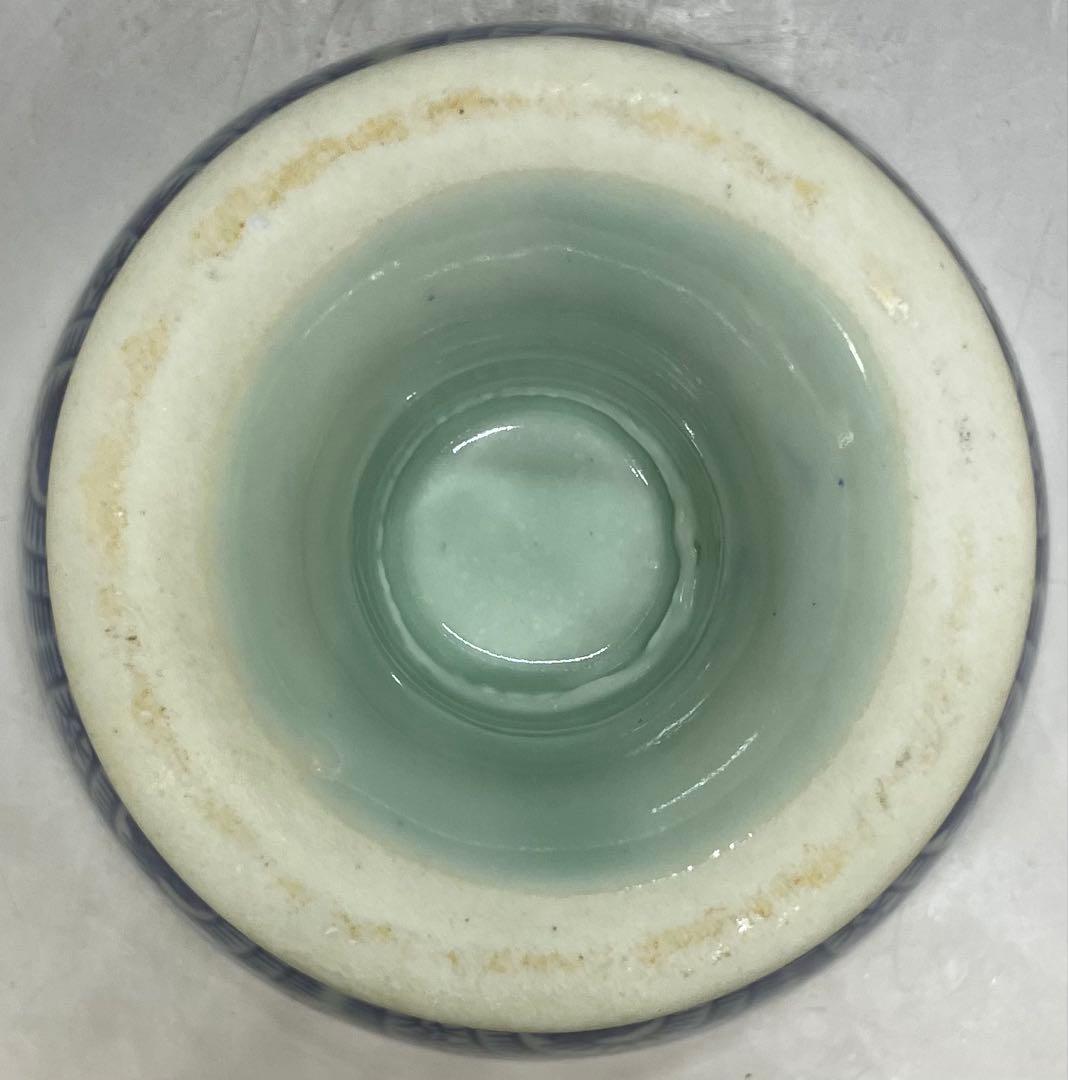
• Condition: Good — cobalt remains vivid, minimal wear
🔹 [ Cultural & Artistic Insight ]
The takokarakusa pattern — spiraling tendrils that earned their name from their resemblance to octopus tentacles — covers every surface of this haisen with obsessive completeness. Bowl, foot, interior, underside: not one square centimeter is left unpainted. Each tendril unfurls from a central medallion containing a chrysanthemum, and between the spirals, small floral motifs fill every remaining space.
The haisen form — a footed bowl originally used for rinsing sake cups during formal drinking ceremonies — elevates the vessel above the table surface, giving the pattern a stage from which to radiate.
"Density is the message. Every tendril declares: nothing here was left to chance."
🔹 [ Deep-Dive Commentary ]
Takokarakusa is among the most recognizable patterns in Ko-Imari porcelain. Its origins trace to the karakusa (arabesque) motifs that traveled the Silk Road from Central Asia through China to Japan, where they were reinterpreted with characteristic Japanese density.
The "tako" (octopus) designation reflects the way the tendrils curl and grip — organic, almost alive. In late Edo period Arita production, this pattern was executed with remarkable consistency across entire services, testament to the workshop system where apprentices spent years mastering the brush control required for these spiraling, interlocking lines.
The footed haisen form is both functional and ceremonial: during formal sake gatherings, cups were rinsed between guests as a gesture of respect. The high foot keeps the bowl's contents visible and the form elegant.
[ JAPANESE DESCRIPTION / 日本語解説 ]
🔹 [ 基本情報 ]
• 焼物:古伊万里
• 技法:染付(コバルト下絵付)
• 文様:蛸唐草文
• 時代:江戸後期(1800年代)
• 産地:佐賀県有田
• 寸法:高さ約9.8cm、口径約11.7cm、底径約8cm
• 状態:良品(コバルト鮮明)
🔹 [ 文化的・芸術的解説 ]
蛸唐草文は古伊万里を代表する文様です。螺旋する蔓が器面を隙間なく覆い、碗・高台・内面・裏面のすべてに筆が通っています。盃洗は正式な酒席で杯を洗うための器であり、高台付きの形が卓上で文様を際立たせます。有田の工房制度のもと、この密度の筆致を全面に展開する技術が脈々と受け継がれました。
🔹 [ SHIPPING & PACKAGING ]
• Dispatch: Within 1-6 business days
• Carrier: Japan Post EMS / UPS (with tracking)
• Packaging: Carefully wrapped with protective materials
🔹 [ Basic Details ]
• Ware: Ko-Imari (古伊万里) — antique Imari porcelain
• Technique: Sometsuke (染付) — cobalt blue underglaze on white porcelain
• Pattern: Takokarakusa (蛸唐草) — octopus arabesque
• Era: 1800s (late Edo period)
• Origin: Arita, Saga Prefecture, Japan
• Dimensions: Height approx. 9.8 cm, Rim diameter approx. 11.7 cm, Base diameter approx. 8 cm
• Condition: Good — cobalt remains vivid, minimal wear
🔹 [ Cultural & Artistic Insight ]
The takokarakusa pattern — spiraling tendrils that earned their name from their resemblance to octopus tentacles — covers every surface of this haisen with obsessive completeness. Bowl, foot, interior, underside: not one square centimeter is left unpainted. Each tendril unfurls from a central medallion containing a chrysanthemum, and between the spirals, small floral motifs fill every remaining space.
The haisen form — a footed bowl originally used for rinsing sake cups during formal drinking ceremonies — elevates the vessel above the table surface, giving the pattern a stage from which to radiate.
"Density is the message. Every tendril declares: nothing here was left to chance."
🔹 [ Deep-Dive Commentary ]
Takokarakusa is among the most recognizable patterns in Ko-Imari porcelain. Its origins trace to the karakusa (arabesque) motifs that traveled the Silk Road from Central Asia through China to Japan, where they were reinterpreted with characteristic Japanese density.
The "tako" (octopus) designation reflects the way the tendrils curl and grip — organic, almost alive. In late Edo period Arita production, this pattern was executed with remarkable consistency across entire services, testament to the workshop system where apprentices spent years mastering the brush control required for these spiraling, interlocking lines.
The footed haisen form is both functional and ceremonial: during formal sake gatherings, cups were rinsed between guests as a gesture of respect. The high foot keeps the bowl's contents visible and the form elegant.
[ JAPANESE DESCRIPTION / 日本語解説 ]
🔹 [ 基本情報 ]
• 焼物:古伊万里
• 技法:染付(コバルト下絵付)
• 文様:蛸唐草文
• 時代:江戸後期(1800年代)
• 産地:佐賀県有田
• 寸法:高さ約9.8cm、口径約11.7cm、底径約8cm
• 状態:良品(コバルト鮮明)
🔹 [ 文化的・芸術的解説 ]
蛸唐草文は古伊万里を代表する文様です。螺旋する蔓が器面を隙間なく覆い、碗・高台・内面・裏面のすべてに筆が通っています。盃洗は正式な酒席で杯を洗うための器であり、高台付きの形が卓上で文様を際立たせます。有田の工房制度のもと、この密度の筆致を全面に展開する技術が脈々と受け継がれました。
🔹 [ SHIPPING & PACKAGING ]
• Dispatch: Within 1-6 business days
• Carrier: Japan Post EMS / UPS (with tracking)
• Packaging: Carefully wrapped with protective materials
Quantity
Couldn't load pickup availability
Low stock: 1 left
View full details