1
/
of
14
Ko-Imari Sometsuke Haisen Pedestal Bowl | Edo Period Blue and White Porcelain
Regular price
Dhs. 640.00 AED
Regular price
Sale price
Dhs. 640.00 AED
Taxes included.
Shipping calculated at checkout.
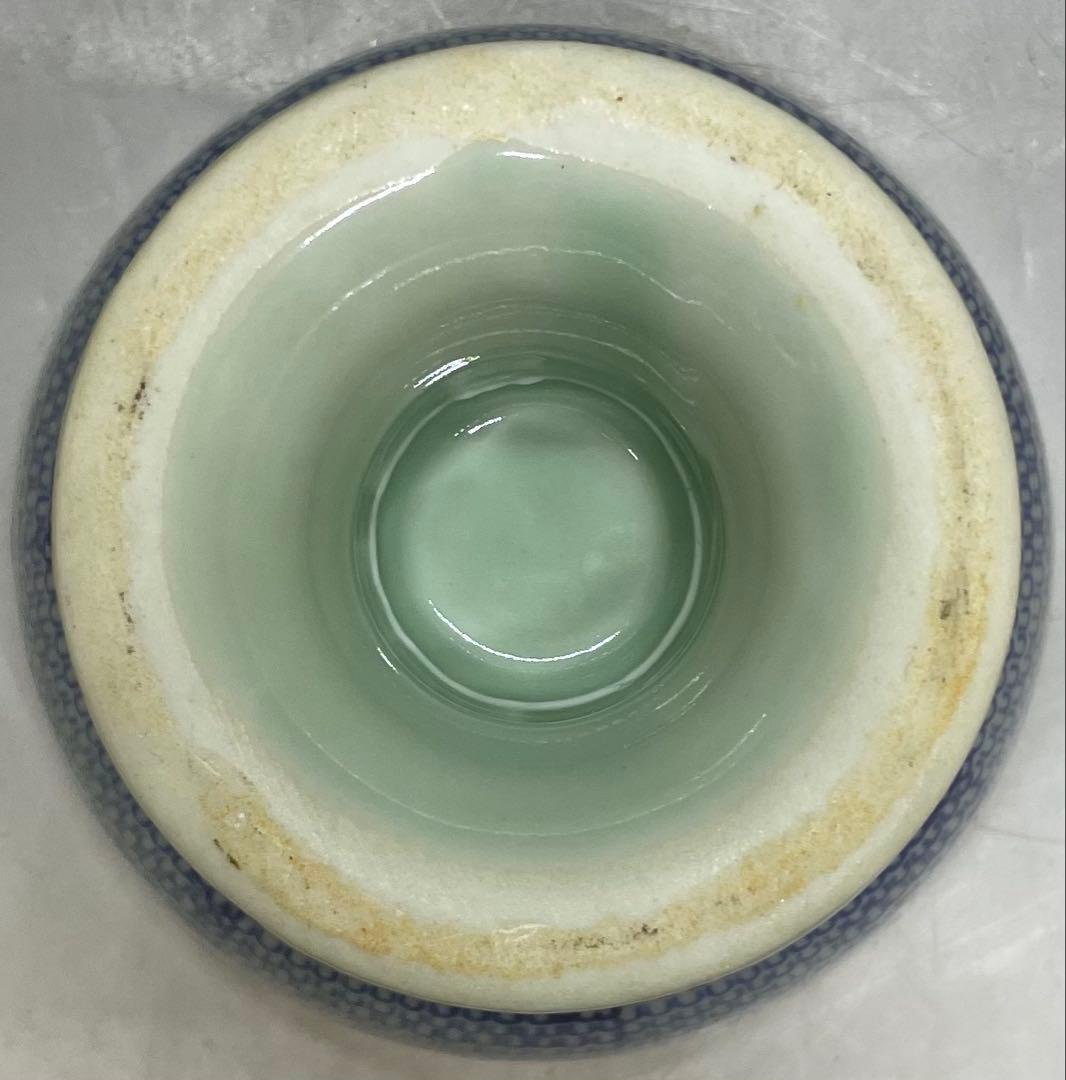
Experience Authentic Japanese Porcelain Art with this Ko Imari Sometsuke bowl. This Edo Blue White Porcelain serves as a Japanese Haisen Bowl and Antique Imari Pedestal, featuring an All Over Imari Pattern of cobalt blue on white — an essential Japanese Cup Washer for any Blue White Ceramic Japan collector seeking Imari Porcelain Antique character with Edo Period Ceramics provenance.
🔹 [ Basic Details ]
• Ware: Ko-Imari (古伊万里), sometsuke (染付 — cobalt blue underglaze)
• Technique: Hand-painted cobalt blue on white porcelain
• Era: Edo Period (1800s)
• Origin: Arita, Saga Prefecture, Japan
• Dimensions: Height approx. 9.8 cm, Rim diameter approx. 11.7 cm, Base diameter approx. 7.9 cm
• Condition: Good for age — consistent with Edo-period Ko-Imari character
🔹 [ Cultural & Artistic Insight ]
The haisen — cup washer — served a specific role at Edo-period drinking gatherings: guests rinsed their sake cups between rounds. The form required both depth and a pedestal to elevate the water above the table surface. This piece fulfills both with an all-over pattern that refuses to leave any surface undecorated.
Small arching waves and geometric fret motifs cover the exterior walls, the pedestal stem, the interior, and the base. The effect is textile-like — a surface so fully inhabited that it asks to be read slowly. At center, a medallion anchors the composition.
"Every surface speaks. The brush stopped nowhere."
🔹 [ Deep-Dive Commentary ]
Ko-Imari sometsuke represents the blue-and-white tradition of Arita porcelain before the later polychrome innovations. The cobalt blue pigment, imported from China and later produced domestically, was applied directly to the raw porcelain body before glazing and firing.
The all-over decorative approach visible here — where pattern covers every available surface including the foot ring — is characteristic of a specific Edo-period taste for density and completeness. Each small arch motif is painted individually, hundreds of them covering the bowl in concentric registers.
The pedestal form (takadai) elevates the bowl's contents, creating a visual hierarchy on the table. As a haisen, this piece served both functional and performative roles — the act of rinsing one's cup between rounds of sake was itself a gesture of refinement.
[ JAPANESE DESCRIPTION / 日本語解説 ]
🔹 [ 基本情報 ]
• 窯元:古伊万里(染付)
• 技法:白磁に呉須(コバルトブルー)下絵付
• 時代:江戸時代(1800年代)
• 産地:佐賀県有田
• 寸法:高さ約9.8cm、口径約11.7cm、底径約7.9cm
• 状態:時代相応の良品
🔹 [ 文化的・芸術的解説 ]
盃洗(杯洗)は江戸時代の酒宴において、盃を洗い清めるために使われた器です。本作は小波文と幾何学文(回文)が外壁・台座・内面・底面のすべてを隙なく埋め尽くし、織物を思わせる密度の装飾を展開しています。中央に丸紋を据え、構成に求心力を与えています。
古伊万里の染付は、有田磁器における多色彩以前の藍一色の伝統であり、呉須の一筆一筆が手仕事の集積として見る者に迫ります。高台付きの器形は卓上に視覚的な階層を生み出します。
🔹 [ SHIPPING & PACKAGING ]
• Dispatch: Within 1-6 business days
• Carrier: Japan Post EMS / UPS (with tracking)
• Packaging: Carefully wrapped with protective materials
🔹 [ Basic Details ]
• Ware: Ko-Imari (古伊万里), sometsuke (染付 — cobalt blue underglaze)
• Technique: Hand-painted cobalt blue on white porcelain
• Era: Edo Period (1800s)
• Origin: Arita, Saga Prefecture, Japan
• Dimensions: Height approx. 9.8 cm, Rim diameter approx. 11.7 cm, Base diameter approx. 7.9 cm
• Condition: Good for age — consistent with Edo-period Ko-Imari character
🔹 [ Cultural & Artistic Insight ]
The haisen — cup washer — served a specific role at Edo-period drinking gatherings: guests rinsed their sake cups between rounds. The form required both depth and a pedestal to elevate the water above the table surface. This piece fulfills both with an all-over pattern that refuses to leave any surface undecorated.
Small arching waves and geometric fret motifs cover the exterior walls, the pedestal stem, the interior, and the base. The effect is textile-like — a surface so fully inhabited that it asks to be read slowly. At center, a medallion anchors the composition.
"Every surface speaks. The brush stopped nowhere."
🔹 [ Deep-Dive Commentary ]
Ko-Imari sometsuke represents the blue-and-white tradition of Arita porcelain before the later polychrome innovations. The cobalt blue pigment, imported from China and later produced domestically, was applied directly to the raw porcelain body before glazing and firing.
The all-over decorative approach visible here — where pattern covers every available surface including the foot ring — is characteristic of a specific Edo-period taste for density and completeness. Each small arch motif is painted individually, hundreds of them covering the bowl in concentric registers.
The pedestal form (takadai) elevates the bowl's contents, creating a visual hierarchy on the table. As a haisen, this piece served both functional and performative roles — the act of rinsing one's cup between rounds of sake was itself a gesture of refinement.
[ JAPANESE DESCRIPTION / 日本語解説 ]
🔹 [ 基本情報 ]
• 窯元:古伊万里(染付)
• 技法:白磁に呉須(コバルトブルー)下絵付
• 時代:江戸時代(1800年代)
• 産地:佐賀県有田
• 寸法:高さ約9.8cm、口径約11.7cm、底径約7.9cm
• 状態:時代相応の良品
🔹 [ 文化的・芸術的解説 ]
盃洗(杯洗)は江戸時代の酒宴において、盃を洗い清めるために使われた器です。本作は小波文と幾何学文(回文)が外壁・台座・内面・底面のすべてを隙なく埋め尽くし、織物を思わせる密度の装飾を展開しています。中央に丸紋を据え、構成に求心力を与えています。
古伊万里の染付は、有田磁器における多色彩以前の藍一色の伝統であり、呉須の一筆一筆が手仕事の集積として見る者に迫ります。高台付きの器形は卓上に視覚的な階層を生み出します。
🔹 [ SHIPPING & PACKAGING ]
• Dispatch: Within 1-6 business days
• Carrier: Japan Post EMS / UPS (with tracking)
• Packaging: Carefully wrapped with protective materials
Quantity
Couldn't load pickup availability
Low stock: 1 left
View full details