1
/
of
8
Kiyomizu Ware Matcha Bowl with Chrysanthemum Crest — Chugūji Temple Commission, Shared Wooden Box
Kiyomizu Ware Matcha Bowl with Chrysanthemum Crest — Chugūji Temple Commission, Shared Wooden Box
Regular price
Dhs. 671.00 AED
Regular price
Sale price
Dhs. 671.00 AED
Taxes included.
Shipping calculated at checkout.
Experience Authentic Japan Art with this Kiyomizu Ware Matcha Bowl. This Japanese Tea Bowl serves as a Temple Commission Ceramic and Chrysanthemum Crest Pottery, featuring Kiyomizu Yaki White Glaze and Crackle Glaze Chawan—a must-have for any Zen Tea Ceremony Collector. Crafted for the ancient Chūgūji nunnery beside Hōryūji, this Antique Japanese Ceramic carries the authority of Japan's most venerated sacred women's temple.
🔹 [ BASIC DETAILS ]
• Artist / Kiln: Kiyomizu-yaki, Kyoto — produced under commission from Chūgūji temple (中宮寺門跡之印)
• Technique: White porcelain glaze (hakuji) with fine crackle (kannyū), gold overglaze enamel chrysanthemum crest (kiku-mon) and temple seal (ji-in)
• Era: Shōwa–Heisei period (estimated 1970s–1990s)
• Origin: Kyoto, Japan (Kiyomizu district)
• Dimensions: Diameter approx. 11.7 cm, Height approx. 7.5 cm
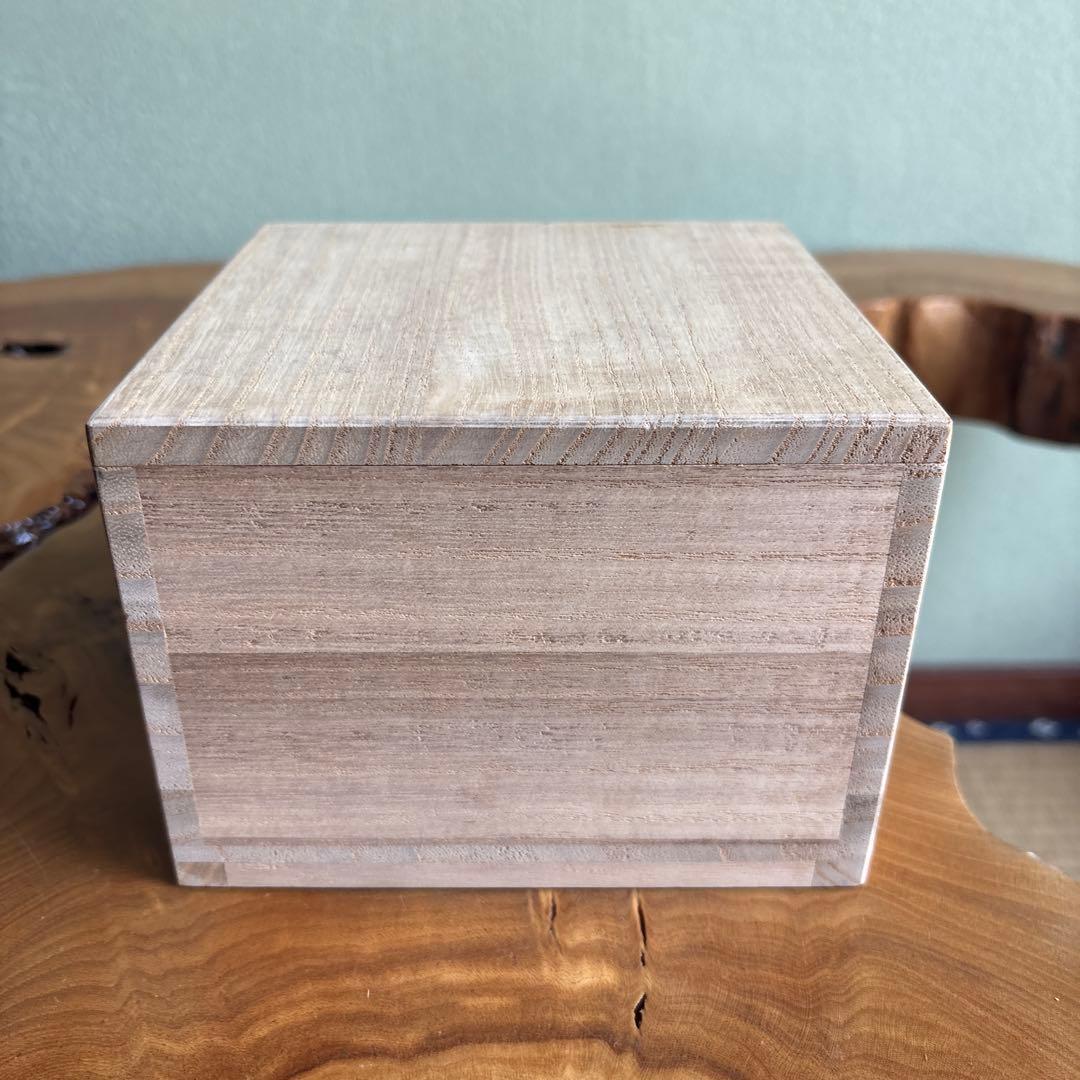
• Box: Tomobako (original signed wooden box) with brushwork inscription 「清水焼 菊花紋 茶盌」 and red temple seal
• Condition: Excellent — no chips, no cracks, no hairlines; glaze surface clean and intact
🔹 [ CULTURAL & ARTISTIC INSIGHT ]
Chūgūji (中宮寺) is one of Japan's oldest and most revered monzeki nunneries — a temple where abbesses of imperial descent have presided for over fourteen centuries. Standing beside the sacred precincts of Hōryūji in Nara prefecture, Chūgūji holds a status in Japanese Buddhism comparable only to the great Kyoto monzeki institutions. Objects bearing the temple's official seal (門跡之印) were not made for general sale; they were produced in limited commission runs for ceremonial presentation, temple ritual, or gift exchange among the highest circles of religious and cultural life.
The chrysanthemum crest — here rendered in refined gold overglaze enamel against a luminous white ground — carries centuries of meaning in Japanese culture. The kiku-mon is simultaneously the emblem of the imperial family, a symbol of longevity, and in Buddhist iconography an emblem of perseverance and spiritual flowering. To see it joined with the Chūgūji seal on a single tea bowl is to hold an object where court culture and monastic life converge.
The glaze itself speaks quietly. White porcelain from Kiyomizu's most accomplished kilns achieves a softness that is not quite white — in certain light, the surface shifts toward pale blush, almost as though warmth from a thousand ceremonies had settled into the clay. The fine all-over crackle (kannyū) that covers both interior and exterior is not a flaw but a deliberate aesthetic quality, the glaze contracting slightly as it cools and leaving a web of fine lines that record the moment of transformation from liquid to solid. Poetic Line: "A web of fine frost on white stone — the moment the fire ended, held still."
🔹 [ DEEP-DIVE COMMENTARY ]
Kiyomizu-yaki is the collective name for the ceramics tradition that developed in eastern Kyoto around Kiyomizudera and the Gojōzaka slope from the seventeenth century onward. Unlike single-kiln traditions such as Hagi or Bizen, Kiyomizu-yaki encompasses a wide range of techniques — from painted overglaze enamels (iro-e) in the Kyoto-Ninsei lineage to fine white porcelain work. What unifies the tradition is its orientation toward the aesthetics of the imperial city: refined, decorative, courtly.
Commission pieces made for monastic institutions — especially those of monzeki rank — represent the upper tier of this tradition. The kiln would have received precise specifications: the crest motif, the seal placement, the glaze character appropriate to the institution's refined taste. The tomobako, hand-inscribed and bearing the red seal, is not simply packaging; it is a certificate of provenance that guarantees the object's identity and origin for generations.
The gold enamel chrysanthemum on this bowl is applied with exceptional precision — sixteen petals, formally arranged, the circumference clean and the lines of each petal fine and confident. Gold overglaze application of this quality requires multiple firings and a skilled specialist hand; it is among the most demanding techniques in Kiyomizu enamel work. The companion temple seal glyph (迯, read as the temple's abbreviated ji-in) appears below the chrysanthemum, grounding the decorative element in institutional authority.
For collectors of Japanese ceramics, a documented temple-commission piece with intact tomobako and dual-emblem decoration represents a category that rarely appears outside Japan's antique interior market. The combination of identifiable provenance (Chūgūji monzeki), refined technique (Kiyomizu hakuji with kannyū), and symbolic density (imperial crest + temple seal) places this bowl in the category of culturally significant functional objects — vessels that have always existed at the intersection of tea practice, religious life, and court culture.
Ceremony tea bowls from institutional commissions were often used in formal presentation ceremonies (献茶式, kenchashiki) or kept as commemorative gifts between temple and patron. Whether this bowl was used in ceremony or preserved as a formal presentation piece, its condition — pristine, with no evidence of heavy use — suggests careful custodianship consistent with its provenance.
[ JAPANESE DESCRIPTION / 日本語解説 ]
🔹 【基本情報】
• 作者・窯元:清水焼(京都)、中宮寺門跡之印による特注品
• 技法:白磁釉(薄い全面貫入あり)に金彩過焼付け菊花紋(16弁)・寺印(迯)
• 推定年代:昭和〜平成期(1970年代〜1990年代頃)
• 産地:京都市・清水地区
• 寸法:直径 約11.7cm、高さ 約7.5cm
• 箱:共箱(「清水焼 菊花紋 茶盌」墨書・赤角印)
• 状態:良好。ヒビ・カケ・傷なし。釉面は清潔。
🔹 【文化・芸術的背景】
中宮寺は奈良・法隆寺の隣に位置し、1400年以上の歴史を持つ皇室ゆかりの門跡尼寺です。この寺に由来する門跡之印を持つ茶碗は、一般市販品ではなく、献茶式や贈答用として作られた特注品です。菊花紋は皇室の紋章であると同時に、仏教美術においては長寿と精神の開花を象徴します。門跡之印と菊花紋が一碗に共存するこの茶碗は、宮廷文化と宗教生活が交わる場所に生まれた器です。
釉薬は白磁の中に仄かな温もりを帯び、光の角度によっては淡い桃色を映します。全面に走る細かな貫入は欠陥ではなく、京焼の美意識における意図的な景色――冷却の瞬間を釉の肌に刻んだ痕跡です。
🔹 【専門的解説】
清水焼は、17世紀以降に京都東山の清水寺周辺で発展した陶芸の総称で、上絵付けから白磁まで幅広い技法を含みます。その共通する美学は、御所文化を背景とした繊細さと格調の高さです。門跡寺院への特注品は、紋様・寸法・釉調に至るまで精密な仕様書に基づいて制作された最高水準の作品群です。
本作の金彩菊花紋は16弁、精密な筆致で施釉後に多段焼成された専門技術の結晶です。寺印(迯)との組み合わせは、装飾と権威証明が一体化した稀有な構成です。門跡之印を持つ共箱付きの寺社特注品は、国内の骨董流通でも稀少な存在です。状態の良さは、大切に保管されてきた品格ある歴史を物語ります。
🔹 [ SHIPPING & PACKAGING ]
• Dispatch: Within 1-6 business days
• Carrier: Japan Post EMS / UPS (with tracking)
• Packaging: Carefully wrapped with protective materials
🔹 [ BASIC DETAILS ]
• Artist / Kiln: Kiyomizu-yaki, Kyoto — produced under commission from Chūgūji temple (中宮寺門跡之印)
• Technique: White porcelain glaze (hakuji) with fine crackle (kannyū), gold overglaze enamel chrysanthemum crest (kiku-mon) and temple seal (ji-in)
• Era: Shōwa–Heisei period (estimated 1970s–1990s)
• Origin: Kyoto, Japan (Kiyomizu district)
• Dimensions: Diameter approx. 11.7 cm, Height approx. 7.5 cm
• Box: Tomobako (original signed wooden box) with brushwork inscription 「清水焼 菊花紋 茶盌」 and red temple seal
• Condition: Excellent — no chips, no cracks, no hairlines; glaze surface clean and intact
🔹 [ CULTURAL & ARTISTIC INSIGHT ]
Chūgūji (中宮寺) is one of Japan's oldest and most revered monzeki nunneries — a temple where abbesses of imperial descent have presided for over fourteen centuries. Standing beside the sacred precincts of Hōryūji in Nara prefecture, Chūgūji holds a status in Japanese Buddhism comparable only to the great Kyoto monzeki institutions. Objects bearing the temple's official seal (門跡之印) were not made for general sale; they were produced in limited commission runs for ceremonial presentation, temple ritual, or gift exchange among the highest circles of religious and cultural life.
The chrysanthemum crest — here rendered in refined gold overglaze enamel against a luminous white ground — carries centuries of meaning in Japanese culture. The kiku-mon is simultaneously the emblem of the imperial family, a symbol of longevity, and in Buddhist iconography an emblem of perseverance and spiritual flowering. To see it joined with the Chūgūji seal on a single tea bowl is to hold an object where court culture and monastic life converge.
The glaze itself speaks quietly. White porcelain from Kiyomizu's most accomplished kilns achieves a softness that is not quite white — in certain light, the surface shifts toward pale blush, almost as though warmth from a thousand ceremonies had settled into the clay. The fine all-over crackle (kannyū) that covers both interior and exterior is not a flaw but a deliberate aesthetic quality, the glaze contracting slightly as it cools and leaving a web of fine lines that record the moment of transformation from liquid to solid. Poetic Line: "A web of fine frost on white stone — the moment the fire ended, held still."
🔹 [ DEEP-DIVE COMMENTARY ]
Kiyomizu-yaki is the collective name for the ceramics tradition that developed in eastern Kyoto around Kiyomizudera and the Gojōzaka slope from the seventeenth century onward. Unlike single-kiln traditions such as Hagi or Bizen, Kiyomizu-yaki encompasses a wide range of techniques — from painted overglaze enamels (iro-e) in the Kyoto-Ninsei lineage to fine white porcelain work. What unifies the tradition is its orientation toward the aesthetics of the imperial city: refined, decorative, courtly.
Commission pieces made for monastic institutions — especially those of monzeki rank — represent the upper tier of this tradition. The kiln would have received precise specifications: the crest motif, the seal placement, the glaze character appropriate to the institution's refined taste. The tomobako, hand-inscribed and bearing the red seal, is not simply packaging; it is a certificate of provenance that guarantees the object's identity and origin for generations.
The gold enamel chrysanthemum on this bowl is applied with exceptional precision — sixteen petals, formally arranged, the circumference clean and the lines of each petal fine and confident. Gold overglaze application of this quality requires multiple firings and a skilled specialist hand; it is among the most demanding techniques in Kiyomizu enamel work. The companion temple seal glyph (迯, read as the temple's abbreviated ji-in) appears below the chrysanthemum, grounding the decorative element in institutional authority.
For collectors of Japanese ceramics, a documented temple-commission piece with intact tomobako and dual-emblem decoration represents a category that rarely appears outside Japan's antique interior market. The combination of identifiable provenance (Chūgūji monzeki), refined technique (Kiyomizu hakuji with kannyū), and symbolic density (imperial crest + temple seal) places this bowl in the category of culturally significant functional objects — vessels that have always existed at the intersection of tea practice, religious life, and court culture.
Ceremony tea bowls from institutional commissions were often used in formal presentation ceremonies (献茶式, kenchashiki) or kept as commemorative gifts between temple and patron. Whether this bowl was used in ceremony or preserved as a formal presentation piece, its condition — pristine, with no evidence of heavy use — suggests careful custodianship consistent with its provenance.
[ JAPANESE DESCRIPTION / 日本語解説 ]
🔹 【基本情報】
• 作者・窯元:清水焼(京都)、中宮寺門跡之印による特注品
• 技法:白磁釉(薄い全面貫入あり)に金彩過焼付け菊花紋(16弁)・寺印(迯)
• 推定年代:昭和〜平成期(1970年代〜1990年代頃)
• 産地:京都市・清水地区
• 寸法:直径 約11.7cm、高さ 約7.5cm
• 箱:共箱(「清水焼 菊花紋 茶盌」墨書・赤角印)
• 状態:良好。ヒビ・カケ・傷なし。釉面は清潔。
🔹 【文化・芸術的背景】
中宮寺は奈良・法隆寺の隣に位置し、1400年以上の歴史を持つ皇室ゆかりの門跡尼寺です。この寺に由来する門跡之印を持つ茶碗は、一般市販品ではなく、献茶式や贈答用として作られた特注品です。菊花紋は皇室の紋章であると同時に、仏教美術においては長寿と精神の開花を象徴します。門跡之印と菊花紋が一碗に共存するこの茶碗は、宮廷文化と宗教生活が交わる場所に生まれた器です。
釉薬は白磁の中に仄かな温もりを帯び、光の角度によっては淡い桃色を映します。全面に走る細かな貫入は欠陥ではなく、京焼の美意識における意図的な景色――冷却の瞬間を釉の肌に刻んだ痕跡です。
🔹 【専門的解説】
清水焼は、17世紀以降に京都東山の清水寺周辺で発展した陶芸の総称で、上絵付けから白磁まで幅広い技法を含みます。その共通する美学は、御所文化を背景とした繊細さと格調の高さです。門跡寺院への特注品は、紋様・寸法・釉調に至るまで精密な仕様書に基づいて制作された最高水準の作品群です。
本作の金彩菊花紋は16弁、精密な筆致で施釉後に多段焼成された専門技術の結晶です。寺印(迯)との組み合わせは、装飾と権威証明が一体化した稀有な構成です。門跡之印を持つ共箱付きの寺社特注品は、国内の骨董流通でも稀少な存在です。状態の良さは、大切に保管されてきた品格ある歴史を物語ります。
🔹 [ SHIPPING & PACKAGING ]
• Dispatch: Within 1-6 business days
• Carrier: Japan Post EMS / UPS (with tracking)
• Packaging: Carefully wrapped with protective materials
Quantity
Couldn't load pickup availability
Low stock: 1 left
View full details