1
/
of
10
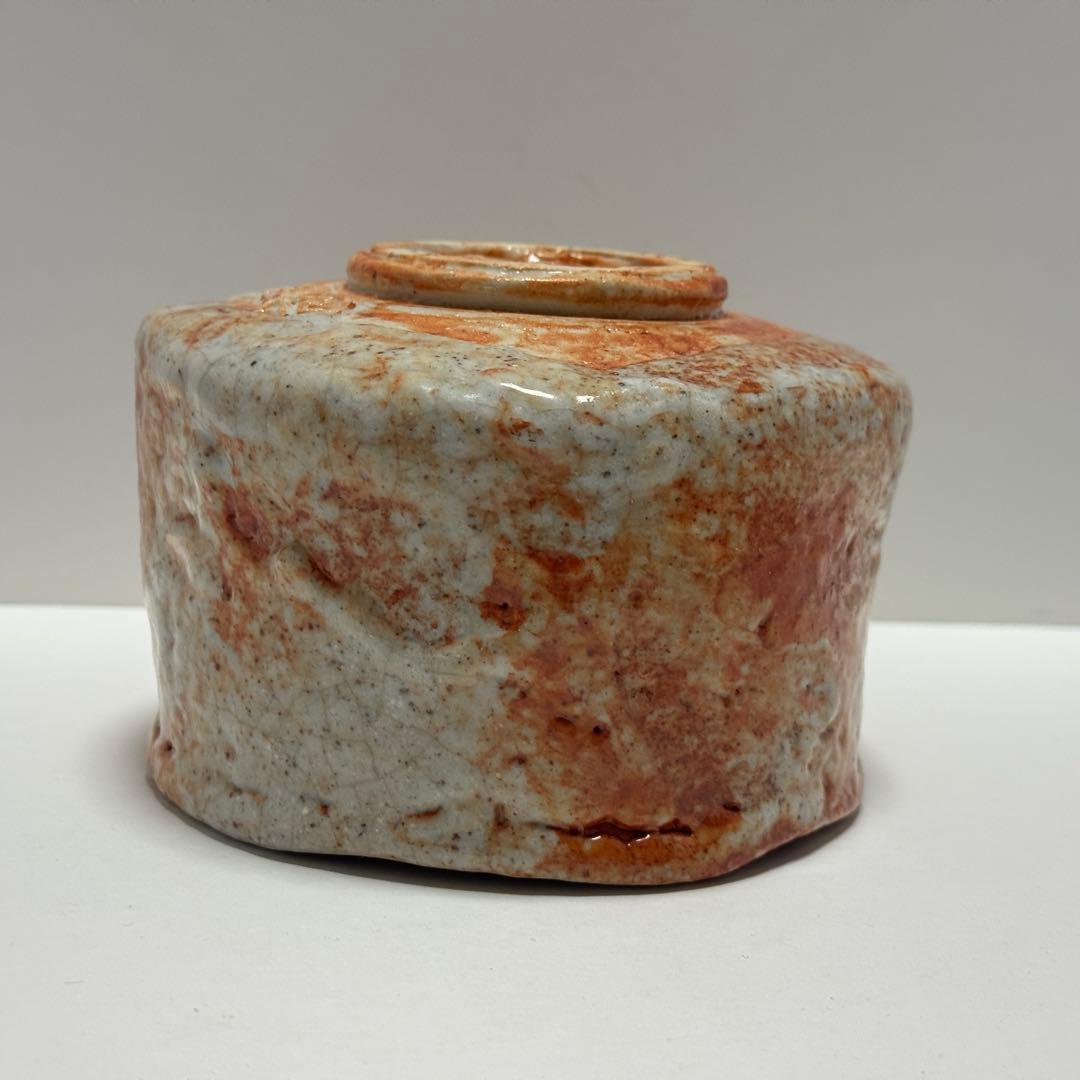
Kishu Ware Chawan 'Kocho' by Shodai Sankawa Seiho — Aoi Kiln, Shino-Style Tea Bowl
Kishu Ware Chawan 'Kocho' by Shodai Sankawa Seiho — Aoi Kiln, Shino-Style Tea Bowl
Regular price
Dhs. 920.00 AED
Regular price
Sale price
Dhs. 920.00 AED
Taxes included.
Shipping calculated at checkout.
A chawan named Kocho (紅潮, Crimson Tide) from Kishu-yaki, formed by the first-generation Sankawa Seiho at Aoi Kiln. The body is hand-built in a roughly cylindrical form — low, compact, with deliberate undulations pressed into the walls — and covered in a shino-style white glaze through which iron-red passages surge in broad, uneven sweeps. The interior well is dominated by warm terracotta orange; the exterior alternates between granular white and rust-amber tides that seem still in motion.
🔹 [ BASIC DETAILS ]
• Artist: Shodai (First Generation) Sankawa Seiho (初代 寒川栖豊), Kishu-yaki / Aoi Kiln (葵窯)
• Technique: Shino-style glaze (志野) over hand-built stoneware; iron-red (beni-shio) glaze effect
• Era: Late Showa – Early Heisei (estimated 1980s–1990s)
• Origin: Kishu (紀州), Wakayama Prefecture, Japan
• Dimensions: Diameter approx. 12.8 cm × 12.6 cm, Height approx. 8.7 cm
• Box: Authentication box (kiwame-bako) written by Mitsuko, the artist's wife, with her seal — not a tomobako by the artist's own hand
• Condition: No chips, cracks, or repairs. Clean throughout.
🔹 [ CULTURAL & ARTISTIC INSIGHT ]
Kishu-yaki (紀州焼) is the collective name for ceramics produced in the Kishu domain — present-day Wakayama Prefecture — a lineage long overshadowed by the great kilns of Mino, Bizen, and Hagi, yet possessing its own steady current of wabi sensibility. Sankawa Seiho, working under the name Shodai (first generation), operated Aoi Kiln as a space for this quieter tradition. The name Kocho — "crimson tide" — is not decoration; it describes the glaze event itself, the iron coloring that surfaces unpredictably through the shino ground, like color arriving in water.
The shino aesthetic, rooted in Momoyama-period Mino ware, holds that the most alive surfaces are those the fire writes onto, not the potter. Seiho works within this understanding: the form is deliberately plain, almost severe, so that the glaze movement carries everything. POETIC LINE: "The tide comes in from somewhere below the glaze — iron that was once earth, returning to the surface."
🔹 [ DEEP-DIVE COMMENTARY ]
Shino glaze (志野釉) is a thick, feldspar-based white glaze fired at high temperature in an atmosphere kiln. The opacity and granular surface texture result from the trapped gases and the glaze's partial crystallization during cooling. Iron-rich clay beneath or iron slips applied before glazing burn through the white layer during firing — this phenomenon, known broadly as hi-iro (fire color), creates the orange-to-rust passages that define pieces like this Kocho chawan.
The Kishu domain had ceramic production dating to the Edo period, with patronage from the Tokugawa branch family that governed the region. Kishu-yaki never achieved the fame of designated official kilns, which paradoxically preserved a certain informality and directness in its work — closer to the mingei spirit than to the courtly refinement of Kyo-yaki.
Sankawa Seiho's Aoi Kiln operated within this inheritance. As a shodai — a first-generation master who establishes a kiln name — Seiho's work carries the weight of origination: there is no inherited style to continue, only one being built. The kiwame-bako authentication by Mitsuko (his wife) is a documented practice within traditional Japanese ceramic circles, where a family member or trusted associate verifies a work after the maker's death or in later years, lending it formal provenance.
For collectors, this chawan presents a documented piece from a smaller but authentic regional tradition, authenticated through familial provenance and named (Kocho) — a significant marker in the chawan hierarchy, where named bowls occupy a distinct category above unnamed production pieces. The interplay of white ground and iron tide, the hand-built irregularity of the rim, and the compact, grounded form make it practical for temae while sustaining extended visual attention.
[ JAPANESE DESCRIPTION / 日本語解説 ]
初代 寒川栖豊、葵窯による紀州焼の茶碗。銘を「紅潮」という。手捻りによる低めの筒形に成形され、志野釉の白い地肌を突き破るように鉄分による赤橙色の景色が大きく広がる。内側は温かみのある赤土色が支配し、外壁には白と錆色が波のように入り混じっている。
【基本情報】
• 作家:初代 寒川栖豊(葵窯、紀州焼)
• 技法:志野釉、手捻り、鉄分による紅潮景
• 年代:昭和後期〜平成初期(推定1980〜90年代)
• 産地:紀州(和歌山県)
• 寸法:直径 約12.8cm × 12.6cm、高さ 約8.7cm
• 箱:奥様・美津子さんによる極め箱(共箱ではありません)
• 状態:傷・割れ・金継ぎなし。良好。
【文化・芸術的解説】
紀州焼は、現在の和歌山県を中心とした紀州藩ゆかりの焼き物の総称。美濃・備前・萩といった著名産地の陰に隠れがちではが、侘びの美意識に根ざした静かな流れを持つ。葵窯の初代栖豊は、その流れの中で独自の仕事を積み重ねた作家である。銘「紅潮」は装飾ではなく、窯変そのものの描写だ——志野の白地から浮かび上がる鉄分の色は、まるで水中に広がる潮のように捉えがたく、しかし確かにそこにある。
志野の美学は、桃山時代の美濃焼に源を持ち、「最も生きた景色は、火が書いたもの」という思想に貫かれている。栖豊はこの理解のもとに働く——形はあえて無口であり、釉薬の動きがすべてを語る。詩的な一言:「潮は釉の下のどこかからやってくる——かつて土であった鉄が、ふたたび表面へ還っていく。」
【詳細解説】
志野釉は長石を主成分とする白釉で、高温の雰囲気焼成によって不透明な粒状肌を生み出す。釉中に閉じ込められたガスと冷却時の部分的な結晶化がこの独特の質感を作る。鉄分を含む土や鉄絵具が白釉を突き破って現れる「火色」現象が、この紅潮茶碗に見られる橙〜錆色の景色を生み出している。
紀州での陶芸生産は江戸時代にさかのぼり、徳川御三家のひとつ紀伊藩のもとで育まれた。官窯ほどの格式を持たなかった分、直接的で素朴な作風が保たれ、民藝に通じる精神が根づいている。
初代として窯号を立てた栖豊の仕事には、「継承」ではなく「創始」の重みがある。奥様・美津子さんによる極め書きは、日本の陶芸界において家族や信頼ある関係者が作品に由来を付与する慣行であり、正式な来歴の証となる。
コレクターにとって、この茶碗は地方窯の真摯な仕事に家族鑑定という具体的来歴が加わり、かつ「紅潮」という銘を持つ点で注目に値する。銘のある茶碗は、無銘の量産品とは明確に区別される位相に立つ。白い地と鉄の潮の相克、手捻りによるゆらぐ口縁、低く安定した腰——点前の実用に耐えながら、長く眼をとどめさせる力を持つ一碗である。
🔹 [ SHIPPING & PACKAGING ]
• Dispatch: Within 1-6 business days
• Carrier: Japan Post EMS / UPS / FedEx (with tracking)
• Packaging: Carefully wrapped with protective materials
🔹 [ BASIC DETAILS ]
• Artist: Shodai (First Generation) Sankawa Seiho (初代 寒川栖豊), Kishu-yaki / Aoi Kiln (葵窯)
• Technique: Shino-style glaze (志野) over hand-built stoneware; iron-red (beni-shio) glaze effect
• Era: Late Showa – Early Heisei (estimated 1980s–1990s)
• Origin: Kishu (紀州), Wakayama Prefecture, Japan
• Dimensions: Diameter approx. 12.8 cm × 12.6 cm, Height approx. 8.7 cm
• Box: Authentication box (kiwame-bako) written by Mitsuko, the artist's wife, with her seal — not a tomobako by the artist's own hand
• Condition: No chips, cracks, or repairs. Clean throughout.
🔹 [ CULTURAL & ARTISTIC INSIGHT ]
Kishu-yaki (紀州焼) is the collective name for ceramics produced in the Kishu domain — present-day Wakayama Prefecture — a lineage long overshadowed by the great kilns of Mino, Bizen, and Hagi, yet possessing its own steady current of wabi sensibility. Sankawa Seiho, working under the name Shodai (first generation), operated Aoi Kiln as a space for this quieter tradition. The name Kocho — "crimson tide" — is not decoration; it describes the glaze event itself, the iron coloring that surfaces unpredictably through the shino ground, like color arriving in water.
The shino aesthetic, rooted in Momoyama-period Mino ware, holds that the most alive surfaces are those the fire writes onto, not the potter. Seiho works within this understanding: the form is deliberately plain, almost severe, so that the glaze movement carries everything. POETIC LINE: "The tide comes in from somewhere below the glaze — iron that was once earth, returning to the surface."
🔹 [ DEEP-DIVE COMMENTARY ]
Shino glaze (志野釉) is a thick, feldspar-based white glaze fired at high temperature in an atmosphere kiln. The opacity and granular surface texture result from the trapped gases and the glaze's partial crystallization during cooling. Iron-rich clay beneath or iron slips applied before glazing burn through the white layer during firing — this phenomenon, known broadly as hi-iro (fire color), creates the orange-to-rust passages that define pieces like this Kocho chawan.
The Kishu domain had ceramic production dating to the Edo period, with patronage from the Tokugawa branch family that governed the region. Kishu-yaki never achieved the fame of designated official kilns, which paradoxically preserved a certain informality and directness in its work — closer to the mingei spirit than to the courtly refinement of Kyo-yaki.
Sankawa Seiho's Aoi Kiln operated within this inheritance. As a shodai — a first-generation master who establishes a kiln name — Seiho's work carries the weight of origination: there is no inherited style to continue, only one being built. The kiwame-bako authentication by Mitsuko (his wife) is a documented practice within traditional Japanese ceramic circles, where a family member or trusted associate verifies a work after the maker's death or in later years, lending it formal provenance.
For collectors, this chawan presents a documented piece from a smaller but authentic regional tradition, authenticated through familial provenance and named (Kocho) — a significant marker in the chawan hierarchy, where named bowls occupy a distinct category above unnamed production pieces. The interplay of white ground and iron tide, the hand-built irregularity of the rim, and the compact, grounded form make it practical for temae while sustaining extended visual attention.
[ JAPANESE DESCRIPTION / 日本語解説 ]
初代 寒川栖豊、葵窯による紀州焼の茶碗。銘を「紅潮」という。手捻りによる低めの筒形に成形され、志野釉の白い地肌を突き破るように鉄分による赤橙色の景色が大きく広がる。内側は温かみのある赤土色が支配し、外壁には白と錆色が波のように入り混じっている。
【基本情報】
• 作家:初代 寒川栖豊(葵窯、紀州焼)
• 技法:志野釉、手捻り、鉄分による紅潮景
• 年代:昭和後期〜平成初期(推定1980〜90年代)
• 産地:紀州(和歌山県)
• 寸法:直径 約12.8cm × 12.6cm、高さ 約8.7cm
• 箱:奥様・美津子さんによる極め箱(共箱ではありません)
• 状態:傷・割れ・金継ぎなし。良好。
【文化・芸術的解説】
紀州焼は、現在の和歌山県を中心とした紀州藩ゆかりの焼き物の総称。美濃・備前・萩といった著名産地の陰に隠れがちではが、侘びの美意識に根ざした静かな流れを持つ。葵窯の初代栖豊は、その流れの中で独自の仕事を積み重ねた作家である。銘「紅潮」は装飾ではなく、窯変そのものの描写だ——志野の白地から浮かび上がる鉄分の色は、まるで水中に広がる潮のように捉えがたく、しかし確かにそこにある。
志野の美学は、桃山時代の美濃焼に源を持ち、「最も生きた景色は、火が書いたもの」という思想に貫かれている。栖豊はこの理解のもとに働く——形はあえて無口であり、釉薬の動きがすべてを語る。詩的な一言:「潮は釉の下のどこかからやってくる——かつて土であった鉄が、ふたたび表面へ還っていく。」
【詳細解説】
志野釉は長石を主成分とする白釉で、高温の雰囲気焼成によって不透明な粒状肌を生み出す。釉中に閉じ込められたガスと冷却時の部分的な結晶化がこの独特の質感を作る。鉄分を含む土や鉄絵具が白釉を突き破って現れる「火色」現象が、この紅潮茶碗に見られる橙〜錆色の景色を生み出している。
紀州での陶芸生産は江戸時代にさかのぼり、徳川御三家のひとつ紀伊藩のもとで育まれた。官窯ほどの格式を持たなかった分、直接的で素朴な作風が保たれ、民藝に通じる精神が根づいている。
初代として窯号を立てた栖豊の仕事には、「継承」ではなく「創始」の重みがある。奥様・美津子さんによる極め書きは、日本の陶芸界において家族や信頼ある関係者が作品に由来を付与する慣行であり、正式な来歴の証となる。
コレクターにとって、この茶碗は地方窯の真摯な仕事に家族鑑定という具体的来歴が加わり、かつ「紅潮」という銘を持つ点で注目に値する。銘のある茶碗は、無銘の量産品とは明確に区別される位相に立つ。白い地と鉄の潮の相克、手捻りによるゆらぐ口縁、低く安定した腰——点前の実用に耐えながら、長く眼をとどめさせる力を持つ一碗である。
🔹 [ SHIPPING & PACKAGING ]
• Dispatch: Within 1-6 business days
• Carrier: Japan Post EMS / UPS / FedEx (with tracking)
• Packaging: Carefully wrapped with protective materials
Quantity
Couldn't load pickup availability
Low stock: 1 left
View full details