1
/
of
8
Kiseto Tea Bowl by Kozan — Kuriban Form, Tanpan Green Spots, Signed Tomobako
Kiseto Tea Bowl by Kozan — Kuriban Form, Tanpan Green Spots, Signed Tomobako
Regular price
Dhs. 488.00 AED
Regular price
Sale price
Dhs. 488.00 AED
Taxes included.
Shipping calculated at checkout.
Experience Authentic Japan Art with this Kiseto Tea Bowl. This Mino Pottery Chawan serves as a Japanese Tea Ceremony Bowl and Wabi Tea Bowl, featuring Tanpan Green Glaze Spots and Antique Crackle Glaze Finish — a must-have for any Art Collector and Matcha Bowl enthusiast.
🔹 [ BASIC DETAILS ]
• Artist: Kozan (光山) — Mino Kiseto potter
• Technique: Kiseto glaze (yellow Seto), tanpan copper-green splash, natural crazing (kannyu)
• Era: 2007 – 2009
• Origin: Mino, Japan (Gifu Prefecture)
• Form: Kuriban (栗盤) — a squatter, wide-footed kiseto form named after the chestnut tray
• Dimensions: Diameter approx. 12.8 cm / Height approx. 7.5 cm
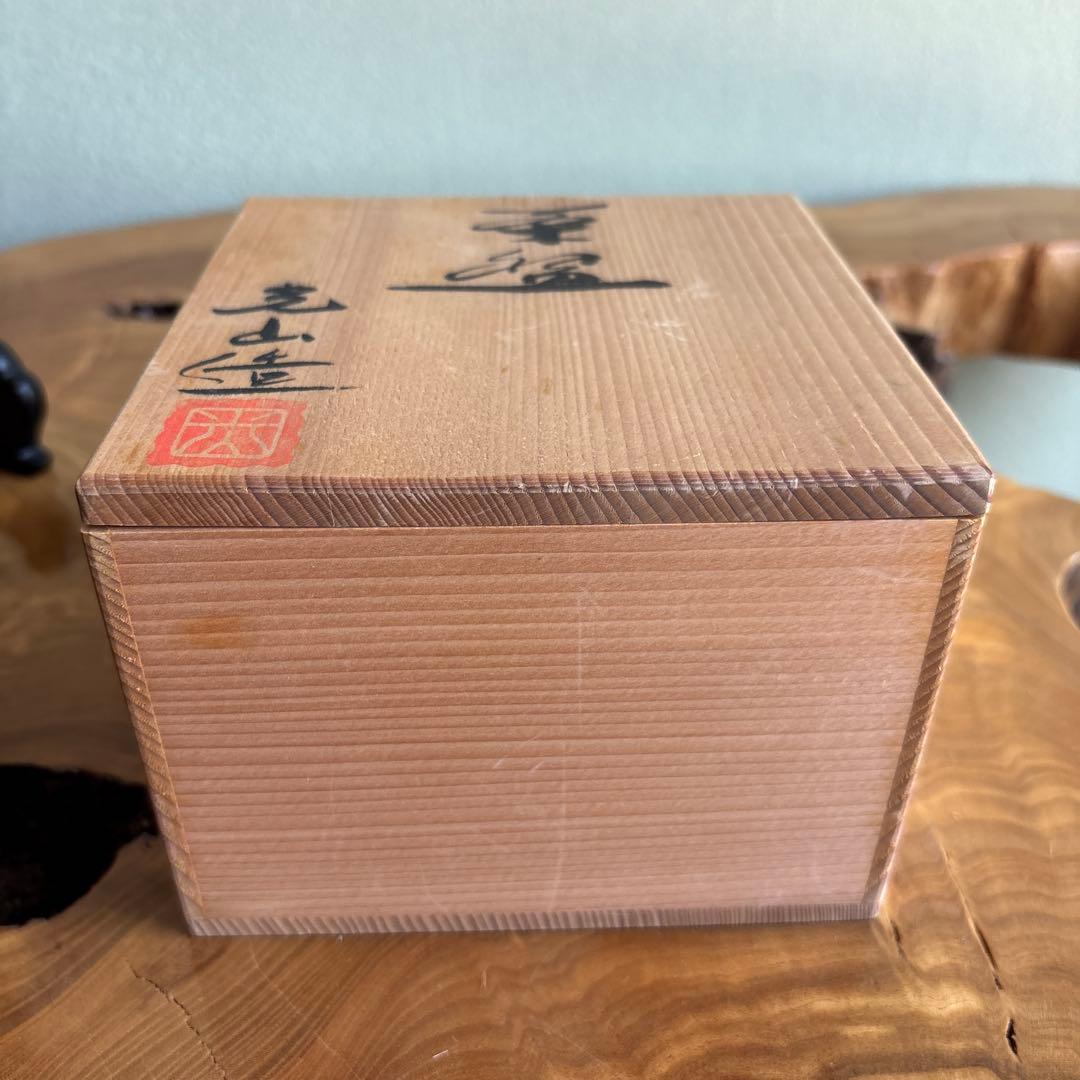
• Box: Tomobako (artist's own wooden box), lid inscription: 栗盤 光山造
• Condition: Very good. Minor kiln variation consistent with the aesthetic intention.
🔹 [ CULTURAL & ARTISTIC INSIGHT ]
Kiseto — "yellow Seto" — is among the oldest of the Mino glazes, its amber warmth developed in the Momoyama period when tea masters sought surfaces that held light the way old wood holds memory. Kozan works within this lineage not to replicate it but to allow it to continue through his hands.
The kuriban form is particular. Lower and broader than a standard chawan, its wide mouth invites a slower pour, a fuller stillness at the rim. The name — chestnut tray — carries autumn's density: harvest, heaviness, a bowl that knows the weight it holds.
The tanpan spots are not decoration. They are where copper and heat negotiated in the kiln — small, verdigris-green islands in the straw-yellow ground. Each occurrence is singular. No two firings produce the same arrangement. The crazing (kannyu) that laces the surface is the glaze remembering its own cooling, a record of time written in hairlines.
POETIC LINE: "The green marks arrived unannounced — copper's quiet argument with fire."
🔹 [ DEEP-DIVE COMMENTARY ]
Kiseto (黄瀬戸) belongs to the Six Ancient Kilns tradition of Mino ware, fired in large anagama or noborigama kilns at temperatures that coax iron-rich clay into straw, amber, and pale gold. Unlike the dramatic iron-black of Seto or the ash-grey of Shino, kiseto asks for patience — its beauty reveals itself slowly, in changing light.
The tanpan technique introduces copper compounds (胆礬, vitriol) to specific areas of the unfired glaze surface. In reduction or cooling atmospheres, copper volatilizes and settles as oxide, producing the characteristic blue-green spots that have been prized since the Momoyama period. On this piece, the spots cluster naturally near the foot and at the shoulder — evidence of an unforced process.
The kuriban (栗盤) form occupies a specific position within tea practice. Its low centre of gravity and wide opening make it well suited for koicha (thick tea), where a deeper, more meditative bowl is preferred. The slightly flared rim (端反り, hatan-sori) on this example gives the lip a refined articulation — the clay lifted rather than cut.
Kozan works in the Mino tradition with attention to historical form while retaining individual authorship. The signed tomobako confirms this is a documented, attributable work — significant for any collector building a coherent kiseto archive.
— [ JAPANESE DESCRIPTION / 日本語解説 ] —
🔹 [ 基本情報 ]
• 作家: 光山(みの黄瀬戸作家)
• 技法: 黄瀬戸釉、胆礬(たんぱん)緑斑、貫入
• 時代: 2007〜2009年頃
• 産地: 美濃(岐阜県)
• 形状: 栗盤(くりばん)— 黄瀬戸茶碗の典型的な盤形
• 寸法: 口径約12.8cm / 高さ約7.5cm
• 箱: 共箱(蓋裏書「栗盤 光山造」)
• 状態: 良好。窯変は意図の範囲内。
🔹 [ 文化・美術的解説 ]
黄瀬戸とは、桃山時代の美濃窯が生んだ釉薬の記憶である。琥珀色の肌は鉄分を含む美濃の土が高温で静かに溶けた証であり、長く茶人に愛されてきた。光山はその系譜の中で、模倣ではなく継続として仕事をする。
栗盤という形は、普通の茶碗より低く広い。口が開くことで茶がゆっくりと広がり、飲む側に余白が生まれる。栗の盆地から採った名は、秋の重さと収穫の密度を帯びている。
胆礬の緑斑は意図されたものではなく、銅と炎が窯の中で交渉した痕跡である。貫入は、冷却の過程に生まれた釉の記憶——釉が時間を記録した細い線群だ。
🔹 [ 深掘り解説 ]
黄瀬戸釉は、美濃の六古窯系譜に位置する。登窯または穴窯での高温還元焼成により、鉄分が藁色から琥珀へと変化する。その変化は急激ではなく、光の角度によって異なる表情をみせる——それが黄瀬戸の本質である。
胆礬技法は、施釉前の素地に硫酸銅を点置することで生まれる。焼成時、銅が揮発・酸化して特有の緑青を形成する。桃山時代から珍重されたその発色は、一点一点異なり、再現不能である。この碗の緑斑は高台周辺と肩部に自然な形で現れており、施釉の意図より炎の意志が勝っている。
栗盤形は、濃茶に適した盤形茶碗として茶の湯の実践の中に明確な位置を持つ。重心が低く、口が広いため、茶が溜まりやすく、飲み口が柔らかい。この碗の端反りは、切り取られた口ではなく、土が自然に持ち上がった形——作家の手の静けさを示す。
共箱に記された「栗盤 光山造」は、帰属が確認できる作品であることを証明する。コレクションとしての整合性を重視する方に、確実な一点。
🔹 [ SHIPPING & PACKAGING ]
• Dispatch: Within 1-6 business days
• Carrier: Japan Post EMS / UPS (with tracking)
• Packaging: Carefully wrapped with protective materials
🔹 [ BASIC DETAILS ]
• Artist: Kozan (光山) — Mino Kiseto potter
• Technique: Kiseto glaze (yellow Seto), tanpan copper-green splash, natural crazing (kannyu)
• Era: 2007 – 2009
• Origin: Mino, Japan (Gifu Prefecture)
• Form: Kuriban (栗盤) — a squatter, wide-footed kiseto form named after the chestnut tray
• Dimensions: Diameter approx. 12.8 cm / Height approx. 7.5 cm
• Box: Tomobako (artist's own wooden box), lid inscription: 栗盤 光山造
• Condition: Very good. Minor kiln variation consistent with the aesthetic intention.
🔹 [ CULTURAL & ARTISTIC INSIGHT ]
Kiseto — "yellow Seto" — is among the oldest of the Mino glazes, its amber warmth developed in the Momoyama period when tea masters sought surfaces that held light the way old wood holds memory. Kozan works within this lineage not to replicate it but to allow it to continue through his hands.
The kuriban form is particular. Lower and broader than a standard chawan, its wide mouth invites a slower pour, a fuller stillness at the rim. The name — chestnut tray — carries autumn's density: harvest, heaviness, a bowl that knows the weight it holds.
The tanpan spots are not decoration. They are where copper and heat negotiated in the kiln — small, verdigris-green islands in the straw-yellow ground. Each occurrence is singular. No two firings produce the same arrangement. The crazing (kannyu) that laces the surface is the glaze remembering its own cooling, a record of time written in hairlines.
POETIC LINE: "The green marks arrived unannounced — copper's quiet argument with fire."
🔹 [ DEEP-DIVE COMMENTARY ]
Kiseto (黄瀬戸) belongs to the Six Ancient Kilns tradition of Mino ware, fired in large anagama or noborigama kilns at temperatures that coax iron-rich clay into straw, amber, and pale gold. Unlike the dramatic iron-black of Seto or the ash-grey of Shino, kiseto asks for patience — its beauty reveals itself slowly, in changing light.
The tanpan technique introduces copper compounds (胆礬, vitriol) to specific areas of the unfired glaze surface. In reduction or cooling atmospheres, copper volatilizes and settles as oxide, producing the characteristic blue-green spots that have been prized since the Momoyama period. On this piece, the spots cluster naturally near the foot and at the shoulder — evidence of an unforced process.
The kuriban (栗盤) form occupies a specific position within tea practice. Its low centre of gravity and wide opening make it well suited for koicha (thick tea), where a deeper, more meditative bowl is preferred. The slightly flared rim (端反り, hatan-sori) on this example gives the lip a refined articulation — the clay lifted rather than cut.
Kozan works in the Mino tradition with attention to historical form while retaining individual authorship. The signed tomobako confirms this is a documented, attributable work — significant for any collector building a coherent kiseto archive.
— [ JAPANESE DESCRIPTION / 日本語解説 ] —
🔹 [ 基本情報 ]
• 作家: 光山(みの黄瀬戸作家)
• 技法: 黄瀬戸釉、胆礬(たんぱん)緑斑、貫入
• 時代: 2007〜2009年頃
• 産地: 美濃(岐阜県)
• 形状: 栗盤(くりばん)— 黄瀬戸茶碗の典型的な盤形
• 寸法: 口径約12.8cm / 高さ約7.5cm
• 箱: 共箱(蓋裏書「栗盤 光山造」)
• 状態: 良好。窯変は意図の範囲内。
🔹 [ 文化・美術的解説 ]
黄瀬戸とは、桃山時代の美濃窯が生んだ釉薬の記憶である。琥珀色の肌は鉄分を含む美濃の土が高温で静かに溶けた証であり、長く茶人に愛されてきた。光山はその系譜の中で、模倣ではなく継続として仕事をする。
栗盤という形は、普通の茶碗より低く広い。口が開くことで茶がゆっくりと広がり、飲む側に余白が生まれる。栗の盆地から採った名は、秋の重さと収穫の密度を帯びている。
胆礬の緑斑は意図されたものではなく、銅と炎が窯の中で交渉した痕跡である。貫入は、冷却の過程に生まれた釉の記憶——釉が時間を記録した細い線群だ。
🔹 [ 深掘り解説 ]
黄瀬戸釉は、美濃の六古窯系譜に位置する。登窯または穴窯での高温還元焼成により、鉄分が藁色から琥珀へと変化する。その変化は急激ではなく、光の角度によって異なる表情をみせる——それが黄瀬戸の本質である。
胆礬技法は、施釉前の素地に硫酸銅を点置することで生まれる。焼成時、銅が揮発・酸化して特有の緑青を形成する。桃山時代から珍重されたその発色は、一点一点異なり、再現不能である。この碗の緑斑は高台周辺と肩部に自然な形で現れており、施釉の意図より炎の意志が勝っている。
栗盤形は、濃茶に適した盤形茶碗として茶の湯の実践の中に明確な位置を持つ。重心が低く、口が広いため、茶が溜まりやすく、飲み口が柔らかい。この碗の端反りは、切り取られた口ではなく、土が自然に持ち上がった形——作家の手の静けさを示す。
共箱に記された「栗盤 光山造」は、帰属が確認できる作品であることを証明する。コレクションとしての整合性を重視する方に、確実な一点。
🔹 [ SHIPPING & PACKAGING ]
• Dispatch: Within 1-6 business days
• Carrier: Japan Post EMS / UPS (with tracking)
• Packaging: Carefully wrapped with protective materials
Quantity
Couldn't load pickup availability
Low stock: 1 left
View full details