1
/
of
9
Kiseto Matcha Bowl Meigetsu Moon Mino Ware Signed Artist Chawan Tea Ceremony
Kiseto Matcha Bowl Meigetsu Moon Mino Ware Signed Artist Chawan Tea Ceremony
Regular price
Dhs. 509.00 AED
Regular price
Sale price
Dhs. 509.00 AED
Taxes included.
Shipping calculated at checkout.
A Kiseto matcha bowl carved with the 明月 (Meigetsu / Bright Moon) motif — classic Mino ware stoneware in warm straw-ochre glaze with characteristic copper-green 胆礬 wash, deeply incised seasonal calligraphy and foliate carving encircling the body. Signed artist work with original tomobako. A vessel for the autumn tea gathering.
🔹 [ BASIC DETAILS ]
• Artist: Signed artist work (作家物); box lid inscribed 「黄瀬戸 明月茶碗」with kiln seal — name partially legible on seal, attributed to a regional Mino kiln master
• Technique: Hand-thrown stoneware, incised / carved decoration (線刻), Kiseto glaze with 胆礬 (copper-green) accent
• Era: Showa–Heisei period (est. mid-to-late 20th century)
• Origin: Mino region, Gifu Prefecture, Japan
• Dimensions: Diameter approx. 13.5 cm / Height approx. 7.7 cm
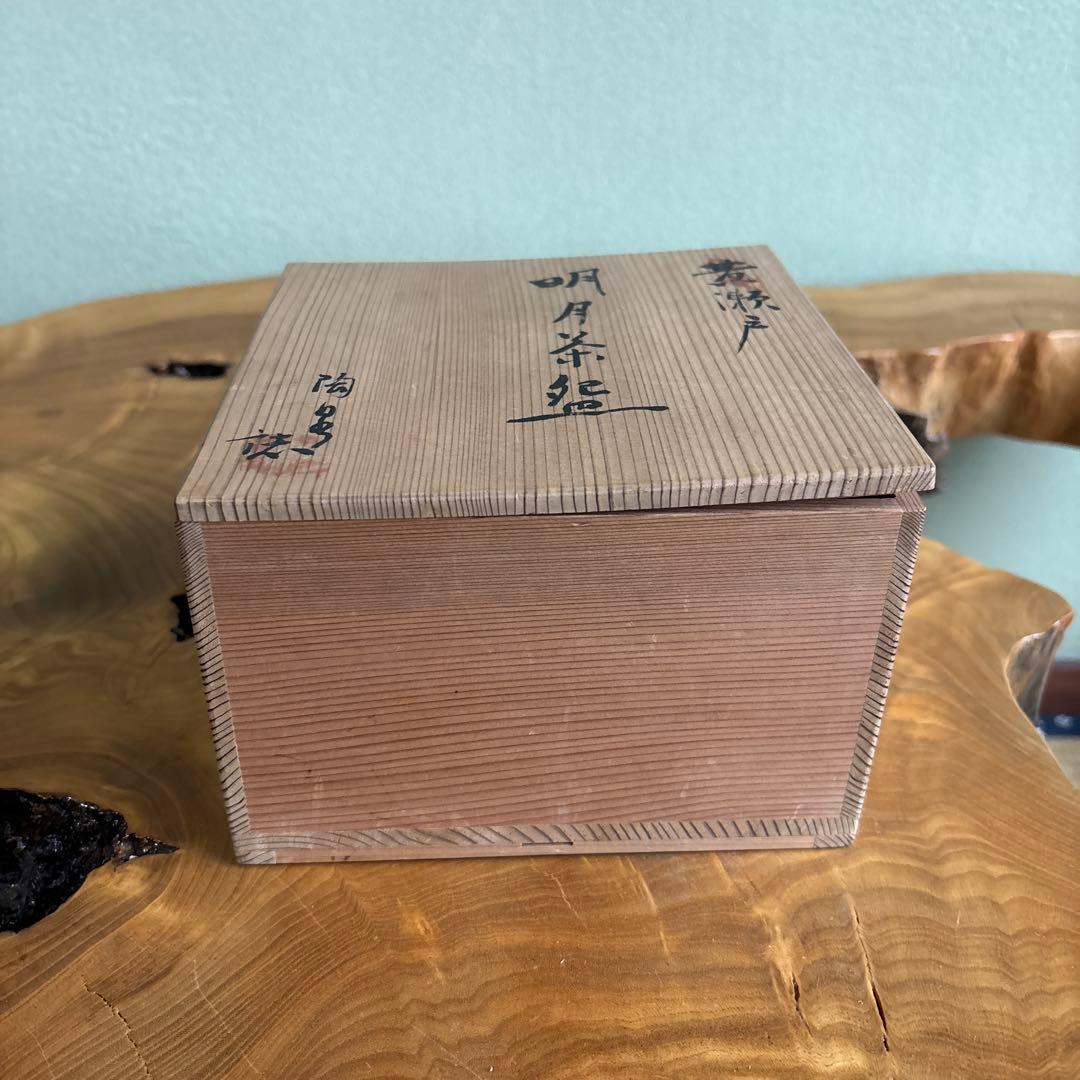
• Box: Original signed tomobako (共箱) included
• Condition: Good overall; minor age-appropriate surface patina consistent with use; no cracks or chips noted
【日本語】
• 作者:作家物(共箱に「黄瀬戸 明月茶碗」と墨書、陶印あり)
• 技法:轆轤成形、線刻装飾、黄瀬戸釉・胆礬
• 時代:昭和〜平成期(推定)
• 産地:岐阜県 美濃
• サイズ:直径約13.5cm/高さ約7.7cm
• 付属:共箱
• 状態:良好。使用感による経年変化あり、割れ・欠けなし
🔹 [ CULTURAL & ARTISTIC INSIGHT ]
Kiseto — 黄瀬戸 — is one of the four canonical Mino wares, alongside Shino, Oribe, and Setoguro, each emerging from the kilns of Mino province during the Momoyama period (late 16th–early 17th century) under the aesthetic gravity of the wabi tea movement. Where Shino carries snow-white opacity and Oribe its bold geometries, Kiseto speaks in understatement: a pale yellow-straw glaze fired in oxidation, its warmth drawn from iron-bearing clay, punctuated only by the deliberate copper-green bloom of 胆礬 (tamba / chalcanthite) applied by hand.
The motif here — 明月, the Bright Moon — belongs to one of the most enduring themes in East Asian poetic and ceramic tradition. The harvest moon (中秋の名月) has governed the tea calendar for centuries: an occasion for moon-viewing (観月) gatherings where the bowl itself becomes an instrument of that attention, its surface a field on which season is inscribed. To hold a bowl carved with 明月 on a autumn evening is to participate in a conversation that runs from Tang dynasty poetry through the tearoom floors of Momoyama.
The moon arrives quietly. The tea is prepared. The season completes itself.
【日本語】
黄瀬戸は、志野・織部・瀬戸黒とともに美濃四様のひとつ。桃山期の侘び茶の美意識のなかで生まれ、酸化炎焼成による淡い黄褐色の肌と、胆礬による青緑の景色を特徴とする。本作に刻まれた「明月」は、中秋の名月を詠む古来の意匠であり、観月の茶事に最もふさわしい文様のひとつ。茶碗の肌に刻まれた月は、席を沈黙で満たし、秋の夜をそのまま手のひらに収める。
🔹 [ DEEP-DIVE COMMENTARY ]
The Kiseto glaze tradition originates in the Ozone and Kujiri kiln clusters of Mino province — present-day southern Gifu Prefecture — where potters in the late Momoyama period refined a yellow-toned feldspathic glaze fired in oxidizing atmosphere. The resulting surface reads as a controlled accident: variations in iron concentration produce zones of deeper amber or near-white, while the clay body itself, high in silica and fine-grained, contributes a matte, almost dusty texture at unglazed points near the foot.
What distinguishes this bowl visually — and what marks any serious Kiseto piece — is the 胆礬 accent. Chalcanthite (copper sulfate, used in Japanese ceramic tradition as 胆礬) is applied raw to the unfired glaze surface and volatilizes during firing, leaving behind pools of blue-green oxide that settle into low points and texture breaks. On this bowl, that green wash gathers on the shoulder where the incised decoration creates micro-depressions, giving the impression that the moon's reflection has pooled in water. It is structural, not decorative — a consequence of the making.
The incised decoration running around the bowl's exterior is executed with confident, unhurried strokes. The characters and foliate motifs — paulownia-like clusters and what may be abbreviated calligraphic renderings of moon-related verse — were carved into the leather-hard clay before glazing, allowing the glaze to gather in the carved channels and emphasize the relief. This technique (線刻 / senkoku) requires the potter to commit fully: there is no erasure in clay at this stage. The assurance of the line speaks to the maker's hand.
For the autumn tea ceremony — particularly the 名月の茶事 (harvest moon gathering) — a Kiseto bowl of this scale (13.5 cm diameter) sits comfortably in the hands through multiple bowls of tea, its weight neither demanding nor absent. The uneven rim, a deliberate quality in Mino ware aesthetics, ensures no two sips come from precisely the same geometry. The interior glaze, pooling slightly at the center, catches light and holds it in the way that good Kiseto always does: as if lit from within.
The tomobako (共箱) — the signed wooden box — carries the piece's full title in the artist's own brushwork: 「黄瀬戸 明月茶碗」. In Japanese ceramic culture, the tomobako is not incidental storage; it is the vessel's identity document, establishing provenance, intention, and the artist's own declaration of what the work is called. To receive this bowl is to receive both the object and its name.
【日本語】
黄瀬戸の釉薬は、美濃・大萓や九尻などの窯場で桃山期に確立された長石系酸化焔の釉。鉄分による淡黄〜琥珀の変化と、胆礬による青緑の景色が最大の特徴で、本作でも肩から胴部にかけて緑の釉だまりが見られる。これは意図的に塗布された胆礬が焼成中に揮発・定着したもので、線刻の溝に沿って釉が溜まり、月光が水面に映るような印象を生む。
胴部を巡る線刻文は、成形後の半乾燥状態で施されたもの。草花文と漢字様の文字が交互に連なり、秋の月にまつわる詩境を器面に展開している。線は迷いなく、一筆に近い運びで刻まれており、制作者の熟練が手の痕跡に残る。
「明月茶碗」と墨書された共箱は、作品の同定と由緒を伝える重要な附属品。茶道具において共箱の存在は、作品の格を一段引き上げるものとして扱われる。
🔹 [ SHIPPING & PACKAGING ]
• Dispatch: Within 1-6 business days
• Carrier: Japan Post EMS / UPS (with tracking)
• Packaging: Carefully wrapped with protective materials
🔹 [ BASIC DETAILS ]
• Artist: Signed artist work (作家物); box lid inscribed 「黄瀬戸 明月茶碗」with kiln seal — name partially legible on seal, attributed to a regional Mino kiln master
• Technique: Hand-thrown stoneware, incised / carved decoration (線刻), Kiseto glaze with 胆礬 (copper-green) accent
• Era: Showa–Heisei period (est. mid-to-late 20th century)
• Origin: Mino region, Gifu Prefecture, Japan
• Dimensions: Diameter approx. 13.5 cm / Height approx. 7.7 cm
• Box: Original signed tomobako (共箱) included
• Condition: Good overall; minor age-appropriate surface patina consistent with use; no cracks or chips noted
【日本語】
• 作者:作家物(共箱に「黄瀬戸 明月茶碗」と墨書、陶印あり)
• 技法:轆轤成形、線刻装飾、黄瀬戸釉・胆礬
• 時代:昭和〜平成期(推定)
• 産地:岐阜県 美濃
• サイズ:直径約13.5cm/高さ約7.7cm
• 付属:共箱
• 状態:良好。使用感による経年変化あり、割れ・欠けなし
🔹 [ CULTURAL & ARTISTIC INSIGHT ]
Kiseto — 黄瀬戸 — is one of the four canonical Mino wares, alongside Shino, Oribe, and Setoguro, each emerging from the kilns of Mino province during the Momoyama period (late 16th–early 17th century) under the aesthetic gravity of the wabi tea movement. Where Shino carries snow-white opacity and Oribe its bold geometries, Kiseto speaks in understatement: a pale yellow-straw glaze fired in oxidation, its warmth drawn from iron-bearing clay, punctuated only by the deliberate copper-green bloom of 胆礬 (tamba / chalcanthite) applied by hand.
The motif here — 明月, the Bright Moon — belongs to one of the most enduring themes in East Asian poetic and ceramic tradition. The harvest moon (中秋の名月) has governed the tea calendar for centuries: an occasion for moon-viewing (観月) gatherings where the bowl itself becomes an instrument of that attention, its surface a field on which season is inscribed. To hold a bowl carved with 明月 on a autumn evening is to participate in a conversation that runs from Tang dynasty poetry through the tearoom floors of Momoyama.
The moon arrives quietly. The tea is prepared. The season completes itself.
【日本語】
黄瀬戸は、志野・織部・瀬戸黒とともに美濃四様のひとつ。桃山期の侘び茶の美意識のなかで生まれ、酸化炎焼成による淡い黄褐色の肌と、胆礬による青緑の景色を特徴とする。本作に刻まれた「明月」は、中秋の名月を詠む古来の意匠であり、観月の茶事に最もふさわしい文様のひとつ。茶碗の肌に刻まれた月は、席を沈黙で満たし、秋の夜をそのまま手のひらに収める。
🔹 [ DEEP-DIVE COMMENTARY ]
The Kiseto glaze tradition originates in the Ozone and Kujiri kiln clusters of Mino province — present-day southern Gifu Prefecture — where potters in the late Momoyama period refined a yellow-toned feldspathic glaze fired in oxidizing atmosphere. The resulting surface reads as a controlled accident: variations in iron concentration produce zones of deeper amber or near-white, while the clay body itself, high in silica and fine-grained, contributes a matte, almost dusty texture at unglazed points near the foot.
What distinguishes this bowl visually — and what marks any serious Kiseto piece — is the 胆礬 accent. Chalcanthite (copper sulfate, used in Japanese ceramic tradition as 胆礬) is applied raw to the unfired glaze surface and volatilizes during firing, leaving behind pools of blue-green oxide that settle into low points and texture breaks. On this bowl, that green wash gathers on the shoulder where the incised decoration creates micro-depressions, giving the impression that the moon's reflection has pooled in water. It is structural, not decorative — a consequence of the making.
The incised decoration running around the bowl's exterior is executed with confident, unhurried strokes. The characters and foliate motifs — paulownia-like clusters and what may be abbreviated calligraphic renderings of moon-related verse — were carved into the leather-hard clay before glazing, allowing the glaze to gather in the carved channels and emphasize the relief. This technique (線刻 / senkoku) requires the potter to commit fully: there is no erasure in clay at this stage. The assurance of the line speaks to the maker's hand.
For the autumn tea ceremony — particularly the 名月の茶事 (harvest moon gathering) — a Kiseto bowl of this scale (13.5 cm diameter) sits comfortably in the hands through multiple bowls of tea, its weight neither demanding nor absent. The uneven rim, a deliberate quality in Mino ware aesthetics, ensures no two sips come from precisely the same geometry. The interior glaze, pooling slightly at the center, catches light and holds it in the way that good Kiseto always does: as if lit from within.
The tomobako (共箱) — the signed wooden box — carries the piece's full title in the artist's own brushwork: 「黄瀬戸 明月茶碗」. In Japanese ceramic culture, the tomobako is not incidental storage; it is the vessel's identity document, establishing provenance, intention, and the artist's own declaration of what the work is called. To receive this bowl is to receive both the object and its name.
【日本語】
黄瀬戸の釉薬は、美濃・大萓や九尻などの窯場で桃山期に確立された長石系酸化焔の釉。鉄分による淡黄〜琥珀の変化と、胆礬による青緑の景色が最大の特徴で、本作でも肩から胴部にかけて緑の釉だまりが見られる。これは意図的に塗布された胆礬が焼成中に揮発・定着したもので、線刻の溝に沿って釉が溜まり、月光が水面に映るような印象を生む。
胴部を巡る線刻文は、成形後の半乾燥状態で施されたもの。草花文と漢字様の文字が交互に連なり、秋の月にまつわる詩境を器面に展開している。線は迷いなく、一筆に近い運びで刻まれており、制作者の熟練が手の痕跡に残る。
「明月茶碗」と墨書された共箱は、作品の同定と由緒を伝える重要な附属品。茶道具において共箱の存在は、作品の格を一段引き上げるものとして扱われる。
🔹 [ SHIPPING & PACKAGING ]
• Dispatch: Within 1-6 business days
• Carrier: Japan Post EMS / UPS (with tracking)
• Packaging: Carefully wrapped with protective materials
Quantity
Couldn't load pickup availability
Low stock: 1 left
View full details