1
/
of
8
Kiseto Chawan with Shobu Iris Motif — Kosen-toen, Mino Ware with Tomobako
Kiseto Chawan with Shobu Iris Motif — Kosen-toen, Mino Ware with Tomobako
Regular price
Dhs. 509.00 AED
Regular price
Sale price
Dhs. 509.00 AED
Taxes included.
Shipping calculated at checkout.
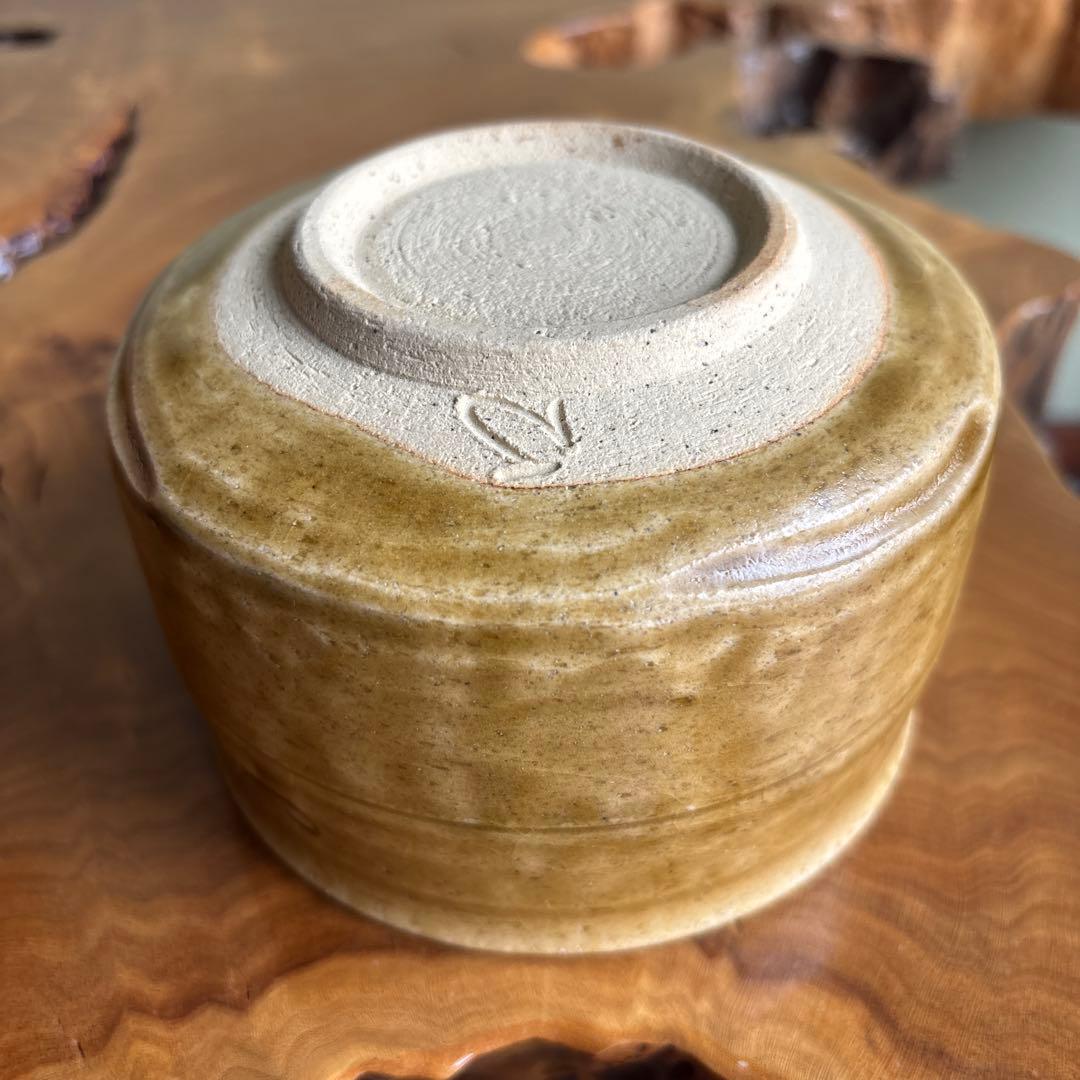
Experience Authentic Japan Art with this Kiseto Chawan Tea Bowl. This Mino Ware Chawan serves as a Japanese Tea Ceremony Bowl and Shobu Iris Motif vessel, featuring Kiseto Yellow Glaze and Tampan Verdigris Accent—a must-have for any Art Collector seeking Incised Iris Pottery, Kosen-toen Work, or Momoyama Style Ceramics.
🔹 [ BASIC DETAILS ]
• Artist: Kōsen-tōen (香泉陶苑), Mino
• Technique: Kiseto (yellow ash-glaze) with iron undertones; incised shōbu (iris) frieze encircling the body; tampan (copper-verdigris) pooled at the blossom center
• Era: 2000 – 2006
• Origin: Mino, Gifu, Japan
• Dimensions: Height approx. 7 cm, Diameter approx. 11 cm
• Box: Tomobako (signed wooden box) inscribed 黄瀬戸茶碗 香泉作 with red seal
• Condition: Very good — no chips, cracks, or hairlines; light crackle network integral to the glaze; tampan accent vivid and intact
🔹 [ CULTURAL & ARTISTIC INSIGHT ]
Kiseto — literally "yellow Seto" — emerged in the Mino kilns of Gifu during the Momoyama period (late 16th century) as one of the four great Mino wares, alongside Shino, Oribe, and Setoguro. Where Shino reaches for weight and Oribe for theatrics, kiseto holds a quieter register: an amber warmth that seems to gather and slow light rather than reflect it. The glaze derives its ochre-to-olive range from feldspathic ash fired at reduction temperatures, with iron impurities threading through as subtle rust-brown shadows beneath the surface.
The shōbu (Japanese iris) is a summer motif with deep cultural resonance — associated with Boys' Day, warriors' resolve, and the elegant arrival of the wet season. Here it is rendered not with a brush but with a potter's tool, incised into the leather-hard clay as a continuous frieze of flowing stems and open blossoms. The tampan accent — copper oxide applied locally — bleeds blue-green at the blossom center, a single chromatic note against the golden ground. The philosophical weight lies in restraint: one motif, one accent, silence everywhere else.
🔹 [ DEEP-DIVE COMMENTARY ]
Tampan is copper sulfate (胆礬), traditionally ground from natural mineral deposits and applied as a colorant in kiseto and oribe glazes. Under oxidizing kiln conditions it produces green; in reduction or where concentration pools, it shifts toward blue-black — the precise hue visible at this bowl's blossom center. The effect is neither planned nor fully controlled, which is its authorship: the kiln participates in every decision.
The incising technique (彫り / hori) predates the brush in Mino ware. A pointed tool traces through the unfired clay body, leaving grooves that catch and hold glaze differently from the surrounding surface — slightly darker, slightly recessed — creating a drawing that is simultaneously tactile and visual. Running one's fingertips along the exterior of this chawan is a different act from looking at it.
Kōsen-tōen is a Mino kiln working within the classical kiseto tradition, producing work grounded in Momoyama-era precedents while remaining firmly contemporary in craft sensibility. The tomobako — a signed paulownia wooden box — confirms the maker's intention: this is not production ware but a documented object with a stated identity.
For collectors of Japanese ceramics, a kiseto chawan with tampan and incised decoration represents one of the more demanding forms in the Mino vocabulary. The glaze must be managed across a wide temperature window; the decoration must be confident enough in the clay to survive shrinkage without cracking; the tampan must be placed before the outcome is visible. Each stage involves irreversible commitment.
As a functional tea bowl, the form rewards use. The slightly cylindrical profile — stable, direct, without theatrical footing — places it in the natsu-chawan (summer bowl) category, where the wide mouth and modest height allow the matcha to cool more quickly. The shōbu motif reinforces this seasonal logic. To hold this bowl in both hands in July is to hold a considered object.
[ JAPANESE DESCRIPTION / 日本語解説 ]
黄瀬戸は、桃山時代に美濃の窯場で誕生した四大美濃焼のひとつ。志野の重厚さとも、織部の奔放さとも異なる、静かな琥珀色の光を湛えた焼き物である。長石質の灰釉が還元炎の中でゆっくりと熔け、鉄分が釉の底に錆色の影を作る。その色調は、黄から緑、オリーブへと微妙に移ろい、光の当たり方によって表情を変える。
本作は香泉陶苑による黄瀬戸茶碗。胴部を一周する菖蒲文の線彫が目を引く。鋭い道具で半乾きの素地を刻んだ彫り文様は、釉を盛り、光と影を纏い、触れれば指先にも届く。花芯部分に施された胆礬(タンパン)は、窯の中で青緑へと変じ、黄金色の地に一点の色彩を落とす。計算し尽くされた余白と、その余白を破る一刷毛のような偶然性——これがこの茶碗の密度である。
菖蒲は夏の意匠。武者の節句に結びつき、梅雨の到来を告げる花でもある。広口で高さを抑えたこの形は夏茶碗としての機能を持ち、季節の論理を形に織り込んでいる。共箱には「黄瀬戸茶碗 香泉作」と墨書され、赤い印が押される。作者の意図と作品の素性が、箱という小さな空間に静かに収まっている。
状態は良好。釉の貫入は焼成時に生じた自然なもので、欠けや割れはない。胆礬の発色も鮮明。使えば育ち、飾れば静かに主張する、美濃の伝統を現代に繋ぐ一碗。
🔹 [ SHIPPING & PACKAGING ]
• Dispatch: Within 1-6 business days
• Carrier: Japan Post EMS / UPS (with tracking)
• Packaging: Carefully wrapped with protective materials
🔹 [ BASIC DETAILS ]
• Artist: Kōsen-tōen (香泉陶苑), Mino
• Technique: Kiseto (yellow ash-glaze) with iron undertones; incised shōbu (iris) frieze encircling the body; tampan (copper-verdigris) pooled at the blossom center
• Era: 2000 – 2006
• Origin: Mino, Gifu, Japan
• Dimensions: Height approx. 7 cm, Diameter approx. 11 cm
• Box: Tomobako (signed wooden box) inscribed 黄瀬戸茶碗 香泉作 with red seal
• Condition: Very good — no chips, cracks, or hairlines; light crackle network integral to the glaze; tampan accent vivid and intact
🔹 [ CULTURAL & ARTISTIC INSIGHT ]
Kiseto — literally "yellow Seto" — emerged in the Mino kilns of Gifu during the Momoyama period (late 16th century) as one of the four great Mino wares, alongside Shino, Oribe, and Setoguro. Where Shino reaches for weight and Oribe for theatrics, kiseto holds a quieter register: an amber warmth that seems to gather and slow light rather than reflect it. The glaze derives its ochre-to-olive range from feldspathic ash fired at reduction temperatures, with iron impurities threading through as subtle rust-brown shadows beneath the surface.
The shōbu (Japanese iris) is a summer motif with deep cultural resonance — associated with Boys' Day, warriors' resolve, and the elegant arrival of the wet season. Here it is rendered not with a brush but with a potter's tool, incised into the leather-hard clay as a continuous frieze of flowing stems and open blossoms. The tampan accent — copper oxide applied locally — bleeds blue-green at the blossom center, a single chromatic note against the golden ground. The philosophical weight lies in restraint: one motif, one accent, silence everywhere else.
🔹 [ DEEP-DIVE COMMENTARY ]
Tampan is copper sulfate (胆礬), traditionally ground from natural mineral deposits and applied as a colorant in kiseto and oribe glazes. Under oxidizing kiln conditions it produces green; in reduction or where concentration pools, it shifts toward blue-black — the precise hue visible at this bowl's blossom center. The effect is neither planned nor fully controlled, which is its authorship: the kiln participates in every decision.
The incising technique (彫り / hori) predates the brush in Mino ware. A pointed tool traces through the unfired clay body, leaving grooves that catch and hold glaze differently from the surrounding surface — slightly darker, slightly recessed — creating a drawing that is simultaneously tactile and visual. Running one's fingertips along the exterior of this chawan is a different act from looking at it.
Kōsen-tōen is a Mino kiln working within the classical kiseto tradition, producing work grounded in Momoyama-era precedents while remaining firmly contemporary in craft sensibility. The tomobako — a signed paulownia wooden box — confirms the maker's intention: this is not production ware but a documented object with a stated identity.
For collectors of Japanese ceramics, a kiseto chawan with tampan and incised decoration represents one of the more demanding forms in the Mino vocabulary. The glaze must be managed across a wide temperature window; the decoration must be confident enough in the clay to survive shrinkage without cracking; the tampan must be placed before the outcome is visible. Each stage involves irreversible commitment.
As a functional tea bowl, the form rewards use. The slightly cylindrical profile — stable, direct, without theatrical footing — places it in the natsu-chawan (summer bowl) category, where the wide mouth and modest height allow the matcha to cool more quickly. The shōbu motif reinforces this seasonal logic. To hold this bowl in both hands in July is to hold a considered object.
[ JAPANESE DESCRIPTION / 日本語解説 ]
黄瀬戸は、桃山時代に美濃の窯場で誕生した四大美濃焼のひとつ。志野の重厚さとも、織部の奔放さとも異なる、静かな琥珀色の光を湛えた焼き物である。長石質の灰釉が還元炎の中でゆっくりと熔け、鉄分が釉の底に錆色の影を作る。その色調は、黄から緑、オリーブへと微妙に移ろい、光の当たり方によって表情を変える。
本作は香泉陶苑による黄瀬戸茶碗。胴部を一周する菖蒲文の線彫が目を引く。鋭い道具で半乾きの素地を刻んだ彫り文様は、釉を盛り、光と影を纏い、触れれば指先にも届く。花芯部分に施された胆礬(タンパン)は、窯の中で青緑へと変じ、黄金色の地に一点の色彩を落とす。計算し尽くされた余白と、その余白を破る一刷毛のような偶然性——これがこの茶碗の密度である。
菖蒲は夏の意匠。武者の節句に結びつき、梅雨の到来を告げる花でもある。広口で高さを抑えたこの形は夏茶碗としての機能を持ち、季節の論理を形に織り込んでいる。共箱には「黄瀬戸茶碗 香泉作」と墨書され、赤い印が押される。作者の意図と作品の素性が、箱という小さな空間に静かに収まっている。
状態は良好。釉の貫入は焼成時に生じた自然なもので、欠けや割れはない。胆礬の発色も鮮明。使えば育ち、飾れば静かに主張する、美濃の伝統を現代に繋ぐ一碗。
🔹 [ SHIPPING & PACKAGING ]
• Dispatch: Within 1-6 business days
• Carrier: Japan Post EMS / UPS (with tracking)
• Packaging: Carefully wrapped with protective materials
Quantity
Couldn't load pickup availability
Low stock: 1 left
View full details